Archives » 2023 » January

Embracing the Pun

Part of the central portion of Orkney’s mainland is known by the name of Harray.

On the way up to Kirbuster Farm Museum we passed a local ceramic artist’s workshop and retail premises. The business’s name is obviously playing on a more widely known enterprise.

Harray Potter

Kirbuster Farm Museum (i)

On the way back to Stromness from Birsay we took a slight detour and passed Kirbuster Farm Museum. It being latish we saved a visit for a day or so later.

It’s one of the few attractions on Orkney’s mainland that isn’t a neolithic ruin. It’s a now disused farm in which two brothers had lived out their lives without modernising the place to 20th century standards.

The first thing you come across is an old kiln:-

Kiln at Kirbuster Farm Museum, Orkney

Kiln, Kirbuster Farm Museum, Orkney

Further on is the farm building:-

Kirbuster Farm Building, museum, Orkney, Scotland

To the side is a path to the garden leading through this lovely swan necked arch:-

Swan Arch, Kirbuster Farm Museum, Orkney

The garden is sheltered and so can harbour trees; a rare sight on Orkney:-

Garden Trees, Kirbuster Farm Museum, Orkney

At the bottom of the garden is a burn going under a bridge whcih carries the main road past the farm:-

Burn and Bridge near Kirbuster Farm Museum, Orkney

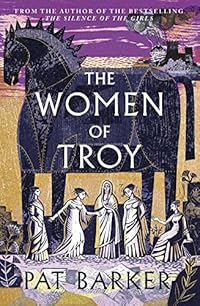
The Women of Troy by Pat Barker

Hamish Hamilton, 2021, 311 p.

This is the sequel to The Silence of the Girls which dealt with the events leading up to the fall of Troy through the eyes of Briseis, a princess of Troy’s ally, Lyrnessus. She had been given to Achilles as a slave in reward for his part in the Greeks’ victory over her city. No familiarity with that first book is necessary as the major details, being relevant to the story line, are gone over again in this volume.

We start inside the Wooden Horse* where Pyrrhus, the son of Achilles, is – almost literally -shitting himself, fearing discovery by the Trojans. This is the first time I can remember reading anywhere a consideration of the logistics of carrying through such a ruse de guerre as the horse. Very few other scenes are shown from his viewpoint though, as most of the narrative is provide by Briseis again, except for one or two sections from the point of view of Calchas, a priest of Athena born in Troy but who had been in Agamemnon’s entourage for years.

This means that, bar Pyrrhus’s killing of Priam, we do not get a first-hand account of the sacking of Troy; though Briseis is aware of the mayhem – all males killed, all pregnant females too on the off-chance their child is a boy – through the tales of the women who survived. War in the Bronze Age was brutal, as in any age.

Through meetings with those women of Troy – Hecuba, Cassandra, Andromache, even Helen herself though of course she was not Trojan – Briseis sees it all and remarks on the ironic relationship between those two prominent figures. “You couldn’t imagine a more feminine woman than Helen nor a more virile man than Achilles, and yet in every way that mattered, they were alike. It was always about them.” Many an imbroglio has been initiated by the actions of people like that.

All the characters, Greeks and former Trojans alike, are kept on the beach by a continuing unfavourable wind preventing the Greek ships from sailing back home. Something has clearly upset the Gods; whether the destruction of Troy itself, the violation of the Temple of Athena wherein Little Ajax raped Cassandra, a virgin priestess, or the refusal by Pyrrhus, in imitation of his father’s treatment of Hector’s body, to have Priam buried. The main plot in The Women of Troy deals with the resolution of this last situation. Its main theme though is the treatment of women, their endurance and (mostly) forbearance, their invisibility to men.

Menelaus had promised to kill Helen on sight or take her back to Greece for the women to stone her. But in the camp he kept her in the lap of what passed for luxury and there were stories of “Helen’s ecstatic cries.” Briseis reflects, “And there’d be plenty of ecstatic cries; Helen was no fool.” But. “The whole camp resented his taking her back. Greek fighters and Trojan slaves united in one thing and one thing only: hatred of Helen.” His slaves know what goes on, “‘All night,’ Hecuba tells Briseis. ‘What’s he trying to do? Fuck her to death?’” In a later meeting with Helen Briseis notices the bruises round Helen’s neck from Menelaus throttling her in the process.

Briseis has no illusions about men. She remarks on her husband Alcimus staying out all night. “Of course he had other women – all men do,” later saying even Trojan men did. Knowing of his imminent death Achilles had had her married to his best friend, confident Alcimus would look after her and the baby she carried. When Briseis asks him if he regrets the marriage he says, “I’m married to the second most beautiful woman in the world – how could I possibly regret that?” This despite him not taking her to his bed – at least not in the text – perhaps because she was carrying his friend’s child. Even so, second most is obviously not the most tactful thing to say to your wife. But people assumed Briseis loved Achilles. After all she’d had the fastest, strongest, bravest, most beautiful man of his generation in her bed. How could she not love him? Simple. “He killed my brothers. We women are peculiar creatures. We tend not to love those who murder our families.”

A certain bitterness, even resignation, is evidenced in Briseis observing that “Achilles’ story never ends: wherever men fight and die you’ll find Achilles,” and she quotes Cassandra (famously endowed with the gift of true prophecy but simultaneously cursed as not to be heeded) saying, “‘I’ve learned not to be too attached to my own prophecies. They’ve only ever been believed when I could get a man to deliver them.’”

Yet the focus, and perhaps unintended hero, of this tale is the dead Priam, a man too compassionate for his own good, whose unburied body means his spirit will be doomed to wander till the end of time. It is the all but insignificant Calchas who comes up with a solution to the problem even if Pyrrhus attempts to subvert it.

One small irritation was that Barker apparently felt the need to explain about laying coins (or, here, a piece of jewellery) on a dead person’s eyes to pay the ferryman. Surely anyone familiar with this era would know that classical allusion. However, that she manages to maintain momentum and interest in a story where its principal character, being both a Trojan and a woman, has little room for manœuvre is an admirable feat of story-telling even if that story’s bones have been available for authors to pick over for millennia. She has filled her novel – both her novels – with characters who ring utterly true, both to their times and to our knowledge of human nature.

(*I refuse to call the horse Trojan. It was built – and used – by the Greeks.)

Pedant’s corner:- The inside cover blurb says “the wind has vanished” (in the text it hasn’t, it is its continual blowing that keeps the Greeks on the beach,) Rufus’ (Rufus’s,) Achilles’ (Achilles’s,) Odysseus’ (Odysseus’s,) Lord Alcimus’ (Alcimus’s,) Lord Pyrrhus’ (Pyrrhus’s,) “are singing hymns of praise to Athena, guardian of cities, as they dragged the horse inside the gates” (as they drag,) “brought to this of Lyrnessus camp” (to this camp of Lyrnessus,) Calchus (elsewhere always ‘Calchas’.) “A big crowd, …., were watching”” (a big crowd …. was watching.)

ParSec 6

ParSec 6 is now available to buy.

This is the issue that contains my reviews of Beyond the Burn Line by Paul McAuley and Percivous Escape by JJ Cook and A J Cook MD.

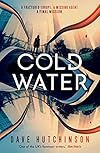
I have also received for review – for ParSec 7 – Cold Water by Dave Hutchinson, another novel set in his Fractured Europe universe.

Dumbarton 1-0 Bonnyrigg Rose

SPFL Tier 4, The Rock, 28/1/23.

Well, a win’s a win. Mustn’t complain.

Three points and a clean sheet. Gregg Wylde scored early on.

Spiral Galaxies Colliding

From Astronomy Picture of the Day for 23/1/23 a picture of two spiral galaxies in the process of collision.

The whole system is known as ARP 274 and contains three galaxies as there is a smaller one to the left in the image.

ARP 274

Friday on my Mind 225: Eight Miles High; and 226: Guinnevere – RIP David Crosby

Last week, David Crosby of The Byrds, Crosby Stills and Nash, and Crosby, Stills, Nash and Young plus various solo offerings died.

Another to add to the long list of 60s and 70s rock greats who have left us recently.

Crosby first came to attention in the UK as a member of US group The Byrds, pioneers of folk rock and a distinctive jangly guitar style

This video features a US TV appearance with a song which is a contender for the first psychedelic recording.

The Byrds: Eight Miles High

In 1968 he teamed up with Stephen Stills and Graham Nash to form one of the best close harmony groups of their time. One of my favourites of theirs is Suite: Judy Blue Eyes which I posted here.

That group became even more potent with the addition of Neil Young a year later. I featured CSNY’s great protest song Ohio in 2010.

This though is from that first eponymous CSN album; a slower, acoustic piece which Crosby wrote.

Crosby, Stills and Nash: Guinnevere

David Van Cortlandt Crosby: 14/8/1941 – 18/1/2023. So it goes.

Wormhole by Keith Brooke and Eric Brown

Angry Robot, 2022, 381 p.

Brooke and Brown have usually collaborated only on shorter pieces but this novel shows their partnership also works at longer length. It is an unusual amalgamation of the detective story and the SF trope of first contact in that the police officer, Gordon Kemp, (passed over and relegated to cold case files) travels to another planet, Mu Arae II, to help solve a case.

It is the late 2100s. Eight decades ago the Strasbourg set off to travel to Mu Arae using suspended animation technology to keep its crew alive till it got there. Widely thought to have been destroyed by an explosion shortly after the voyage began, Kemp discovers that the ship is still on course and due for imminent landfall when he is called in to investigate the death of suspended animation technology entrepreneur Sebastian White just before the Strasbourg’s launch. “‘That’s not a cold case. That’s an archaeological dig.’” White’s wife, Rima Cagnac, was suspected but had an alibi. As a prominent scientist she was on the Strasbourg’s crew. Now the quantum lattice, wormhole technology carried on board, will allow instant travel to Mu Arae and Kemp is designated for the job of bringing Cagnac back to Earth. (One of the things the reader has to take on trust here is that its developers would have been able to keep the wormhole technology’s existence secret for 80 years.) Before Kemp goes, his superiors require him to have an update to his imp – an implant that allows access to the net but may also give his bosses control over him. He has a tame tech whizz called Martin give it the once-over. Martin finds anomalies and supplies Kemp with a device to override it. Chekhov’s gun comes to mind.

The narrative viewpoints switch between Kemp, his associate, Danni Bellini, looking into the case’s background on Earth, and Cagnac, as the Strasbourg arrives in the Mu Arae system and the expedition begins to explore Carrasco, Mu Arae II. Tension builds up with the revelation that the Strasbourg contains six extra sleep pods for the wormhole technicians, the necessity for maintaining bio-hazard protocols, the eventual emergence of cloud fever and deaths due to exposure to pathogens in Carrasco’s atmosphere, the appearance through the wormhole of a goon squad under the control of a Major Gellner and hints of first contact. Connections are established between the murderer and the ruthless conduct of those who want to exploit Carrasco at any cost.

In this sort of scenario there is the danger of the author(s) falling between two stools. Brooke and Brown have managed to avoid that particular hazard. There is enough here to satisfy both the SF reader and the crime aficionado. And it is very neatly done. It helps that human nature does not change over time.

“Time interval” or equivalent count; at least forty.
Pedant’s corner:- fit (x 2, fitted,) heaviside layer (usually capitalised; Heaviside,) “‘when I lasted dated’” (when I last dated,) the Gambie (the Gambia.) “‘Great-nephew, or even something more removed’” (is framed as a question, so needs a question mark at the end,) “for all intents and purposes” (usually it’s ‘to all intents and purposes’,) “had not yet knit together” (knitted,) “you could have just laid low” (OK, it was in dialogue; but strictly it’s ‘lain low’.) “She peered at her softscreen unrolled” (as her softscreen,) “an image sprung up” (sprang up.) “‘I don’t now.’” (I don’t know,) “to look in through library window” (through the library window.)

Finstown, Orkney, War Memorial and Graves

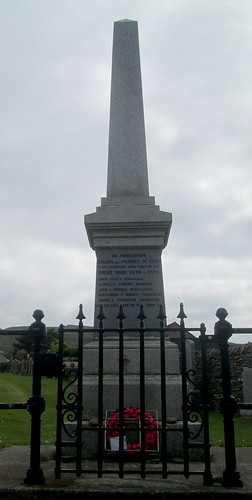
Finstown is a small settlement about halfway between Kirkwall and Stromness. Its War Memorial is a simple obelisk lying beside the A 965 road through the village:-

War Memorial, Finstown, Orkney

Closer view:-

Finstown War Memorial, Orkney

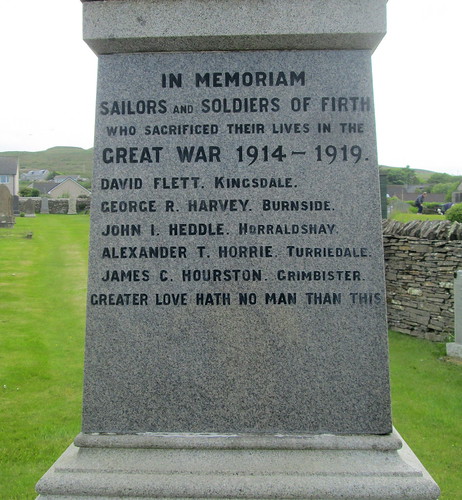
Dedication “to the soldiers and sailors of Firth.” (Finstown lies on the Bay of Firth,) and names Flett-Hourston:-

Dedication, Finstown War Memorial, Orkney

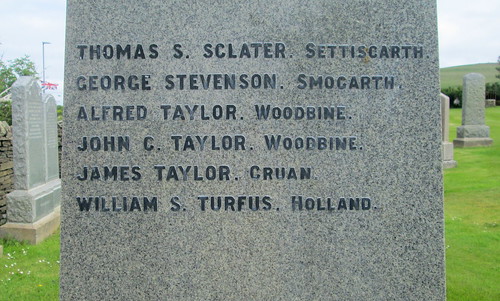
Names Sclater-Turfus:-

War Memorial, Finstown, Orkney

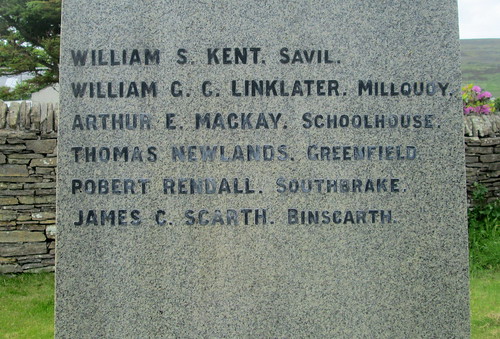
Names Kent – Scarth:-

Names Finstown War Memorial, Orkney

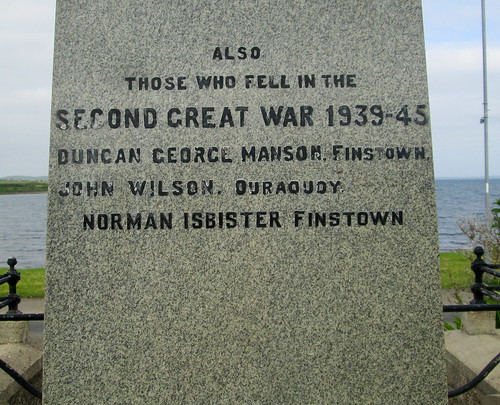
World War 2 Dedication and Names:-

World War 2 Dedicationand Names, War Memorial, Finstown, Orknet

In the graveyard behind the memorial lie two Commonwealth War Graves, both from World War 2.

Marine N Isbister, RML, HMS Proserpine, 8/7/1944, aged 24, a local whose name is on the War Memorial:-

War Grave, Finstown, Orkney 1

Lance Bombardier J M Bews, Royal Artillery, 26/3/1941, aged 20:-

Finstown, Orkney, War Grave

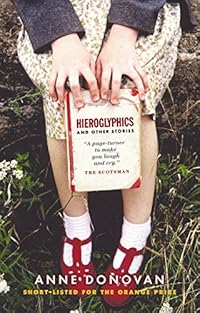
Hieroglyphics by Anne Donovan

Canongate, 2004, 173 p.

This is a fine collection of short stories by the author, whose novels Buddha Da, Gone Are the Leaves and Being Emily I enjoyed immensely. As a glance at the titles shows, most of the stories here are written in very broad Glasgow dialect.

Title story Hieroglyphics is narrated by Mary, a schoolgirl who cannot read nor write because all she sees is the letters “diddlin aboot.” Inspired by her knowledge of Egyptians her class studied in Primary School she can however express herself using pictograms.
Clare, the narrator of All That Glisters, is also a schoolgirl. Her father is bedridden from asbestosis but she brightens his life with a Christmas card she made for him using glitter pens. The ending is bitter sweet.
The Ice Horse is a rocking horse kept in the cold shed at Anna’s grandfather’s home. Her dearest wish is to look into its un-ice-covered eyes.
Virtual Pals is in the form of an exchange of emails between Siobhan and Irina. The latter was supposed to live in Shetland but her replies are emailed from Jupiter. This gives Donovan the opportunity to comment on the mores of young teenage life in Glasgow.
In Dear Santa another young girl who feels her younger sister is her parents’ favourite swithers about asking Santa for what she really wants for Christmas.
Wanny the Lassies is the tale of a schoolgirl causing problems for her male teacher through an essay indicating he had inappropriate relations with her.
A Chitterin Bite draws a parallel between the betrayal of a young girl by the friend she goes swimming with who drops her by taking up with a boy, to her later affair with a married man.
Me and the Babbie tells of the intense bond a mother feels with her new-born son.
In Away in a Manger a mother and her child go to see the Christmas Lights in Glasgow’s George Square. Both are shocked to see a homeless man in the background of the nativity tableau.
The Doll’s House her father made for her is being decorated by a mother for her son.
While out Brambling a woman and her child get lost.
A mature student takes some children for drama classes in The Workshop. It brings her into close contact with their male teacher.
Marking Time tells of a South European immigrant to Glasgow who remembers his time sweeping the beach of his home town when news of a bequest reaches him.
A Ringin Frost is the story of a woman whose husband is the only person who can warm her cold heart.
In A Change of Hert a woman searches for the reason why her husband’s preferences have changed after his heart transplant.
Dindy is told in short paragraphs illustrating fragments of memory.
Loast is narrated by an unmarried woman losing in old age her memory for words.
Zimmerobics is the bright idea of a young woman to lighten the existence of people in an old folks’ home.

Pedant’s corner:- “chitterin bite” (usually spelled chittery bite,) “aware that this eyes scan the room” (his eyes,) “painted the it coral pink” (no ‘the’ needed,) “round the the cars” (has a ‘the’ too many.)

free hit counter script