Archives » 2023 » January

Wideford Hill Chambered Cairn, Orkney (ii)

Cairn’s entrance ladder:-

Wideford Chambered Cairn Ladder

Entrance from inside. You can see it’s quite restricted. The woman in the picture was our travelling companion:-

Entrance to Wideford Chambered Cairn, Orkney, from Inside

There is some graffiti on the walls.

Interior side wall (i):-

Wideford Chambered Cairn, Orkney, Wall

Interior side wall (ii):-

Wall, Wideford Chambered Cairn, Orkney

Close up on graffiti:-

Graffiti, Wideford Chambered Cairn, Orkney

Original entrance from inside:-

Original Entrance, Wideford Chambered Cairn, Orkney

Chambers:-

Inside Wideford Chambered Cairn, Orkney

Inside Cairn , Wideford, Orkney

Inside  Wideford Cairn, Orkney

The side of Wideford Hill where the chamber sits overlooks an inlet of the NorthSea/Atlantic called the Bay of Firth. The settlement of Finstown lies to the far left of the Firth, beyond the islands as seen in this photo stitch:-

From Wideford stitch, Orkney

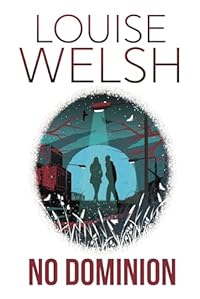
No Dominion by Louise Welsh

John Murray, 2017, 380 p, including ii p Afterword.

This is the last in Welsh’s Plague Times trilogy in which a pandemic known as “the sweats” has ravaged society. Stevie Flint from A Lovely Way to Burn and Magnus McFall from Death is a Welcome Guest have now been on Orkney for seven years. Apart from the cathedral, still used for significant occasions, Kirkwall has been abandoned and burnt to minimise disease risk. The centre of what authority exists lies in Stromness and is run on democratic lines. Stevie is President of the Orkney islands and has no sexual partner. Neither has Magnus but he acts as father to Shug, a boy now an adolescent and one of the seven children on Orkney who survived the sweats and have been fostered out.

We start at an Easter gathering in Stromness in a former hotel, with the odd musical turn and the adults drinking. It has become obvious that Shug is attracted to Willow, another fostered child also reaching adulthood. Her foster father Bjarne is not keen on the idea of the pair having a relationship and when they leave together gets into an argument with Magnus.

The gathering is interrupted, though, by the arrival of a boat in the harbour containing three people, one of whom, Belle, Magnus had met on his way up to Orkney. The newcomers agree to quarantine on Wyre, one of the smaller islands.

Things come to a head and Magnus finds Shug beaten up. Going to confront Bjarne he discovers him and his wife Candice shot dead in their home. The same night several children go missing, Shug, Willow, other girls called Sky and Moon, a boy, Aril, and a two year-old, little Evie. The three strangers are gone too. Stevie and Magnus delegate themselves to follow them into mainland Scotland to retrieve the children.

From there it is the usual post-apocalyptic scenario, meetings with every-person-for-themselves types, religious nutters, travels through various quasi-feudal fiefdoms, Do-Not-Enter-On-Pain-Of-Death signs, all-but-forced labour in the big city, and, for Stevie, the threat of rape from men who don’t know her.

Welsh has shown she can write. Her first novel, The Cutting Room, was an unusual take on the crime genre and her second book, the novella Tamburlaine Must Die, was simply superb, but it’s a pity she has more recently tipped over into thriller territory. She does illustrate, though, that carrying on earlier notions of morality in post-disaster times has its problematic edges. In her Afterword she says that her vision of the world is that most people are fundamentally good. But books with only good people in them are likely to be boring. No Dominion isn’t boring but it doesn’t really add much to post-disaster literature.

Pedant’s corner:- “Magnus had drank more than he was used to” (had drunk,) snuck (x 2, sneaked,) “Magnus sunk to his haunches” (sank,) “lifted the valence” (the valance,) “3AMP fuses” (3 Amp fuses,) “Burnham Wood” (it was in dialogue but it still should be spelled ‘Birnam Wood’,) wheescht (usually spelled ‘wheesht’,) “the oldest of the pair” (older of the pair.) “The City Chambers were nearby” (in Glasgow the City Chambers is usually spoken of in the singular; was nearby,) “sunk to his haunches” (again! sank,) “the Orkneys” (this was Stevie speaking. Traditionally Orcadians would refer to ‘Orkney’ or ‘the Orkney Islands’. But she wasn’t Orcadian,) “The City Chambers’ marble floors” (if singular then ‘City Chambers’s’.) “Three candelabras” (candelabra is already plural,) a missing end quote mark on a piece of dialogue, “better shape that the provost” (than the Provost,) “‘Let’s hope none of the bastards’ aim improves’” (of the bastards’ aims improves.)

Kilmarnock 1-0 Dumbarton

Scottish Cup, Round 4, Rugby Park, 21/1/23.

Well. We held them for 90 minutes. Not bad, away to a team three divisions above us. The BBC gave Finlay Gray a better rating than any Kilmarnock player.

That late goal must have been a sickener for the players though.

But we avoided a potentially tiring 30 minutes of extra-time.

We can concentrate on the league now. (Famous last words.)

Wideford Hill Chambered Cairn, Orkney (i)

Wideford Hill Chambered Cairn, Orkney was one of the ancient sites in the Orkney Islands we didn’t visit in 2017. We tyook it in in June last year.

The approach is up a very steep – and winding – farm road till you reach the car park (grandiose description for two parking spaces) from which you can look down to Kirkwall. The photo also shows some of the road:-

Kirkwall From Wideford Hill

There is a view of Scapa Flow from there too:-

Scapa Flow from Wideford Hill

A notice at the car park said the chambered cairn was about half a mile away on a path round the hill. It was much longer than that.

You can see me walking the path here in a photo taken by the good lady. As you can see the cairn is nowhere in sight and we had been walking for about twenty minutes by this time:-

Bay of Firth from Wideford Hill, Orkney

Cairn from path. To the left you can see the box in which the key to the entrance is kept and the information board:-

Wideford Chambered Cairn, Orkney, neolithic

Information board:-

Wideford Hill Chambered Cairn, Orkney, neolithic

Original entrance (now gridded off):-

Wideford Chambered Cairn Original Entrance

Cairn from above. The modern entrance is the blue square on its top

Wideford Chambered Cairn, Orkney

Something Changed 63: Road Rage

Catatonia was one those Welsh bands that flowered in the 1990s. In their case it helped that singer Cerys Matthews has such a distinctive voice.

I love her rolled “r” on the word rage in this song.

Catatonia: Road Rage

Interior, Italian Chapel, Lamb Holm, Orkney

I mentioned the Italian Chapel on Orkney before. On that 2017 visit we didn’t go inside, in June this* year we lingered a bit longer.

Information board:-

Information Board, Italian Chapel, Orkney

Internal Information board:-

Information Board, Italian Chapel, Orkney

Door wall from inside. Unfortunately the light from outside obscures things for the camera a bit:-

Doorway, Italian Chapel, Orkney

Frieze above door:-

Frieze Above Door, Italian Chapel, Orkney

The interior is striking. Amazingly all of the effects are examples of trompe l’oeil. What looks like tiling is in fact painted. The metal bits were made from bits of tin can and such, fashioned into shape.

Altar:-

Altar, Italian Chapel, Orkney

Closer view of altar:-

Closer View, Altar, Italian Chapel, Orkney

Ceiling:-

Ceiling, Italian Chapel, Orkney

More of ceiling:-

More of Ceiling, Italian Chapel, Orkney

*It’s last year now.

Paradise Reclaimed by Halldór Laxness

Vintage, 2002, 304 p, plus ii p Translator’s Notes on pronunciation, vi p Introduction by Jane Smiley and iv p Notes. Translated from the Icelandic Paradísarheimt (Helgafell, Reykjavík, 1960) by Magnus Magnusson.

This novel by Icelander Laxness is told in an unusual register almost like a fable or as if it were being recited. But I suppose that’s not surprising given Iceland’s heritage of oral literature in the sagas.

Set in the time of King Kristian Wilhelmsson of Denmark it is the story of a man called Steinar who had a farm at Hlíðar in the district known as Steinahlíðar where stones regularly fell from the mountains and had to be removed from the farmland. Steinar was married and had a daughter and a son. One day a miraculous pony is born to a scrawny mare and it becomes the apple of his daughter’s eye. Nevertheless, he takes it off to where the king is holding a meeting on his only journey to Iceland as a gift to his monarch. The king promises to reward him in a suitable way. On his way home Steinar comes upon a Mormon preaching. This is an Icelandic convert, Bishop Þjóðrekur. From then on the two’s existences are entwined.

As conveyed by Laxness, Icelanders’ attitudes in those days seem very like Scotland’s. “Dancing was the devil’s work.” This sentence is leavened a little by the next, “It was not considered seemly for young unmarried people to tramp on one another’s toes except at most, perhaps, in order to have illegitimate children,” which would have definitely been disapproved of by Scots but the similarity between the two countries is reasserted by the observation that “All life had to serve some useful purpose and the glory of God.”

Just the same, “Love as we now call it had not yet been imported to Iceland.” Not that that was an insuperable barrier. “But nature got its way nonetheless.” Even if potential young partners studiously avoided looking at one another.

Steinar later makes a mahogany box which can only be opened by reciting a poem and resolves to take this to Denmark as another gift to the king but not before unwisely offering Björn of Leirur the use of his farm to pasture a horse. In Denmark he meets Þjóðrekur again and agrees to travel to the US to sample Mormon life for himself, making bricks and changing his name to Stone P Sandford.

On the farm he had left behind his family gets by as best they can until Björn of Leirur brings a whole troop of horses to graze on the land. At that time in Iceland it was apparently the tradition for a woman of the house to help a male visitor remove his clothes before bed. Steinar’s daughter performs the duty but falls asleep in his bed and finds a gold coin on the window sill in the morning. On later nights the coin is silver and, later still, copper. (A girl only receives a gold coin once, you see.) This is an attempt at light-heartedness by Laxness as the girl denies all knowledge of how it happened when the inevitable consequence ensues. The local sheriff is bemused by her adamant refusal to admit anything untoward as she says she was always asleep. Eventually the farm becomes unmanageable and the family, told by Þjóðrekur that Steinar is in Utah, decide to travel to the US. On the ship the girl (her name is never given) has another fantastical sexual interaction after observing that “human virtues do not all reside in the face.”

Since this is in effect a told story (probably better suited to be an audio book these days,) the usual nuances of characterisation are not to be expected. By and large the people on these pages are broadly brushed, their encounters tinged with magical realism. It is a reminder of past times, an exploration of faith and belief, an examination of Mormonism from a skewed angle. It is still a memorable experience.

Pedant’s corner:- “out with the official programme” (that ‘out with’ would be the Scottish word ‘outwith’, no doubt altered by a non-Scottish editor,) a missing comma before a piece of direct speech, aa missing start quotation mark when a chapter begins with a piece of direct speech, “furor” (furore,) “took of his hat” (took off.)

Interior and Stained Glass, St Magnus Cathedral, Kirkwall, Orkney

Looking towards entrance door:-

Stained Glass, St Magnus Cathedral, Kirkwall, Orkney

Towards altar:-

More Stained Glass,St Magnus Cathedral, Kirkwall, Orkney

Note lighted room high up above further arch:-

High Room, St Magnus Cathedral, Kirkwall, Orkney

On side wall of Cathedral:-

Stained Glass Window, St Magnus Cathedral, Kirkwall, Orkney

War Memorial Plaques, St Magnus Cathedral, Kirkwall, Orkney

Though I posted about the Royal Oak Memorial in Kirkwall’s St Magnus Cathedral in 2017 I didn’t photograph these wall-mounted memorials when we were in Orkney then.

In memory of the men of the Cathedral’s congregation who died in the Great War:-

War Memorial, St Magnus Cathedral, Orkney

To William Baikie, Watson, MC, Lieutenant Royal Field Artil 25.lery, 29/9/1918, aged 25:-

War Memorial Plaque, St Magnus Cathedral, Kirkwall

In memory of Archibald Garden Robertson, 2nd Lieutenant, Black Watch, attached to RFC, 8/6/1917:-

War Memorial Plaque in St Magnus Cathedral, Kirkwall

Forfar Athletic 2-1 Dumbarton

SPFL Tier 4, Station Park, 14/1/23.

Well, this is a disappointment.

Mind you, you can’t expect to win a game when one of your centre-halves is sent off after 12 minutes. It also doesn’t help that he’s barely had a game in almost two years due to injury and the form of our other choices.

Plus Forfar have been our bogey team of late.

It would have been nice to extend our lead to seven points. As it is it could be down to one after the postponements get played. (Or worse if we lose to Stirling Albion.)

Free hit next week with our cup game against Kilmarnock.

free hit counter script