Archives » 2025 » May

Pawn in Frankincense by Dorothy Dunnett

Century,1983, 494 p. First published 1969.
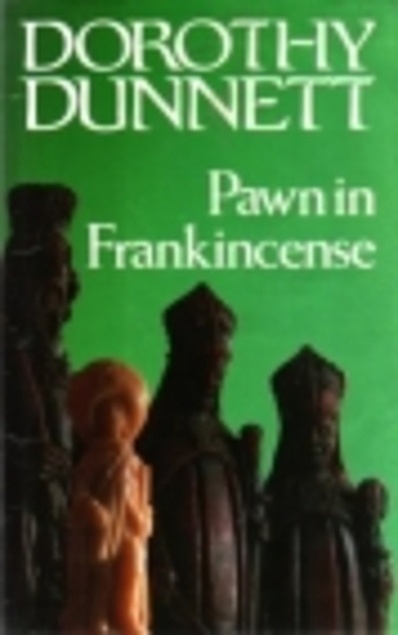
This is the fourth in Dunnett’s series of novels featuring Francis Crawford of Lymond, Comte de Sevigny. See here, here and here. After the revelation in book three that Lymond had fathered a son on Oonagh O’Dwyer and Graham Reid Malett’s escape from the cathedral of St Giles, Crawford is faced with a dilemma. If he kills Malett then the child will be killed.

Taking advantage of the commission of Henri II of France to transport an elaborate spinet to the Grand Sultan Suleiman the Magnificent and be French Ambassador to the Sublime Porte, Crawford travels the Mediterranean accompanied by former Grand Knight of Malta and one of Lymond’s mercenary company, Jerott Blyth, and sixteen year-old Philippa Somerville, daughter of friends of the Lymond family whose intention is to protect Lymond’s child Khaireddin from further harm. Also in the party are the spinet’s constructor Georges Gaultier, his niece Marthe, who bears an uncanny resemblance to Crawford, and a Swiss cook, Onophrion Zitwitz.

Things are complicated by the fact that there are two fair-haired children of the correct age knocking about, Khaireddin and Kuzucuyum, one of them the child of Malett and his deceased sister Joleta. Both may have to be rescued.

False trails, betrayals and incident abound, including a set piece among the ancient cisterns below what was once Constantinople but is now – and has been for a hundred years – Stamboul, the atmosphere of Suleiman’s court is evoked admirably, Crawford’s trials grow. The climax comes with a chess game using live pieces instigated by Suleiman’s second wife Hürrem Sultan, known as Roxelana, to resolve the competing claims of Malett and Lymond as to the truth, a game which involves a pawn sacrifice.

There is something about the writing which lends the tale opacity, however. Perhaps Dunnett, like Lymond, is being too clever for her own good. Not that it affected her sales.

Possibly reflecting attitudes when the book was written a minor character, Pierre Gilles D’Albi, says of Marthe, “‘She has too many ideas. Women with ideas are a threat to the civilized world.’”

The series as a whole may be the Lymond Chronicles but as written this one is more the tales of Philippa Somerville and Jerott Blyth than of Lymond.

Sensitivity note: uses the word ‘nigger’.

Pedant’s corner:- bouillotte (is an 18th century card game, not a 16th century one,) a missing quotation mark at the end of a piece of dialogue. At one point Blyth is trapped in a small building which is on fire and giving off hydrocyanic gas, and survives. (Exposure to small amounts of HCN is usually fatal,) “since Odysseus’ time” (Odysseus’s time – I note Zakynthos’s appeared later so usage of the apostrophe wasn’t consistent,) Scandaroon (x 1, elsewhere Scanderoon,) “a English girl” (an English girl,) rauccous (raucous,) hoopoo (hoopoe.)
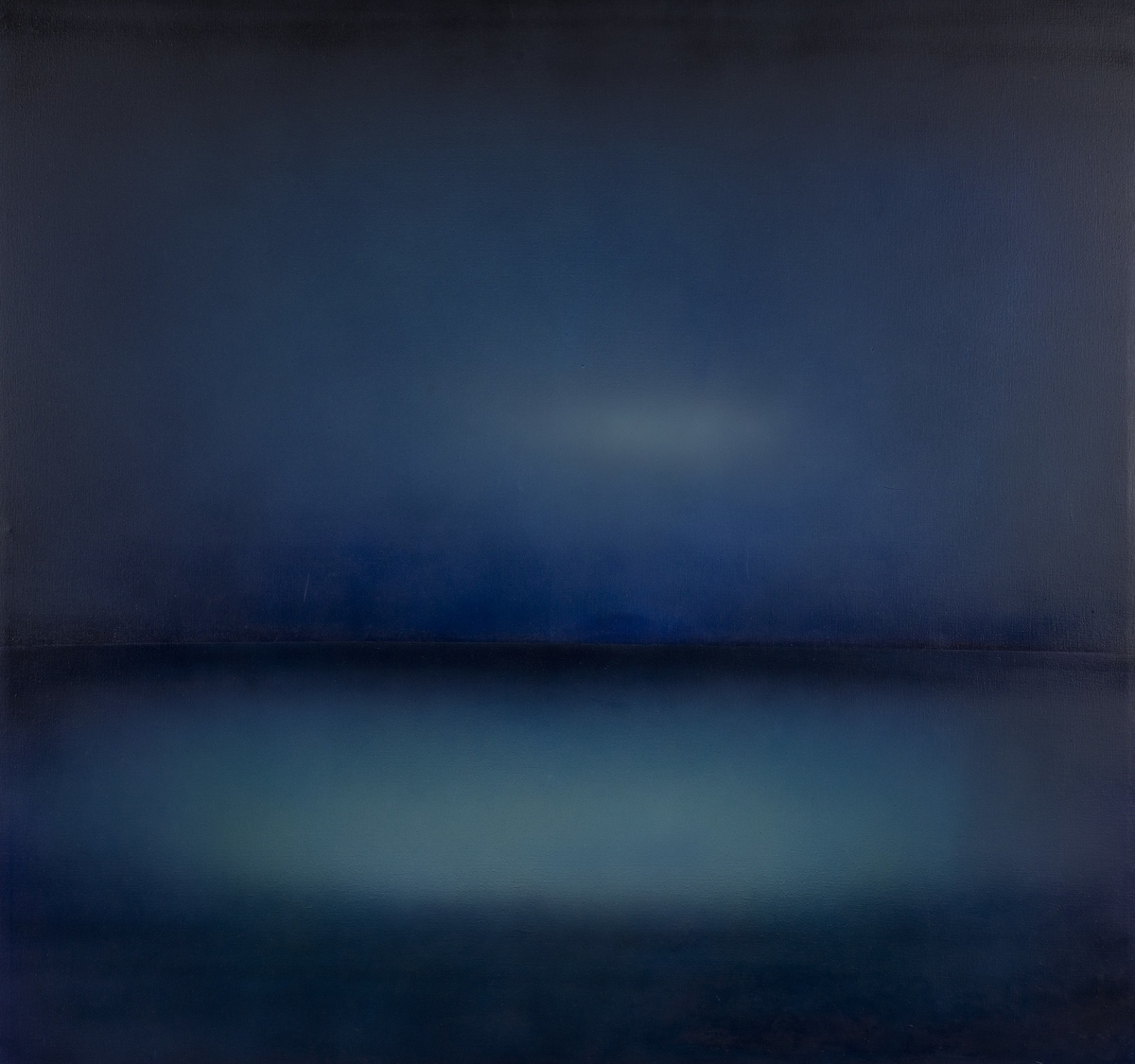
A Weather Eye at the McManus Art Gallery and Museum, Dundee

This week I visited Dundee’s McManus Art Gallery and Museum to see the exhibition A Weather Eye. I got to it late. It finishes on Sunday 11/5/25: tomorrow!

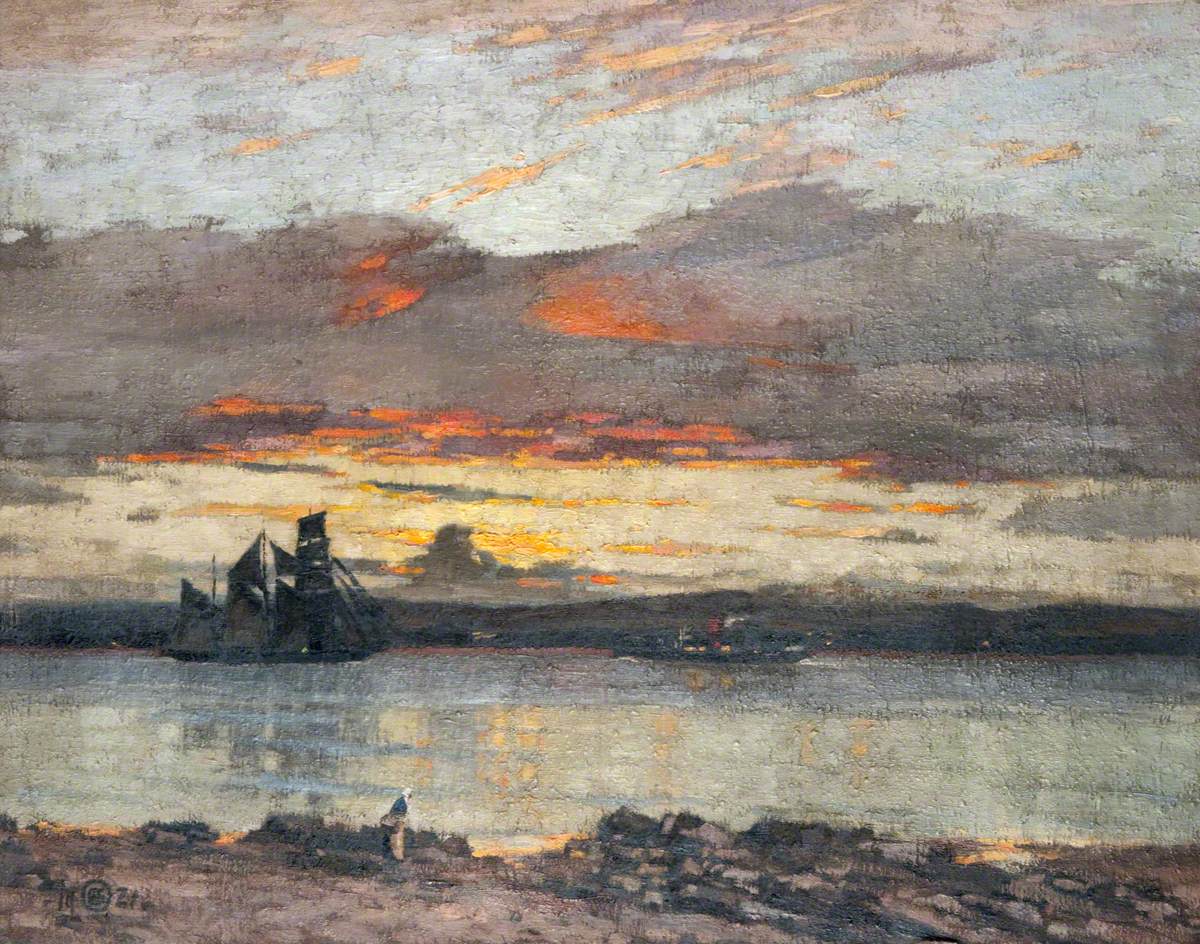
Each painting was accompanied on its information board by a Scots word to do with weather or the image depicted.

The quality and interest of course varied.

My highlights were:-

Island by James Howie; accompanied by the word ‘loom’.


Alec Grieve’s Sunset on the Tay; ‘gloamin’.


Storm at Sea Remembered by Jon Schueler; ‘doister’.


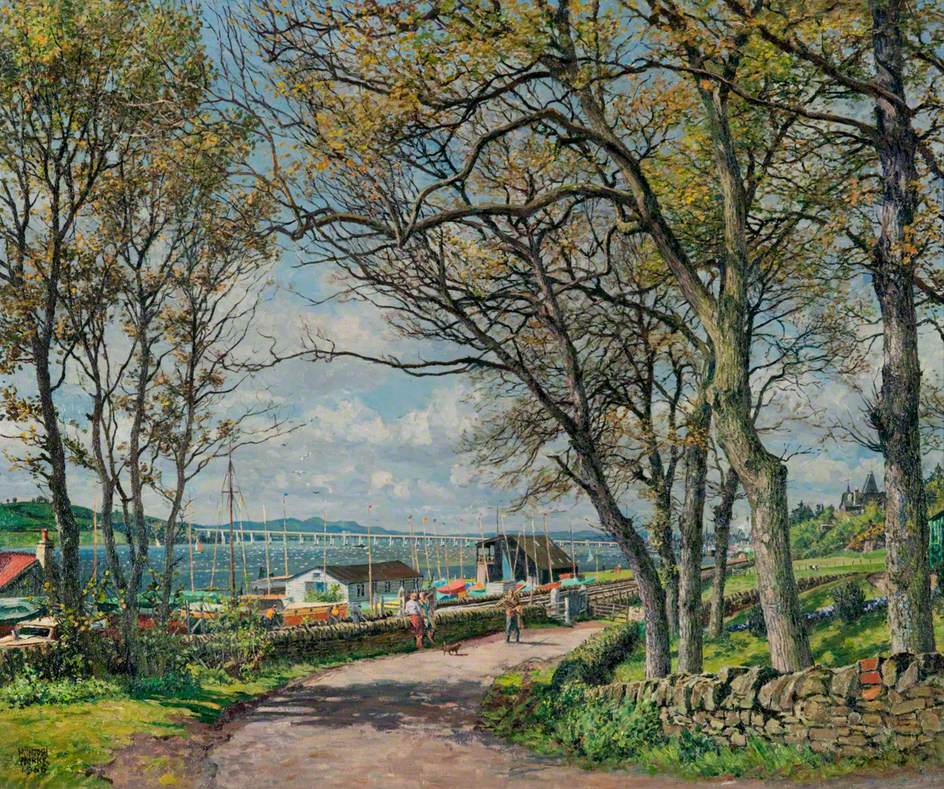
The Tay Road Bridge by James McIntosh Patrick; ‘braw’.


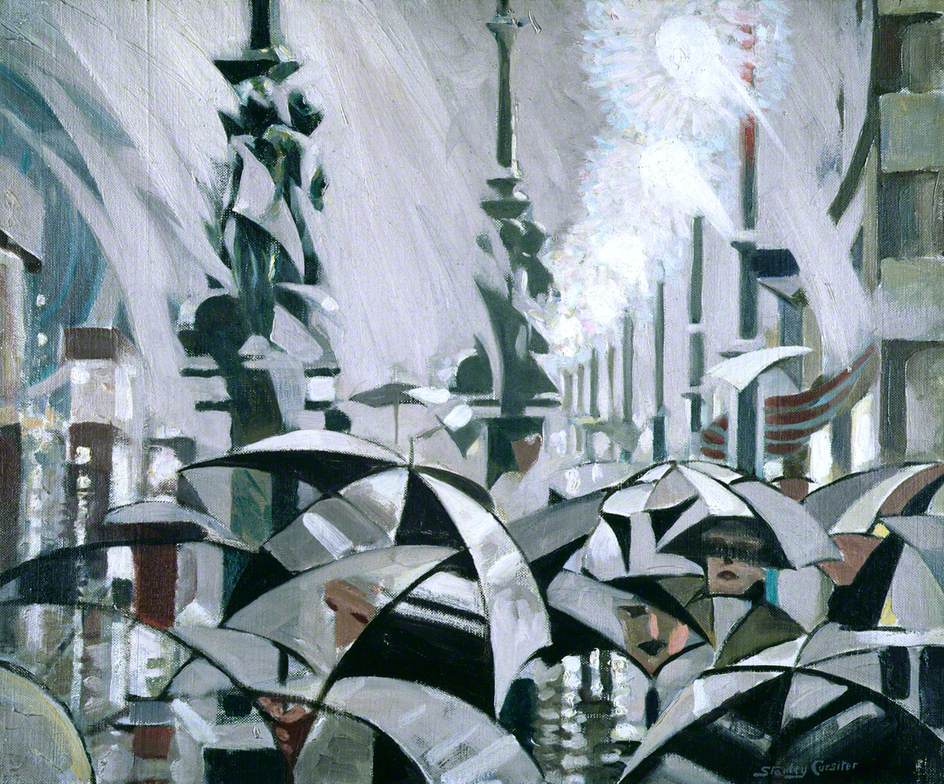
Stanley Cursiter’s Rain on Princes Street; ‘evendoon’.

The above were all available to look at on the website Art UK.

The one below wasn’t; so here’s my photo of it.

William Cadenhead’s New Snow, Catlaw; ‘owerblaw’.

New Snow Catlaw, by William  Cadenhead


Reelin’ in the Years 247: Without You

The Guardian only printed the obituary of Joey Molland, guitarist with Badfinger on Wednesday 7/5/25 but it must have been on its website for over a month.

I have featured the band’s big hits Come and Get It, plus Day After Day and No Matter What before.

This song was on their LP No Dice in 1970 but was made more famous by Nilsson a couple of years later.

Badfinger: Without You


Nilsson: Without You


Joseph Charles (Joey) Molland: 21/6/1947 – 1/3/2025. So it goes.

BSFA Award

This year’s winners were indeed announced at Eastercon and the full list can be found here.

As far as the adult fiction categories go we have –

Short fiction:

Why Don’t We Just Kill the Kid in the Omelas Hole by Isabelle Kim

Shorter fiction – which somewhat confusingly is for longer fiction than the short fiction category; ie novella and novelette (whatever a novelette is):-

Saturation Point by Adrian Tchaikovsky

Novel:

Three Eight One by Aliya Whiteley

I note there was an award for best translated short work:

Bone by Bone by Mónika Rusvai, translated from Hungarian by Vivien Urban.

I haven’t read any of them.

(I have read the novel withdrawn from consideration, Alien Clay by Adrian Tchaikovsky. My review appeared in ParSec 13 and will do so here in due course.)

A Spitkeet House

There are several examples at De Spitkeet of the types of houses people lived in in the area in times gone by.

Below is a typical Spitkeet turf house:-

A Spitkeet House

Reverse view:-

A Spitkeet, Reverse View

Entrance:-

Spitkeet Entrance

Information about. In the Mallemolen museum part there was a photograph from the 1930 with children sleeping on the floor:-

Spitkeet Information

Interior:-

Interior of Spitkeet

Clogs:-

Clogs Inside Spitkeet

Fire layout and cooking pot:-

Spitkeet Interior

Parents’ bed:-

Bed in Spitkeet

Fall of Man by Rupert Croft-Cooke

Macmillan and Company, 1955, 316 p.

While this is a very well written account of the life of the narrator, Arthur’s, lifelong friend, Antony Scaw, the years have not been kind to its culmination.

Antony was one of those types who are, if not entirely self-absorbed, at least disinterested in the wider world. In Antony’s case even to the extent of not noting the sensitivities of the rest of his family in not speaking of their brother Jack, killed in the Great War.

The early chapters relate life in Antony’s home Ripstead, where his mother finds him difficult to understand. But Arthur is accepted as almost part of the family in part due to his friendship with Antony. The pair endured Wincaster, a minor public school, together before entering adult life after the war

Antony married a woman named Olivia, but they soon grew apart and she began going around with one Reggie Duggan. The group in whose circles he moved could not comprehend his attitude in allowing Olivia to behave as she wished but Antony was of the belief that it was not his business to dictate how other people lived. Later, long after the catastrophic end of his wife’s affair, Antony mentions to Arthur their “‘predecessors who refused to take the omnipotent “They” of life quite seriously’” and had suffered for it.

By this time Antony’s painting had made him moderately successful and after the Second World War he had moved to Long Baddeley, where he lived with a housekeeper Mrs Potter – who gets squiffy now and again – and a ten-year-old girl, Pippa, whose parents had abandoned her.

Local widow Sally Greenway takes a fancy to Antony but he is not interested and Sally’s attachment sours to disillusion and suspicion, suspicion which she fosters with the authorities and bolsters with her questioning of Pippa on taking her out for the day.

It is, of course, the paintings of Pippa which Antony has made, of Pippa unclothed, which become the most damning evidence against him.

Narrator Arthur is convinced of Antony’s innocent intent and the reader has to take that, Pippa’s attitude to him and Antony’s denials of impropriety at face value but at the same time must think a line has not only been crossed but been travelled far beyond. The tragedy unfolds as it must, all the circumstances of Antony’s home life and the prurience of police and court officials pointing only one way.

Despite Fall of Man being at heart a plea for the understanding, even tolerance, of non-conformity (Antony’s actions in the book did not harm anyone, least of all Pippa, it was the initial court proceedings which did that to her) it is more than likely that had Croft-Cooke been around to consider such a plot in the present day he would not have written it nor, if he had, found a publisher for it.

Pedant’s corner:- a missing comma before a piece of direct speech (x 2,) “a character in a wideawake hat with a tawny beard” (a little clumsy. How can a hat have a beard?) hu-ha (nowadays spelled ‘hoo-hah’,) wistaria (wisteria,) “for politeness’ sake” (to avoid that annoying apostrophe use ‘for the sake of politeness’.)

Stenhousemuir 2-1 Dumbarton

SPFL Tier 3, Ochilview, 3/5/25.

And so an utter car crash of a season comes to an end.

They were the better team, shifted the ball about well and scored early on. We didn’t start to come into it till later in the first half.

We got back into it from a corner nodded on by Mark Durnan to Matthew Shiels whose shot wasn’t cleared by their defence and ended up in the net. It was difficult to tell exactly what happened as we Sons fans were in the enclosure at the opposite end of the pitch.

Their second was hard luck on Shay Kelly in goal as he made a great point-blank save from the first effort but the rebound was put in off the post. (The guy almost put it past which would have been a shocking miss.)

So who knows how many of these players we will see again in a Sons shirt? Not Michael Ruth I would wager. He would provbably deserve a place in a Tier 2 team. Player of the year Mouhamed Niang might also be off. So might they all to be fair.


Pingo

The Spitkeet (see previous post) acreage is centred round a collapsed pingo, a depression formed after ice age permafrost melted. They are usually filled with water. The landscape of Friesland and parts of Groningen Province contains quite a few pingos.

Pingo and bridge:-

De Spitkeet, Pingo + Bridge

The bridge:-

Pingo + Bridge, De Spitkeet

The pingo from the bridge. The Mallemolen (see previous post, is to the left in the middle distance):-

Pingo from Bridge, De Spitkeet


Live It Up 129: Sixty Eight Guns. RIP Mike Peters.

Mike Peters of Welsh band The Alarm died earlier this week.

As far as I can see the band only hit the top twenty twice, with this song achieving their highest chart placing at no 17.

The Alarm: Sixty Eight Guns


Michael Leslie (Mike) Peters: 25/2/1959 – 28/4/2025. So it goes.

Missing Review

In my post about the latest issue of ParSec magazine I said it would contain my review of Hammajang Luck by Makana Yamamoto.

Well; it didn’t.

After the issue had been released I received an email from ParSec’s editor saying that just before the issue went live he had received a letter from the book’s publisher demanding that my review be taken down.

The letter apparently described my review as “hugely upsetting to the author and a lot of people.” Quite how that could be the case when the review had yet to appear is a point to ponder. The author maybe – if the review had been shared with them – but a lot of people?

The letter claimed that I had misgendered the book’s protagonist, Edie, throughout as “they are explicitly known as they/them throughout the entirety of the book” and I had failed to follow that designation. 

Now: the book was written in the first person singular by a narrator who was clearly not male. With such a narrator occasions on which the use of they/them will describe the protagonist will be vanishingly rare.

Regular readers of this blog will know how unlikely it is that something as striking as a still relatively uncommon use of personal pronouns would pass me by.

Nvertheless, just to check, I did a quick scan of the Advanced Reading Copy sent to me for review and, as I had recalled, the pronouns used to describe the protagonist are actually ‘I’ and ‘me’ (naturally so for a first person narration) – or ‘you’ when the narrator was being spoken to by other characters. I could find no instance of ‘they/them/their’ at all. In this circumstance it can surely be understood why a humble reviewer would assume that the normal pronouns for a female character would apply.

My review, as reviews must be, accordingly was based on the text as written – or at least as published in the ARC.

In the cold light of day and coming to the review afresh there was a three word passage which perhaps came across as more flippant and thoughtless than I intended. Had I been contacted directly about this I would have acceded to its removal/replacement without hesitation. I was not given the opportunity.

I will nevertheless alter that when I post the review here in due course.

I have no quibble with ParSec’s editor’s decision not to publish the review. He has after all a relationship with the publisher to nurture but I would add he has enough on his plate without having to deal with a back and forth about something so trivial as a book review.

I must add that it used to be considered bad form for an author to complain about a review.

But that a publisher can all but demand a review not be printed is surely a bit over the score.


free hit counter script