Archives » 2023 » December

Reading Scotland 2023

Thirty four Scottish books read this year; equally divided between female and male authors. Fiction, Poetry, Science Fiction, Fantasy, Non-fiction, Football. I have linked to my reviews if they have appeared here.

No Dominion  by Louise Welsh

Hieroglyphics by Anne Donovan

For the Good Times by David Keenan

Wild Geese by Nan Shepherd

Paper Cup by Karen Campbell

The Christmas Truce by Carol Ann Duffy

A Would-Be Saint by Robin Jenkins

Something Like Happy by John Burnside

The Mandelbaum Gate by Muriel Spark

The Dark Remains by William McIlvanney and Ian Rankin

Scotland’s Lost Clubs by Jeff Webb

The Oath Takers by Naomi Mitchison

Vinland by George Mckay Brown

Beethoven’s Assassins by Andrew Crumey

Chimera by Alice Thompson

Hester by Mrs Oliphant

Antimacassar City by Guy McCrone

The Marriage Portrait by Maggie O’Farrell

The Philistines by Guy McCrone

Fishnet by Kirstin Innes

A Gift From Nessus by William McIlvanney

Sea-Green Ribbons by Naomi Mitchison

Companion Piece by Ali Smith

Night Boat by Alan Spence

Europa Deep by Gary Gibson

Murder in the Merchant City by Angus McAllister

O Caledonia by Elspeth Barker

The Puritans by Guy McCrone

King Hereafter by Dorothy Dunnett

Escape From Hell by Hal Duncan

The Pearl-fishers by Robin Jenkins

The Bachelors by Muriel Spark

Klaus by Allan Massie

Early in Orcadia by Naomi Mitchison


Vacant Possession by Hilary Mantel

Harper Perennial, 2006, 238 p (plus 7 p “About the Author” and 4 p “About the Book.”) First published in 1987.
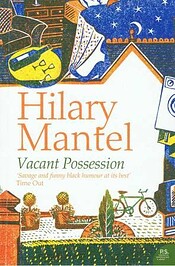
It wasn’t until I read the “About the Author” section at the end of the book that I realised this was a sequel of sorts to Mantel’s previous novel Every Day is Mother’s Day. Not that it matters as this was written in a way that doesn’t require knowledge of the earlier book.

It begins with a one page vignette focusing on the existence of Muriel Axon, before switching to the humdrum marriage of Colin and Sylvia Sidney. Sylvia is a depressed housewife immersing herself in good works and with a yen for the local vicar. On marriage Sylvia is of the opinion that “After twenty years you can’t expect passion. It’s enough if you’re barely civil.”

Years earlier Colin had had an affair with a young social worker called Isabel Field which had more or less ended by the time he was caught up in a bizarre situation where he saw her trapped in an upstairs room and ran to her rescue. One of the occupants was found dead and the other her daughter was more than a little strange.

It turns out that that daughter was Muriel Axon, who has spent the years in between in a mental institution and is now prone to using disguises. The Sydneys moved into the old Axon house and Muriel, in the guise of Lizzie Blank, is now their cleaner.

Further complications arise when Suzanne Sydney, the eldest daughter, returns from University pregnant with no wish to abort the baby and the belief that the father wants a divorce and to marry her.

I know it is the author’s job to represent the world, and that she must do so with a small cast of characters. But it strains credulity more than a little that this father, Jim Ryan, is the husband of Isabel Field and that her father is the dirty old man in the care home where Muriel, in another disguise, is a cleaner, but has an even closer connection with Muriel’s backstory.

The cover blurb describes this as “Savage and funny black humour at its best.” There is certainly darkness at the centre of it all, Muriel’s young life was constrained, Gothic even, and the ending appears bleak; but the humour is hard to find, except perhaps in the quotidian banalities of the Sidneys’ marriage or the doings of the younger Sydneys.

Yet Mantel knows how to weave a story and creates memorable characters. Vacant Possession is no Wolf Hall (nor its sequels) but is an intriguing read just the same.


Pedant’s corner:- “it’s worse that I thought” (worse than,) “she did use to give her some funny looks” (did used to,) whinging (I prefer whingeing,) bye-and-bye (by and by,) “haled him out of bed” (hauled him,) shrunk (shrank,) a missing comma before a piece of direct speech.

Reelin’ in the Years 229: Gaudete. RIP Bob Johnson

I saw in the Guardian last week that Bob Johnson of the folk-rock band Steeleye Span had died.

This track of theirs – the band’s first UK hit – seemed appropriate for the time of year; doubly so since it was Johnson who brought the song to the band. It was the first UK hit to be sung entirely in Latin and one of only a handful of a capella hits.

Steeleye Span: Gaudete

Robert (Bob) Johnson: 18/3/1944 – 15/12/2023. So it goes.

Dumbarton 4-4 Clyde

SPFL Tier 4, the Rock, 23/12/23.

I was at this but haven’t got round to writing about it since I had a big birthday at the weekend and there was of course Christmas.

Clyde must have won the toss as they chose to change ends – no doubt to utilise the wind. It and the driving rain were atrocious throughout.

We started OK but soon fell out of it as Clyde were aided by the conditions. Harry Broun, in goal due to Brett Long’s long-term injury, had to face a one-on-one early on and manged to put the attacker off enough for the shot to go past the post.  Then we were awarded a penalty though no-one near where I was sitting had a clue what for. Handball most likely. Tony Wallace converted.

Harry Broun stood up to another one-on-one, blocking the shot. Our goal was leading a charmed life through a series of corners where the ball was being driven towards the goal by the wind but the equaliser came from an attacked cutting inside and hitting a shot from outside the box. Maybe Broun was unsighted but it looked potentially savable; but the shot shild never have been allowed.

We took the lead again when an Aron Lynas cross was deflected and looped over the keeper. But it didn’t last. Once again an attacker was allowed to cut towards goal and the despairing lunge caught his leg. Penalty to Clyde. 2-2.

I was having kittens every time they went up the park and especially at corners. The ball was somehow scrambled away several times. I was glad to get to half-time still level.

The second half was different. We basically controlled it without ever threatening their goal much. Sub Ryan Wallace livened things up a bit though and scored with a header from a cross.

A stramash from a corner led to Aron Lynas hitting the bar and then heading in our fourth.

That ought to have been it. 4-2 up and with the wind in our favour there ought to have been no way back for Clyde. But one of our party’s number then fatally said, “I wonder when was the last time we won 4-2 two games in  a row.” I pointed out there was still time, but that was because I was hoping for a fifth.

That didn’t happen. Their subs up front made a difference. Had we not had a scratch defence (a regular centre half plus a right back out and our usual left back shuffled to centre back for the game meant we missed our normal drive from the full back positions) then we might have coped. As it was their lad got free and fairly blasted the ball through Harry Broun. The strike was so ferocious and the conditions so poor but it was still a surprise he could have scored from the angle he had.

Clyde then sensed the draw and threw everything forward. Again our normal defence might have stopped their third equaliser. By that time it seemed almost inevitable they would score but it was still a poor one to lose.

That was a chance to catch Peterhead, who lost at home, and keep pace with Stenhousemuir spurned. The league is most likely gone now, even with just over half the season to go.

Commonwealth War Graves at Kinloss Abbey

Kinloss ws the site of an RAF base from 1939 onwards. In 2012 the RAF moved out and the site became a barracks for the Army.

Part of the Kinloss Abbey grounds became a burial ground for war dead. There was already a grave there of a Great War casualty (Lieutenant Percy Strickland, HMS Dublin, 31/5/1916, aged 27.) The remainder are RAF, RCAF, RAAF or RNZAF casualties from World War 2.

There are in total 73 war graves at the site.

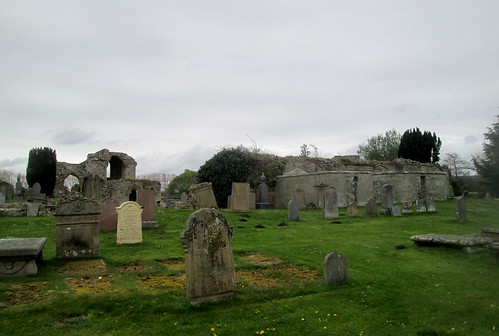
Kinloss Abbey ruins and some of the war graves:-

War Graves and Ruins of Kinloss Abbey

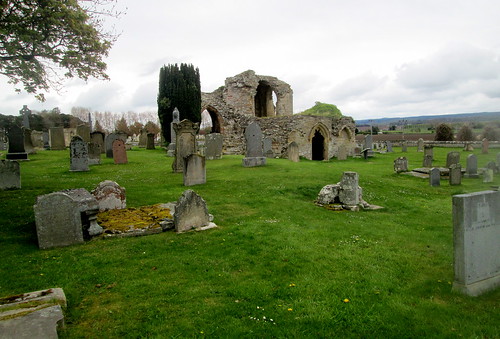
Since there are more than thirty graves the site has a Cross of Sacrifice:-

Kinloss Abbey Ruins, War Graves, Cross of Sacrifice

Reverse view:-

Kinloss Abbey and War Graves

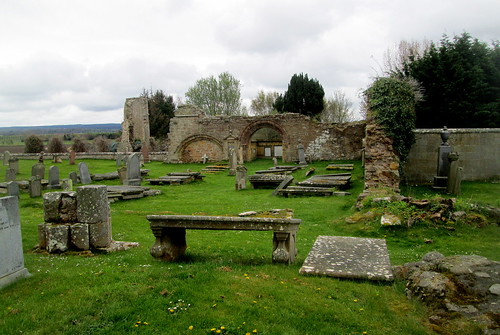
Another set of war graves lies to the right of the above photo; seen here from the Abbey ruin above:-

War Graves at Kinloss Abbey

Reverse view:-

War Graves at Kinloss Abbey

Best of 2023

These are in order of reading; 18 in total, 9 by women, 10 by men, 8 by Scots (italicised,) 4 translations, 1 SF/Fantasy. The links are to the reviews on here:-

Paradise Reclaimed by Halldór Laxness 

The Women of Troy by Pat Barker 

For the Good Times by David Keenan

The Infinities by John Banville

Wild Geese by Nan Shepherd  

Paper Cup by Karen Campbell

A Would-Be Saint by Robin Jenkins 

Master of the Crossroads by Madison Smartt Bell 

Beethoven’s Assassins by Andrew Crumey  (my review was published in ParSec 8 and will appear here in due course.)     

The Marriage Portrait by Maggie O’Farrell 

The Liar’s Dictionary by Eley Williams

Fishnet by Kirstin Innes 

The Gaze by Elif Shafak

Dancing Lessons for the Advanced in Age by Bohumil Hrabal

Utopia Avenue by David Mitchell 

O Caledonia by Elspeth Barker 

Cybele, with Bluebonnets by Charles L Harness

Of Love and Other Demons by Gabriel García Márquez

My present read (Luka and the Fire of Life by Salman Rushdie) may be an addition to this list (but then again it may not.)

Kinloss Abbey

Kinloss Abbey was the largest Cistercian Monastery in the north of Scotland. Its ruins lie about three miles east of Forres.

Information board:-

Information Board, Kinloss Abbey

Ruins from entrance:-

Ruins of Part of Kinloss Abbey

Kinloss Abbey Ruins

View to the right from above:-

Ruins of Part of Kinloss Abbey

Tower towards  left of picture above:-

Ruins, Kinloss Abbey

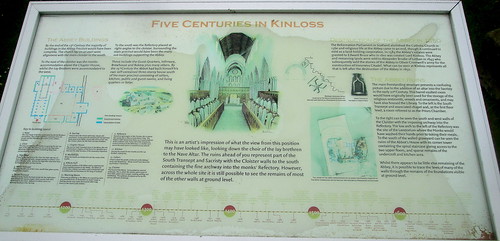
Abbey History:-

Kinloss Abbey Information

Tull at Christmas: Weathercock

Originally on the album Heavy Horses (1978) this was later included on The Jethro Tull Christmas Album (2003.)

Jethro Tull: Weathercock

Permafrost by Alastair Reynolds

Tor.com, 2019, 172 p.

Reynolds can be relied upon to give us good, solid well-written SF. This is a departure from his usual galaxy-spanning Space Opera epics though; a tale of environmental catastrophe and time travel.

Permafrost is the name of the time travel project, whose base is located in Kogalym in the far north of Russia. In 2080, after an event known as the Scouring has removed nearly all life on Earth starting with insects and radiating outwards from there, Valentina Lidova, an 80 year-old woman is recruited into the project seemingly because she is the daughter of mathematician Luba Lidova who worked on the mathematics of paradoxes. It is explained to Valentina that time has a block structure, more like a crystal lattice than a river, circuit diagram or tree. But the lattice isn’t static. It can adjust itself or be adjusted.

The project is regulated by four AIs named The Brothers, each after one of those in the Karamazov novel. The time travel mechanism involves twinned electrons called Luba pairs one of which is sent back into the brain of an experimental subject in the past.

The choice of Valentina as the first chrononaut (though Reynolds eschews this term) surprises the rest of the trainees as she joined the most recently. She is sent into the mind of Tatiana Dinova, a woman undergoing brain scans in 2028.

Complications ensue when Valentina discovers Tatiana is able to communicate with her and when others of the trainees sent to an earlier time begin to interact with her. It seems that even further in the future than 2080 efforts are being made to disrupt their mission and their controllers have become desperate and taken risks.

The story then settles down into what are in essence two chases, one in 2028 to secure the caching of a sample of seeds for use in 2080 and one in 2080 to obviate interference from the further future.

This is excellent, well-constructed SF.

Pedant’s corner:- “There were flaws in it imperfections,  impurities and stress points.” (There were flaws in it; imperfections,) “the thunderclap arriving after a lighting flash” (lightning flash,) focussing (focusing.) “Cho had even showed me” (shown me.)

Something Changed 75: Sugar Coated Iceberg

I haven’t posted a Lightning Seeds track for a while.

So here’s a no. 12 from 1997.

Lightning Seeds: Sugar Coated Iceberg

free hit counter script