Archives » Poetry

The Keelie Hawk by Kathleen Jamie

Poems in Scots. Picador, 2024, 124 p, including 4 p Afterword

In her afterword, Jamie, a former Scottish Makar, says these 43 poems are her effort at a literary, lyrical Scots. The poems are mostly quite short (none strays over more than three, sparsely covered, pages) but pack a punch. Each is provided with a translation into English on the lower part of the even numbered pages opposite them. Those English versions tend to seem insipid when set beside the more vigorous originals. Jamie thinks that has something to do with the vowel sounds. For myself I think Scots, as a language – which it still is, however neglected since its heyday as one of the great languages of mediæval Europe – tends to be more earthy, rooted as it was in the land. Also, its consonants are more to the fore.

Four of the works here are Scots versions of poems by others, two by Friedrich Hölderlin (tailored from the English translations of Michael Hamburger) and two by Uyghur writer Chemengül Awut (now sadly disappeared into a re-education camp) translated into English by Munawwar Abdulla. Jamie has adapted Hölderlin poems before.

Jamie had initially envisaged this publication as a pamphlet but her editor at Picador saw no reason why a major London publishing house shouldn’t publish a whole book of poems in Scots, so she “scrievit some mair.”

I’m glad she did. They’re worth reading.

Pedant’s corner:- No entries

Umbilical by Teika Marija Smits

NewCon Press, 2023, 228 p.  Reviewed for ParSec 9.
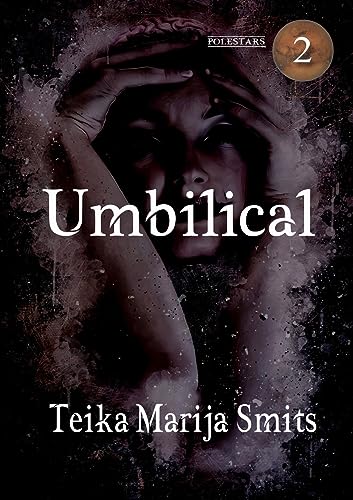
This is the author’s first collection of stories, twenty-one in all, plus one poem. Sixteen of them were culled from appearances in a variety of outlets over the past ten years, five are making their first appearance in print. The contents range in genre over SF, fantasy, myth and horror, with stories sometimes crossing over their borders.

In general, literature deals largely with the themes of love, sex and death. Science Fiction tends to be more restrictive (love for example tends to be bypassed and sex for the most part avoided) but its signature feature is in making its metaphors literal. (The outstanding example of that here is the title story, about the bond between a daughter and her mother.) Fantasy, myth and horror act more as warnings and as stripped-down guides to human relationships.

In the first few stories here the theme of death seems to be a connecting thread but this does not then extend to the collection as a whole.

The poem, Icarus Dreams, opens proceedings and partly sets the tone by inviting Icarus to heed his father and rewrite his story. Smits is more than adequately equipped to provide new shapes to old tales. To that end there are herein updated treatments riffing on the Blackbeard and Theseus stories, while the Baba Yaga of Russian folklore meets an AI.

But the author has further strings to her bow. Elsewhere, moles on the skin are a marker of long, perhaps immortal, life, and carry the threat of incarceration to unravel their genetic secrets. We meet an AI repairman whose encounter with his charge becomes reminiscent of 2001: A Space Odyssey. One story (not narrated by Dr Watson) features Sherlock Holmes, but only in a bystanding part as he asks his psychic investigator – and female – cousin to help him. We have tales where a psychological decline follows the break-up of a relationship which had settled into routine, the Green Man appears to rescue a ravaged future Britain, a woman inherits a bookshop with an unusual kind of ghost, AI/human hybrids question each other over their origins – and the nature of God. One story centres on the reliving of bottled memories. There is an African inspired SF/fantasy cross-over. A woman falls in love with her witness protection AI android bodyguard, another tells of the lengths she went to in an attempt to get pregnant, a brother and sister hatch a plot to rescue their twin siblings from VR addiction in a warehouse, a female painter who sells pictures under her brother’s name finds she cannot hide her expertise from J M W Turner (with whom she shares the same reverence for sunlight,) two people celebrate their involvement with the commercial start-up of nuclear fusion at Sellafield, a woman on the point of death remembers incidents from her life while subjectively traversing a fantastical purgatorial maze.

Their telling requires a comprehensive array of authorial registers and Smits handles them all well, with very few infelicities. She is a talent to watch.

Pedant’s corner:- Theseus’ (x 2, Theseus’s,) focussing (x 2, focusing,) a missing comma before a piece of direct speech,  Holmes’ (x 2, Holmes’s, which appeared later,) shrunk (shrank,) focussed (x 3, focused,) sunk (sank,) Geena Davis’ (Davis’s,) “legs akimbo” (I doubt it. It’s extremely difficult to put your feet on your hips,) “and laid down again” (lay down again,) data used as a singular noun (that would be datum, data is plural,) Jesus’ (Jesus’s,) “the settings on each gamer’s capsule isn’t” (the settings … aren’t,)  “‘it’s okay to chop down all the forests and poison the soil.’?” (has that question mark in the wrong place. It ought to be where the full stop is,) “him and Kel had looked to the stars” (he and Kel,) James’ (x 3, James’s; annoyingly employed a few pages later.) “A trail of soapy bubbles stream after his fleeing form” (a trail streams.) Plus points, though, for using maw correctly as a stomach.
 

Love and Zen in the Outer Hebrides by Kevin MacNeil 

Canongate, 1998, 77 p.

MacNeil first published works of poetry before going on to write some of the most idiosyncratic novels to come out of Scotland this century – or indeed the past many decades. (See The Stornoway Way, A Method Actor’s Guide to Jekyll and Hyde and The Brilliant and Forever.) This was his first book of poems and comprises IV Parts, the first of which, Learning the Art, consists mostly of very short stories which are poem-like in their economy. A couple are written in a form of English which approximates the Western Isles dialect. (The author is from Lewis.) The remainder of the book contains poems – some as terse as haiku – written in English or in Gaelic with English translations appended.
Pedant’s corner:- “ ‘We’ll go hack to the pub,’” (back,) “the lay of the land” (it wasn’t a song so ‘lie of the land’.)

Reading Scotland 2023

Thirty four Scottish books read this year; equally divided between female and male authors. Fiction, Poetry, Science Fiction, Fantasy, Non-fiction, Football. I have linked to my reviews if they have appeared here.

No Dominion  by Louise Welsh

Hieroglyphics by Anne Donovan

For the Good Times by David Keenan

Wild Geese by Nan Shepherd

Paper Cup by Karen Campbell

The Christmas Truce by Carol Ann Duffy

A Would-Be Saint by Robin Jenkins

Something Like Happy by John Burnside

The Mandelbaum Gate by Muriel Spark

The Dark Remains by William McIlvanney and Ian Rankin

Scotland’s Lost Clubs by Jeff Webb

The Oath Takers by Naomi Mitchison

Vinland by George Mckay Brown

Beethoven’s Assassins by Andrew Crumey

Chimera by Alice Thompson

Hester by Mrs Oliphant

Antimacassar City by Guy McCrone

The Marriage Portrait by Maggie O’Farrell

The Philistines by Guy McCrone

Fishnet by Kirstin Innes

A Gift From Nessus by William McIlvanney

Sea-Green Ribbons by Naomi Mitchison

Companion Piece by Ali Smith

Night Boat by Alan Spence

Europa Deep by Gary Gibson

Murder in the Merchant City by Angus McAllister

O Caledonia by Elspeth Barker

The Puritans by Guy McCrone

King Hereafter by Dorothy Dunnett

Escape From Hell by Hal Duncan

The Pearl-fishers by Robin Jenkins

The Bachelors by Muriel Spark

Klaus by Allan Massie

Early in Orcadia by Naomi Mitchison


The Christmas Truce by Carol Ann Duffy

Illustrated by David Roberts Picador, 2011, 40 p.

This is a not very long poem about the celebrated Christmas Truce of 1914 made up into a self-contained book with the use of illustrations.

As an introduction to the subject for younger readers it would serve very well.

It tells the story in short lines with the occasional rhyme deployed for emphasis.

The illustrations are flat and cartoon-like but convey the essence admirably.

Reading Scotland 2022

These are the Scottish books I read this year, in order of reading. 14 by men, 13 by women. Two were SF and one had a fantasy element. Two were non-fiction and another contained poetry.

Death is a Welcome Guest by Louise Welsh
Shuggie Bain by Douglas Stuart
The Comforters by Muriel Spark
Red, Cherry Red by Jackie Kay
Braking Day by Adam Oyebanji
Rose Nicolson by Andrew Greig
The Gourlay Girls by Margaret Thomson Davis
A Summer of Drowning by John Burnside
The Perpetual Curate by Mrs Oliphant
The Thistle and the Grail by Robin Jenkins
The Big Music by Kirsty Gunn
The Young Team by Graeme Armstrong
At the Loch of the Green Corrie by Andrew Greig
Something Like Breathing by Angela Readman
To Be Continued by James Robertson
Lobsters on the Agenda by Naomi Mitchison
Morning Tide by Neil M Gunn
The Good Times by James Kelman
Phoebe Junior by Mrs Oliphant
Robinson by Muriel Spark
Midwinter by John Buchan
Luckenbooth by Jenni Fagan
Clydesiders at War by Margaret Thomson Davis
Scottish Ghost Stories edited by James Robertson
Ancestral Machines by Michael Cobley
Islanders by Margaret Elphinstone
Billionaires’ Banquet by Ron Butlin

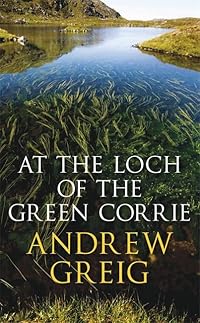
At the Loch of the Green Corrie by Andrew Greig

Quercus, 2011, 324 p, including i p Reading and ii p Acknowledgements.

This non-fiction book is Grieg’s tribute to Norman MacCaig, one of that generation of Scottish poets which included Christopher Murray Grieve (Hugh McDiarmid,) Sidney Goodsir Smith, Sorley MacLean and Edwin Morgan, to whom Greig as an aspiring poet himself looked up. Not long before MacCaig’s death he laid on Greig a request that he catch for him a fish at the loch of the green corrie (which isn’t the loch’s real name) in MacCaig’s beloved Assynt in the western Highlands. But it is much more than a mere tribute. It is an appreciation of MacCaig’s poetry, a voyage into Greig’s past and present relationhips, and into the Deep Time which geologist James Hutton divined must be the case from his studies of the native rocks of that area and the changes which had been wrought on them, a threnody to the landscape of Assynt (and Scotland as whole,) a paean to friendship, a meditation on the usefulness – or otherwise – of literature, a celebration of what it means to be human. Anyone familiar with Greig’s fiction will recognise the affinities with it that this book displays, the same sympathetic observation of people and customs, the same sense of a writer exposing the human soul.

That disposition makes itself felt from time to time, “Most team games have their roots in warfare or fertility rituals – shinty dispenses with the fertility part,” a consideration of Deep Time with the present moment leads to a comparison with bifocal lenses, “the close-up and the long distance are true, while the middle distance is fuzzy and befuddled. Unfortunately that is where we live most of the time,” a reference to “the curious indifference of our English friends and partners to being English” indicates the vagaries of nationality. The culture of the western Highlands is illuminated via the thought that drinking is sacramental as long as it’s done in company, “what possible pleasure could there be in drinking alone?” Grieg touches on the importance of scale and size in making the Scottish landscape so alluring. The hills of Wales and the Lake and Peak districts of England are somewhat tame in comparison, “domestic,” while the Himalayas are too austere and grand. (As well as fishing, composing poetry and writing fiction Greig has mountaineering as one of his pastimes. How does he find the time to write?)

But it is literature that is a continual spur – and disappointment, a poetical apprehension of failure. “The word is an arrow that will always miss its mark. ‘The curse of literacy’.”

Pedant’s corner:- “A phantom pantheon of poets come trooping up these winding stairs” (a phantom pantheon comes,) “the short, direct terms that Low Dutch imported into English to such forceful effect” (surely Low Dutch exported these and English imported them?) missing commas before pieces of direct speech, “two core principals” (principles makes more sense,) sprung (sprang,) “born off downstream” (borne off,) “ropey weed” (weed like rope, used, I suppose, to distinguish from ‘ropy’ weed, weed that’s not good at being weed,) “Johnson‘s Baby Powder” (Johnson’s.)

Bust of Mikhail Lermontov, Earlston

Of all the things I expected to see in Earlston, a bust of Mikhail Lermontov, a Russian poet second only to Pushkin, was not one of them. However, Lermontov was descended from George Learmonth who emigrated to Russia from Earlston and may himself have been descended from Thomas the Rhymer.

In 2015 a bust of Lermontov was unveiled in Earlston:-

Bust of Mikhail Lermontov, Earlston

Information board:-

Mikhail Lermontov Information Board, Earlston</center.

Red, Cherry Red by Jackie Kay

Poems by Jackie Kay illustrated by Rob Ryan Bloomsbury Children’s Books, 2019, 94 p. First published 2009.

Quite why this volume of poetry comes under the imprint of a children’s publisher is slightly mystifying. I would say that the poems it contains are not particularly restricted to a child audience. Lines like, “Time is a loop stitch. I knit to keep death away,” would certainly indicate as much. However, grandmothers and knitting are recurrent subjects.

Some of the more memorable poems came towards the end of the book.

Great-Grandmother’s Lament contrasts the present-day childhood engagement with screens to what occurred in the past. Shetland is a love poem to that archipelago and includes sly allusions to lines from popular songs. Like its title, The Nine Lives of the Cat Mandu riffs, punningly or otherwise, on the word ‘cat’ or proverbs/phrases involving either it or the three letters it contains in their order. First and Foremost does something similar for ‘first’. Double Trouble uses opposites to make its point. Sour Sixteen embodies the passage of a child’s life to that age in terms of how quickly those years pass for a parent. First X compares voting for the first time, with thanks to the suffragettes, to a first kiss, x.

51st Highland Division Memorial, Perth

Also at the south end of Perth’s North Inch is a memorial to the 51st Highland Division. It takes the form of a bagpiper being thanked by a young girl.

51st Highland Division Memorial, Perth

Dedication:-

Dedication, 51st Highland Division Memorial, Perth

To either side of the memorial are two cairns with inset plaques.

El Alamein 50th anniversary plaque:-

51st Highland Division Memorial, Perth

51st Highland Division final reunion commemoration. Plaque donated by the people of Genner, Holland:-

Plaque, 51st Highland Division Memorial, Perth

On the memorial itself are several additional reliefs.

51st Highland Division Battle Honours:-

Battle Honours, 51st Highland Division Memorial

Remembrance of our liberators:-

51st Highland Division Memorial Remembrance Plaque

Poem on the Memorial (by Andrew McGeever):-

Poem on 51st Highland Division Memorial, Perth

Friezes of military scenes:-

Frieze, 51st Highland Division Memorial, Perth

51st Highland Division Memorial Frieze, Perth

free hit counter script