Archives » 2019 » May

I’ve Been Away

I’ve had a holiday sans internet for the past fortnight, cruising the Baltic – but I had scheduled various posts in the interim which seem to have gone on alright.

I’m back now, but I’m shattered.

I’ll get round to posting more soon.

Live It Up 54: Garden Party

This piece of rather heavy-handed social commentary was, in 1983, the third choice of single for Mariilion.

As a result this version does not use the word that rhymes with rucking in the two words that follow it, presumably to avoid being banned and to safeguard airplay. Live versions of the track have no such inhibitions.

Marillion: Garden Party

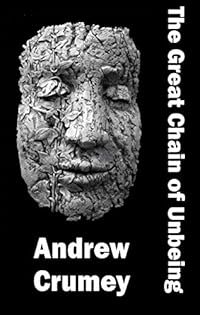
The Great Chain of Unbeing by Andrew Crumey

Dedalus, 2019, 335 p. Reviewed for Interzone 275, May-Jun 2018.

 The Great Chain of Unbeing cover

In his previous eight novels Crumey has constructed a strange niche for himself from his considerations of music, parallel worlds, imagined universes, the rendering of scientific concepts thought to be abstruse into accessible fictional form, all peopled with credible characters experiencing real human dilemmas. He is not beyond literary playfulness. Here we start with “The Unbeginning”, finish with “The Unending” and “The Introduction” comes as part three.

His latest novel is unconventional even in Crumey’s terms. It’s presented as a series of tales, which at first sight appear to have only the most tenuous of links between them (if any at all) yet on closer examination yield foreshadowings and echoes, subtle resonances – both with themselves and the rest of his oeuvre. We have a scene from the life of a man genetically blind due to his father’s exposure to H-bomb tests, a tale of mistaken identity on the international conference scene, an imagined interview, the thoughts of a lecturer undergoing a CT scan, how silk worms came to Europe, a man suspecting his wife of an affair, a fragment from a life of Beethoven, a young woman visiting her father on a Greek island after an abortion, the consciousness of a concert pianist who comes on like a hit man, the spying activities around the military secret that was early FM radio, a postman’s reminiscences, a lecture given by an insect, the story of The Burrows (a vast tunnelling project the length and breadth of Scotland) and the underground habitat which results, the invention of the word-camera which captures a scene and renders it in text, a woman bumping into someone she thought was dead (so reversing the previous collapse of her wave function,) a philosophical discussion of a Moslowski-Carlson machine to replicate Earth light years away, extracts from a truly awful SF novel inhabiting just that universe, a metaphor about the dangers of seeking fire.

They’re all beautifully written, pitch perfect to the milieux portrayed but also interspersed with a sly humour. “‘Bradley’s a real philosopher, incidentally, by which I mean a dead one,’” and in The Burrows section, “Some international medical authorities insisted that being starved of sunlight would cause long-term health problems but the Scots had been managing like that for centuries and it hadn’t done them any harm,” with ice-cream having a surprisingly prominent presence.

The text comments on itself, “A conventional novel or story collection is a sequence of parts in some predetermined order. We could of course read them any way we like,” and provides “layers of fiction”. Characters note variously a tendency to inconsistency, that imitation is the most fundamental human impulse, “‘We describe everything in terms of its similarity or difference compared to something else.’” That things aren’t what they seem or are described as being different to what they are. There are thoughts on a “past that wasn’t there,” “spurious influences”, “the night she didn’t have, with him instead of Matt. There is only now, she thought. Nothing else has any existence.” The five-second thrill of a life that never happened. The territory between being and non-being. One character says, “‘what neither of us can imagine is a universe without space and time,’” yet elsewhere we have, “‘Time is an appearance not a reality.’”

Despite “the interconnections by which the world is made a coherent whole,” even the most straightforward mainstream passages are saturated with subtle indeterminacies which it would be easy to overlook. Statements like, “‘You concentrate on that object…. visualise it as clearly as you can. Until it becomes no longer itself,’” or, “‘Alfredo Galli wanted to create a matrix of compositional elements through which numerous paths could be conceived, each a possible book with its own multiplicity of readings,’” and “History is an infinite superposition,” but “‘The universe is a circle…. A great chain of living and dying, giving and taking. Every moment is a link.’” “‘There is only one not many. No Difference, only Alike.’” Yet, “all literary style is really a kind of selection, a form of negation,” and “any path through the matrix of narrative possibilities should be a story not only scandalously disjointed but also inherently inconsistent: an appearance betraying its own unreality.”

What we have here is perhaps a literary expression of sonata form – “in the development the tunes get mixed up,” but with something to be discovered between the tones yet nevertheless totally accomplished.

The following did not appear in the published review.

Pedant’s corner:- jack-in-the-boxes (just sounds odd to me. But what is a more sensible plural? Jacks-in-the-box? Jacks-in-boxes? Jacks-in-the-boxes?) “The audience were applauding” (the audience was,) “All the burden of his father’s ambitions were lifted” (the burden was lifted,) liquified (liquefied; liquefy was used earlier,) “Ten Downing Street” (usually 10 Downing Street,) “the way his generation speak” (speaks,) Guttenberg (Gutenberg,) “umbilical chord” (that’s a cord,) “Marks and Spencers” (Marks and Spencer’s,) midgie (there is no such thing; it’s a midge,) CO2 (CO2,) a missing quotation mark at the end of a piece of direct speech.
Buzzards

Since we moved to Son of the Rock Acres we have noticed a lot more wild life than in the old house. That’s not surprising. We back onto woodland now.

We did used to be near a park where there were swans and herons as well as geese and gulls of various sorts and – once – a deer seemingly trapped in the fenced-off tennis court.

What we didn’t hear were owls which we did here as soon as we moved into the new house but they seem to have gone quiet.

Three or so years ago we began to notice a buzzard flying about the adjacent estate. I took this – very amateur – video of it in February 2016. (Click on the picture to get to the video.):-

Buzzard

Last year about this time we noticed three of the birds circling almost over the house:-

3 Buzzards

They were making a distinctive cry. (Again, click on picture to get to video):-

Buzzards

Earlier this year one took to perching on a young tree just over the back fence:-

Buzzard

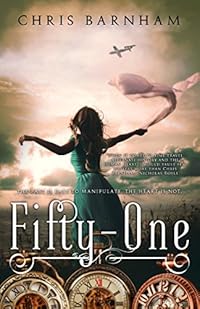
Fifty-One by Chris Barnham

Filles Vertes Publishing, 2018, 317 p. Reviewed for Interzone 275, May-Jun 2018.

 Fifty-One cover

This novel is centred on the explosion of a V-1 Flying Bomb in Lewisham, London, in 1944 where fifty-one people were killed, hence the book’s title. It also features time travel in a way which has unavoidably noticeable echoes of Connie Willis’s “Oxford” series of tales but is in some respects better plotted and certainly not so prone to the narrative deferral to which Willis seems so wedded. Do not be put off by the book’s cover, which admittedly does have a doodlebug on it, but otherwise conveys a misleading impression of the contents. There is an element of romance here and it drives part of the plot but it is by no means the narrative’s main concern.

In the early 2020s experiments at CERN led by one Axel Darnell showed certain particles to be travelling back in time. Soon (too soon?) this discovery was extended into sending back animals then humans and the OffTime organisation was set up not only to explore the past for historical knowledge but also to monitor and amend any changes in the timeline.

There are two main settings, London in 2040 where the offices of OffTime are located and the same city during the 1940s war years. A prologue set in Koblenz in 1954 does rather give the game away about where we might be headed and we return there for the epilogue.

In the main story Jacob Wesson and his partner (in the romantic sense) Hannah Benedict are part of an OffTime team sent to 1941 to thwart an assassination attempt on Churchill. From the off there are odd aspects to this venture, including why it is even necessary, and of course things do not go smoothly. Jacob’s retrieval to 2040 in the middle of an air-raid is interrupted by a mysterious voice. Instead he jumps to 1943. While in 1941 Jacob (literally) bumped into one Amy Jenkins – about whose life we had been told in a previous chapter – then disturbed her wedding preparations. In implementing the “lost retrieval” protocol he meets up again with Amy (widowed in the same air-raid which disrupted the retrieval), and eventually despairing of being brought back to his own time allows himself to form an attraction to her. When contact is finally made Jacob has no option but to return to 2040, leaving Amy behind. But she follows him to the pick-up point and is projected into her future – against the supposed laws of time travel. Jacob and his team are faced with the dilemma of what to do with her and more importantly, what else have they not been told?

If you examine this in any detail it all vanishes in smoke of course. Any alteration of past events scenario is necessarily prone to that, however – unless it restores the time we know. There are certain pointers, though, that the past into which the team is sent is not our past (the “real” past?) and the 2040 shown here always seems contingent.

There are some problematic aspects to the narrative. Barnham has a tendency to tell the reader things rather than show them. The information dumping is not well integrated into the text and at times too crude. There is a bagginess to the prose, a tendency to repetition of things we already know. The necessity to make a time jump naked in order to avoid temporarily debilitating nausea was also a bit of hand-waving overkill. The dynamics of the relationship between Jacob and Hannah are underplayed and, for a supposed grand passion, that between Jacob and Amy is too restrained.

This is a US publication and so accommodations must be made but putting transatlantic speech patterns* into the mouths of 1940s Londoners can only jar with the British reader. Particularly egregious was the substitution of “Mum” by “Mom” in the wording of a famous wartime poster which consequently totally fails to embody the pun necessary for its effect. And that’s a pity as it immediately hauls said reader out of the story.

For all that, fans of a good time travel romp will enjoy this. The plotting is clever (if transparent, so that the twist in the tail came as not entirely a surprise.) Were Barnham to be more confident in his ability – and in the reader’s – eliminate repetition, tighten up on info-dumping and expand on characterisations sometimes too closely linked to plot necessities, his creations would breathe more freely.

The following did not appear in the published review.
Pedant’s corner:- *eg “‘we can go help them’” (go and help them,) “‘will go find’” (go and find.) “Be Like Dad, Keep Mom” (“Keep Mom” makes absolutely no sense. Unlike “keep mum”, which means “don’t say anything”.) “to get back with the program” (not a phraseology appropriate to a 1940s Londoner.)
Otherwise; “probably” appeared twice within the space of one line, “‘Keep out of sight and be ready to get into position right on the dot?’” (isn’t a question so needs no question mark,) “Code One” (really? Nothing more original for an emergency signal?) “The Heinkel bombers” (just “the Heinkels”, bombers is unnecessary,) “and what was doing there” (what was he doing there.) “‘But I finally I have some news’” (drop one of those “I”s ), “or tables, to be precise since she’d pushed” (the comma is misplaced “or tables to be precise, since she’d pushed”.) Jenkins’ (Jenkins’s,) “Amy had never seen a color (sic) photograph” (but coloured cinema films surely?) “the shops on this side of the Thames were closed for the weekend” (for Sunday maybe, but not the whole weekend,) practice (I thought the USian was always practise,) “get ahold” (get a hold,) “within a few days they’d break out and advance south towards Paris” (the D-Day breakout took longer than a few days after D-Day and Paris was east of the landing area, perhaps an indication of this not being “our” past.)

Arrochar and Tarbet War Memorial

Last March we had to take a trip across to the west to Tarbet which is on (freshwater) Loch Lomond side. A narrow stretch of land (and hill) separates it from Arrochar on (sea) Loch Long. There’s only about a mile between them.

The Vikings once dragged their boats over the pass on rollers in order to stravaig up and down Loch Lomond.

The War Memorial lies beside the A 83 a bit nearer to Arrochar than Tarbet but covers both villages.

Arrochar and Tarbet War Memorial

Reverse view:-

<Arrochar and Tarbet War Memorial/center>

The dedication is unusual in using Roman Numerals. “In memory MCMXIV-XVIII. MCMXXXIX-XLV”

Dedication, Arrochar and Tarbet War Memorial

At the base of the memorial this plaque reads, “The villagers of Arrochar and Tarbet Commemorate 50 Years of Peace VE and VJ Days 1995. With gratitude to those who served.”

Arrochar and Tarbet Peace Memorial

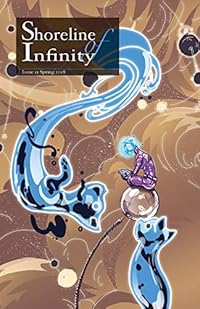
Shoreline of Infinity 11: Spring 2018

The New Curiosity Shop, 134 p.

All-women issue published on International Women’s Day.

 Shoreline of Infinity 11 cover

In Pull up a Log,a Guest Editors Pippa Goldschmidt, Caroline Grebell and Monica Burns note that some potential contributors to this special issue did not want to be cordoned off in such a way, bemoaning the general lack of submissions to SF markets by women writers, but rejoice in the many good submissions received – too many for this one edition, and lament the passing of Ursula Le Guin to whom they dedicate the issue.

Unusually we start with a poem, Speculative Fiction by Katherine McMahon. Later on the non-fiction has S J McGeachy’s “Frankenstein: the Nuts and Bolts of Genre Mash-up”b wherein the essayist feels Mary Shelley’s greatest achievement wasn’t so much the invention of a new genre but in ignoring the constraints of a previous one where in effect women didn’t matter. “Confessions of a Science Fiction She-nerd” by Jonatha Kottler tells us how the author got into SF, there is an interview with Lisanne Normann conducted by Caroline Grebell, “Noise and Sparks: Beyond the Mountains” by Ruth E J Booth finds the author disappointed in the Wonder Woman film’s failure to resonate with her personally while recognising it did with others, and arguing for more diverse stories on the mainstream. Reviews has only books by female authors all reviewed by women. Marija Smitsc finds Helen Segdwick’s The Growing Season slightly flawed, Eris Youngd looks at Lidia Yulnavitch’s Book of Joan,e Shelly Bryant’s collection Launch Pad lacks dynamism made up for by ambition according to Georgina Murray,f Samantha Dolang appreciates N K Jemisin’s The Fifth Season and Lucy Powellh calls The Long Way to a Small Angry Planet by Becky Chambers a tour de force. To that last I can only say, “What?” Multiversei has six poems by three poets, Catherine Edmunds, Paige Smith and Katie Fanthorpe.
As to the fiction:
A Slow Unfurling of Truth1 by Aliette de Bodard is a human tale of betrayal, filial duty and redemption wound round a memory encoding device in a colonially exploited setting.
In Write ME2 by Emily Bowles women’s bodies are being adapted to service the preservation of language in order to maintain male privilege and power.
Heading for the Border3 by Karen Heuler is set in a post-apocalyptic world invaded by aliens who bombed a nuclear reactor. Two women scratch a living selling cosmetics from the back of a truck to help improve the survivors’ morale.
Lith Amenti’s Sacrifice for a Broken Sky4 has a father about to sacrifice his daughter to placate what appears to be a black hole tearing at the fabric of the world. It isn’t, quite, and the story’s resolution doesn’t fit with its beginning.
In Do No Harm5 by Anna Ibbotson the reward for coming in the top two in an online virtual reality cancer eradicating game is to treat patients in the real world. The top guy is very casual about the process.
#No Bad Vibes6 by Katy Lemon is narrated via alien edited audio transcripts of and commentary on posts by an internet influencer. The aliens are using her to promote their message. Misunderstandings are mutual.
Sim Bajwa’s HR Confidential7 is a set of recorded exchanges between an employee and Human Resources along with their accompanying memos. The employee’s complaints relate to an overbearing line manager and the company’s subsequent efforts to improve productivity.
In Pearls That Were His Eyes8 by Jen Downes, a soldier conscripted due to bankruptcy is injured in an attack but the ocean into which he falls, apparently to his death, is riddled with downed military medical bots.

Pedant’s corner:- two of the responses to Caroline Grebell’s Twitter requests, ‘Why do you read SciFi?’ ‘Your favourite female SciFi author?’ are printed twice – and I hate the contraction SciFi. It’s SF. a“there are a plethora of voices” (a plethora is singular, so ‘there is a plethora of voices’.) bH G Wells’ (Wells’s.) c“the brief mention to epigenetics” (mention of.) d‘geocatacysm’ (later in the review it’s ‘geocataclysm’,) ethe book’s cover – illustrated on the page – has The Book of Joan. f“For all intents and purposes” (is this USian? It’s ‘to all intents and purposes’,) sat (sitting,) “out with” (outwith.) gpalette (palate.) hChambers’ (Chambers’s,) Jenks’ (Jenks’s,) Chambers’ (this one wasn’t a possessive, so, Chambers.) iIn the author information; Edmunds’ (Edmunds’s,) “where she feel most at home” (feels.)
1“the back of their hands” (strictly that should be backs,) [“We should “] (that second quote mark is inverted in the text – an opening mark rather than a closing one – no doubt due to the character space between itself and ‘should’,) “Too young for everything that had might have happened off-world to him” (either ‘had’ or ‘might have’, not both,) “had insisted to come” (is not an English construction, ‘had insisted on coming’ is,) “she’d return the capital with one more authentication” (return to the capital,) “the man who pretended himself Simalli Fargeau” (again isn’t an English construction, ‘presented himself as’ or ‘pretended to be’.) 2written in USian, “a few strings savaged from a piano” (salvaged? Though, given the story’s premise savaged makes sense,) spit (the past tense is ‘spat’. I don’t care how USians say or spell it, it just is,) sprung (sprang.) “I on the other had simply gave him back one word at a time” (on the other hand.) 3Written in USian, Ikea (IKEA.) 4Written in USian, “Before, he thought before that he had prepared” (one ‘before’ too many I’d have thought,) “Hedda holds very last of her treasures” (holds the very last.) 5James’ (James’s,) “‘for hells sake’” (hell’s.) 6“individual specie traits” (‘specie’ means ‘in kind’ and hence ‘coins’. It is not the singular of species.) 7“‘For fucks suck’” (suck? And it should be fuck’s.) 8“this damn’ battle” (I fail to see the necessity of the apostrophe.)

Something Changed 21: Chocolate Cake

As I mentioned before Chocolate Cake was the first Crowded House song that I was aware was by the band.

This is a live performance from 1991.

Crowded House: Chocolate Cake

Unusual Shop Windows, Kendal

The building once housed Ruskins but is now occupied by Furness Building Society.

The rectangular windows now look double-glazed. I’m not so sure about the curved ones.

Unusual Shop Windows, Kendal

Kendal War Memorial

Kendal’s War Memorial, a statue of a standing soldier with slung rifle, is set beside the main street.

The inscription reads, “In honour of the men of Kendal who loyally served in THE GREAT WAR and in proud and grateful memory of those named hereon who gave their lives for their country this monument is erected by their fellow townsmen.”

The lower panel here bears World War 2 names:-

Kendal War Memorial

World War 1939-1945:-

Kendal War Memorial World War 2 Names

From south. Great War names:-

Kendal War Memorial from South

World War 2 names. Upper plaque bears one name for the Koran War:-

Kendal War Memorial Plaques

From north. Great War names:-

Kendal War Memorial from North

free hit counter script