Earthlight, 1999, 595 p, plus ii p Map and vi p Dramatis Personae.
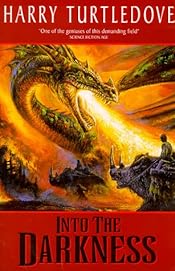 This is the usual Turtledove type of story-telling. An episodic narrative seen from many viewpoints; very similar to, indeed indistinguishable from, his Great War, American Empire and Settling Accounts series as well as his World War and Colonisation books. Only the setting here really differentiates it from those.
Unlike in those though everything is prefaced by a map. This world has seemingly only one major continent, Derlavai, though there is a counterpart to Antarctica to its south and a minor one to its northeast. Only the latter (plus a few scattered islands) is situated north of the planet’s equator. To the east of Derlavai is the Bothnian Ocean. This presumably goes all the way round the world to Derlavai’s west but there it is labelled on the map, Bothian Ocean.
Magic or sorcery (both terms are used,) not technology, is the driving power in this world and there are frequent references to its governing rules of similarity and contagion. Since the discovery of ley lines from which power can be drawn (it’s not clear if this source is purely magical or if it derives from magnetism) travel has tended to follow those lines. Adding to the fantasy factor we have dragons, unicorns, behemoths, leviathans, and sticks firing energy beams. Rather than bombs, artillery fires eggs, also able to be dropped from dragons. Military units can be accompanied by mages. Beyond the range of ley lines magical energy needs to be procured by the sacrifice of human life. (Despite the exotic setting the people described are in effect humans – or as much as anyone in a Turtledove book can be said to be human.)
Dragons of course take the part of aeroplanes here, behemoths are in effect large rhinoceroses adapted and armoured for warfare, leviathans are counterparts of whales and take the role of submarines though with only one crew member. The unicorns are just glorified horses and don’t seem to have exotic uses. In amongst all this make-believe, names like Algarve, Cottbus and Ventspils do tend to break the spell a little.
Sometime in the past Derlavai was dominated by the Kaunian Empire. It was overthrown though, and now its successor realms of Unkerlant, Algarve, Forthweg, Valmiera, Jelgavia, Gyongyos, Lagaos and Kuusamo form various and variously shifting alliances. Each of these are monarchies with social hierarchies embedded in them. Ethnic groupings are frequently referred to in what amounts to racist terms, blonds, redheads etc. Those identified as of Kaunian descent are particularly disdained. There is also a high degree of sexism or outright misogyny in the way female characters are spoken about and treated by the male ones. Very few men here show any kind of respect towards them.
The story revolves around a war of revenge instigated by the Provinces of Algarve and Unkerlant but anyone with a passing interest in the Second World War (not as the back blurb has it, the First World War) or who has read Turtledove’s ‘Settling Accounts’ trilogy can spot resemblances and the tactical and strategic manœuvres to come. There even promises to be, in further instalments, a magical equivalent of the Manhattan Project whose nascent stirrings are given here.
As usual, Turtledove’s “characters” are no more than cyphers, in place merely to push the overall scenario forward or illustrate attitudes. Often we find them saying the same things over again in only slightly different ways. Unlike in Kate Atkinson’s Human Croquet, this is not beyond the purpose of emphasis, with the result it feels like being beaten about the head with words. Moreover, it reads as if parts of the book were written by different authors who did not know what the others had already told us.
There are five (five!) others of these ‘Darkness’ books to go. At least they’re not demanding reading.
Pedant’s corner:-Written in USian. Otherwise; a missing opening quotation mark at a piece of dialogue, “the Twinkings War” (many times; to avoid being misread this would have been better rendered as ‘the Twin Kings War’.) “He brought a chunk of melon … from a vendor” (He bought a chunk,) “that would have burned a hole in man” (in a man,) “‘wouldn’t by any chance by Algarvian ships’” (be Algarvian ships,) “on the other wide” (other side,) “had bee anything but idle” (had been.) “Bembo instead, he said,” (Bembo instead said.) “‘If I had to chose’” (to choose.) “‘You can borrow the book after I’d done with it’” (after I’ve done with it,) “a carried at his beck and call” (a carriage,) “found water with it in the days of the Kaunian Empire. Now people all over Derlavai dowsed for water with it in the days of the Kaunian Empire. Now people all over Derlavai dowsed for water, for metals, for coal,” (The sentence I have italicised is superfluous,) “‘till we shop up on their doorstep’” (till we show up,) a missing comma before a piece of dialogue, “even though a crystal” (even through a crystal,) a missing closing quotation mark, “wracking their brains” (racking,) ley lines/ley-lines (spelling switches between the two.) “‘We shall also put yachts to see’” (‘to sea’ makes more sense even if the next two words were ‘to peer’,) “on to the streets” (onto the streets,) Forgiathwens (Forthwegians.) “Wherever they were, though they had great strength.” (needs a comma after ‘though’,) “let alone to dot on a map” (let alone to a dot,) “to peasants haled before such tribunals” (hauled before,) an extraneous quotation mark at the end of one paragraph. “‘Just get the filth of my blackboard’” (off my blackboard.) “He patted Eforiel, bring the leviathan to a halt” (brought the leviathan to a halt.) “The first trousered soldiers was labeled Valmeria” (were labeled – and of course it’s ‘labelled’ in British English,) “had one of the tables up and spoken” (upped and spoken,) “Raunu shook his head” (the character concerned was Skarnu,) “arguing about for year” (for years,) maw (it’s not a mouth.) “Kaunian wheezed” (the character was Krasta, and she isn’t Kaunian.) “‘to send word or your doings’” (word of your doings,) “the ass’ ear” (x 2, ass’s,) “to find out of” (to find out if,) “squeeze in close behind him” (close beside him,) “in the paly” (in the play,) “the mist might lay on the sea all day” (might lie on the sea.) “They’d overran her” (overrun her.) “He thrashed for a couple of minutes, ever more weakly, they lay still” (then lay still.)
Plus marks for ‘stanch’ referring to a flow.


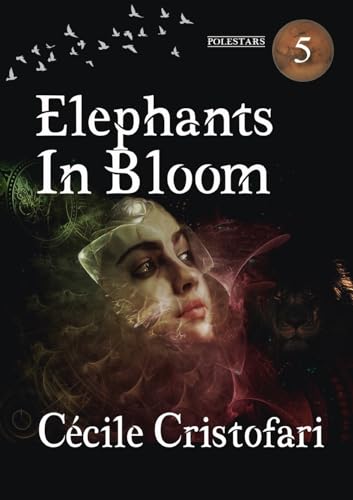 This is the author’s first collection of short stories. Ten of them appeared in a variety of publications over the past five years, eight are original to this book. Each is provided with an authorial afterword. Some of these mention Cristofari’s French background and the latitude she gains as a writer from having two languages to draw on. She casts her net wide, with settings ranging from prehistory through to the present day and beyond. A common thread running through them is ecological collapse and possible recovery from it, in perhaps a sign of recent events some feature characters living in the aftermath of a pandemic.


