Archives » St Andrews

Holy Trinity Church St Andrews, Great War Memorial

The Great War dead of Holy Trinity Church, St Andrews, are commemorated on an internal wall of the church:-

Great War Memorial, Holy Trinity Church, St Andrews

Names:-

Names, Great War Memorial, Holy Trinity Church,St Andrews

Holy Trinity Church, St Andrews, Great War Memorial Names

The notice below implies the names are for the whole of St Andrews not just Holy Trinity’s dead. The town’s War Memorial, situated near the ruins of the Cathedral, I featured here.

Great War Memorial Information, Holy Trinity Church, St Andrews

Holy Trinity Church, St Andrews

Holy Trinity Church is in the centre of St Andrews, in what is a kind of town square, two sides of which are pedestrianised. It is the traditional Parish Church for the town and was where John Knox helped to start the Scottish Reformation.

For some reason it was open when we were in the town in September 2024 so we took the chance to have a look around.

East window:-

East Window, Holy Trinity Church, St Andrews

Door and west window:

West Window, Holy Trinity Church, St Andrews

The pulpit is fairly elaborate and lit up from within:-

Pulpit, Holy Trinity Church, St Andrews

Holy Trinity Church, St Andrews, Pulpit

The wooden ceiling is also worth a look, containing several armorial crests:-

Ceiling, Holy Trinity Church, St Andrews


Borges and Me: an encounter by Jay Parini

Canongate, 2021, 309 p.
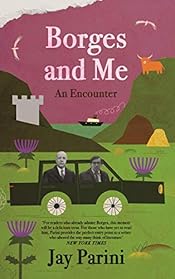
In his youth, as a post-graduate student at St Andrews escaping being drafted to Vietnam and contemplating a thesis on George MacKay Brown (a prospect his tutor deprecated on the grounds that Brown was still alive,) the author, a nervous individual from Scranton, Pennsylvania, with an overbearing mother also to escape, met Argentine writer Jorge Luis Borges, who was on a visit to the town to meet a local academic, Alastair Reid, with whom Parini had formed a friendship. Despite Borges’s fame, Parini had never read a word of his.

The book is constructed, and reads, like a novel, starting with a recounting of the author’s learning of Borges’s death one morning fifteen years, plus a wife and three sons, later, triggering memories of the impact Borges had made on him. Borges and Me goes on to relate the circumstances of that meeting, the car journey through the Highlands with Parini acting as the blind Borges’s eyes it led to, and how it changed him. Thirty-six years on from that, Parini was encouraged to write it all up as a complete narrative. Such a tardy account cannot be in all respects absolutely accurate, some elisions and compressions must occur. Parini’s afterword uses the phrase ‘novelistic memoir’ to characterise it. As a result the book is therefore probably more effective than a pure memoir.

In many ways the title is apposite. Borges and Me is really more about Parini than Borges. His mother on learning of his proposed transatlantic destination said, “‘Are you crazy? Nobody goes to Scotland!’” but relented, saying, in recognition of his avoiding the Army, “‘At least you’ll be safe in Scotland, though Scotch girls have a bad reputation,’” (really?) “‘and the men apparently wear skirts.’”

We hear of Parini’s preoccupations of the time; the unread letters from the draft board he stuffed in a drawer, his learning to use the word ‘rucksack’ for ‘backpack’ and what he describes as the pretentious ‘garden’ for ‘yard’, his struggles connecting with women.

The descriptions of St Andrews are of course very familiar to me. But Alastair Reid’s warning to Parini, contrasted with his experiences in the Pacific War (World War 2 was still a huge presence in so many lives in the 1960s and 70s,) “‘Remember, this isn’t a university, it’s a film set. Don’t be fooled. The lecturers, even the students, are actors. They’re here to attract tourists,’” is only partly true. St Andrews has the golf as well to do that.

An anecdote Reid told him prompted the thought, “Was this the essence of storytelling? Did one simply have to relate a tale in a believable fashion, with the authority of the imagination?” Which is of course a comment on the present enterprise – and of fiction writing in general.

And there are reflections on the Scotland of that age. Reid says, ‘What I don’t like about Scotland is that virtue is taken for achievement. And narrowly defined. We’re always judged in this fucking country…. They don’t even take off their clothes to fuck here.’ This last prompted Reid to suggest special Scottish pyjamas, with flaps in the appropriate place so that the deed could be done as secretively as possible.

(Aside. Actually I read once that the Inuit peoples of the Arctic have clothes that are indeed equipped in such a way; but that would be for purely practical purposes, to avoid the cold, not as a moral imperative.)

As portrayed here Borges was a formidable personality with an intimidating breadth of knowledge – among other things he corrected Parini’s pronunciation of Scone (Palace.) “‘It rhymes with spoon. It’s a Pictish word’” – and also aware of his own mortality. The failings of the body did at one point lead to a comic episode in a B&B in Killiecrankie. The only toilet was off the bedroom of the widowed lady proprietor and Borges had consumed a few pints.

Parini does not pity Borges his blindness as it in some ways freed him. “No wonder he lived so fully in the great room of his mind.”

At one point Borges apparently stated, “‘Israel as a state inspires me. An intractable situation, very sad, unsolvable with Palestine: competing and equally valid claims.’” Intractable indeed.

He also had an old man’s wistfulness for the loves of his youth (and present) Doña Leonor and Maria Kodama, a contrast with the young Parini’s stated lack of experience

The final stop on the car journey, for a pilgrimage across Drumossie Moor, the battlefield of Culloden, has poignant resonances, though I must say the tourist facilities there have changed a lot since that time. Parini describes them as basic indeed. When I revisited a few years ago the visitor centre was as bright and commercial as you would find anywhere.

But Borges’s influence was profound.  “One felt somehow more intelligent, more learned and witty, in his presence. The universe itself felt more pliable and yielding, and so available.”

Borges and Me is a delightful book. An elegant tribute to the great man, a tribute to the uncertainties of youth and the potentially beneficial upshots of unexpected encounters.

Pedant’s corner:- mostly written in USian. “Orkney, a remote island off the north coast of Scotland” (Orkney is an archipelago, not a single island,)  bandanna (x 2, bandana,) “a tony girls’ school in Kent” (??? Tiny? Tory?) “in pigeon Spanish” (pidgin Spanish that would be,) “following the M 90 through the town of Kinross” (the M 90 bypasses Kinross, you have to make a small detour to go through the town,) crenulations (as a castle feature it’s spelt crenellations,) “a lunch of mulligatawny and cheese rolls” (I hope it was mulligatawny soup and cheese rolls; a filling of mulligatawny and cheese does not sound appetising,) “he invariably shined warmth on his characters” (shone warmth,) “chomping at the bit” (it’s champing.) Robbie Makgill (more likely McGill,) “‘We played hooky’” (supposedly said by a Scot. It’s not a phrase we use for truanting, ‘dogging it’, ‘bunking off’, or ‘plunking’, as it was called in my youth.)

Xstabeth by David Keenan

White Rabbit, 2020, 172 p

The book is prefaced with a biography of one David W Keenan who committed suicide in 1995, lists his interest in occult matters, his published pamphlets relating to his home town of St Andrews and that he self-published one novel in his lifetime, Xstabeth by David W Keenan, Illuminated Edition with Commentary, reproduced in full thereafter – including various commentaries (as by diverse academics) interpolated between the narrative chapters.
With this I found myself in Russia again, seemingly in the immediate post-Soviet era, though this time St Peters (not for some reason St Petersburg) rather than Moscow where narrator Aneliya is the daughter of a famous musician, who is friends with one “even famouser,” Jaco, though the story later transfers itself to St Andrews.

Jaco is not the type a respectable girl ought to be getting mixed up with. He drinks and frequents strip clubs. But Aneliya is drawn to him nonetheless, with the consequences we might expect. During one of their encounters, in which Aneliya describes one of Jaco’s sexual kinks, she has the disturbing thought that Jaco had performed similar deeds on her mother.

The mysterious Xstabeth enters the story when an impromptu performance by her father in a club is secretly recorded on an old reel-to-reel recorder by one of the staff who is so besotted by it he determines to release it pseudonymously. The music has a force all to itself which is mesmeric but an acquired taste.

The transition to St Andrews is somewhat surprising but gives Keenan an opportunity to display his knowledge of the town. The street known as The Scores – thought to be named after golfing record cards – is said to be a place to pick up prostitutes (think about it) but little evidence is given for this in the text. Nevertheless, the famous golfer – never actually named but sufficiently accomplished to be tied for the lead in the tournament ongoing in the town – Aneliya has met at the hotel asks her to attempt to ply the trade there. It is only he (the famous golfer, who opines that Russian whores are the most desirable,) who obliges himself though.

Aneliya tells us “Naivety gets me every time. Knowledge can be cynical. It just gets used to undermine things. Sarcasm and irony are horrible. Naivety is the deepest form of belief. It’s closer to reality. To wonder. Plus it has more love in it” and “Writing is always starting from scratch. On the blank sheet. Always beginning again. Even when you think you’ve cracked it.”

David W Keenan’s Xstabeth is a strange but compelling confection. The narrative parts are written in short sentences. Sometimes broken up. Into even shorter ones. The effect is as if we are listening to someone speaking to us in staccato fashion. The addition of the commentaries makes David (without the W) Keenan’s Xstabeth even more idiosyncratic. Like the music it is named for, Xstabeth is a genre of one.

Pedant’s corner:- famouser (why Keenan chose to employ this for some while rather than the more familiar ‘even more famous’ is obscure,)  “the lay of the land” (x 3. It wasn’t a tune. The correct phrase is ‘the lie of the land’,) neck-in-neck (it’s neck and neck,) confectionary (confectionery.)

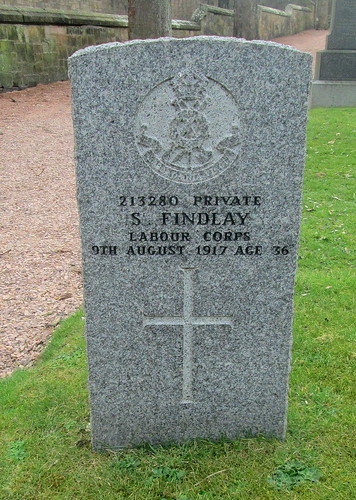
War Grave at St Andrews Cathedral

By the side of St Andrews Cathedral in St Andrews There is a cemetery. In March this year I noticed a Commonwealth War Graves here sign so popped in for a look

There was one war grave, of Great War Private S Findlay, Labour Corps, 9/8/1917, aged 36.

War Grave, St Andrews Cathedral

Aldborough

On the way back up from Peterborough we stopped off at the village of Aldborough in Yorkshire.

There are Roman remains there but the English Heritage site was shut due to Covid restrictions so we couldn’t access them. Maybe another time.

Aldborough is one of those English villages centred round a village green. It’s slightly unusual in that the green still has a maypole.

Aldborough Maypole

Maypole, Aldborough, Yorkshire

The other part of the green has a lovely oak tree on it:-

Oak Tree, village green, Aldborough, Yorkshire

There was the obligatory church (St Andrew’s):-

Aldborough Church, Yorkshire

St Andrew's Church, Aldborough, Yorkshire

Another historical hangover is the presence of stocks:-

Aldborough Stocks, Yorkshire

The memorial you can see beyond the stocks in the photo above was erected on the 50th anniversary of an air crash where due to the skill of the pilot the aeroplane narrowly avoided Aldborough. All seven crew were killed.

Air Crash Memorial, Aldborough

This stone is just along from the memorial. It records where MPs for Aldborough and Boroughbridge were elected in the days before the Great Reform Act of 1832. Was Aldborough a rotten borough?

Aldborough Election Site

Cover Issues

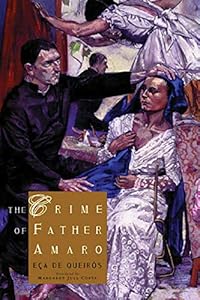
I confess I had never heard of Josa Maria Eça de Queiroz (or José Maria Eça de Queirós) – the full name of the Portuguese author one of whose books I am reading at the moment (see sidebar until I move on to another book) – until earlier this year when we attended an exhibition of the paintings of Portuguese artist Paula Rego at the Modern Two part of the Scottish National Gallery of Modern Art. In the gallery shop my eye was taken by copies of de Queirós’s The Crime of Father Amaro (an alternative title) whose cover (see below, left) incorporated one of Rego’s paintings. I had never read any Portuguese literature so took note of the book, but not so much as to make a purchase there and then as I wanted to find out more about the author first. de Queirós turns out to be one of Portugal’s most respected writers and there are several editions of this book in translation besides the one I bought.

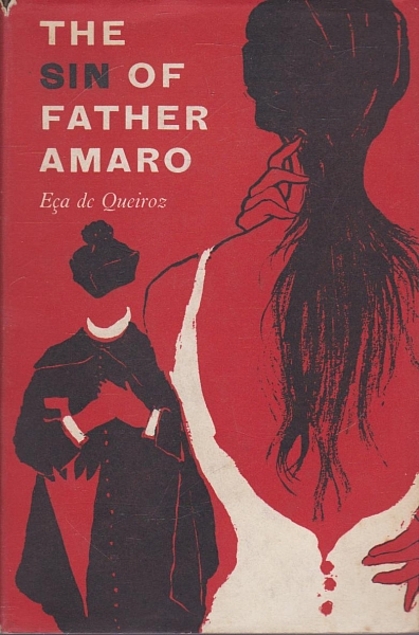
So it was that earlier this year on coming across a copy of The Sin of Father Amaro in my favourite second hand bookshop – Bouquiniste, in St Andrews since you ask – at a bargain price, I could not pass up the chance to sample de Queirós’s work. I must say though, that the covers of most editions do give the game away somewhat as to what the nature of Amaro’s crime – or sin; take your pick – might be. They leave nothing to the imagination. In fact only the Rego cover doesn’t. The others are also more than a little misleading in that the female character they attempt to depict is far from the apparent temptress that especially the right hand one might suggest.

 The Sin of Father Amaro cover
 The Sin of Father Amaro cover

 The Sin of Father Amaro cover

St Andrews Memorial Hall

I came across this Memorial Hall in St Andrews a couple of years ago. I don’t go along that street (St Mary’s Place) much so hadn’t really noticed it before.

The central window block has a wooden frame and panelling with the dedication:-
“1914-1918 Victory 1939-1945
Memorial Hall”

Upper part, St Andrews Memorial Hall

Here’s a photo from further back showing its street aspect and the rather elegant gates. The coloured sign says, “Fife Council Community Services. Victory Memorial Hall St Andrews.”

St Andrews Memorial Hall

Fife Pilgrim Way

A project to resurrect the mediæval Fife Pilgrim Way is now well in hand.

There were two main routes across the county (or kingdom as the locals still refer to it at times,) starting at Culross and North Queensferry and ending up at St Andrews.

The ancient route went through the nearest small town to Son of the Rock Acres, Markinch, the ancient capital of Fife.

There are some hopes the restored route(s) will bring modern day pilgrims (and other tourists) to the town.

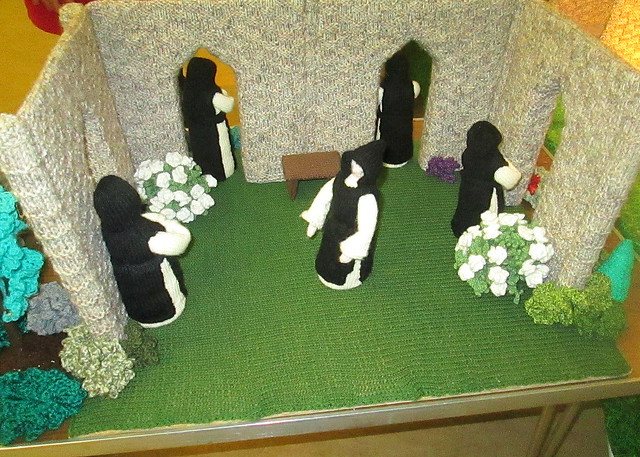
A year or so ago there was an information day about the Pilgrim Way at St Drostan’s church. On display were several representations of monastic and pilgrim life, rendered in knitwear.

Trees and pilgrims:-

Knitted Trees and Pilgrims

Church:-

Knitted Church

Monks:-

Knitted  Monks

Monks’ garden:-

Knitted Garden

Monastery vegetable patch:-

Knitted Vegetable Patch

A Heron, St Andrews, Fife, Scotland

I captured this heron on the bank of the Kinness Burn at St Andrews harbour:-

A Heron, St Andrews, Fife, Scotland

free hit counter script