Archives » Second World War

Lyness Royal Naval Cemetery, Hoy, Orkney (iii)

An unknown sailor of the Great War, HMS Narborough, 12/1/1918:-

A Sailor of the Great War

An unknown sailor from the Royal Oak, sunk by a German submarine, 14/10/1939:-

A Sailor of the 1939-1945 war.

There are civilian burials in the cemetery at Lyness. Whether these deaths were due to enemy action or not is not made clear on the gravestones.

A Merchant Navy Seaman, Ham Fat, fireman, SS Pass of Leny, 14/6/1943:-

Merchant Navy Seaman, Lyness Royal Naval Cemetery

T H Coleman, First Radio Officer, S S Vasna, 17/9/1941, aged 46:-

Merchant Navy Sailor

“A Parsee” and “A Musalman” Sailor:-

A Parsee and A Musalman Sailor

K Ullah, fireman and trimmer, K Ullah, SS Mostyn, 30/1/1941, aged 32:-

K Ullah

The Power by Naomi Alderman

Viking, 2016, 349 p.

 The Power cover

The Power imagines what it would be like, how interactions between the sexes would be affected, how society would be changed, if women developed the ability to administer electric shocks – in much the same way a manta ray can. The premise is a fantastical one but is given a Science-Fictional rationale by positing an area of muscle across the collar bone, called a skein, as a centre for the power and an origin for the mutation in a Second World War chemical agent (Guardian Angel) which protected against gas attacks, which inevitably leaked into the environment.

The story of how this power changes the world is told mainly through four points of view: Allie, who becomes the head of a new religion emphasising God’s female nature by transforming herself into Mother Eve; a London gangster’s daughter called Roxy; Margot Cleary, a US city mayor eager for further political advancement and Tunde who, initially by accident, becomes the journalistic chronicler of events.

There is, of course, a backlash to the new reality, both in the political sphere and in the darker (and perhaps not so hidden) recesses of the internet. One conspiracy theorist called UrbanDox believes that Guardian Angel was leaked deliberately just to do men down.

Yet Alderman’s is no simplistic account. Biblical cadences emphasise the mythical nature of the origins of her future society. Her characters are by and large agreeably nuanced, their actions not entirely predictable but still credible. Roxy is wonderfully realised but I wasn’t entirely convinced by Alderman’s US ones, and wondered whether Saudi Arabian women would throw off sexual inhibitions quite so quickly as one does here. But I suppose in the heady throes of a revolution anything might go and Alderman’s tale implicitly argues that human nature is indivisible, characteristics and behaviours shown by any one individual may or may not be shown by others, irrespective of their sex.

Where I have major reservations is with the framing device, a series of letters supposedly sent five thousand years hence between “Neil” and “Naomi” wrapped around the contents of a manuscript whose title page reads The Power: a historical novel by Neil Adam Armon (the anagram is easily deciphered) and which purports to be an imaginative, speculative, account of how the power originated and precipitated what became known as the Cataclysm. These letters stand on their heads widely held beliefs (in our present) about the proclivities and habits of, and attitudes to, men and women. Alderman’s point in a nutshell, but perhaps a little too heavy-handed. Between each section of the book (which count down from the power’s first appearance to the Cataclysm) are illustrations of little understood artefacts from around the time described in the manuscript. The interpolation into the manuscript of seemingly intact “Archival documents relating to the electrostatic power, its origin, dispersal, and the possibility of a cure” also strains credibility. How could they have survived more or less intact, remaining understandable, when the illustrated artefacts did not? Moreover the manuscript itself is too close to present day speech patterns – especially in the character of Roxy – to make the framing device believable. A five thousand year hence Neil Adam Armon would have got so much of our present wrong that he actually gets right. From this point of view it might have been better just to present the story as speculation rather than an imagined history from the future. This is a very purist position, of course, which argues for every detail of the overall book to be true to its own reality as presented to the reader – and very difficult to bring off. And anyway, SF is always about the present, never the future (or in this case the manuscript’s distant past.) I also doubt whether the inhabitants of such a world would in fact call the historical break a cataclysm but all this is mere quibbling. Though its interpretation of human nature, power and how it is implemented is bleak, The Power is engrossing, well written and with a lot to say about relationships between the sexes.

Pedant’s corner:- “over to her cousins” (cousins’,) “the particulate and debris grow” (particulates and debris?) “the music reaches a crescendo” (no, a crescendo is a rise, not the climax at its end.)

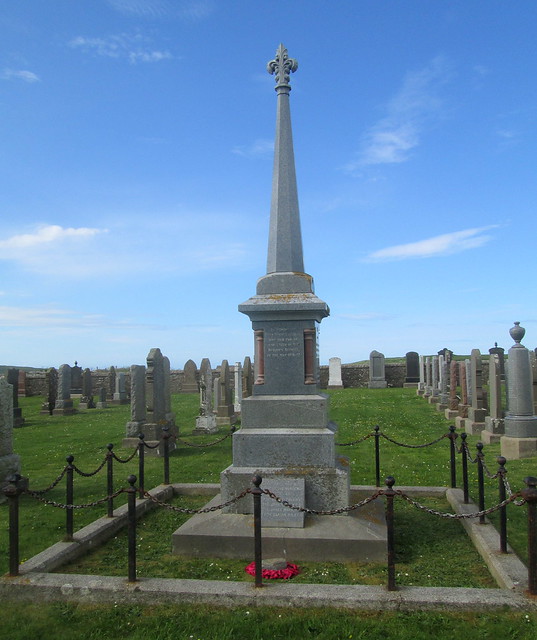
Birsay War Memorial

From Marwick Head we travelled on up the west coast of mainland Orkney (though the road is not actually right by the sea) heading for Birsay which lies towards the northwestern tip.

Before we got there I spotted a War Memorial in what turned out to be Birsay Cemetery.

Birsay War Memorial

The inscription reads, “In memory of those natives of Birsay who died for us and truth in the nation’s service in the war 1914-19.”

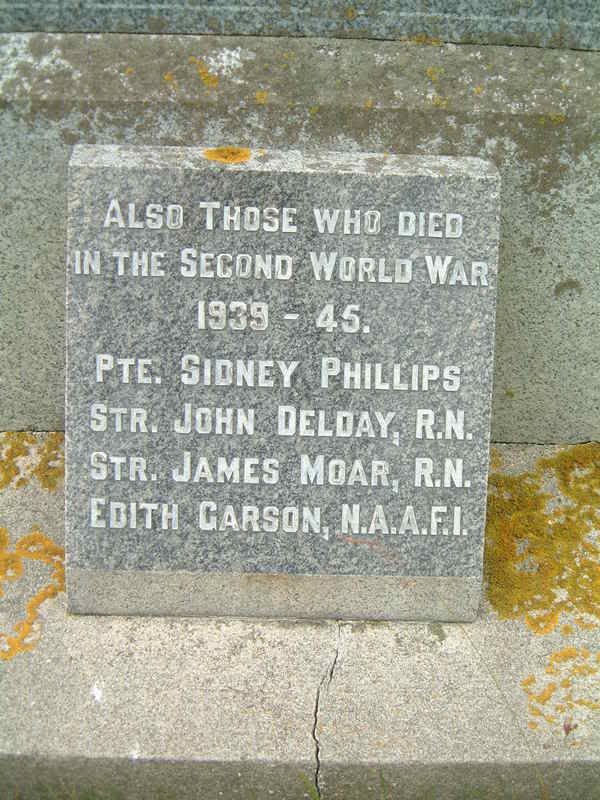
The lower plaque towards the base reads, “Also those who died in the Second World War,” including Edith Carson, NAAFI.

Birsay War Memorial WW2 inscription

The other sides contain plaques for 1916:-
Birsay War Memorial (1916 names)

1917:-
Birsay War Memorial (1917 names)

and 1918:-
Birsay War Memorial (1918 names)

Two graves in the cemetery commemorate Great War deaths.

George Robertson, CEF, killed in action Oct 1916, aged 35:-

Memorial Stone at Birsay

L/Cpl William A D Flett, 5th Seaforth Highlanders, 51st Division, killed in action Cambrai, France, 21/3/1916, aged 21 years:-

Birsay Commemoration Stone

Lyness Royal Naval Cemetery, Hoy, Orkney (i)

Panorama from road:-

Lyness Royal Naval Cemetery, Hoy, Orkney

Entrance and Cross of Sacrifice from road:-
Lyness Royal Naval Cemetery, Hoy, Orkney

Graves (WW2):-
Graves at Lyness Royal Naval Cemetery, Hoy, Orkney

More WW2 graves:-
Graves at Lyness Royal Naval Cemetery, Hoy, Orkney

Johannes Thill. Despite the fact more German sailors and one soldier are buried elsewhere in the cemetery this grave stands in splendid isolation well away from all the others. It can be seen in the background to my photo of the HMS Vanguard Memorial (previous post):-

Johannes Thill, Lyness Royal Naval Cemetery, Hoy

A German Soldier. The other Germans in the cemetery were all sailors:-

A German Soldier, Lyness Royal Naval Cemetery, Hoy

A Norwegian Seaman (Norsk Sjømann) called Ivar Jacobsen, 1941:-

A Norwegian Sailor (Norsk Sjømann)

Crawford

Crawford is a village in South Lanarkshire, Scotland. We passed through on a trip with the good lady’s blog friend, Peggy, last summer.

Its War Memorial is in the form of a Celtic Cross with embossed sword. Its front bears names from the Great War, “In grateful memory of those who gave their lives in the war for civilisation”:-

Crawford War Memorial

On the side are listed names for World War 2, “Brave young men who died for their country 1939-45”:-

Crawford War Memorial Side View

Eyemouth

Eyemouth, in the Scottish Borders Region, just a few miles north of the border and of Berwick, is the town where my mother spent most of her childhood before her family then moved to Dumbarton.

It’s a typical Scottish fishing village/town where a river (the River Eye) flows into the North Sea via a harbour.

I’ve been there several times before, as a child with my mother, and later as an adult but it was many years ago now. When the good lady’s blog friend, Peggy, was here last summer we took the opportunity to visit as she wanted to see it.

I hadn’t remembered this decoish set of windows:-

Art Deco Style in Eyemouth
The statue in front of the shop is of William Spears who in the 19th century led a revolt against the tithes on fish levied by the Church of Scotland.

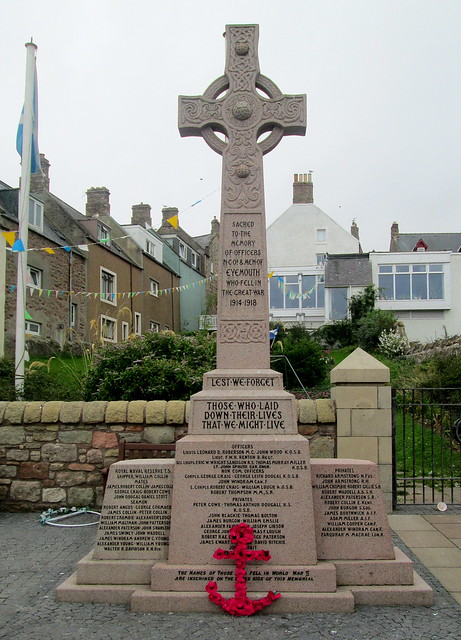
This is the War Memorial, “Sacred to the memory of officers, NCOs and men of Eyemouth who fell in the Great War”:-

Eyemouth War Memorial

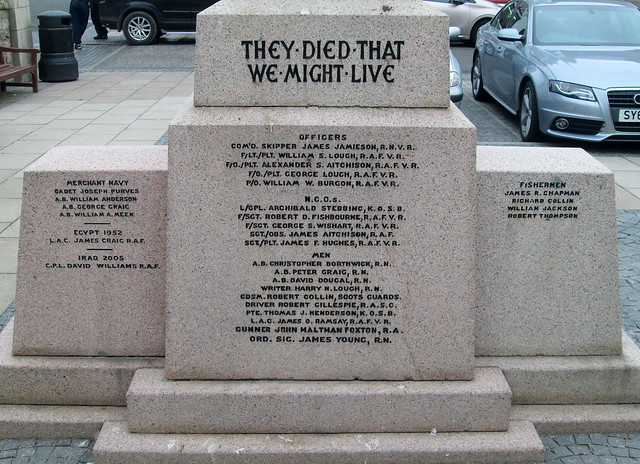
The reverse names the second war’s dead and the column’s inscription reads, “Sacred to the memory of officers, NCOs and men of Eyemouth who gave their lives in the Great War II, 1939-45.” Note also Merchant Navy, Fishermen plus Egypt 1952 and Iraq 2005:-

Eyemouth War Memorial

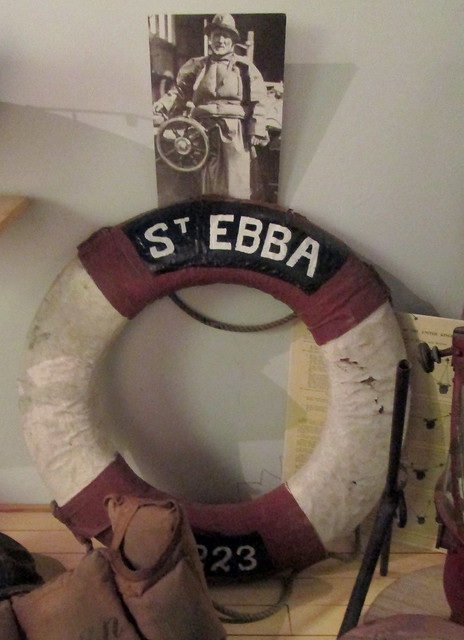
The original Jack Deighton, my grandfather, was the minister at the local Episcopal Church, St Ebba’s, named after a local saint, the Abbess of Coldingham. The Lifeboat at Eyemouth was also named for her as this lifebelt in the museum attests:-

Eyemouth St Ebba Lifebelt

Honfleur War Memorial

From over the street:-

Honfleur War Memorial

Honfleur is a relatively small town. Just look at all those names. “To her children of the armies of the land and sea killed for the homeland 1914-1918.” A measure of what France lost between 1914 and 1918:-

Honfleur, War Memorial Close

World War 2 names are at the base of memorial. In front is a stone poilu’s helmet above crossed swords with the inscription, “Gloire au Soldats Francaise”.

Honfleur, War Memorial Detail

Off to one side was this plaque to Albert Manuel, “heros de la résistance, croix de guerre”:-

Honfleur, War Memorial, Resistance Plaque

This plaque commemorates “The veterans of Indo-China in Normandy. To their lost and disappeared 1945-54.”

Honfleur War Memorial, Indo-China

Another notes “19th March 1962. End of the war in Algeria.”

Honfleur, War Memorial, Algeria Plaque

Yet More of Lorient

On the way back to the ship the good lady said, “Can you hear bagpipes?”

Indeed I could.

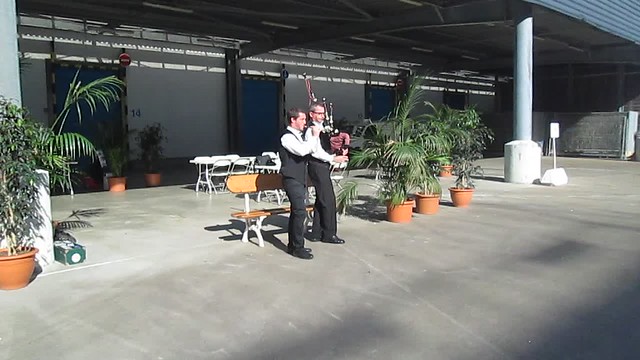
It turned out there was a group doing traditional Breton dance on the quayside beside the ship and they were accompanied by Breton bagpipers. (Click on photo and get to video on my Flickr.) You can see SS Black Watch looming in the background there:-

Breton Bagpipes Dancers, Lorient

They were also taking the opportunity to ply us with traditional food; pancakes. I had one with abricot, jam as it turned out.

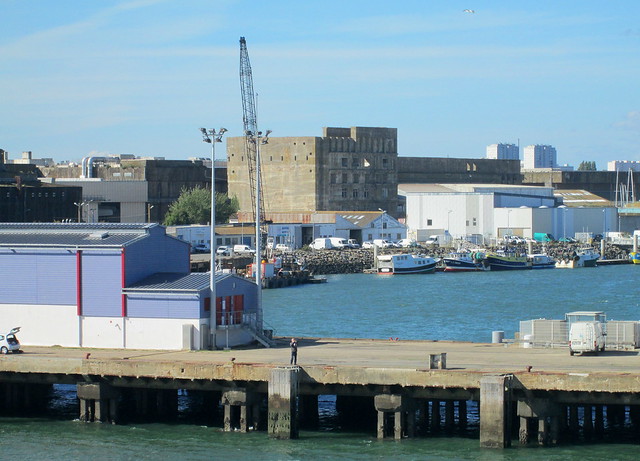
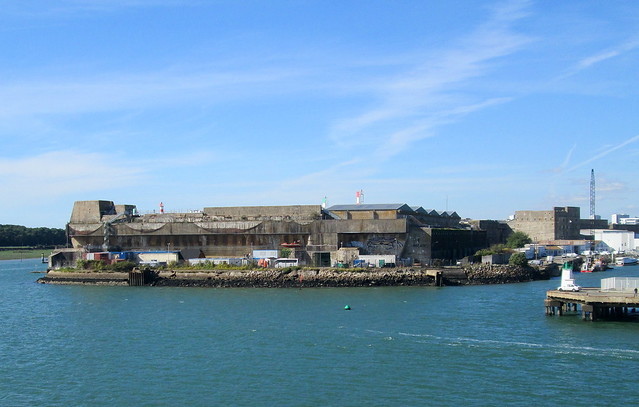
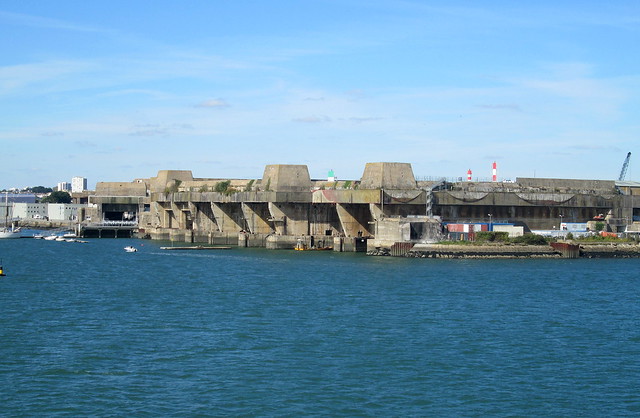
Steaming out of Lorient we had a good view of the main reason why Lorient was heavily bombed during World War 2, the German built submarine pens. Lorient’s position gave the U-Boats instant access to the Atlantic.

In background here:-
Submarine Pens Lorient 1

View from rear side:-
ubmarine Pens, Lorient 2

Side front:-

Submarine Pens, Lorient 3

Slightly further across:-
Submarine Pens, Lorient 4

Abernethy War Graves

Despite the absence of a “Commonwealth War Graves here” sign on the gateposts we found three war graves in Abernethy churchyard.

Private J Gray, RASC, 18/11/1917, aged 33:-

Abernethy War Grave 1

Private P Scott, Royal Scots Greys, 20/2/1919, aged 28:-
Abernethy War Grave 2

Private H Rutherford, Cameron Highlanders, 10/12/1918:-
AbernethyWar Grave 3

In addition several headstones commemorated war dead.

Alexander Stephen, 16/8/1018, aged 48:-
Abernethy Graveyard, War Inscription 1

William Edmiston, 23/5/1915, aged 19:-
Abernethy Graveyard War Inscription 2

Private John Greenhill, 28/10/1914, aged 20:-
Abernethy Graveyard War Inscription 3

John Saunders, died from wounds at Boulogne, 26/5/1915, aged 35:-
Abernethy War Inscription 4

Sergt Alexander Mitchell, RAF, died in Cambridge Hospital, 13/10/1918, aged 31:-
Abernethy War Inscription 5

Kenneth James, CMF, 22/3/1944. aged 26:-
Abernethy War Inscription 6

The Amazing Adventures of Kavalier and Clay by Michael Chabon

Fourth Estate, 2001, 646 p, plus iii p Author’s Note.
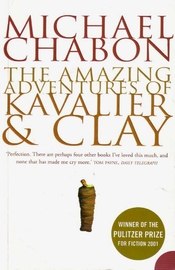
The Amazing Adventures of Kavalier and Clay cover

I was immediately struck by this book’s opening sentence, “In later years, holding forth to an interviewer or to an audience of fans at a comic book convention …. Sam Clay liked to declare … that back when he was a boy … that he had been haunted by dreams of Harry Houdini.” In its essential form this has similarities to the first sentence of Gabriel García Márquez’s One Hundred Years of Solitude, “Many years later, as he faced the firing squad, Colonel Aureliano Buendía was to remember that distant afternoon when his father took him to discover ice.” Not a bad model to aspire to. Chabon’s opening sentence is, however, less stark, more elaborate than Marquez’s, being replete with subclauses and apparent asides. In this it is at one with many of the ones that follow, exquisite, information packed, beautifully constructed sentences unfolding over several lines yet seeming almost effortless, not a word out of place nor too much. Yet other sentences are admirably short. This is a book that has some very good writing indeed. At the same time it is also a compelling story. And it has occasional footnotes. What’s not to like?

The Kavalier and Clay of the title are respectively Joe and Sammy, cousins, both artists, who invent a comic book hero known as The Escapist, inspired by Kavalier’s training as an escapologist in Prague in the 1930s. They meet when Joe Kavalier turns up at the Klayman household in New York after his fraught journey from Czechoslovakia (via Lithuania and Japan) the setting up of which required almost all the money his family could scrape together to save at least one of their number. There are echoes of Márquez’s magical realism in Joe’s escape from Nazi occupation; inside a coffin which also contains the (disguised) Golem of Prague. The Escapist character is a great success – punching Hitler on the nose and otherwise bashing Nazis speaking to a latent emotion – as are other creations of theirs such as Luna Moth, riding the boom in comic books of the time. Despite exploitation by their publisher (the standard contract handed over the rights to their characters) they still manage to make a fair bit of money. Joe is continually worried about his family in Prague and his cash mostly goes to finding out their well-being or otherwise and to bringing his younger brother Thomas and other Jewish children to the US. In amongst details of their personal lives – Joe’s affair with Rosa Luxemburg Sax and Sammy’s incipient homosexuality laying the ground for later developments – Chabon also delivers to us a history of the comic book.

Given my interest in Art Deco and Moderne architecture I was particularly delighted by the scene set in the abandoned remains of “that outburst of gaudy hopefulness”, the New York World’s Fair 1939-40.

In a sentence that has striking echoes for the world in which I was reading the book Chabon says, “One of the sturdiest precepts of the human delusion is that every golden age is either in the past or the offing.” Arguably the real delusion is that there ever was, or will be, a golden age.

The shadow of the wider world never lifts from Joe, even if on joining up on the final entry of the US into World War 2 the navy sends him to the Antarctic rather than to kill Germans. A novel of folk caught up in “interesting times” may be a shortcut to wider significance but, “The true magic of this broken world lay in the ability of the things it contained to vanish, to become so thoroughly lost, that they might never have existed at all,” is as true of more settled eras. And the events in Europe and elsewhere are backdrop to the human stories here. For all that, as well as a story of love and loss, tragedy and redemption (or a kind of catharsis,) at its heart The Amazing Adventures of Kavalier and Clay is a pæan to the comic book. And Chabon has made art out of its history.

Pedant’s corner:- the local Gestapo bureau (this was on the border between Poland and Lithuania, hence before the German invasion of Poland; so no Gestapo. Even if after the German invasion the border would have been between the Soviet controlled area of Poland and Lithuania so still no Gestapo,) beltoids (deltoids?) from which dangle … an array (an array dangles,) Longchamps’ (Longchamps’s,) “a Brooklyn Dodgers football game” (the Brooklyn Dodgers were a baseball team; still are, though they moved to LA,) lists of dramatis personae (dramatis personae plural would be dramatum personae,) “there were a fair number of moths” (x 2, there was a fair number,) aetataureate (an invention by Chabon meaning “of the golden age”,) missing start quote on a piece of dialogue at a chapter start (probably the publisher’s house-style, but annoying just the same,) a number of orders were issued (a number was issued,) maw (for an entrance. A maw is a stomach,) “‘Oh much more than see him’” (seen him makes more sense,) chile con carne (not spelled chile.)

free hit counter script