Posted in History, Trips at 12:00 on 30 August 2017
The main World War 2 defence artillery battery for the Sound of Hoy was the Ness Battery. A few buildings remain. They have that vaguely Deco style of a lot of World War 2 fortifications. We missed the guided tour so didn’t get the full access. We’d only gone out for an evening stroll.


Shore Battery. Atlantic/Pentland Firth beyond:-

Graemsay and Hoy from Ness Battery:-

No Comments »
Posted in History, Trips at 20:00 on 25 August 2017
A spit of the Orkney mainland, a ness, juts down from Stromness towards Hoy. To defend the Sound of Hoy from the 1860s onwards artillery batteries were sited on the north shore of the Sound of Hoy.
We strolled down one evening not knowing there were remains still there. I suspect these are all World War 2 vintage.
Site of Volunteers Battery, Stromness:-

Nissen Hut, Volunteers Battery, Stromness. I supose they kept ammunition and such here. I suspect it’s now used by Stromness Golf Club:-

Gun Emplacement, Links Battery, Stromness, Hoy in background:-

Closer View, Gun Emplacement, Links Battery, Stromness:-

Searchlight Emplacement, Links Battery, Stromness:-

Reverse View Links Battery, Searchlight Emplacement. Mainland Orkney in background, island of Graemsay to right:-

Sound of Hoy and Hoy from Links Battery Searchlight Emplacement:-

Remains of Gun Batteries, Stromness Golf Course, in middle ground:-

No Comments »
Posted in Trips, War Memorials at 12:00 on 22 August 2017
A statue of a woman on a plinth, this stands on the outskirts of Stromness beside the main road to Kirkwall:-

Statue and Plinth. Dedication, “In memory of the gallant dead who gave their lives for honour and freedom in the European War 1914-1919.”:-

View looking towards town:-

Names for 1915-17:-

Names for 1917-18:-

Additional plaque. After 1917:-

Names for 1939-45. “To the glory of God and in memory of those who made the supreme sacrifice in the Second World War 1939-45.”:-

No Comments »
Posted in History, Trips at 12:00 on 21 August 2017
During World War 2 Italian prisoners of war were held on Orkney. After the sinking of the Royal Oak, Churchill ordered the gaps between four of the islands at the southern end to be filled in. These links between the islands came to be known as the Churchill Barriers. One of the photos in the link shows – still there over 70 years later – the remains of a pre-barrier block ship that was sunk early in the war before the barriers’ construction.
The Italians were set to work on building them. At first they objected as the barriers were military measures on which they were banned from working by the Geneva Conventions. When it was suggested to them that they were being built to improve civilian communications between the islands they happily acceded.
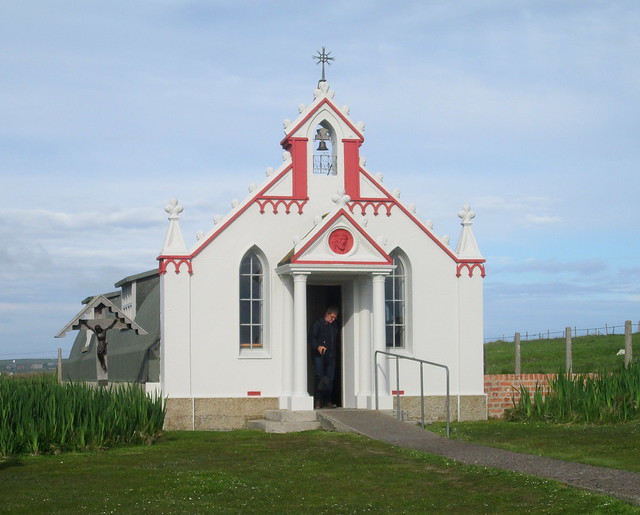
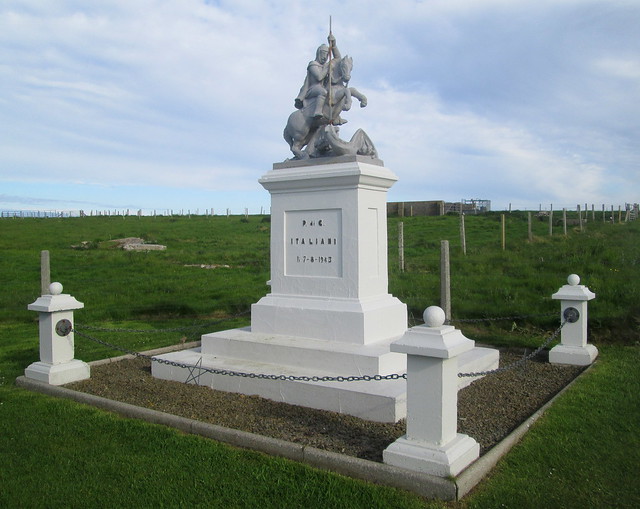
Another part the prisoners’ legacy is the ornately decorated chapel that they built (see pictures here) on the island of Lamb’s Holm, plus the statue of Saint George nearby.
The Italian Chapel is now a tourist attraction in its own right. It was quite busy when we visited so I only photographed the outside.
Italian Chapel:-
Statue of Saint George:-
No Comments »
Posted in Art Deco, History, Trips at 20:00 on 20 August 2017
Island of Stroma, Pentland Firth. Stroma is not part of Orkney proper but lies to the south:-

A fortification on Flotta, Orkney. Hard to tell at the distance; it may have been from the Great War, World War 2 or both:-

Fortifications on South Ronaldsay, Orkney. World War 2 vintage:-

More Fortifications on South Ronaldsay. Artillery emplacements. These are almost Art Deco in style:-

No Comments »
Posted in History, Museums, War Memorials at 20:13 on 13 August 2017
Almost the first thing you notice making your way out of the ferry terminal at Lyness on Hoy, apart from the last remaining oil tank servicing what was the naval base there and the building housing the Lyness Naval Museum is two flags and two upright stone markers.
This is the Arctic Convoy Memorial. Some of the convoys’ ships sailed from Scapa Flow.
Memorial from road:-

Memorial Plaza:-

Memorial Dedication:-

Russian Inscription and Flag. (I note that the flag, strictly, should be that of the USSR):-

Russian inscription:-

British Inscription and Flag:-

British Inscription:-

No Comments »
Posted in Architecture, Art Deco, Trips at 12:00 on 13 August 2017
Ahoy-hoy was the suggestion of the inventor of the telephone Alexander Graham Bell for the greeting people should use when answering the telephone. I couldn’t avoid thinking of it as we approached the island of Hoy across Scapa Flow on the ferry crossing from the terminal at Houton to Lyness.
Hoy from ferry:-

Approaching Lyness:-

Plaque at Lyness Ferry Terminal commemorating the salvaging of ships from the scuttled German High Seas Fleet in Scapa Flow. Apparently the metal from the ships found use in the space programme as it was uncontaminated by radioactive fallout:-

Old Fortified Building on Hoy seen from Lyness Naval Cemetery. This must have been to do with either or both of the World Wars:-

The Hoy Hotel. Art Deco/Moderne style. We met an Australian photographing the building. He had come to Hoy as that was his surname:-

Photo in the Lyness Naval Museum of the Garrison Theatre, Hoy, built by the Royal Marines. Now no more except for the foyer:-

No Comments »
Posted in Trips, War Graves at 20:00 on 8 August 2017
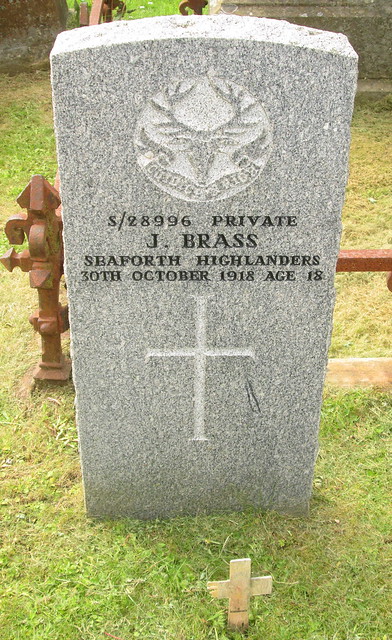
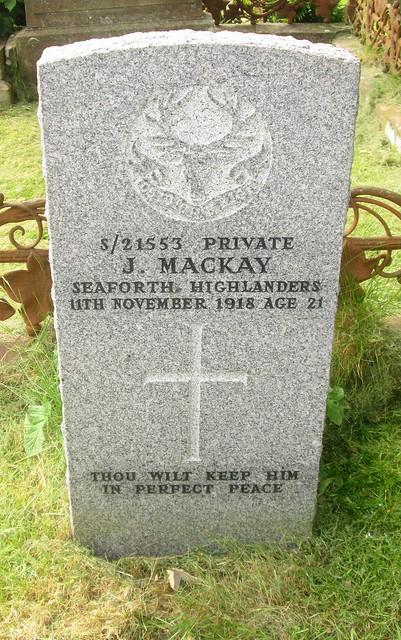
The churchyard cemetery at St Magnus Cathedral, Kirkwall, had a Commonwealth War Graves sign on it. There were two, both Seaforth Highlanders from the Great War.
Private J Brass, 30/10/1918, aged 18:-
Private J McKay, 11/11/1918, aged 21:-
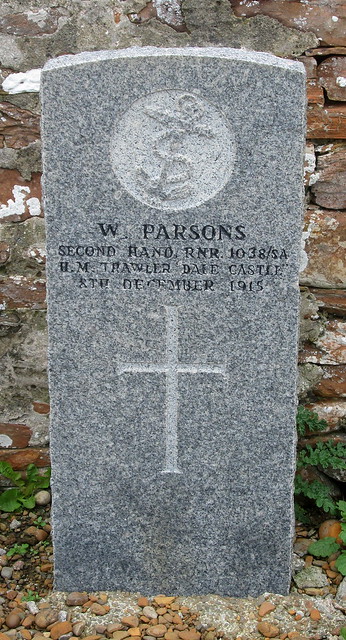
Similarly, in Stromness’s Warebeth Cemetery on the shores of Hoy Sound, W Parsons, Second Hand, RNR, HM Trawler Dale Castle, 8th December 1918:-
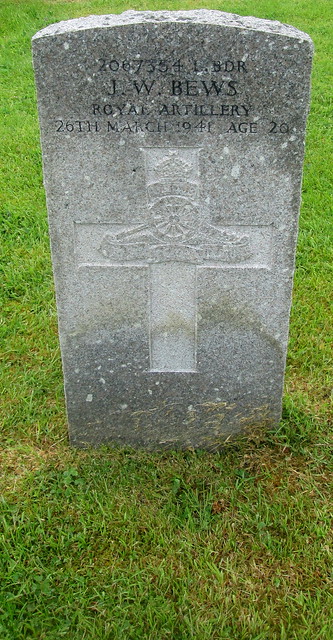
And at Orphir, Lance Bombardier J W Bews, Royal Artillery, 26/3/1941, aged 20:-
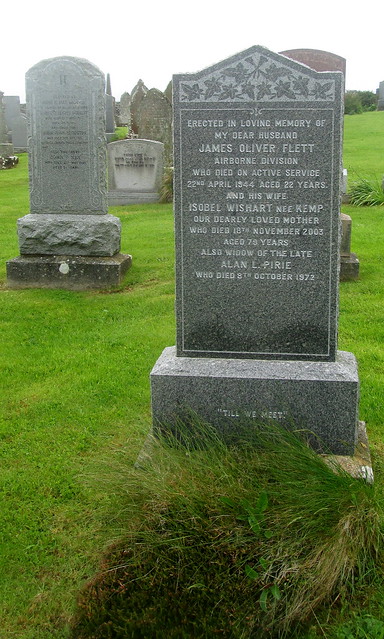
Also in Orphir cemetery was this dedication to James Oliver Flett, Airborne Division, who died on active service, 22/4/1944, aged 22:-
No Comments »
Posted in Trips, War Graves, War Memorials at 12:00 on 8 August 2017
On the night of 8th October, 1939, the German submarine U-47, under the command of Günther Prien, penetrated the defences of Scapa Flow, Orkney, through Holm Sound and Kirk Sound. Her first two torpedo salvos missed all but an anchor chain but her third struck HMS Royal Oak. Within fifteen minutes the ship had sunk with the loss of 833 British sailors out of the crew of 1,234 men and boys. Many of their bodies were unrecoverable and remain on the ship. A few are interred at Lyness Naval Cemetery on Hoy.
For his feat Prien was awarded the Knight’s Cross of the Iron Cross, the first sailor of a U-boat and the second member of the Kriegsmarine to receive this decoration.
To prevent any further such attacks a series of barriers known as the Churchill barriers was built between four of the southern Orkney islands to connect them to each other and the mainland. The one shown below (picture from the Royal Oak’s Wikipedia page) crosses what was Kirk Sound.

For decades afterwards the Royal Oak, a designated war grave on which diving is therefore prohibited, leaked oil into Scapa Flow before the leak was sealed off.
A memorial to HMS Royal Oak is set into the north wall of Kirkwall’s St Magnus Cathedral. There is a dedication plaque, a book of remembrance listing the names, with a page turned every day, surmounted by the ship’s bell.
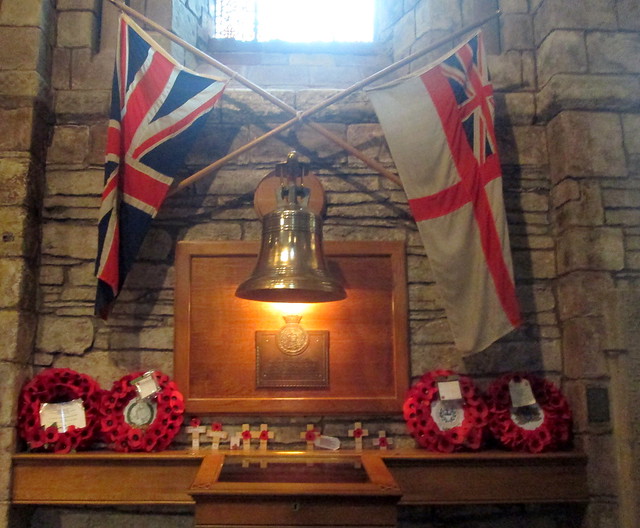
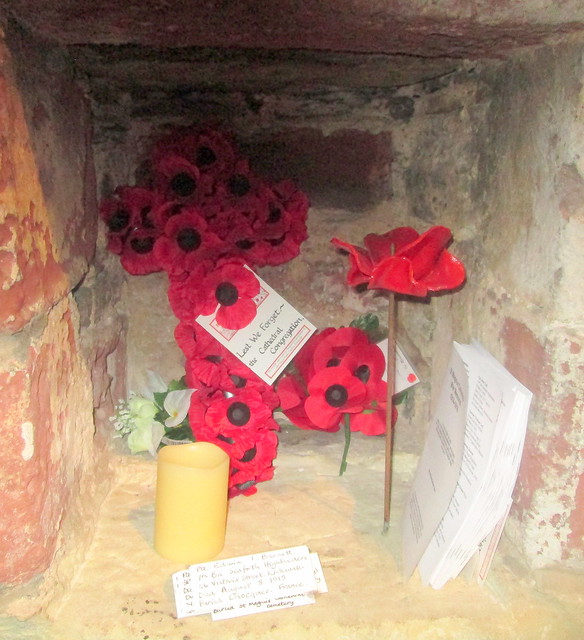
Further along the same wall lies another site of more general remembrance, a niche containing poppies and candles.
No Comments »
Posted in Trips, War Memorials at 20:42 on 7 August 2017
As seen from my previous post, Kirkwall’s War Memorial (also dedicated to the parish of St Ola) is located right beside St Magnus Cathedral – which is in the background the first, third and fourth photo here. The Memorial is in the form of an arch which acts as a gateway to the churchyard and cemetery behind. The original pillars are dedicated to the Great War. The external pillars were added to commemorate the Second World War.

Left hand pillars:-

Right hand pillars with wreath. St Magnus Cathedral in background:-

War Memorial Arch. “To the glory of God in memory of the men of Kirkwall and St Ola who fell for freedom in the Great War”:-

No Comments »
