Archives » 2015 » August

Art Deco in Asmara

The Guardian this week published several pieces about the African country of Eritrea, which is ruled by a repressive regime.

The Guardian briefing about the country is here.

Two of these articles were, however, illustrated by photographs of Art Deco buildings – a relic of Mussolini’s invasion of Abyssinia (Ethiopia) of which Eritrea was then a part.

I couldn’t find all of the photos from the print editions on the Guardian website but the main piece on the Art Deco buildings is here.

The Fiat Building in Eritrea’s capital Asmara is simply stunning:-

Fiat Building Asmara

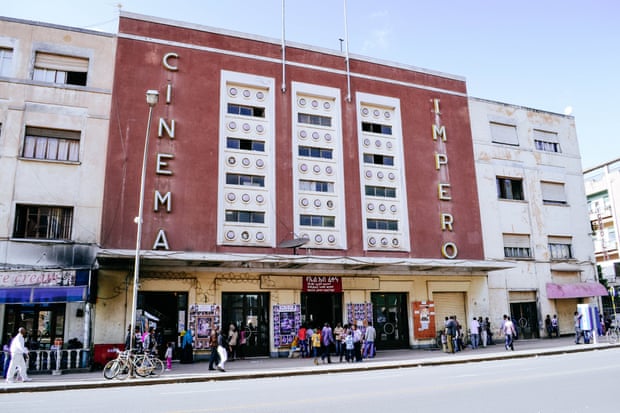
This is the Cinema Impero in Asmara:-
Cinema Impero Asmara

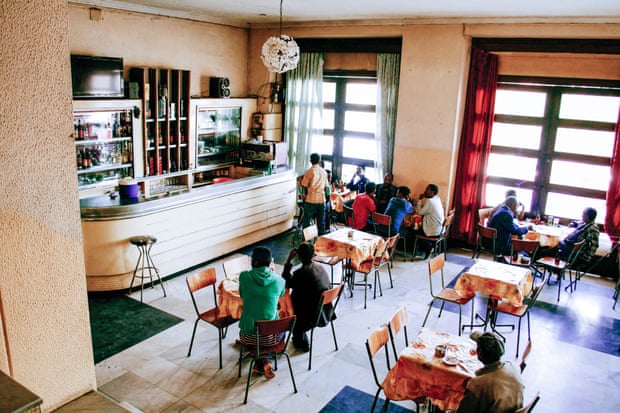
And here is a café interior:-
Cafe in Asmara

The photographs shown here are credited in the Guardian to Natasha Stallard/Brownbrook.

Reelin’ In the Years 106: Teenage Rampage

I’ve not done one of these for a while.

The Sweet: Teenage Rampage

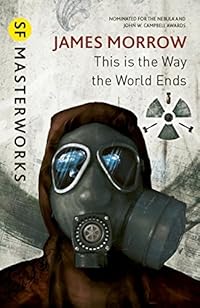
This is the Way the World Ends by James Morrow

Gollancz SF Masterworks, 2013, 312 p, with iv p introduction by Justina Robson.
(Not borrowed from but) returned to a threatened library.

 This is the Way the World Ends  cover

Framed as a tale told by Doctor Michel de Nostradame in Salon-de-Provence, 1554, (that’ll be Nostradamus to you and me) this is the story of George Paxton, a monumental mason, in the late(ish) twentieth century US.

George is approached by a glib salesman to buy a scopas suit (Self-Contained Post-Attack Survival) for his daughter to protect against nuclear attack. It is too expensive and his wife makes him return it. However, soon such suits are commonplace, people wearing them in the course of everyday life. Then George is offered a free suit provided he accepts the condition that he sign a confession of his complicity in the nuclear arms race. He does so, to give the suit as a Christmas present to his daughter. On his way back home his town is obliterated in a Soviet nuclear strike, a response to the US attack which followed the detection of Soviet Spitball missiles heading for Washington. As he heads towards the blast area to try to rescue his family the last thing he sees before losing consciousness is a giant vulture as big as a pterodactyl heading for him.

As it turns out he was taken from the ruins by the crew of a submarine, the City of New York, now headed for Antarctica. The crew are “unadmitted”, humans – with black blood – whose existences were pre-empted when their hypothetical progenitors were annihilated by the war. The survivors they have gathered were all architects of the war in one way or other. After giving them medical treatment – ‘If one had to say something good about acute radiation sickness, it would be this: either it kills you or it doesn’t,’ – the unadmitted put them on trial, Nuremberg-style. This allows Morrow to skewer the through the looking-glass idiocies and contradictions of deterrence theory. The submarine’s captain, dismissing a particular riddle as having no answer, poses one that does, “When is a first strike not a first strike?” is then asked, “When,” and replies, “When it is an anticipatory retaliation.” (Sounds like 1970s Rugby Union doctrine.)

In the course of all this we encounter a MAD Hatter (Mutually Assured Destruction,) a March Hare (Modulated Attacks in Response to Counterforce Hostilities) and Stable talks (Strategic, Tactical, and Anti-Ballistic Limitation and Equalization,) the likelihood that scopas suits contributed to a willingness to accept the possibility of nuclear war, and the thought that, “When you turn the human race into garbage, you also turn history into garbage.”

At the time of writing (1986) the prospect of nuclear annihilation was never far away, in 2015 it has, perhaps, much less resonance. Whether it is this that contributes to the sense of distance throughout the book is difficult to decipher. Whatever the reason, the tone feels somehow off-kilter. Moreover, rather than being rounded characters most of Paxton’s fellow defendants are ciphers there solely to represent points of view and the unadmitted seem like actors inhabiting parts only shallowly instead of true agents. The role the giant vultures had in precipitating the war is a nice touch though.

The blurb mentions Kurt Vonnegut as a comparison but – repetitions of epitaphs “they were better than they knew” and “they never found out what they were doing here” apart – I was more reminded of R A Lafferty, except without his level of utter bonkersness (giant vultures excepted of course.) Despite Vonnegut’s lighter touches the seriousness with which he treated his subjects was always apparent. Morrow approaches this but doesn’t quite get there.

Pedant’s corner:- Paxton is named as Paxman on the back cover! Then an other (another,) as if a rain were felling on its streets (falling,) Jesus’ (Jesus’s,) videocassertes (videocassettes,) liquifying (liquefying.)
In the introduction:- whimsys (whimsies,) the reasoning of the accused make them (reasoning is singular so “makes”.)

Queen’s Park 0-0 Dumbarton

aet 1-0. Scottish Challenge Cup, Hampden Park, 18/8/15.

Any triumphalism is now put firmly on hold.

Again we faced a lower league team packing the defence – Queen’s had six across the back at times* – again we failed to break them down.

OK, we did get a penalty right at the end of normal time but Garry Fleming blasted it over the bar.

I never at any time felt that we would lose a goal but then in the first half of extra time we did. Andy Graham dwelled too long on the ball near our penalty area and ended up losing it, leaving us undermanned at the back. The free attacker stroked the cross in.** After that we were a bit more open as we pushed up and there were a couple of close things. Our best efforts were a Willie Gibson free kick their goalie saved and a Garry Fleming effort with his right foot when his left might have been a better bet. He’s not really convincing as a centre forward.

Were the players perhaps not too bothered about this game? The league is probably more important. If so I hope they’re more focused when the Scottish Cup comes round. I wouldn’t like to see us exit that this way.

This was my first view of the revamped Hampden; a vast bowl of a stadium. A weird sight indeed with its serried ranks of empty seats. The attendance was apparently 587. I had meant to take my camera but left home in a bit of a rush and forgot it. Next time we play Queen’s? (I can’t see us being back at Hampden any other way.)

*Queen’s had a player with number 10 on his back playing at centre back. This is a defilement of the spirit of football. A no 10 shirt rightly belongs to a fantasista.

**Edited to add:- The linesman put up his flag for an attacker offside (who looked to be on the bye-line from where we were) in the run-up to Andy Graham losing the ball. For some reason the ref overruled the flag.

The Comet Sublimes

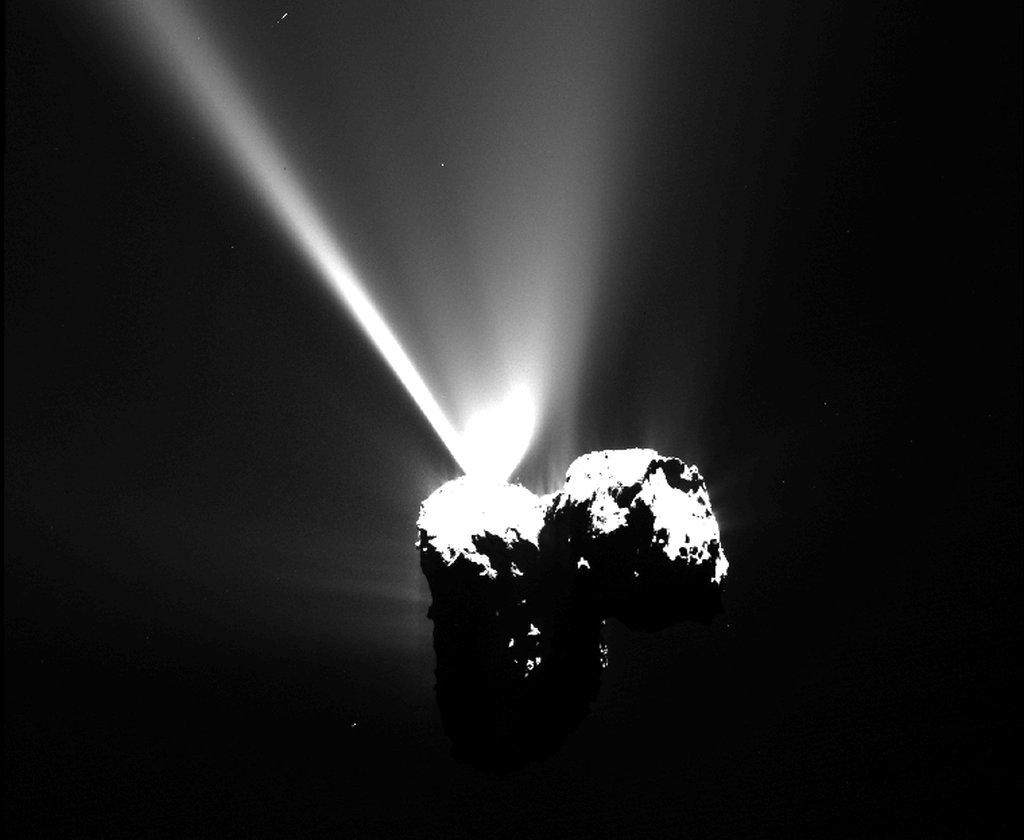
As viewed from the European Space Agency’s Rosetta spacecraft, Comet 67P/Churyumov-Gerasimenko sprays out gas just twelve hours before its closest approach to the sun (on this pass.) From Astronomy Picture of the Day, 15/8/15.

APOD 15/8/15

Pecdant’s corner:- USian alert? The APOD page says the comet’s primordial ices are sublimating. That would be subliming, then. In my understanding to sublimate is to suppress or divert an instinct.

Fair Helen by Andrew Greig

A veritable account of ‘Fair Helen of Kirkconnel Lea’ scrieved by Harry Langton.
Quercus, 2014, 368 p. Borrowed from a threatened library.

 Fair Helen cover

After all these years, all those novels, you’d think there would not be much more to say on the subjects of love, sex and death. But they are the human driving forces; or fears. There isn’t really much else to write about. And Greig has a heart and a talent to match anyone’s.

In Fair Helen Greig adds himself to that long line of Scottish authors who have illuminated the byways of the country’s history, in this case the last gasps of the Border reiving tradition. James VI – referred to as Jamie Saxt in the text – sits in Holyrude awaiting the death of “the Auld Hag” (as our narrator Harry Langton calls Elizabeth of England) to fulfil his destiny and incidentally ensure the end of the border feuds. Langton, though flawed, is an engaging guide to the times; discursive, reflective, and prone to the occasional footnote. If the setting and vocabulary were not enough (an appended “Scots Guide” defines some of the non-English words used: my favourite of these, houghmagandie, is given as sexual shenanigans but that fails to recognise the connotations of exuberance) the attentive descriptions of landscape and evocations of other works of Scottish literature, “Timor mortis conturbat me, indeed,” “a mere mouse running before the coulter blade,” “‘How can they stay sae fresh and fair?’” would anchor Fair Helen firmly. (That some of these references post-date the novel’s times only makes them the more redolent.)

Early on we have a warning about the trustworthiness of text, “What is the point of gossip and story if not to exaggerate our lives to the scale we believe they should be rather than the small affairs we fear they truly are?” – and there is that “veritable” in the strapline – yet the tale purports to be the true story of the tragedy described in the border ballad ‘Fair Helen of Kirkconnel Lea’. Greig’s choice of narrator is subtle, being none of the three main actors in the events that led to balladry. Harry was cousin to Fair Helen (Irvine) and friend of Adam Fleming, her lover, though not so close to the man whom she is contracted to marry, Robert Bell. Langton’s presence at, and contribution to, the outcome of the affair is approached via his entanglement not only with the lovers but also with the coming man, Walter Scott of Branxholme and Buccleuch. Langton notes that, “Rarely is it fortunate to come to the attention of the high heid ones.” But Helen has words of advice when, “‘I am much changed,’ I said, ‘And the world has grown ugly.’ Her hand squeezed my wrist. Her grip was strong and urgent. ‘Think that and they have won.’”

Through Langton, Greig is also overly modest. “I contemplated my Thucydides. The wars of Greek city-states did not seem so distant. If they appeared more noble, perhaps, it was just they had better writers.” The meat of his quote from Montaigne, “‘The public weal requires that men should betray, and lie, and massacre,’” is alas followed too closely to this day.

Greig has been described as a post-Calvinist author. This is explicit here in passages such as, “The rediscovered voices of Antiquity have offered a vision of a greater, kinder, more humane and playful life (scarcely in Scotland, ma foi, not till the hoodie craws of the Reformed Faith back away from the carcass of this my only true home!)” The older Langton reflects, “There is no dancing in the inn courtyards now, religious fanatics denounce and rule, witches still confess under torture and our songs are all grim or piously false as ‘Fair Helen of Kirkconnel Lea’,” and, “Women have become douce-like, modest, eyes downcast as though feart to trip on their own feet, and men are penitential. The flesh is sinful and chastity rated far higher than charity,” adding cuttingly, “It is a wonder that bairns still get born at all.” The women and men Langton knew in the borders in the far-off days of his youth, “were … otherwise.” He tells his latter day patron, Drummond of Hawthornden, (in whose library he leaves a copy of Love’s Labours Won, a gift from a strolling player in London, another knowing authorial touch,) “‘Reform may have banished corruption,” (of the church.) “It would also banish wit and laughter, music and dance and kindliness.’” And thinks to himself, “And fornication.”

As to the country itself, “Here all about lay Scotland, dark and dreich and dear. Cloud-shadow scurrying over hill and burn, cold wind and dry branch, our hard humour and hidden hurts. Here affection came wrapped in insult as sweet fruit in burnt pie-crust. Tenderness was hidden under armoured jacks, with only keening pipes and fiddle and human voice to tell the heart’s ways.”

The novel is threaded with a sense of loss. This could perhaps arise only in that the story is narrated by an old man, “My soul is an old horse-trough that lies forgot in a field, its rotting boards mottled with fungus and moss,” remembering the past – were it not that this sort of deep nostalgia is a familiar strand in Scottish literature. And the Scottish fixation with death is marked by, “The skull and hourglass we Scots inscribe on our tombs to counter any pious suggestion of the life to come.”

The hyper-critical might carp that the story is merely (merely!) a recapitulation of Romeo and Juliet – the Fleming and Irvine families are after all in feud when they first get together – but star-crossed lovers are a literary staple and here there are complications; an end to the feud is negotiated but Helen’s engagement to Bell is announced at the celebration which marks the reconciliation. Fair Helen is a delight and, despite any lack of Calvinism, still Scottish to the bone. As in That Summer and Electric Brae Greig makes you care about his main characters and portrays the others as rounded.

Pedant’s corner:- That mention of high heid ones looks odd as it is usually rendered as high heid yins. We have maw as mouth rather than stomach, hung at times (when hanged is used elsewhere,) Lucretius’ (Lucretius’s.) “As we forded the stream I look off to my left,” (looked,) Longshanks’ (Longshanks’s,) snuck in (sneaked? tucked?), their force were (was,) had began (had begun; or merely, began,) snuck (definitely sneaked.) I also thought I caught a continuity error when Langton hands Mrs Smeaton’s packages to Jed Horsburgh, who is in custody for protecting Adam Fleming.

St Mirren 1-2 Dumbarton

SPFL Tier 2, St Mirren Park, 15/8/15

Wow!

I’m struggling to remember when we last won our first two league games. In fact I can’t. And these two were against two of the teams expected to be in the promotion play-offs.

I wasn’t at the game as I was away down in England (hence the lateness of this posting) but it’s a cracking result.

Will we be able to keep it up?

Well, the next league game is a top of the table clash at home versus Queen of the South who just happen to have a 100% record at our new ground.

Plus there’s the small matter of a second round (be still my beating heart) Challenge Cup tie at Hampden against the other royally monickered Scottish team, Queen’s Park, tomorrow night.

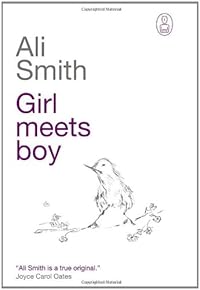
Girl Meets Boy by Ali Smith

Canongate, 2007, 164 p.

Not borrowed from a threatened library but returned to one of them.

 Girl Meets Boy cover

This is part of Canongate’s Myths series and is a retelling of one of Ovid’s Metamorphoses wherein Iphis (a name used for both sexes) was born a girl but on the gods’ advice is brought up by her mother as a boy as her father said they couldn’t afford a girl. As a young adult Iphis falls in love with and is set to marry Ianthe but has to appeal to the gods to resolve the dilemma of how to do this as a girl.

Told in five chapters titled “I,” “You,” “Us,” “Them,” and “All Together Now” Smith adapts this to a story of Anthea falling for Robin Goodman whom at first sight she thought, “He was the most beautiful boy I had ever seen,” rapidly amending this to, “She was the most beautiful boy I had ever seen.”

Mixed in with this is the story of Anthea’s sister, Imogen – at first shocked by Anthea’s relationship (Oh my god my sister is A GAY,) but later reconciled to it – and both their experiences of working for a rapacious company called Pure which sells bottled water. Office politics and the vacuousness of “creative” meetings are well skewered.

Many of the scenes take place in Inverness, Smith’s birthplace, but the book’s concerns are never parochial. Smith works in an account not only – in Imogen’s trip down south – of the Englishness of England but of the many ways in which women are disadvantaged in the workplace and life generally and also provides a more satisfactory resolution to the “problem” than would have been available to Ovid. As Robin (another name used for both sexes) tells Anthea, “It’s what we do with the myths we grow up with that matters.”

The book is typographically idiosyncratic in that the author’s name on the title page, the page headers (Smith’s name on even pages and the book’s title on the odd,) the names of the dedicatees and the authors of the epigraphs are rendered in a fetching pink and as in most of Smith’s books the right hand margin is unjustified but, in this case, not in a distracting way.

This may be a short novel but it is perfectly formed, the best by Smith I have read.

Pedant’s corner:- back and fore (maybe it is an Inverness thing;) and in the acknowledgements, H2O (H2O.) Here Smith also seems to find it noteworthy that ‘water is bent,’ but that isn’t news to a chemist.

Asimov’s Science Fiction Jun 2015

Dell Magazines.

Asimov's Jun 2015 cover

This magazine is more weighted to fiction than Analog though there are non-fiction pieces. Kathleen Ann Goonan’s guest editorial describes SF as a literature that asks Where do we come from? What are we? Where are we going? – thus adding two additional questions to the one most literature addresses – Robert Silverberg’s Reflections goes over the history of predictions of the end of the world and of apocalyptic SF while James Patrick Kelly’s On The Net: an Optimist’s Tale argues that modern day SF is not as pessimistic as some in Project Hieroglyph present.
As to the fiction, there is less cleaving of the paper light years in Asimov’s than there was in Analog, notwithstanding the first story The End of the War by Django Wexler, wherein two remnants of humanity called Minoans and Circeans fight a proxy war on derelict spaceships left over from the main battles by means of pilot-controlled salvage/manufactory devices. The opposing pilots have conversations as they fight over the remains.1 Henry Lien’s The Ladies’ Aquatic Gardening Society has two society ladies in what seems the nineteenth century trying to find the favour of Mrs Ava Vanderbilt by means of elaborate gardens. They take it too far.2 Mutability by Ray Nayler sees a couple meet for the first time in a café – four hundred years after being photographed together. Indrapramit Das’s The Muses of Shuyedan-18 features two human women who are witnessed having sex by the huge alien of the title which reproduces them in a carving on its back.3 The titular characters in M Bennardo’s Ghosts of the Savannah are two prehistoric women hunters who don’t want to settle to a life of domesticity and child-bearing. Our Lady of the Open Road by Sarah Pinsker is the tour bus for the band Cassis Fire, who are rare hold-outs still playing real gigs in a world where entertainment has been cornered by the corporate might of StageHolo.4

Pedant’s corner:-
1 the compute power (twice!! “computing power” is so much less ugly,) to go to particular place (a particular place,) “slingshot” as the preterite of the verb (slungshot? slingshotted? But then I suppose USians use fit as a past tense,) the maze of room and corridors (this ship had corridors but only one room?)
2 hostess’ (hostess’s,) the USianism “dove” for “dived”, plus the story jumps from Chapter VII to IX with no sign of VIII.
3 chord (cord,) in a way the human brain will remind of our own architectures (will be reminded of.)
4 in the cards (on the cards.)

Friday on my Mind 124: It’s Gettin’ Better

This is just a wonderful feel-good song. Cass had a distinctive voice. Pity she died so young. (So it goes.)

Cass Elliott:- It’s Gettin’ Better

free hit counter script