Archives » 2015 » August

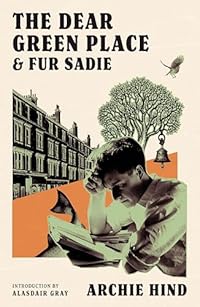
The Dear, Green Place by Archie Hind

Polygon, 2008, 248 p, plus viii p introduction by Alasdair Gray. In The Dear Green Place and Fur Sadie.

Borrowed from a threatened library. (One of the 100 Best Scottish Books.)
 The Dear, Green Place cover

Many Scottish novels betray a love of the country’s landscape, some even start with descriptions of it. So too it is with The Dear, Green Place, except – the place in question being Glasgow – it’s a cityscape we are reading about. Glasgow’s name is supposedly from the Gaelic Gles Chu, (“the dear green place”) the location where St Mungo (St Kentigern in the Celtic) built his little church and founded the settlement which became the second city of the empire. As described here, “A Calvinist, Protestant city. The influx of Roman Catholic Irish and Continental Jews had done nothing to change it. Even they in the end became Calvinist.” (This is true not just of Glasgow but reflective of Scotland as a whole.)

Our protagonist, Mat Craig, thinks of the city that, “the foundries, steelworks, warehouses, railways, factories, ships, the great industrial and inventive exploits seemed to give it all a kind of charm, a feeling of energy and promise,” and finds pride in the thought that during the (1945-51) Labour Government’s first term of office domestic life changed from sordidness and squalor to become decent. Like many a working man of the times he is well read – the text is peppered with references to art and literature, in particular to Thomas Mann – and capable of finding the dynamic sublime in the dripping of raindrops from one rail of a fence to another. “The dynamic sublime. A wee Glesca one. All on a reduced scale.” On New Year celebrations he feels that it is, “good in the depth of winter to have a formal and ceremonious occasion for the release of inhibitions, but in Glasgow drink still leaves the sober certainty of the bitterness of life and the inexorable passage of time.”

His great ambition is to be a writer but his mother is against him getting above himself. She complains when he gives up his office job, “It’s a guid respectable job with a collar and tie.” He replies, “Aye. It’s respectable. And I’m fed up to the teeth with respectability. As soon as anyone shows any sign of gumption you want him to become respectable. Put a collar and tie on. It’s in case they’ll bite. They’re frightened they’ll bite. And so they will. The ones that don’t get collared.” But, he thought, he would always have to make concessions to others just because he loved them. “It was exactly thus that conscience makes cowards of us all.”

He marries and to make ends meet goes to work alongside his brother in a slaughterhouse. There are vivid descriptions of the processes involved in rendering an animal fit for human consumption. He meets with minor success with a few short stories written in a style he knows will sell but completing his novel is a more elusive task. Even stopping work and living on his and his wife’s savings isn’t enough. He feels a deep attachment to his art, “obliging him to accept the arrogant task of creating art out of deprivation rather than choose the easy way of leaving deprivation behind him…. To attempt the difficult, almost impossible task of making art out of his Scottishness rather than turn towards a sophisticated, successful but alien tradition.”

On the death of his father in a lorry accident he thinks, “everything in human life – the everyday common tasks, sex, love, contentment, aspiration, ordinary human intercourse, hope, laughter, were like dirty snivelling little secrets being uncovered by this sneering, wicked, expedient, mechanistic force that was the world,” and conceives “a story of this bonny wean, of a gifted child who’d scatter his useless gifts about the world; a story of prodigality, of waste, of squandering, which would contain all his sourness, pessimism and accusation; and his love too.”

An intensely literary book, The Dear, Green Place is about the struggle to stay yourself and be true to a vision, and the difficulties that lie along that path. And a reminder that knowledge and deep thinking do not belong exclusively to the well-heeled.

According to Alasdair Gray’s introduction (again I left this till after reading the book) Hind’s shorter works – plays, radio scripts and some short stories – are now lost. All that remains of his œuvre is contained within this book’s covers. The Dear, Green Place is the major part and acts in contrast to the stereotypical view of Glasgow and its inhabitants as portrayed in the likes of No Mean City. Gray tells us that Gles Chu has been previously translated as green hollow, green churchyard, greyhounds ferry, dear stream, and later, in Glasgow’s industrial, imperial pomp, grey forge or grey smithy but that the dear green place, Hinds’s own translation, is now generally accepted. Though sometimes, still – even now the smoke and the industry have largely gone – that description can seem inapt, the city does have an abundance of parks and leafy spaces.

The other large story in these covers is the unfinished Fur Sadie, the story of Sadie Anderson, a woman with perfect pitch – her ‘doh’ (in her head she can translate intervals and chords into sol-fa) – who, remembering her childhood friend Anna Berman playing the piano, in middle age buys one of her own and starts to get lessons – despite the incomprehension and teasing she receives from her husband, Alec, and sons, Hugh and Colin. In a pun on musical terminology and the position of a working class woman of her time Hind tells us Sadie had always known how to diminish. Despite many years of marriage and three children together Sadie and Alec had never seen one another naked, “A terrible modesty that excluded sexuality from the commonplace acts of the day and, denying ordinary acts of touching and looking, denied a way of expressing tenderness.” This “modesty” surrounding the human body (pudency would be an even more apt term) was an all too prevalent tendency in a Scotland steeped in Calvinism. The story’s title is not only a reference to Beethoven’s piano composition Für Elise but also to the way the word “for” is pronounced in Glasgow dialect. Fur Sadie acts as a companion piece to The Dear, Green Place in that it features another working class protagonist with aspirations to artistic endeavour but it has a more optimistic feel. It’s a pity it is incomplete (apparently Hind said, “It developed a slow puncture,”) as Sadie is an engaging character and this reader of the fragment was definitely left wanting more.

The final prose piece in the book, The Men of the Clyde, appeared in Scottish International, August 1973, and is an encomium to the workers of the Upper Clyde Shipbuilders work-in. Lastly there is a song lyric, The Dear Green Place, (composed with Peter Kelly) from a review Through with a Flourish presented at the Edinburgh International Festival in 1971.

Pedant’s corner:- compatability, (compatibility,) grills (grilles,) rough shod (roughshod,) in a list “paraffin. turpentine,” (paraffin, turpentine,) octopi (octopuses or, the Greek plural, octopodes,) the cuticle of the nails (cuticles would be more correct,) tick (tic,) Anna’s surname flicks from Bermant to Berman and back,) worried at lot (worried a lot,) piano stood (stool,) just that same (just the same,) waked in (walked in,) rubbing a corned (corner,) “Beethoven’s sly double use of the piece, which was for Elsie in the concession to unlearned fingers and that it was for Elsie in that it seemed to express, sensuously, her young bloom” (should not both these Elsies be Elises?)
Falkirk 2-1 Dumbarton

SPFL Tier 2, Falkirk Stadium, 28/8/15.

Well it seems that even watching on television I’m a jinx. After fifteen minutes it was like the bad old days were back again. Our defence looked as porous as it has for seasons now. whether this was due to the changes at the back to accommodate new signing Fraser Wright (I don’t think Scott Taggart deserved to be dropped at right back but Stevie Aitken made Darren Barr captain so presumably now has to play him) I don’t know but we didn’t look organised there to begin with.

Their first had a bit of luck what with the ricochet off Kevin Cawley and the boy hit it well. The second may have been a great strike but where was the tackling?

At least we then made more of a fist of it than in the Queen of the South game. Inevitably our goal came from a set piece. When Grant Buchanan nodded back Willie Gibson’s corner Darren Barr simply wanted it more than the defender.

Second half we seemed to have quite a lot of the ball but only forced Danny Rogers into one save from which Garry Fleming couldn’t quite hit the rebound hard enough. We might have equalised when Grant Gallagher got himself through but was pulled up for a far from obvious foul. The ref gave us a decision in somewhat similar circumstances (a bit further out from goal though) a few minutes later so that may have evened out.

There were more positives from this than from the previous game but we can’t go on giving teams two goals of a start, though.

Reelin’ In the Years 107: Rikki Don’t Lose That Number

Steely Dan’s second UK hit – but it only achieved the heights of no. 58. Though their singles got a lot of airplay I suppose they were more of an albums band this side of the pond.

Steely Dan: Rikki Don’t Lose That Number

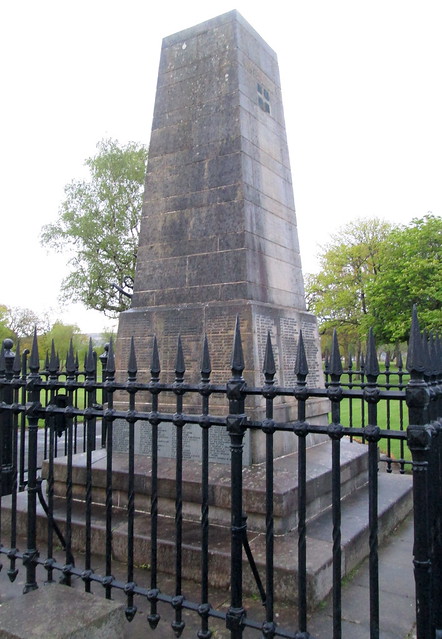
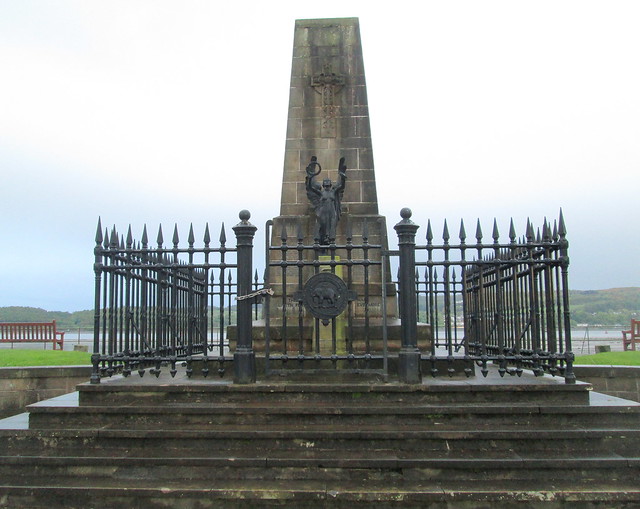
Dumbarton War Memorial

The Memorial is unusually situated some way out of the town centre, in Levengrove Park, on the banks of the River Clyde near its confluence with the River Leven, with a great view of Dumbarton Rock.

This is the view looking from the Park towards the Clyde. It’s the front of the Memorial which as a whole is surrounded by a metal fence and features a bronze angel.* Note the Elephant and Castle crest of Dumbarton on the gate:-

Dumbarton War Memorial, View Towards River Clyde

Reverse of the Memorial – the view towards the Park, again with Dumbarton crest on the fence:-

Dumbarton War Memorial

Again looking into Levengrove Park but from an angle:-
Dumbarton War Memorial from Side

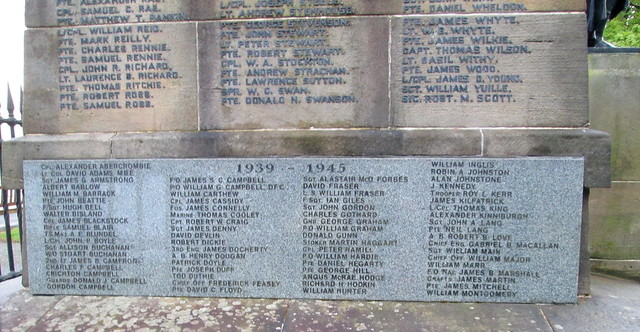
The names of the First World War dead are on each side, above in the original engraving; Second World War ones added below, on two sides only. This is the east side of the Memorial:-

Dumbarton War Memorial Names

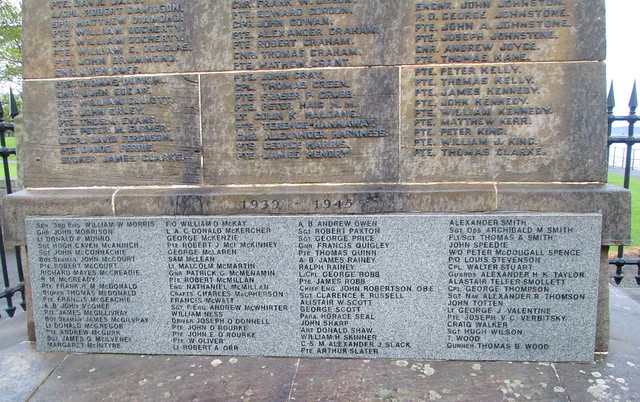
The west side:-

Dumbarton War Memorial Details

*This may actually be a winged Victory rather than an angel.

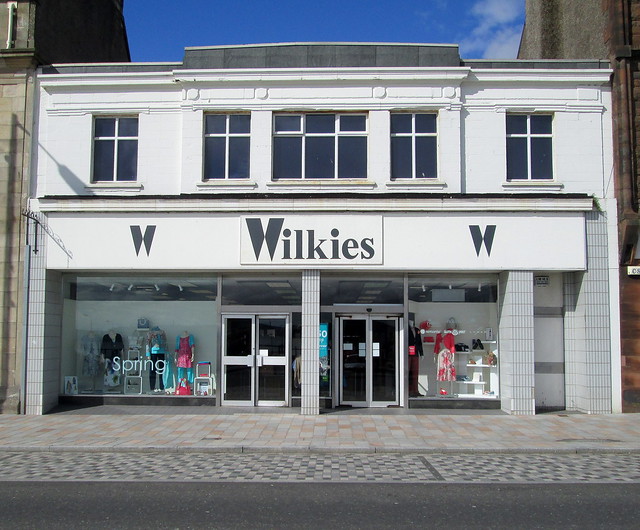
Scotland’s Art Deco Heritage 40: Helensburgh

Typically Art Deco former Woolworths building in Helensburgh, Scotland. Now a Wilkies:-

Former Woolworths Helensburgh

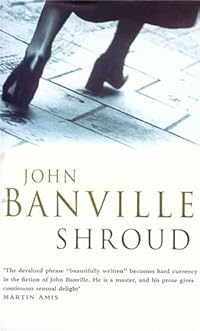
Shroud by John Banville

Picador, 2002, 416 p. (Borrowed from a threatened library.)

 Shroud cover

Axel Vander, an elderly academic on the east coast of the US, one-eyed and gammy-legged due to an unfortunate incident many years before, is contacted by a young woman who says she knows the secret of his past. They both travel to neutral ground, Turin, to meet. She is Catherine Cleave, called Cass. Somewhat precipitately, a sexual relationship begins between them. Though predominantly Vander’s story, even before their first encounter the narrative switches between their two viewpoints, his in first person, Cass’s in third.

His secret is that in the dark times of the early 1940s “Vander” (we never learn his “real” name) took on the identity of a childhood friend after that friend died and identity became something potentially dangerous. As a result, “Mendacity is second, no, is first nature to me. All my life I have lied …. to escape, to be loved, for placement and power. I lied to lie.”

Cass isn’t a simple blackmailer though quite why she seeks Vander out, or becomes his lover, remains obscure. And in the end it avails her nothing. She hears voices, as she suffers from Mandelbaum’s syndrome, a complex condition encompassing depression and delusion. She knows all about the Turin Shroud, which she wants them to visit together. (“He said he knew about fakes.”) Is there just a touch of the “too knowing” about this? Did Banville choose Turin for his setting only because of the Shroud – an obvious metaphor for the identity “Vander” has been wearing for most of a lifetime?

But Vander also compares himself to Harlequin, an inexplicable creature with no relationship with other human beings, and says, “I am an old leopard, my spots go all the way through.” His excuse for taking up with Cass is, “She was my last chance to be me,” asking rhetorically, “Is not love the mirror of burnished gold in which we contemplate our shining selves?” Then again, “There is not a sincere bone in the entire body of my text.”

When he professes to love Cass and tells Kristina Kovacs, his fellow academic and former one night stand, that he is willing to let her go, she replies, “Oh Axel, only someone incapable of love could love so selflessly.” A tale of contradictions, then, and of deceptions, revealed and unrevealed.

Be warned that Banville is fond of the obscure word or two. I hadn’t previously come across apocatastasis (restoration to the original or primordial condition) and pococurantish (demonstrating a tendency toward indifference.)

Pedant’s corner:- “the glass is clear” (The bottle banks have this wrong. Except when it is frosted, all glass is clear – even coloured glass: Banville meant colourless.)

Two More Glasgow War Memorials

These are in the grounds of the Kelvingrove Museum and Art Gallery, Glasgow; near the Cameronians Memorial.

First the West of Scotland Branch of the Normandy Veterans Association Memorial:-

West of Scotland Normandy Landings Memorial

Nearby is the City of Glasgow Squadron Auxiliary Air Force Memorial. (One of the squadron’s Spitfires is on display in the Museum):-

City of Glasgow Squadron War Mem

2015 Hugo Awards

Old news now I suppose. The results are here.

The Hugo Awards are, or at least have been, arguably the most prestigious in Science Fiction.

This year is notable for “No Award” coming first in five of the categories: thus equalling the total of “No Award” for all previous winners in the entire history of the Hugos. This would therefore be an odd phenomenon.

The explanation, for those who are unaware of the stushie, is that two groups of fans calling themselves Sad Puppies and Rabid Puppies tried to game the system by creating lists of recommendations in the various categories and asking those of like mind to nominate these and vote for them in the final ballot. All of which is perfectly within the rules.

The beef of the puppies appears to be (I summarise) that they think the Hugos have in recent years been taken over by political correctness with people of colour, other minorities and women being (in their view) disproportionately represented on award lists. One faction of the puppies ascribes this as due to the actions of what they call “Social Justice Warriors.”

Another viewpoint is that since they failed to win in previous years the Puppies are just bad losers.

An overview of the controversy is here.

The Puppies claim that the stories which have been winning have been unreadable. This is certainly not true of last year’s novel winner Ancillary Justice by Ann Leckie. I have this year’s novel winner The Three-Body Problem by Chinese writer Cixin Liu sitting on my bed-side cabinet awaiting reading for review in Interzone. I understand that had another nominee, put on the Puppies’ list without the author’s agreement, not withdrawn from the contest The Three-Body Problem would not have made it to the final ballot. This looks ironic given the Puppies’ view of minorities. (In Hugo terms a Chinese author is definitely a member of a minority.)

To counter the Puppy strategy some people had advocated voting “No Award” in every category in this year’s ballot. Quickly scanning the results it seems to me that the voters have taken their responsibilities seriously. The nuclear option of blanket “No Award” has been eschewed. Instead “No Award” seems to have been used in the sense for which it was intended; that if the voters considered no nominee merited the award they placed “No Award” first, otherwise they placed it after nominations considered worthy.

It may be, though, that the Hugo Awards are now damaged beyond repair.

Glasgow’s Art Deco Heritage 16: University of Glasgow

I don’t know precisely which building this is. It’s near the Physics (or is it still Natural Philosophy?) Building. I caught a glimpse of it on the path up from the Western Infirmary to the University but I couldn’t see a way round to its other side. Maybe next time I’m in the west end.

Art Deco Building, Univ of Glasgow

Dumbarton 0-2 Queen of the South

SPFL Tier 2, The Rock, 22/8/15.

OK. I admit it. It’s me. I’m the jinx.*

The three games we’ve won this season I’ve not been at. The three we haven’t won, I have. (Though this was the first time I’ve seen us beaten over 90 minutes.) And Queen of the South also kept their record of never having lost a goal at the Rock.

Queens were also more than a cut above either Queen’s Park or East Fife. They never looked in danger of losing said goal. I’ve just looked at the stats and they pretty much confirmed my impression. We only threatened with a Willie Gibson free-kick which the keeper pushed round the post.

Their first goal came when Mark Docherty got done by their wide man. The cross wasn’t cut out, came right across the goal and former Son Ian Russell did what he always does against us.

The second goal killed it (but to be fair, the first one had.) We switched off at a corner kick, allowing it to be played short and a cross to come in. Keeper Mark Brown was left exposed to try to contest the ball with their forward. Brown missed, the forward didn’t.

After that it was only a case of would they increase their lead? We never looked like reducing it. Debutant loanee Scott Brown came on but didn’t have much time to influence things, plus had a few wayward passes. Maybe when he’s had time to integrate with the squad. Midfielder Jon Routledge was given Sonstrust MOM. I couldn’t disagree. But he and Kevin Cawley were the only bright sparks. Garry Fleming just doesn’t look like a centre forward. He and strike partner Steven Craig never got into the game. From what I’ve seen of us so far this season it seems we’re going to struggle to score goals apart from set pieces. We got precious few set pieces today.

The main reason I went today was to try to buy a home top from the club shop. The queue before kick-off was so long I’d have missed some of the game. There was a steward blocking access at half time. At full time there was a sign up saying the shop was shut. I came home with no new top.

*I’m thinking of giving the game at Falkirk on Friday a miss. But it’s on BBC Alba. Will watching it on the TV make a difference?

PS:- I’m sad to see from the club website that three season stalwart Andy Graham has left “by mutual consent.” I think it’s fair to say new boss Stevie Aitken didn’t fancy him as first choice centre half. Sons fans will have fond memories of Andy. In particular his performance at Pittodrie in the cup quarter-final in season 2013-4 was immense.

free hit counter script