Headquarters Building, Chesters Fort, Hadrian’s Wall
Posted in Architecture, History, Trips at 12:00 on 11 December 2021
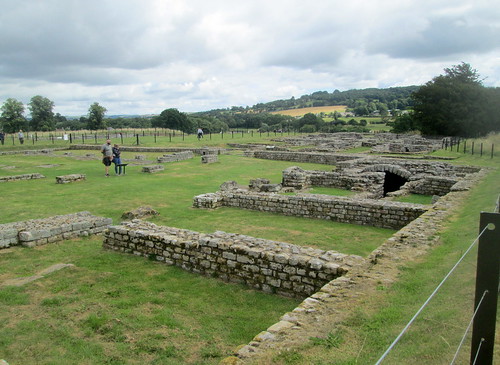
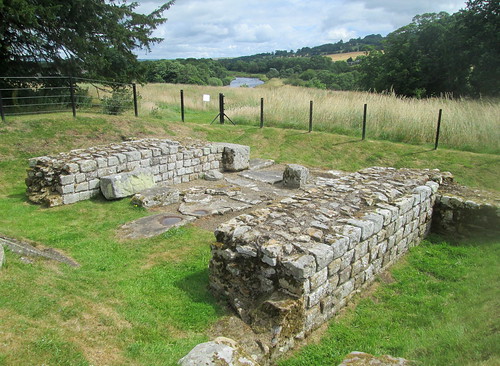
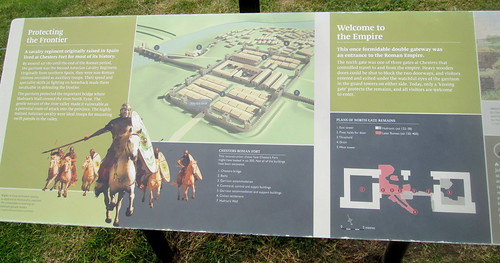
The information board shows how this would have looked in the fort’s heyday:-

It’s a little less imposing now:-


Posted in Architecture, History, Trips at 12:00 on 11 December 2021
The information board shows how this would have looked in the fort’s heyday:-
It’s a little less imposing now:-
Posted in Architecture, History, Trips at 12:00 on 7 December 2021
See previous posts on Chetsers Fort here and here.
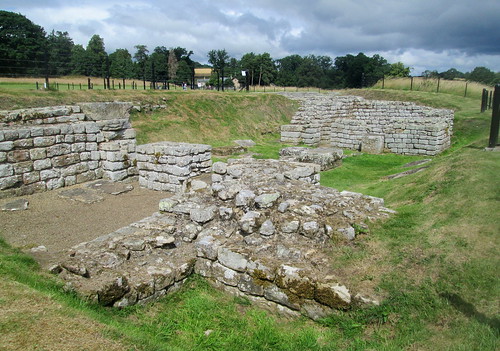
Main east gate. This is nearest the River North Tyne:-
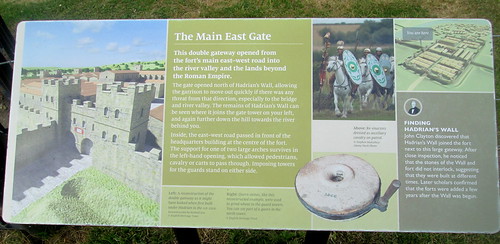
Main East Gate information board:-
West gate:-

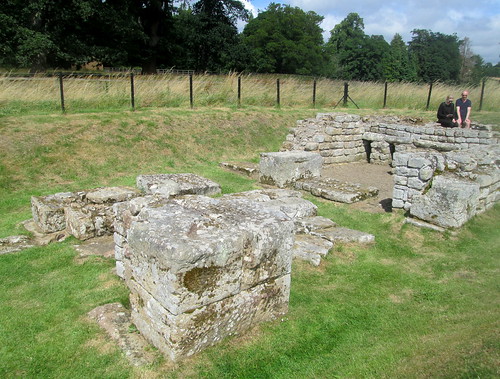
Posts; foundations for something or other:-

Vicinus houses lay outside the fort; local civilians or retired soldiers providing services to the fort would have set up houses/shops etc close by:-


Posted in Architecture, Bridges, History, Trips at 12:00 on 1 December 2021
The main body of Chesters Fort lies on a hill just above the river River North Tyne.
River from Chesters Fort:-

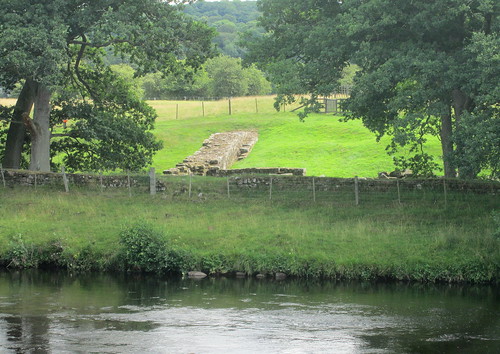
This shows the spot where a Roman bridge crossed the river:-
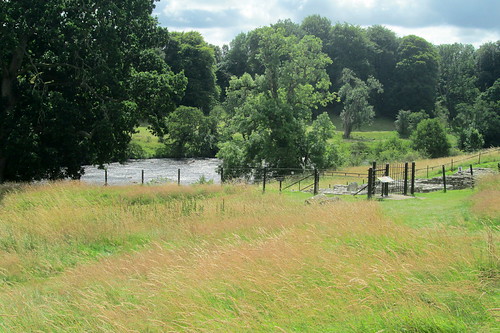
Eastern part of Hadrian’s Wall and bridge abutment:-

Closer view:-
Bridge information board showing how it looked:-

Between the bridge and the fort proper you can still see a part of Hadrian’s wall:-

Also down by the river are the baths the soldiers used:-

Lower part of baths complex:-
Posted in Architecture, History, Trips at 12:00 on 28 November 2021
Chesters Fort was one of the Roman forts stationed along Hadrian’s Wall. It lies a few miles north of Hexham, on a position commanding a crossing point on the river North Tyne.
It was a posting for a troop of cavalry originally raised in what is now Spain.
As a result the remains of the stables take up a fair bit of the site towards the entrance:


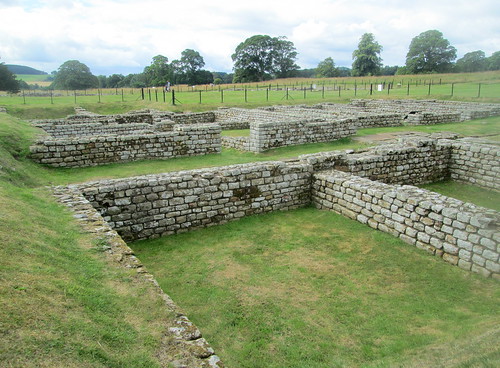

This one was taken from further up the hill, stables to left, Commandant’s House to right.
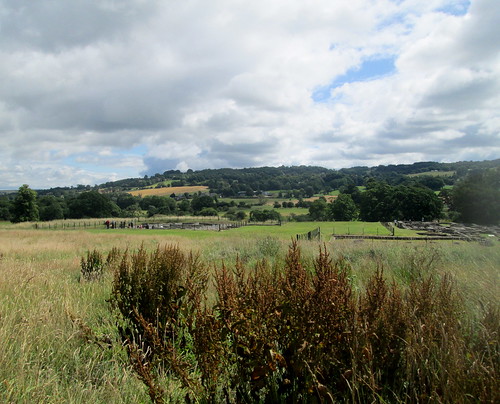
An interval tower:-

Tower at South-East Angle of fort:-

Posted in Fife, History, War Memorials at 12:00 on 13 June 2021
Lassodie is a village that no longer exists. When the pits which were its main employment – and reason for being – closed, the land was cleared of housing. A condition of the original granting of mineral rights, apparently.
Nevertheless it has a War Memorial, which lies beside the B912 between the villages of Kingseat and Kelty in Fife, near Loch Fitty.

Dedication. “Erected in grateful remembrance of the men of this village who fell in the Great War 1914-1918,” with below the “grow not old” lines from Laurence Binyon’s For the Fallen.

The Second World War dedication is inscribed on the southern side of the memorial. “To the glory of god and in memory of the men of Lassodie who fell in the 1939-1945 War.”

Situation. In fenced off square by B912 between Kingseat and Kelty:-

Posted in Curiosities, History, Trips, War Memorials at 12:00 on 6 June 2021
On the way back up from Peterborough we stopped off at the village of Aldborough in Yorkshire.
There are Roman remains there but the English Heritage site was shut due to Covid restrictions so we couldn’t access them. Maybe another time.
Aldborough is one of those English villages centred round a village green. It’s slightly unusual in that the green still has a maypole.


The other part of the green has a lovely oak tree on it:-

There was the obligatory church (St Andrew’s):-


Another historical hangover is the presence of stocks:-

The memorial you can see beyond the stocks in the photo above was erected on the 50th anniversary of an air crash where due to the skill of the pilot the aeroplane narrowly avoided Aldborough. All seven crew were killed.

This stone is just along from the memorial. It records where MPs for Aldborough and Boroughbridge were elected in the days before the Great Reform Act of 1832. Was Aldborough a rotten borough?

Posted in History, Trips at 12:00 on 31 May 2021
There are memorials to two Queens in Peterborough Cathedral, Katherine of Aragon and Mary, Queen of Scots.
The cathedral actually contains the tomb of the first of those. She died in Kimbolton Castle and Peterborough was presumably the nearest viable option given Henry VIII would have wanted the whoel thing over with quickly:-

Tomb inscription. “Here lies the body of Katherine of Aragon, Queen of England, wife of Henry VIII, who died at Kimbolton Castle on the (obscured) day of January 1535/6 aged 49 years.” Note the two pomegranates on the tomb. The pomegranate was Katherine’s personal symbol:-

Plaque on pillar to the side. “A Queen cherished by the English people for her piety, courage and compassion.”

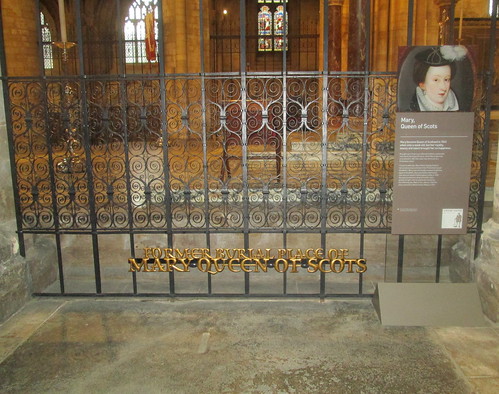
Mary’s body was moved from Peterborough by order of her son King James VI (and I) so a stone inscription now lies on a pillar near where its location was

Posted in History, Museums at 12:00 on 26 May 2021
The codebreakers at Bletchley Park were indebted to the Polish secret service for helping break the Enigma code and for smuggling an Enigma machine to them just as war broke out.
At the entrance to the courtyard of houses seen in yesterday’s post lies a memorial to three of these Polish contributors. In Polish and English it commemorates, “the work of Marian Rejewski, Jerzy Różycki and Henryk Zygalski, mathematicians of the Polish intelligence service, in first breaking the Enigma code. Their work greatly assisted the Bletchley Park code breakers and contributed to the Allied victory in World War II.”


Nearer the main museum building is this memorial to those who worked at Bletchley Park. The letters read, “WE ALSO SERVED.”

Reverse of memorial:-

Posted in History, Museums at 20:30 on 25 May 2021
World War 2 wasn’t all technology driven.
One of the exhibits at Bletchley Park featured the contribution pigeons made to message carrying.
The pigeons were parachuted into occupied Europe using contraptions like this:-

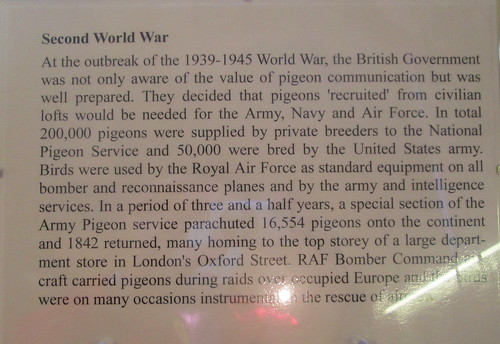
Information board:-
Memorial to a pigeon winner of a gallantry medal. They also served:-

Posted in Architecture, History, Museums at 12:00 on 25 May 2021
There were few facilities at Bletchley Park other than the working spaces. They did have a tennis court and there was the possibility of picnics etc on the lawns.
To simulate this outdoor loudspeakers at the modern museum play voices as if there’s a tennis match or picnic going on.
Some of the workers lived (just slept probably) off-site but there was some accomodation for others.
These buildings enclosing a courtyard were beyond the tennis court:-
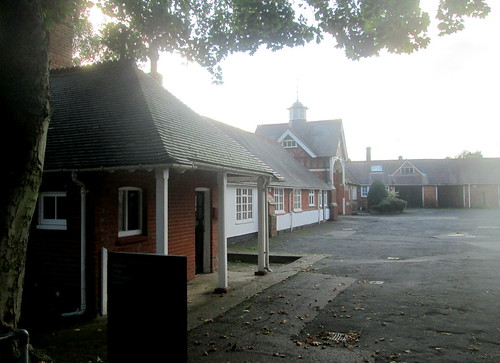
Side of building to left above:-

There was a lovely stained glass window in the side wall here:-

Other side of courtyard:-
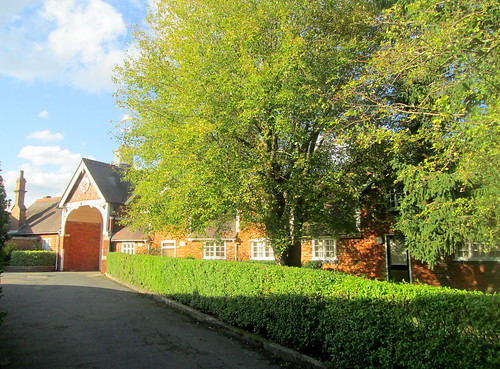
In courtyard to right of arch in photo above:-

Arch into courtyard:-

