Collins, 1950, 510 p, including 2 p Note, 3 p Contents and 4p list of Characters.

This is the second of Barke’s Immortal Memory sequence chronicling the life of Robert Burns. He is now in young adulthood and has moved to the farm of Mossgiel, near Mauchline, with brother Gilbert and the rest of his family. We meet Jean Armour before Burns does, and she is presented as an obedient, dutiful daughter.
Burns is in trouble with the local minister, known as Daddy Auld. He has already fathered a child to Betty Paton, but his penance for this, on the cutty stool, takes place in the nearby parish of Tarbolton since that is where the offence occurred. He was fined one guinea and his sin considered absolved. (This strikes me as akin to those indulgences of the Catholic Church which so enraged the early Protestant reformers.) It is his poems and intellect which most worry Auld, however, who realizes that the best way to undermine Burns will be through his sexual misdemeanours. To that end he enjoins two of his elders, Willie Fisher and James Lamie, to collect evidence against Burns. Fisher is that hypocritical individual about whom Burns would write Holy Willie’s Prayer. (Another long poem, about Mauchline’s Holy Fair, also excites Auld’s ire.)
Burns and his cronies disparage these prurient creatures as the houghmagandie pack, and the fascination of the Church with controlling sexuality (which seems to be the goal of all religions) is noted. “Auld had long been made aware of the peculiar fact that when any of the congregation had to appear on the sessional carpet for a sexual offence, he could count on a full attendance from his lay-shepherds. No other sin so excited their holy zeal for probing into the mystery of the passionate relationship between man and woman and the theological relationship between both and the Presbyterian conception of God.”
When Burns meets Jean he is immediately smitten (though he does have a weakness for imagining himself in love.) Jean’s father dislikes him on reputation alone and has already forbidden her to have anything to do with him. But the attraction is too strong for both of them and she and Burns sign a paper to the effect that they have married. This is without benefit of clergy but would apparently have been recognised legally. He is too poor to support a wife though. The song in the green thorn tree of the book’s title is the one Jean sings at their trysting site.
The inevitable happens and Jean’s father and mother prevail on her to disown him, paper or no. Incensed, Burns turns to Highland Mary (Campbell) for solace and resolves to leave for the Caribbean, arranging a passage for himself and Mary whom he dispatches to Greenock to hide her pregnancy. Some boy, as they say.
In the meantime his poem some of which Barke has Burns conjure up on the spot, have been gaining a reputation and it is arranged for a book of his poetry (Chiefly in the Scottish Dialect) to be published by subscription, or at least promise of payment. He wrestles over which verses to publish as some may be considered too controversial, publishers then, as now, reluctant to take too much of a risk.
Barke’s writing is workmanlike, with occasional veerings into purple prose when describing landscape. Several of the quoted poems have their verses written as speech which detracts from the ability to read them as poems but since Burns was reciting them to others I suppose that’s fair enough. The characterisation is broad brush.
I note that the Church’s strictures against houghmagandie seem to have been spectacularly unsuccessful as several instances of compearing are mentioned in the book – including that of a couple who married before the evidence blossomed, though their marriage did not in any way mitigate the offence. When Burns has to stand for his “fornication” with Jean Armour there is no room on the cutty stool. He is one of five people, including Jean, arraigned on the same day.
Pedant’s corner:- Barke still spells the town Machlin rather than Mauchline, “womankind were crowding in” (womankind is singular; ‘womankind was crowding in’.) Surgeoners! (it was possessive not plural; ‘Surgeoner’s!’,) “knit his brows” (knitted.) “The company were soon in a grand mood” (The company was soon in a grand mood,) staunched (stanched.)


 This one is called Project Hanuman and it’s by Stewart Hotston.
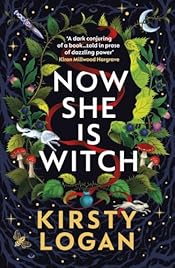 Lux was brought up by her mother in a house by the forest. Her mother was a healer and maker of poppets and possets, subject to suspicion because her baby had arrived suddenly with no man on the scene. Her mother gone, and Lux returned to the house after a sojourn in a sanctuary subject to strict religious rules, she is living alone when a woman, Else, arrives seeking her help to poison the local lord “‘who calls women witches so that he has an excuse to kill them.’” That same night Lux’s house is attacked by some of the local boys. They are driven off by a wolf, which may be Else in transfigured form, but not before the house is set on fire. Lux and Else set off together into the forest. The rest of the tale follows both – but mainly Lux – until she eventually finds employment in the lord’s castle, with Else tending to the herb/poison garden, and their misadventures there. I note here that Logan attributes to the lady of the manor more agency than a woman in her situation is likely to have had.


