Posted in Cruise, Trips, War Memorials at 10:00 on 8 April 2017
Porto’s War Memorial is an imposing structure with a statue of a soldier reminiscent of many British War Memorials, set in a large square with a lovely pavemented approach:-


Plaque to those fallen in subsequent conficts:-

Plaque to commemorate 100 years since the start of World War 1:-

The base of the Memorial pedestal is decorated with representations of artillery shells:-

Sadly there was some grafitti on the base of the Memorial, a piece of which can just be seen to the right above.
Dedication to those who died in defence of overseas provinces. (If my deciphering of the Portuguese is correct):-

There are three cartouches on the Memorial, to the sides and rear. This one commemorates Angola, Naulila, Inhoga, Mongua, Ngiva:-

As best as I can make out this one says Franca, La Lys, Laventie, La Couture:-

And this one Mozambica (Mozambique,) Necomano? Sirra Micula? Namacourra?

No Comments »
Posted in Cruise, History, Trips, War Memorials at 10:00 on 5 April 2017
It is one of the less remembered aspects of the Great War that Portugal was one of the Allies and sent troops to fight on the Western Front.
Germany declared war on Portugal on 9/3/1916 though before that there had been tensions over sea trade embargoes and border clashes in Africa. 12,000 Portuguese troops died and 82,000 civilians due to food shortages.
In São Bento Railway Station in Porto we found a commemorative display of photographs of Portuguese involvement in the war.
Grande Guerra (the Great War):-
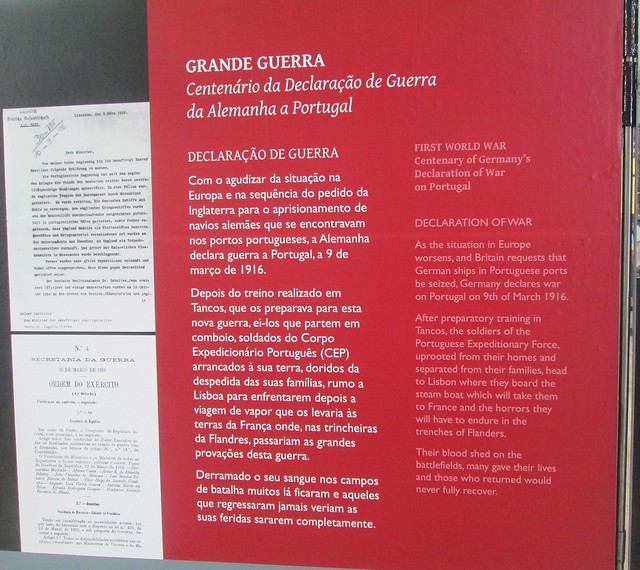
Declaração de guerra (Declaration of war):-
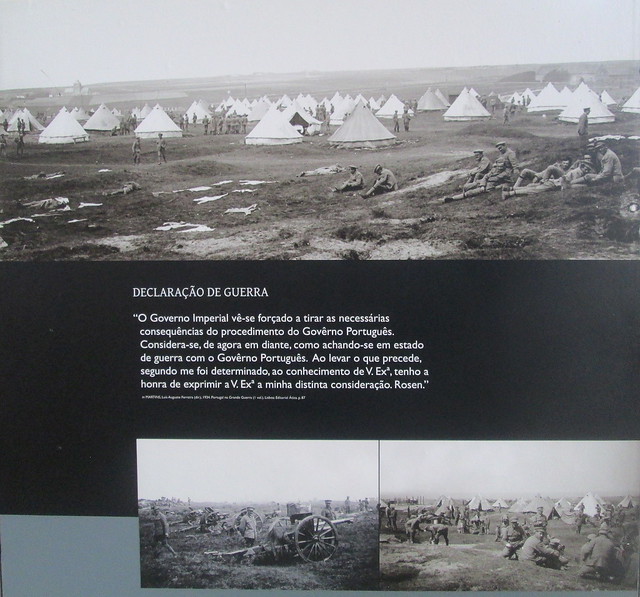
A caminho das trincheiras (Portuguese trenches?):-
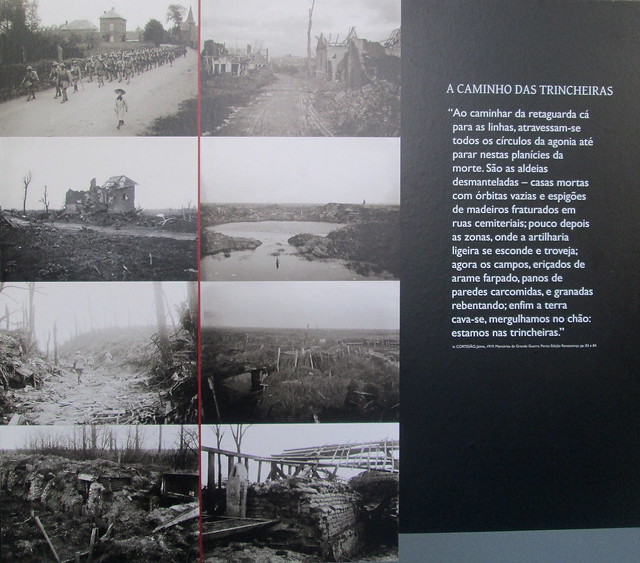
A retaguarda (Training?):-
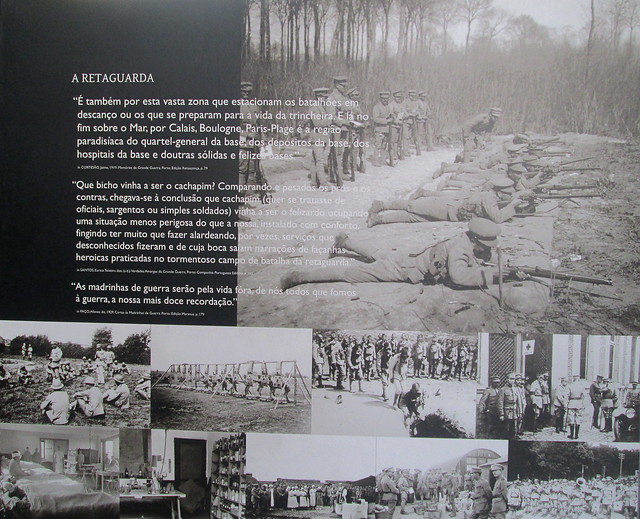
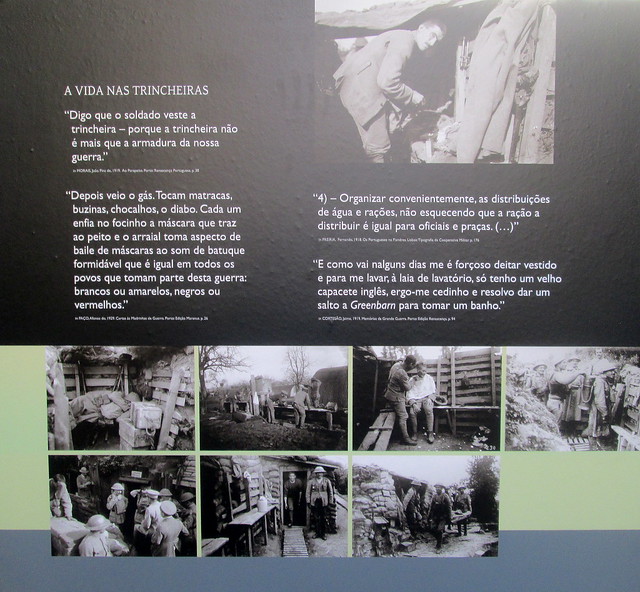
A vida nas trincheiras (Life in the trenches):-
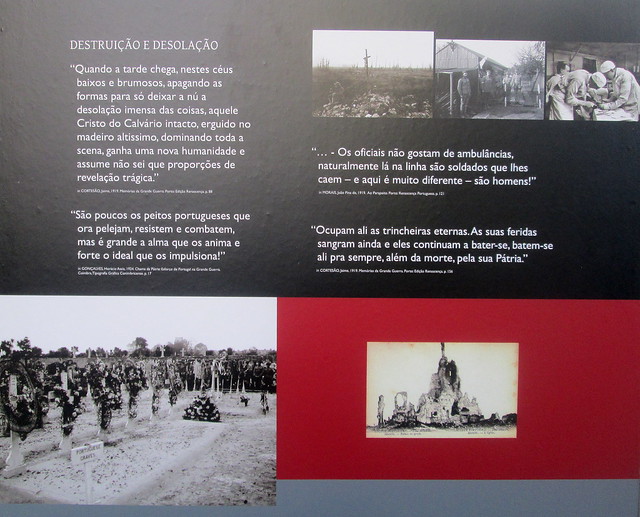
Destruição e desoleção (Destruction and desolation?):-
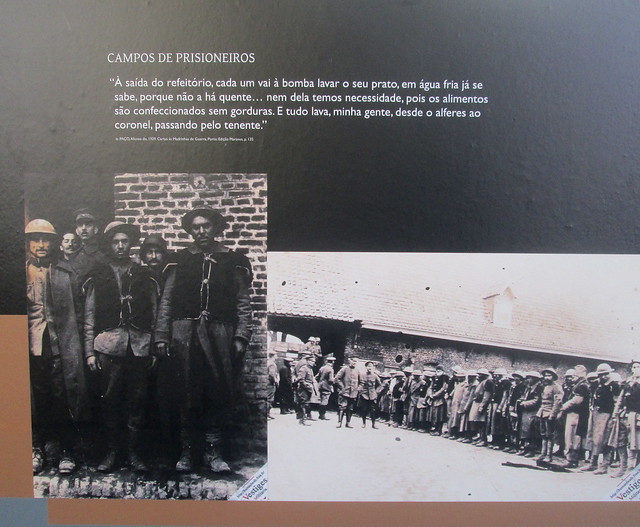
Campos de prisoneiros (POW Camps):-
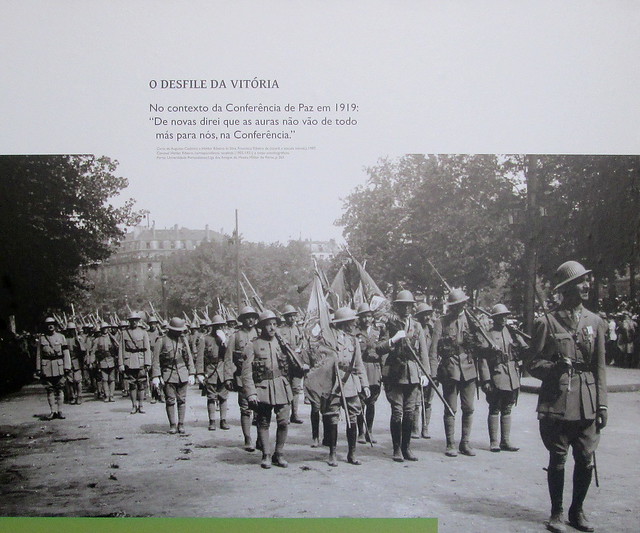
O desfile da vitoria (Victory parade?):-
No Comments »
Posted in Architecture, Cruise, Trips at 10:00 on 4 April 2017
The best tiling we saw in Porto was at São Bento Railway Station (Estação de São Bento.)
I neglected to take a photo of the exterior. This one is from TripAdvisor:-

No tiles there obviously. But the vestibule was fantastic – not to mention packed with people whom it was impossible to avoid getting in the pictures except when only photographing the upper portions:-


The frieze at the top showed agricuktural scenes:-

I had to stitch two photos of the corniced ceiling to get most of it in. The words Minho and Douro refer to the province in which Porto is situated (between the Minho and dDouro rivers):-

This brilliant interior reminded me of Groningen Railway Station.
No Comments »
Posted in Architecture, Cruise, Trips at 21:00 on 3 April 2017
One of the architectural features of buildings in Porto was tiling, as in this church:-

See the side wall:-

This had extensive tiling:-

And this was striking:-

It wasn’t just tiling. I liked the architectural sculpture of a lion here:-

Some buildings were less ornate but still relatively exotic to Scottish eyes:-

No Comments »
Posted in Cruise, Trips at 10:00 on 2 April 2017
Coming out of Trindad Metro station we headed downhill. Almost the first thing we came across was this delightful pavement:-

Imagine that in a city in the UK!
It ran down by the side of an extremely impressive building which I believe is the City Hall:-

The huge plaza below it led to a road junction beside which was an equestrian statue of Don Pedro IV (Dom Pedro IV – and I of Brazil) aka “The Liberator”:-

Further into the city I found this statue of Henry the Navigator, of whom I had learned when I visited Lisbon in my extreme youth:-


This road train just trundled along as we were in a leafy square in Porto:-

No Comments »
Posted in Bridges, Cruise, Trips at 20:38 on 30 March 2017
Porto (Oporto) has a brilliant tram/metro system with six different lines (which sometimes meet up) and 80 or so stations.
It was the first time on the cruise we’d had to negotiate a foreign transport network, but the ticketing machine had an English option and was easy to use. The tickets were also cheap. For a fifteen or so stop ride into Porto from Matosinhos the cost was €2.60 return; for two!
The one we got on was heading for the home of Porto FC, Estádio do Dragão, but we had been told to get off at Trindad for the main part of the city so I never saw the stadium.
These photos were all taken on the way back when we had to make a change.

There are at least two types of tram on the Porto Metro system as seen here:-

The tram on the opposite track was going to the Estádio do Dragão. You can just about make that out on its destination board, even though it’s coupled up:-

Our final destination tram to Senhor de Matosinhos, though our stop was Matosinhos Sul:-

Porto’s metro system – it’s really a light rail – goes along streets, underground and even over the River Douro via the Dom Luis I bridge (Puente Don Luis I):-

No Comments »
Posted in Art, Cruise, Sculpture, Trips at 10:00 on 30 March 2017
This is a panorama of Leixões from the SS Black Watch’s bow:-

On the edge of the beach near the harbour entrance lies this monument “Tragédia do Mar” or “Tragedy of the Sea” a sculpture commemorating the Shipwreck of 1947, where 152 sailors lost their lives:-


Much further along the promenade, too far away for us to walk to as we were pushed for time getting back to the ship, was this sculpture, “She Changes” by artist Janet Echelman.

I found this better photo by António M.L. Cabral on the internet:-

No Comments »
Posted in Cruise, Trips at 20:25 on 28 March 2017
I had only heard of Leixões before through the football team bearing that name, actually part of a wider sporting club. Leixões is however the port for Porto.
Like Avilés, Leixões has an architecturally interesting building by the dockside.
This photo from distance was actually taken when we were leaving port:-

There was a metal sort of walkway or loading way leading out from the building:-

See in this photo how the loading way’s roof bends over to become its wall:-

That curve can be seen here and the building as a whole:-

Views from dockside:-


Part of the structure is supported by these leaning pillars:-

I believe the building may house art exhibits at times. There was none when we were there though. Interior:-
 >
>

From Matosinhos beach:-

No Comments »
Posted in Cruise, Trips at 20:00 on 26 March 2017
The bunkering finished and the Black Watch eventually set off some hours late.
Ferrol harbour outlet:-
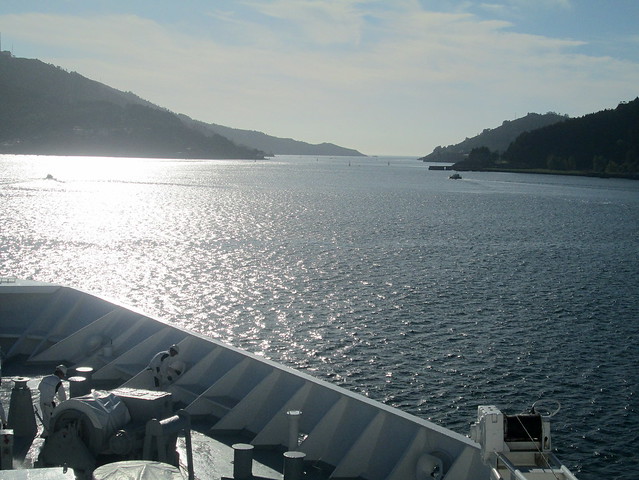
On the starboard side was this collection of houses:-

This was a different (small) harbour on the port side as we sailed. Mugardos?:-

The estuary narrowed for a bit on the way out and there were old fortifications on each side of the estuary.
To port side:-

To starboard was the Castle San Felipe (Castelo San Felipe):-

Castle San Felipe slipway:-

If you look carefully at this photo you should see some gunsmoke coming from the castle. As a “greeting” to the ship there was a guy in mediaeval costume firing a blunderbuss or some such thing:-

Castle San Felipe:-

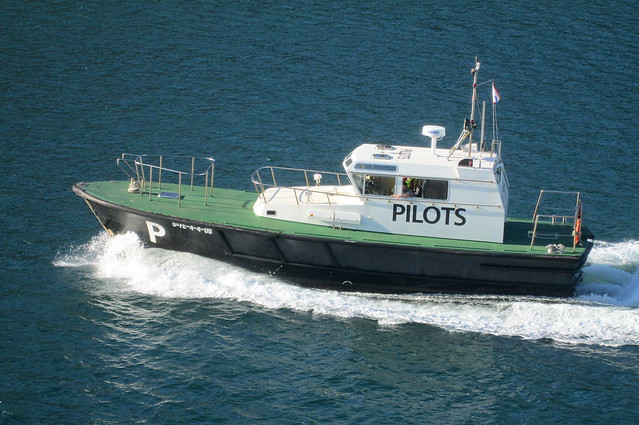
Looking back to port side fortification, pilot boat following the ship:-

There was a third fortification on the starboard side a bit further out from Ferrol. Pleasure boat in foreground:-

The pilot boat zoomed a little closer after we’d made it past the narrows:-
This quarry was the last sign of human activity before the ocean:-

No Comments »
Posted in Cruise, Trips at 10:00 on 25 March 2017
The harbour side, Ferrol. Lovely paving and trees:-
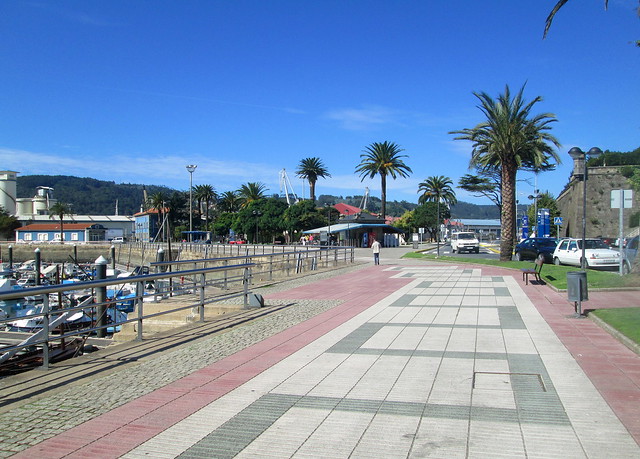
You can see the SS Black Watch in the background here berthed at Ferrol. That beardy bloke got in the photo again:-

Getting up on deck some time after we got back I could hear the sound of pipers again, coming from the quayside. I assume these were the Galician variety:-

I took some video. Click on the picture to take you to it. Galician pipes have a less strident sound than the Scottish variety:-

There was a delay to our departure because of what at first I couldn’t make out from the ship’s PA. I eventually cottoned on they’d said they were “bunkering”. I was amused that the same word is still used even though the ship won’t have coal bunkers but oil tanks instead.
It was a beautiful warm day and the ship put on an impromptu deck party, complete with six piece band.

My cynical self had the thought that they did this to push sales of sangria to offset any excess berthing fees arising from the overstay.
No Comments »

