Archives » Walter Scott

Guy Mannering by Walter Scott 

Or: The Astrologer. Edited by P D Garside.

The Edinburgh Edition of the Waverley Novels, Edinburgh University Press, 1999, 356 p plus 53 p Essay on the Text, 50 p Emendation list, 2 p list of end-of-line “hard” hyphens, 16 p Historical Note, 67 p Explanatory Notes, 20 p Glossary, i p Foreword, i p Contents vi p General Introduction to the Edinburgh Edition, and iii p Acknowledgements. Guy Mannering first published 1815.

Reading Scott these days is an exercise in completion or in acknowledging roots. The roots of long-form fiction, of Scottish story-telling, of the historical novel as a genre.

For time has not been good to novels like this. First there is the author’s prolixity, words thrown about with abandon, then there is the long outmoded practice of addresses to the reader, not to mention direct statements of what will come next, all of which are now passé. More problematically, from very early on the reader has no doubt in which direction this is going, since the plot here is that of the long-lost heir (with a touch of Romeo and Juliet thrown in.) When Scott wrote it, most likely such a story was fresh and new, but in the intervening 210 years it has become all too familiar. And story-telling itself has changed.

The Guy Mannering of the title comes to the estate and house of Ellangowan in Galloway on the night the lady of the house is to give birth to her first child. Mannering casts a horoscope for the boy which predicts misfortunes when he will be aged five and ten plus a further significant event at twenty-two. As well as the laird, Godfrey Bertram, Mannering meets the taciturn dominie Abel Sampson (who however is prone to uttering the word pro-dig-i-ous, in that elongated fashion, when over-excited) and the – kenspeckle, since she is very tall for a woman – gipsy Meg Merrilies. At this point Scott digresses into a discourse on the history in Scotland of what some at the time termed Egyptians, who had been rendered by law to be common and habitual thieves. His sympathies are with Meg however as she is to some extent the heroine (if one there be) of his tale. Five years later, as Mrs Bertram is in labour with a daughter, a murder occurs on the estate, blamed on smugglers, and the son of the house is kidnapped. Bertram, meanwhile, is not a good guardian of the estate’s fortunes and by seventeen further years’ time the estate, in the absence of a male heir, is to be sold by roup.

Mannering, who has been soldiering in India, where his own daughter Julia formed an attachment to one of his subordinates whom Mannering thought unsuitable and whose death he thinks he caused, has now returned and attempts to buy Ellangowan but is too late due to dealing with a concern of the friend with whom Julia is staying, and so takes another house nearby. That subordinate, of the name Vanbeest Brown from a sojourn in Holland, is still alive and in communication with Mannering’s daughter Julia.

On his way to Galloway, Brown saves a local farmer, Andrew (known as Dandie) Dinmont, who breeds terriers, from robbery by two ruffians. Dinmont becomes a fast friend and is instrumental in aiding Brown when he meets difficulties later on.

Even from this short summary it is perhaps obvious who is the lost heir and what part of the resolution will be.

The novel is not without its moments, though, and there are incidents aplenty, as how could there not be in a tale involving smugglers, gipsies, a murder, abduction and thwarted inheritances? Gilbert Glossin, who actually bought Ellangowan, is as slippery a character as you might wish, and the lawyer Pleydell – along with Dinmont – larger than life, but the women, Meg Merrilies apart, tend to be ciphers. In the end the tale is more Brown’s than Guy Mannering’s though and the astrology aspect falls by the wayside. Perhaps as his plot developed Scott lost (fore?)sight of it.


Pedant’s corner:- early nineteenth century spellings, chuse, exstacy, eve’sdropper, paralytick, etc, etc; “the place from whence he came” (since whence means ‘from where’ then ‘from whence’ incorporates a repetition; ‘the place whence he came’.) “None …. were present” (None … was present. Several more examples of ‘none’ with a plural verb,) whiskey (whisky,) a full stop at the end of a question, “from thence” (again repetitious, thence = ‘from where’,) “Meg Merrilies’ wound” (Merrilies’s.) In the essay on the text; miniscule (minuscule.)
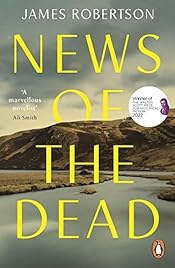
News of the Dead by James Robertson

Penguin, 2022, 374 p.

The book is set in a remote(ish) Highland glen, Glen Conach, named for the (unofficial) Saint who first converted the locals to Christianity, in three different time periods.

There are extracts from the Book of Conach, amounting to tales of his doings and good deeds. (In many ways these reminded me of the life of the Zen Buddhist, Hakuin Ekaku, as told in Alan Spence’s Night Boat. Then again the lives of religious ascetics are all probably very similar.)

That book was in the early 1800s in the library of Thomas Milne, Baron of Glen Conach, and a certain Charles Kirkliston Gibb had been invited (or invited himself) to examine and translate it. Dated entries from Gibbs’s journal of the time, found in the house’s ruins after it was destroyed by fire in the 1830s, are the other major thread. Gibbs thinks Milne is “surely a Tory but even sixty years since that did not oblige a man to be a Jacobite.…. Most Scots are Jacobite to some degree, whether they own it or not. Lamenting ‘what might have been’ eases our guilt at having thrown in our lot with the English. It is part of our character, I think, to love a lost cause.” The ‘sixty years since’ reference to Scott’s Waverley and the latter sentiments of this passage are another example of this perennial Scottish Literature itch.

The third strand, from the present day, gives us the thoughts of an old woman, Maja, who has a benign interest in a young boy, Lachie, who tells her he has seen a ghost. Her musings are a kind of framing device, topping and tailing the book. This gives the novel’s structure an unbalanced feel, though. The extracts from the book of Conach are undoubtedly necessary but they are too many and can feel repetitive. (Read about one ascetic and you’ve read about them all.)

The book’s transcriber Gibbs is a complete chancer, wanting to spin his examination of it out in order to avail himself of his host’s hospitality for as long as possible and casting around in his mind for which laird of his acquaintance he can sponge off next. Nevertheless, his debates with Baron Conach provide scope for philosophising. The Baron tells him, “‘Humans are the same in whatever condition they are found, though when men from different societies are by chance thrown together they may perceive themselves to be so unalike that one takes flight, while another worships, a third enslaves and a fourth murders his fellow creature. This is tragedy, my dear Charles, but is it not true? When Cain slew Abel he slew himself also.’”

Gibbs finds himself at first repelled by the Baron’s daughter Jessie’s birthmark but they become drawn together as much by proximity as anything else. The servant, Elspeth, though, has the best lines. She sees through Gibbs from the off and is as perky and sassy as you could wish. Her connections to the family are strong enough for her to have eyes on the estate’s heir. She says she’ll take a soldier for herself. Alexander Milne is indeed away with the army – as countless others from the glen have been, some not to come back, a familiar Highland tale. The army’s expedition to Walcheren ends badly, of course. But it does bring Elspeth her soldier.

The village is a microcosm, the local dominie and the minister both harbouring secrets. Gibbs reflects on one of the minister’s sermons that “The common folk of Scotland yield to none in their religiosity but I do wonder sometimes how deep it runs, and if one day they might suddenly discard it.” Perhaps a latter day thought untimely ripp’d.

In the present day researchers from university are scouring the glen to record oral tales of Conach, the details of which sometimes differ from those in the long lost book.

We end with Maja’s tale of the dumb lass, a stranger like Conach, who turned up in the glen in the aftermath of the Second World War and was taken in. “We humans have our waifs and strays like any other species of animal. We probably have far more.” The lass was dumb only in the sense that she did not speak.

A book, then, about kindness to strangers, refuge, and place in the world.

Robertson is never less than worth reading.


Pedant’s corner:- “came to nought” (came to naught.)

Ringan Gilhaize by John Galt

Or, The Covenanters.

Edited by Patricia J Wilson. Scottish Academic Press, 1984, 375 p (including 33p Notes on the Text and 10 p Glossary) plus xii p Introduction ii p Notes, ii p Acknowledgements and iii p Note on the Text. Originally published in 1823.

Ringan Gilhaize cover

Compared to the lost cause of the Jacobites, endlessly retrodden by Scottish (and other) writers, the rise and defence of Calvinism in Scotland has been relatively neglected in the Scottish tradition. James Hogg’s The Brownie of Bodsbeck is an exception, as is Scott’s Old Mortality whose unsympathetic treatment of the Covenanting cause impelled Galt to write this riposte, and much more recently James Robertson gave us The Fanatic. The relevant events are seen through the eyes of the Gilhaize family but only in so far as any of its members were directly involved in them. The book is narrated by the titular Ringan Gilhaize and its first section tells of his grandfather’s activities during the Scottish Reformation, which in later life he endlessly recounted to the family round the fireside, and features his encounters with, among others, John Knox and James Stuart (the illegitimate half-brother of Mary Queen of Scots and whom on taking up the throne on her return from France she made Earl of Moray. A confirmed reformer, after Mary’s exile to England he became Regent of Scotland.) This time period was when the groundwork for the stern Calvinistic bent of Scottish Presbyterianism was laid and the text contains many examples of invective against prelacy, papistical idolaters and the Whore of Babylon.

The latter two sections deal with Ringan’s own life and times when, first Charles I, and later his son Charles II, tried to reintroduce elements of episcopacy into Scottish religious observance. This led in the former’s time to the signing of the National Covenant and a few years later the Solemn League and Covenant, which latter was essentially an anti-royal but certainly anti-Catholic agreement between Scottish Protestants and the English Parliament for Presbyterianiam to become the established religion south of the border. (These two Covenants are sometimes rolled into one in people’s minds but it was from them that the Covenanters – in that word’s pronunciation the emphasis is placed on the third syllable – gained their name.) The Covenanter’s insistence on the view that no king could interfere between a man’s conscience and God and that rebellion against any king who attempted to do so was justified, effectively made the Covenanters heirs to the Declaration of Arbroath and holders of the Scottish conscience.

The text of “Gilhaize’s” account is mainly in English larded with Scots words and forms of speech but has that wordiness that is characteristic of novels of its time and of course is reflecting the language of between two and three hundred years earlier than when Galt was writing. The dialogue, moreover, tends to be in very broad Scots indeed.

The novel is in part a history lesson since “Gilhaize” has to provide the background to the events he himself took part in. He therefore mentions the protests in St Giles Cathedral against the prayers in Charles I’s new Prayer Book as supposedly started by Janet (aka Jenny) Geddes (though her name does not appear in contemporary accounts,) a defiance of authority which led to open rebellion and the Wars of the Three Kingdoms. (For a long time these were known as the English Civil War despite the fact that they were precipitated by the necessity for Charles I to recall the English Parliament to provide money to suppress his Scottish religious rebels.)

After the Restoration of the Stuarts, fierce resentment resulted from Charles II’s apostasy in the matter of the Covenant which he had signed essentially in bad faith in what would now probably be called an act of real politique to bring the Scots Parliament onto his side in his war against Cromwell – a hopeless endeavour given the outcome of the Battle of Worcester. To the Covenanters signing was a sacred and binding act. Reneging on that could not be forgiven.

Galt’s focus on the affairs of one family allows him to illustrate the build up of both the petty and the major injustices of the anti-Covenanter legislation as well as Covenanters’ hatred of the favourite General of both the latter Stuart kings, James Graham of Claverhouse, whom the Covenanters dubbed “Bloody Clavers” for his enthusiastic prosecution of the sequestrations, fines, imprisonments and hangings which feed into the slow descent by Ringan into a haze of self-righteousness and moral zeal. A minor drawback of this is that most of the battles mentioned in the book take place off-stage since neither his grandfather nor Ringan himself were present at them. (Exceptions are Drumclog, Rullion Green in the Pentlands, and Killiecrankie, in all of which Ringan took part.)

The final vindication of the Covenanting resistance was the outcome of the “Glorious Revolution” of 1688 – here Galt has Gilhaize believe in the false propaganda that a man child was palmed off on the nation as the lawful son of James VII (and II,) known to Covenanters as “the Tyrant,” and his papistical wife – which secured the Protestant ascendancy in the form of William and Mary.

Two hundred year-old fiction is problematic for the modern reader at any time – patterns of language have changed, writers no longer need to pad out stories to reach a required word count, sentences tend to be less laboriously constructed – but the remoteness here is compounded by the dense nature of the history, the numbers of historical figures, the intensity of the religious discourse. Throughout, the book rings with Biblical imagery and allusions.

Though in their particulars its concerns have now passed into history in Scotland (except for their remnants being attached to a certain football rivalry) Ringan Gilhaize, as an examination of the mindset of the religious zealot, the firm believer in a higher calling, is salutary, and still has resonance for the present day. I’m glad I read it even if the prose does not always flow as smoothly as I might have wished.

Pedant’s corner:- In the Introduction; “worthy the attention” (worthy of the attention, or, worth the attention.) Otherwise: “the Earl of Angus’ house” (Angus’s,) St Giles’ kirkyard (St Giles’s,) her Highness’ presence (Highness’s.) “When she heard the voice or anyone talking in the street” (the voice of anyone talking,) juncutre (juncture,) a capital letter in the middle of a sentence (this may have been to signify a spoken phrase immediately after it; but that was followed by an opening quotation mark to signal the speech’s continuation,) thougt (thought.) In the Notes; divive (divine.)

Ashby de la Zouch Castle (ii)

Castle from its grounds:-

Ashby Castle, Leicestershire

Main tower block:-

Ashby Castle, Leicestershire,

Apparently this is William Lord Hastings’s tower:-

Ashby de la Zouch Castle Information Board

We climbed it. All 23 metres of it via 96 fairly steep steps. Knackering. This is a video of the panorama from the top. (All through our visit those church bells were ringing. It was a Saturday – the bell-ringers must have been practicing):-

Panorama From Tower Ashby de la Zouch

Formal Gardens information board. There was no way to avoid my shadow on it!:-

Shaded Information Board, Ashby de la Zouch Castle

This tower was in one corner of the grounds:-

Corner Tower, Ashby de la Zouch Castle

In its heyday the castle was a centre for “noble” sports:-

Ashby de la Zouch Castle, Information Board

This nearby field is said to be the jousting ground where Walter Scott set his tournament in Ivanhoe:-

Ashby Castle Jousting Grounds (ivanhoe)

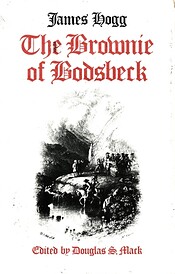
The Brownie of Bodsbeck by James Hogg

Edited by Douglas S Mack, Scottish Academic Press, 1976, 170 p; plus i p Acknowledgements, xi p Introduction, viii p Notes on the Text, x p Appendices, i p Select Bibliography, xvi p Explanatory and Textual Notes and xvii p Glossary. First published 1818.

 The Brownie of Bodsbeck  cover

The novel is set in Hogg’s country of southwest Scotland, the Dumfries and Galloway of Covenanting times, some years after the Battle of Bothwell Bridge. The defeated Covenanters were forced to scatter and hide, holding their prayer meetings in conventicles and taking cover where they might, in danger of being chased down by Government trooops. At times the air was filled with the eerie sound of their singing as if some unnatural creature were haunting the hills.

Despite not being of their persuasion and of the concomitant danger of arrest and execution, Walter Laidlaw, a farmer at Chapelhope, takes to giving some of the fugitives succour and shelter. As a result of her ministrations in this regard his daughter Katharine is in danger of being thought – even by her mother – a witch, and of consorting with the Brownie of Bodsbeck, a deformed supernatural creature believed to haunt Chapelhope. In the glossary a brownie is defined as a “benevolent household sprite, usually shaggy and of peculiar shape, who haunted houses, particularly farmhouses, and, if the servants treated him well, performed many tasks of drudgery for them while they were asleep.” (I mentioned this definition to the good lady who immediately reflected on how this assignation of drudgery to the name conformed with the junior arm of the Girl Guides.) The brownie is alternatively described as a goblin or evil spirit.

The plot gears up when soldiers under the commend of John Graham of Claverhouse, Viscount (“Bonnie”) Dundee, come to the area. Laidlaw is arrested, barely escapes being shot and is taken to Edinburgh for trial. In the meantime a local minister convinces Katharine’s mother to allow him to spend the night with the girl in the farm’s outshot to exorcise the evil she is thought to embody and not to open the door no matter what she might hear. (The only evil truly at hand is the minister’s intention of forcing himself on Katharine.) Katharine persuades him to hold off for a few hours and is rescued by apparitions coming out of the dark.

The behaviour and attitude of Claverhouse as shown here place him in a harsh, unforgiving light, a point over which he clashed with Walter Scott, but are in accord with Hogg’s memories of the stories told to him in his youth about the time.

The text is in the main in English but Hogg’s characters speak broad Scots, laden with the dialect of that area of the Borders. A difficulty in comprehension some may find is that a Highland sergeant’s soft sibilants are represented as in “pe” (for “be,”) “poy” (for “boy”) and “petween” (for “between”) plus the typical aspirations of his vowels are delightfully captured as in “couhnsel” for “counsel” and “tisgrhace” for disgrace.

The glossary is worth perusing on its own. Old Scots was a language very much concerned with agriculture and the land. I had heard of the dog breed whose name is derived from the fictional character in Scott’s Guy Mannering but hadn’t realised before reading it here that a dinmont is a castrated ram between the first and second shearing. (I later found a similar definition – but without the castrated bit – in my Chambers’ Dictionary.)

Hogg’s greatest literary accomplishment was The Private Memoirs and Confessions of a Justified Sinner, which is perhaps the finest ever Scottish novel, the progenitor of so many since. It would be hard for this book – any book – to hold a candle to that.

However, The Brownie of Bodsbeck is entertaining enough – one of those Scots novels that illuminate the past – and refreshing in that it does not focus on the usual suspect of Jacobitism. At times, though, it feels like two stories jammed together. Laidlaw’s tribulations are distinct from those of Katharine and the Brownie and the two don’t really mesh.

Pedant’s corner:- Clavers’ (Clavers’s,) wofully (old spelling but later rendered as woefully,) “the family were crowded round” (the family was.) In the glossary: an opened parenthesis never closed.

Theology Room, Gladstone’s Library, Hawarden, Wales

The library parts of Gladstone’s Library are reminiscent of Walter Scott’s home at Abbotsford but a bit grander. The larger of the two is the Theology Room, which, as its name suggests, mainly houses Gladstone’s collection of books on theology and religion.

Book racks, windows and gallery:-

Book Racks and Windows, Theology Room, Gladstone’s Library

The ceiling is impressive but the photo is badly focused, I’m afraid:-

Ceiling, Theology Room, Gladstone’s Library

Gallery support, complete with carving:-

Gallery Support,  Theology Room, Gladstone’s Library,

View to part of gallery:-

Upper Floor,  Theology Room, Gladstone’s Library,

A selection of periodicals on display:-

Periodicals,  Theology Room, Gladstone’s Library,

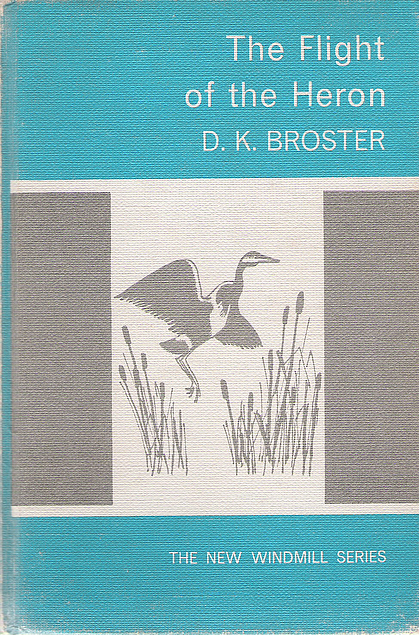
The Flight of the Heron by D K Broster

William Heinemann, 1956, 286 p. First published 1925.

 The Flight of the Heron cover

Broster wasn’t Scottish but the background to her story most certainly is, probably the most worked-over seam in Scottish history, the Jacobite Rebellion of 1745-6, from Scott kicking off the whole historical novel malarkey with Waverley to Diana Gabaldon’s Outlander.

The focus here is very much not on the battles of that rebellion but on the relationship between Jacobite Ewen Cameron (of Ardroy) and a Government Army Officer, the Englishman Captain (later Major) Keith Windham of the Royal Scots.

Just after Bonnie Prince Charlie has landed in Scotland, Windham is captured by Cameron (due to no fault of his own – his horse shying at a heron rising in front of it, which only slightly injures him but breaks the horse’s leg – leaving him all but defenceless.) Windham is surprised to find Cameron not the barbarian of his expectations but a gentleman with fine and chivalrous manners. Having given his parole, Windham is indebted to Cameron for intervening when on a stroll round the Ardroy estate he comes across locals retrieving their arms cache from the thatched roofs of their houses and is thereby thought to be a spy. In the meantime, we find that Cameron’s foster-father – who is a seer – has predicted that Cameron and Windham will meet a total of five times, leaving the reader totting up their encounters. Sure enough the pairs’ paths cross again in Edinburgh after the Battle of Prestonpans when Windham has sallied from the castle in an attempt to capture the Prince – to whom Cameron is now aide-de-camp – who is visiting a house nearby, and once again Windham finds himself indebted to Cameron for allowing him to escape the clutches of Highlander reinforcements.

Windham’s opportunity to repay these favours occurs in the aftermath of Culloden when he arrives just in time to prevent the execution of an almost dying Cameron – wounded and exhausted, barely able to stand – at the hands of a detachment of Government soldiers sweeping the countryside for rebels. Windham’s speiring of Cameron as to the whereabouts of Clan Chief Lochiel then becomes a source of distrust between them before two final meetings in prison resolve their situation.

The book is dedicated to Violet Jacob, whose Flemington – which covers much the same ground as this – and Tales from Angus I read in 2015. Broster is not as good a stylist as Jacob was, though. Indeed, her prose tends to the utilitarian, but she does have an eye for landscape.

It is, however, impossible to read this book nowadays without wondering about its undercurrent, Windham’s several times expressed “strong attraction” for Cameron. His striving to ensure Cameron does not suffer unduly in the Government soldiers’ hands – even to the point of incurring the direct displeasure of the Duke of Cumberland – speaks of something more than mere obligation or friendship. A something that perhaps could not be addressed in so many words on the book’s first printing in 1925.

Pedant’s corner:- the very first word! Prolouge (Prologue,) h (he,) “‘the Elector’s’” (the meaning was ‘of the ‘Elector’ hence, the ‘Elector’’s,) a missing full stop, “a file of soldiers were advancing” (a file … was advancing,) Glangarry (Glengarry, I think,) “more then stupefaction” (more than,) ‘Hangman Hawley (‘Hangman Hawley’,) Mullins’ (Mullins’s,) an unnecessary end quotation mark, “which was, be believed” (which was, he believed,) Babenoch (Badenoch,) “‘for you solicitude’” (your,) “aide-de-camps” (aides-de-camp, as was used elsewhere, except for one “aides-de-camps”) a few missing commas before pieces of direct speech, lous d’or (louis d’or,) will-o-the-wisps (wills-o-the-wisp,) “were else” (where else,) staunch (stanch.)

The Glorious Thing by Christine Orr

Merchiston Publishing, 2013, 235 p, plus i p Acknowledgements, iii p iv p Introduction by Yvonne mcCleery, iii p Afterword by Alistair McCleery, ii p About the author, ii p Discussion Questions. First published 1919.

The Glorious Thing cover

This novel is set on the Home Front during the Great War. David Grant has been invalided out of the Army and has returned home to Castlerig near Edinburgh to convalesce and build himself up. His path crosses with that of the Sutherland sisters, Effie, Nannie, Marion and Jullie.

Marion is unobtrusive and divides men into Bounders (too objectionable,) Selfish Lumps (too absorbed in their conversation to thank you when you passed them tea,) Silly Asses (attempting either to be funny or, worse, sentimental,) Nice Boys (foolish beyond expression) and Dear Old Things (usually friends of Uncle Alexander.) Only her brother Pat was an exception and she realises David Grant too doesn’t fit any of the bills.

Nothing very out of the ordinary occurs in the book: it is a quiet examination of ordinary lives carried on in uncommon circumstances. As soon as David encounters Marion it is obvious where the story will lead but there are complications along the way. “There is nothing more bitter than to have the sweetness of a friendship turned sour by a few interfering words, or the jests of thoughtless outsiders.” However, David’s early thought that “Life is a thing too glorious to be enjoyed” is not borne out except in the circumstances of Nannie’s fiancé’s death in the war and her subsequent attempt to find solace via spiritualism.

This sits somewhat at odds with David’s musings on “the artistic temperament” which he conceives “is a real and wonderful thing; nothing less than the power to understand and love the eternal beauty of the world.” Of course, it is; but the eternal beauty of the world can be an elusive thing to grasp.

The blurb describes Orr as a true hidden gem on the Scottish literary scene. Hidden certainly. I had never heard of her until a recent (though well pre-lockdown) visit to the Scottish Writers’ Museum in Edinburgh; an institution dedicated mainly to Burns, Scott and Stevenson but on one of whose walls was a description of Orr’s career – enough to spur me on to seek her writings out. Unfortunately most are long out of print; and scarce.

Despite being set during the Great War, The Glorious Thing still has a kind of Victorian sensibility – much like the Findlater sisters’ Crossriggs, but better written, and underneath it all, with the prevalence of women in the narrative, a sense of the changes the war wrought.

Pedant’s corner:- Minnie Grant says, ‘Aren’t I swanky?’ (The Scottish form is ‘Amn’t I?) Chambers’ (Chambers’s.) “‘I wonder what be thinks of us’” (what he thinks,) a missing comma before or after a piece of direct speech (a few times,) shrunk (shrank.) “All telegrams do not bring bad news.” (Not true; some telegrams did. What Orr meant was, “Not all telegrams bring bad news,) a speech which was carried over into the next paragraph had an end quotation mark before the paragraph break, “hearts tae break and nine tae sell” (“hearts tae break and none tae sell” makes more sense,) appall (appal.)

Scottish Design, V&A Dundee

Further to my post on Abbotsford, Walter Scott must be one of the few writers to have such a legacy, which I mentioned here.

In the section of the new V&A Dundee (posts passim) devoted to Scottish design there is a model of the Scott Monument the original of which stands in Princes Street, Edinburgh.

Model of Scott Monument:-

Model of Scott Monument

There is also a Robert Adam chimneypiece:-

Adam Fireplace

Some Arts & Crafts furniture:-

Arts and Crafts Furniture

A brooch designed to resemble a galaxy:-

Galaxy Brooch

A poster for the Festival of Britain‘s Industrial Light and Power Exhibition at the Kelvin Hall Glasgow:-

Poster for Festival of Britain Industrial Light and Power Exhibition

And a bookcase/cabinet by George Logan:-

Cabinet by George Logan

Abbotsford

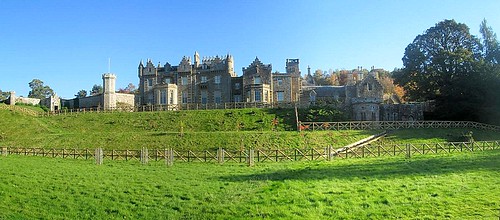
Abbotsford in the Scottish Borders near Melrose is of course the home Walter Scott built for himself after his phenomenal success as a poet and novelist.

Main entrance:-

Abbotsford Stitch

Abbotsford from River Tweed:-

Abbotsford Stitch

Fireplace in entrance hall:-
Abbotsford Fireplace, Sir Walter Scott, Abbotsford

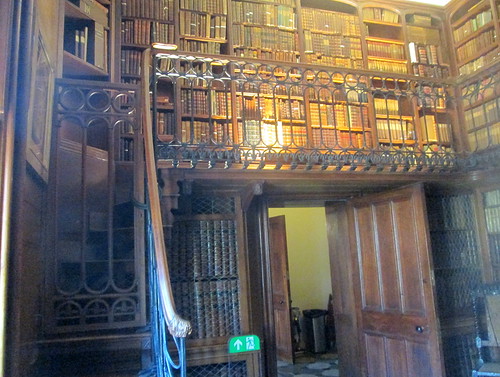
Study entrance and balcony. The study’s upper floor is lined with books:-

Abbotsford Study

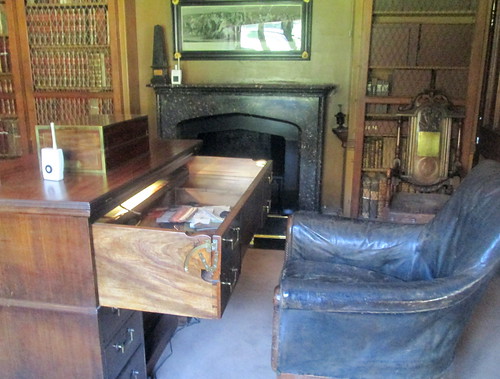
Scott’s desk:-

Abbotsford Study 1

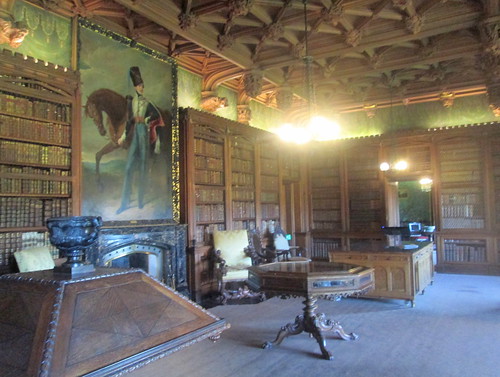
Library:-

Abbotsford Library

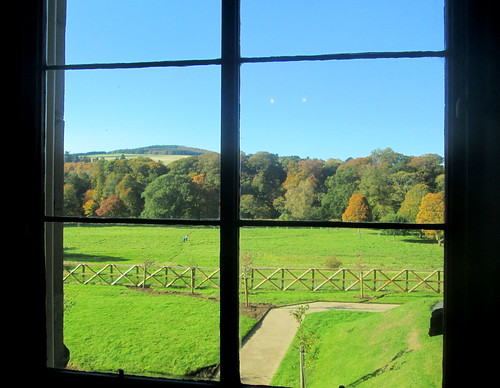
View to River Tweed from Library:-

Abbotsford Library Window

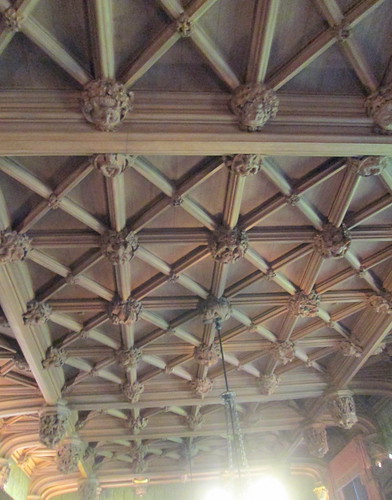
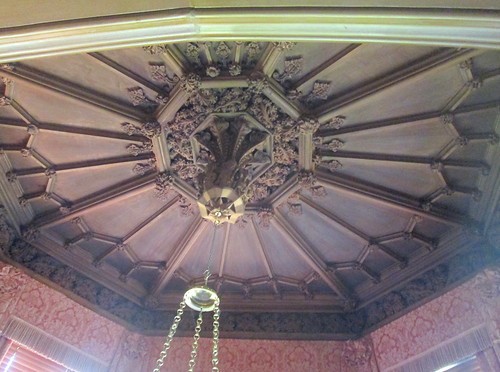
Library ceiling:-

Abbotsford Library Ceiling 2

Window alcove ceiling:-

Abbotsford Library Ceiling

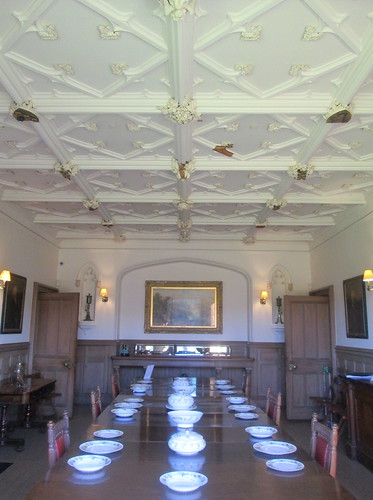
Dining room:-

Abbotsford  Dining Room

Dining room ceiling:-

Abbotsford  Dining Room , Sir Walter Scott, Scottish Borders

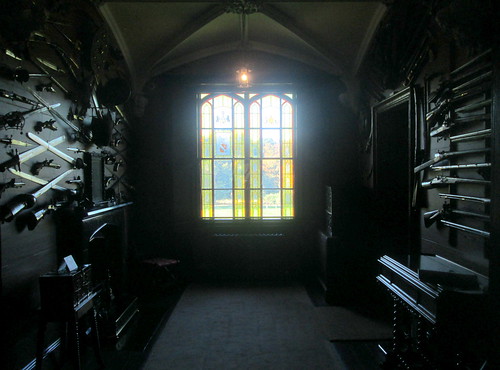
Armoury:-

Abbotsford  Armoury , Sir Walter Scott,

free hit counter script