Archives » 2024 » October

The Changeling by Robin Jenkins

Canongate Classics 22, 1995, 191 p, plus viii p Introduction by Alan Spence.
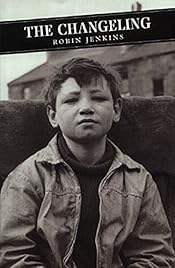
Charlie Forbes is an English teacher married to Mary, with a daughter Gillian and son Alistair. To the scorn and dismay of his headmaster and colleagues he considers one of his pupils, Tom Curdie, to be highly intelligent and worthy of encouragement. For Tom’s home is in Donaldson’s Court, ‘one of the worst slums in Europe’ and his dress matches that environment. Tom’s mother, her bidey-in – the crippled Shoogle not Tom’s father – and Tom’s brother Alec and sister Molly all share a single room in the Court. That Tom is sensitive – shown by his essays and choice of song at a competition – is a testament to him.

Forbes conceives that taking Tom on their annual holiday with his family “doon the watter” to Argyll will be to Tom’s benefit. (This is set in the grand old days when such expeditions by Clyde steamer were all but mandatory for Glasgow folk.) Forbes’s wife begs to differ about the prospect, Alistair is not bothered either way, but Gillian is suspicious. Prior to the trip we are made privy to Tom’s instincts when he breaks into the school at night to steal some money he knows has been left in a teacher’s desk. Nevertheless, Jenkins engages our sympathy towards him by revealing the circumstances of his home life.

As they approach the holiday destination, Forbes thinks to tell Tom, “‘In no other country in the world, not even in fabled Greece, is there loveliness so various and so inspiring in so small a space,’” but an inner voice, echoing one of his teaching colleagues, says to him “it’s guff, a lot of guff.” On landing, observing the other passengers disembark, Forbes recalls a coast landlady had once told him Glasgow folk were ones to splash the siller, East coasters and the English were far cannier.

A curiosity here is that Jenkins mentions other Clyde ports of call such as Kilcreggan, Craigendoran, Tighnabruaich, Largs, Millport and Rothesay but calls the Forbes family’s destination Towellan and its neighbour Dunroth rather than the Innellan and Dunoon on which they are obviously modelled.

Key incidents involve an encounter with a myxomatosic rabbit, Gillian spying on Tom on a trip to Dunroth where she witnesses him stealing two items of little worth but buying a more valuable present for Mary, the arrival of Tom’s friends Chick and Peerie and later of his mother and her brood, Shoogle and all.

While Forbes oscillates between being understanding to Tom and feeling there is nothing to be done to help him there is an evolution of others’ attitudes as the book progresses. Gillian eventually warms to Tom while Tom himself, having seen the possibilities life could have held for him turns in on himself. To reveal any more would constitute a spoiler.

As always with Jenkins the writing is assured, the insights sharp and his compassion for his characters shines through.

Sensitivity note. The text describes a photographer as a Jew.

Pedant’s corner:-  In the Introduction; V S Naipul (V S Naipaul,) Jenkins’ (x 2, Jenkins’s.) Otherwise none.

The Roman Baths, Bath (ii)

There are several pools at the Roman Baths in Bath. This perspex model shows the sequence in which water flows through the system:-

Model of Roman Baths, Bath

One of the pools has bubbles coming up through it:-

Bubbling Pool, Roman Baths, Bath

The darker line round the walls show where the water level once used to be:-

hot bath Bubbling Waters , Roman Bath

Bubbling Waters, Roman Baths, Bath

Thsi model shows how the exterior of the baths would have looked in Roman times:-

Model of Roman Baths, Bath

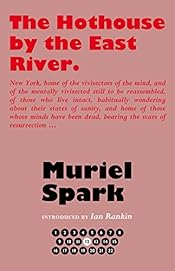
The Hothouse by the East River by Muriel Spark

Polygon, 2018, 138 p, plus iv p Foreword by Alan Taylor and viii p Introduction by Ian Rankin. First published in 1973.

(I thought I’d posted this review a few weeks ago but it seems I hadn’t. As a result of that thought I deleted my pedant’s corner notes. I kept the review’s text, though, as I also post them on a private blog I follow and contribute to. So here it is.)

Another of Spark’s enigmatic novels, unusually this time set in 1970s New York. Paul and Elsa are a relatively well off British couple living in Manhattan with a view of the East River. Elsa’s behaviour is erratic and Paul wonders if she is mad. As an emblem of this, great play is made of the appearance of Elsa’s shadow which always falls wrongly, as if she is lit from a different direction. Her analyst, Garven, spends a lot with them and later takes on the job of butler.

Elsa tells Paul she has recognised an assistant in a shoe shop as Kiel, a former German POW whom they had dealings with during the Second World War. Paul insists this man would be too young and, in any case, believes Kiel died not long after their acquaintance. Paul and Elsa had been employed in the war to try to gain as much information from the POWs as possible to which end Elsa went on long walks with Kiel (and it is likely that significantly more happened between them.)

Among the surreal events which take place is the first night of a production of Peter Pan, overseen by Paul and Elsa’s son, with only old people as the cast, brought to a halt when Elsa pelts the actors with tomatoes causing a disturbance large enough to have the police called.

These are tedious people carrying on pointless activities. That they are people who seem in fact to be dead (or in the case of Paul and Elsa’s children never to have lived at all) perhaps explains it all, but that would be little more satisfactory than stating that it was all a dream, rendering the whole enterprise a bit meaningless. If they are dead what relevance do their interactions have to everyday life or to the human condition? What lesson can be drawn from them?

Kate Atkinson dealt much better with this kind of dilemma in A God in Ruins.

Sensitivity note: mentions Negroes.

The Roman Baths, Bath (i)

We couldn’t go to Bath and not visit the Roman Baths. It’s not cheap but there’s a lot to see and they provided us with one of those audio guides.

Baths from bath level:-

The Roman Baths, Bath

Bath, Roman Baths at Ground Level


Bath, The Roman Baths

Upper level. Note sculptures/statues. Roman gods or emperors as I recall:-

Top Level, Roman Baths, Baths 3

View to left of above:-

View from Roman Baths, Bath

Bath Abbey from Roman Baths:-

Bath, Roman Baths

Arbroath 1-3 Dumbarton

SPFL Tier 3, Gayfield,* 19/10/24

What on Earth just happened?

It seems like we never win in the league at Arbroath, which is why I wasn’t going to go to the game.

But I did and we did – and mighty pleased I am. (Plus it wasn’t cold or windy, a minor miracle in Arbroath in mid-October.)

Not that we started all that well; and they scored a poor goal from our point of view, a free header from a free-kick.

But  after their brief heads-up flurry we came back onto it and Michael Ruth’s enterprise from the right wing into the box and cut back deflected in to Carlo Pignatiello’s path he hit it sweetly with the outside of his boot for 1-1.

There wasn’t much in it for the rest of the first half though Ruthie made the goalkeeper work several times very unlucky his first spilled shot didn’t spill quite far enough on one occasion. They looked the better side but didn’t really threaten Brett Long in goal much, if at all.

Then, suddenly, in the second half we were ahead David Wilson’s corner touched into the net. The announcer gave the goal to young loanee centre half Ethan Brown but it may have been an own goal.

I thought “we won’t be able to hold out for 40+ minutes” but we did, reasonably comfortably. Icing was put on the cake in the last minute when sub Joel Mumbongo headed on for fellow sub Tony Wallace to progress down the left and centre for third sub Finlay Gray to finish things off.

As we were walking out of the ground an Arbroath fan said to my son and I, “You deserved the win today.” That’s not a comment you often hear from the opposition.

So that’s the first league win this season monkey off our back. Mind you, we’re still bottom of the league.

Big game next week, then.

*Call it the Greenversity Stadium at Gayfield if you must.

Earthchild by Doris Piserchia

Dobson Science Fiction, 1979, 201 p.

On a far future Earth from which nearly all humans have fled to Mars and which is dominated by a vast blue creature called Indigo which has been consuming everything, a fourteen-year-old girl named Reee lives alone. Years before, her mother had been snatched away by a Martian space ship. For all the years since Reee has been protected by Emeroo, a shapeshifting green entity who communicates with Reee telepathically. Periodically human like forms whom Reee calls blue boys try to fool her into leaving the safety of her surroundings. Ree also has a flying (what? lizard? dragon?) to help her move about the world. In fah she has two, Belios to begin with, then later Bellis.)

Fairly often Martians fly to Earth in their spaceships to snatch any humans that are left or else to try to exterminate Indigo with fire, (which of course doesn’t work.)

On one of these expeditions a Martian – ie one of the humans who now live on Mars – is left stranded and becomes a companion for Reee. He is disturbed by her nakedness but she has never worn clothes and finds them irritating to her skin when she eventually does wear any. Later still she is taken away to Mars and is bemused by everything she finds there, before returning to Earth again.

Oh, and there are intervals of time in which Ree is suspended for five hundred years.

If all the above didn’t make much sense or seem to sum to anything that pretty much describes the book.

There were times when I detected echoes of A Voyage to Arcturus or Solaris – but only faint echoes – however overall Earthchild is an odd piece without really any of the compensations which fiction usually provides. Full of ideas certainly, but fiction needs more than just ideas to be fulfilling.

Pedant’s corner:- “but what it experienced excruciating pain” (‘but that it experienced excruciating pain’ makes more sense,) “had a way of capitalising on each and every new phenomena” (each and every new phenomenon.) “Nothing crept upon me” (crept up on me,) “Belios’ head” (Belios’s,) “beside which to gro and ripen” (grow.) “‘They don’t look as if they’ve been in a crash?’” (isn’t a question so should not have a question mark,) “loathe to move her position” (loth; or loath.) “I let my long black hair lay across him” (lie across him,) maw (x 2; a maw is not a mouth.) “‘Those with is are closer to water’” (Those with it are…) “It I hadn’t been so angry” (If I hadn’t been,) “compressed molecules of air, water and food Theoretically” (compressed molecules? And there should be a full stop after food,) later “Compressed mols of air …” (air can be compressed but its constituent molecules cannot,) “but water was clear, not blue” (clear does not mean colourless, and in any case water is actually faintly blue.) “All that showed of the trees were huge trunks” (All that showed … was …) miniscule (x 2, minuscule,) botthered (bothered.) “The intended to prove” (They intended,) “too busy to comprehend other than” (to comprehend anything other than,) Bellis’ (Bellis’s,) two lines are in a swapped position, sling shots (elsewhere slingshot is rendered as one word,) “was supposed to have appeared and showed me” (supposed to have appeared and shown me.)

Bath

Bath has many attractions, most of them historical and architectural, but it does tend to be crowded with people as these views of Bath Abbey show:-

Bath Abbey

Bath Abbey , Bath

To the right of the first picture above is the famous Pump Room as known to Jane Austen:-

Bath, The Pump Room

Facade. The Greek inscription apprently means ‘Water is Best’:-

Facade, The Pump Room, Bath


Not Friday on my Mind 85: Song of a Baker

I have referred to this song before but never actually posted it here.

From the sublimely named LP Ogdens’ Nut Gone Flake (don’t take up smoking kids). As I recall it came in a circular cardboard sleeve (and when released as a CD years later in a cylindrical tin resembling those tobacco  was once sold in.)*

The Small Faces: Song of a Baker

*Looking it up it seems that the very first release was also in a tin but quickly replaced by the circular cardboard as the tin was too expensive and rolled off record shelves!

Two More Books

Two books arrived last week for me. I was away over the weekend and so didn’t get round to noting them here until now.

They are Strange Beasts by Susan J Morris and The Queen by Nick Cutter, both writers new to me.

The cover of The Queen says, “Bestselling author of The Troop.” I looked that up and it was published in 2014 and was followed by four (and a half, co-written with Andrew F Sullivan) more since. Nick Cutter is a pseudonym of Craig Davidson.

These books are of course for review in ParSec.

Lizard Tails by Juan Marsé

Vintage, 2000, 235 p. Translated by Nick Caistor from the Spanish Rabos de lagartija.

This is a striking novel. It is told from the viewpoint of an unborn child (though as if being remembered from enough years later for that child to be able to write.) Any objections to such an unlikely story teller are forestalled by the sentence, “It’s precisely because I didn’t see it that I can imagine it much better than you.” (Imagining it is, after all, what novelists do all the time.) Scenes and times shift abruptly but always comprehensibly. Later events (even those subsequent to the narrative) are treated proleptically, but then again, to the narrator they will already have taken place. There are conversations – envisioned or hallucinated – between characters who have not met, the contents of which are not given quotation marks.

The present tense of the book is set in an area of Barcelona just after the Hiroshima bomb. The main protagonist is David Bartra, the brother of our child narrator, but the plot centres round his pregnant mother, Rosa, whose hair colour means she is most often referred to as the red-head.

David’s peculiar pastime is cutting off the tails of lizards to present to his friend Paulino Bartolet. The lizards’ diminished bodies keep on going, (which reads as a metaphor for Franco’s Spain.) David is plagued by a continual hissing noise in his ears and has conversations in his head with not only his father and our unnamed narrator but also an RAF pilot, Flight Lieutenant Bryan O’Flynn – of Irish descent via Australia – depicted surrendering (but in David’s mind maybe about to be shot) in a page from a German propaganda magazine, a photo displayed on David’s wall. O’Flynn spent a lot of time in the Bartra household and, by implication, as it is never fully spelled out, he and Rosa became close. The reader is left to conclude of this situation whatever he or she wishes.

The Bartras live in the abandoned surgery of Doctor P J Rosón-Ansio, one of whose rooms has a giant poster of an ear, which David thinks of as always eavesdropping on his conversations; an entirely understandable belief in an authoritarian state. (Big Brother is not only watching you but also listening.)

Rosa has been left behind by her husband, Victor, most likely because he was an opponent of Franco. Victor had to make his escape by sliding down a gully near the Bartra house; an escapade in which he ripped his trousers and buttocks on a piece of broken glass. In David’s (and our narrator’s) imagination he always appears with a bloodied handkerchief attempting to bandage the cut. As a result of his activities – which included helping smuggle Allied POWs out of France during the war, one of whom was that same RAF pilot who later returned to duty only to be shot down and captured again (hence the photo) the Bartra household has received the attentions of Police Inspector Galván.

The Inspector begins to ply Rosa with gifts either because he is trying to suborn her for information about Victor’s whereabouts or has really formed an affection for her. But he is a nasty piece of work as two incidents reveal. In his conversations with him, David, under the influence of films he has seen, usually calls the Inspector bwana or sahib.

David resents Galván’s attentions to his mother and his adoption of an old dog provides another source of conflict with the Inspector, who maintains the dog should be put down.

Added to all this is Paulino’s relationship with his abusive uncle and an illustration of police immunity from redress when an officer takes advantage of a girl who is trying to help David get Galván into trouble.

Lizard Tails is an example of a certain sort of literature which emanates from totalitarian societies, stories in which everything seems to be said obliquely but is all the more powerful for it.

Pedant’s corner:- smoothe/smoothes (several times; ‘smooth/smooths’,) an unnecessary line break after ‘hand’ in ‘with a hand on my backside’. There was space left on the line for ‘on my’,) atomical (just ‘atomic’,) Morris’ (Morris’s,) “Captain Vickers’ sure shot” (Vickers’s,) “‘A 12-cylinder Rolls Royce Marlin 61 engine’” (Spitfire engines were Rolls Royce Merlin ones,) “as the suns starts to set” (sun,) lungeing (lunging,) “the clothes line” (clothes’ line?) staunch (stanch,) “Señora Vergés’ backside” (Vergés’s.)

free hit counter script