Archives » 2016 » July

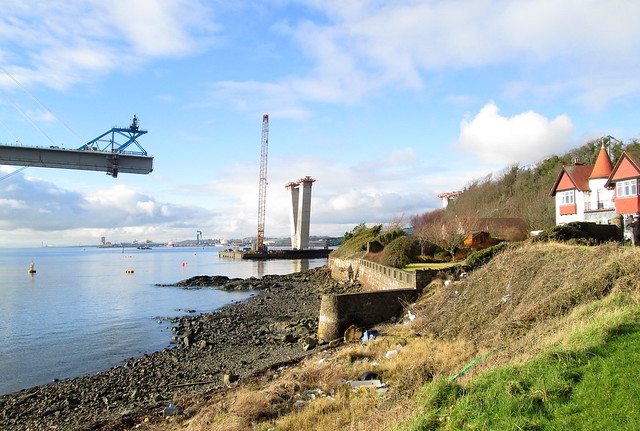
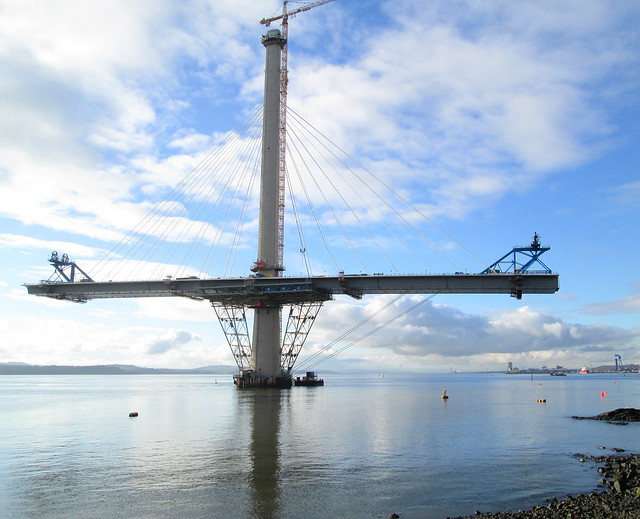
Queensferry Crossing (iv)

Photos taken 11/2/2016.

North Support Pillar:-

New Forth Road Bridge 14

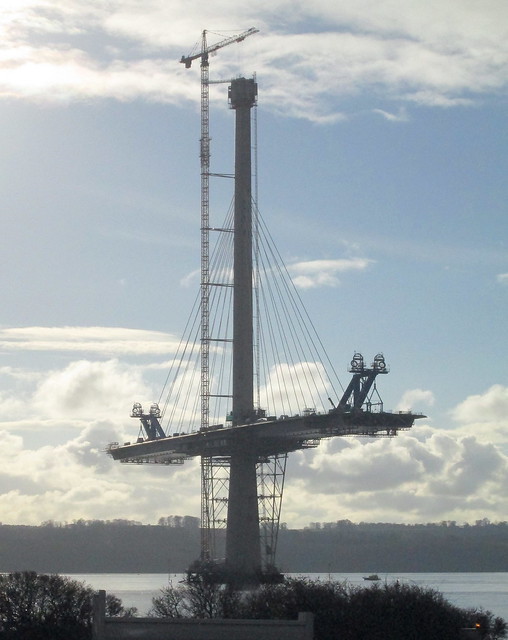
North cable stay tower:-
New Forth Road Bridge 15

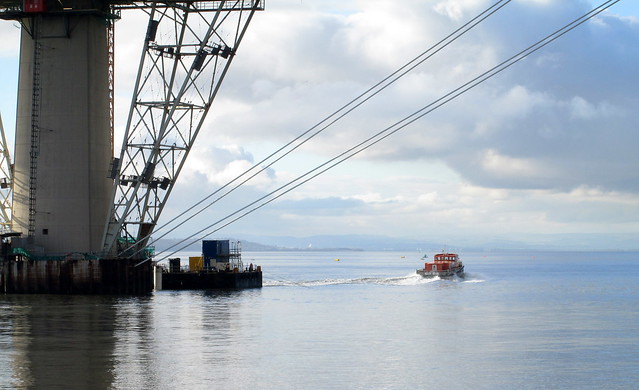
Service boat near north cable stay tower:-

New Forth Road Bridge 16

Centre cable stay tower from North Queensferry:-

New Forth Road Bridge 17

South and centre cable stay towers and south support pillar from South Queensferry. I have read there’s a problem with this pillar as it’s leaning a bit:-

New Forth Road Bridge 18

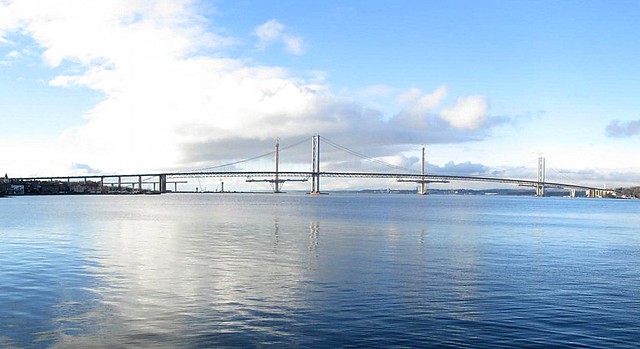
South, centre and north cable stay towers plus first Forth Road Bridge to right:-

New Forth Road Bridge 19

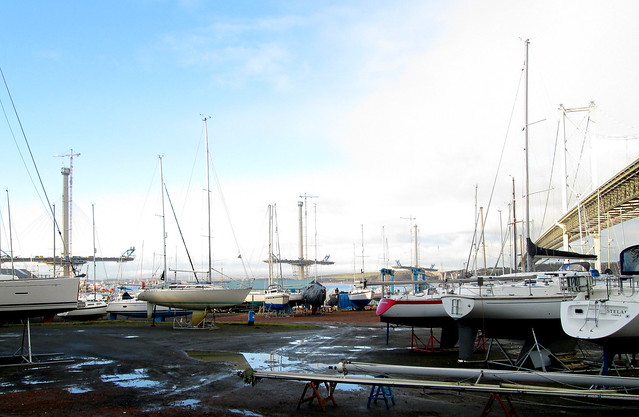
New bridge seen through the original Forth Road Bridge:-

New Forth Road Bridge 20

Forth Bridges

Forth Bridge (rail) seen through south piers of Forth Road Bridge. Road Bridge’s suspension cables feeding into their anchor point:-

Forth Bridges

Portugal 0-0 France (1-0 aet)

Euro 2016, Final, Stade de France, 10/7/16.

So. It wasn’t to be Germanic hegemony after all.

Neither was it to be French triumph.

Like a lot of the knockout matches this was a spectacularly dull game but it suggested one thing to me. Portugal are a better team without Cristiano Ronaldo in it than with him. I felt much the same about Liverpool in the latter stages of Steven Gerrard’s time with them. It seemed to me the rest of the Liverpool players were looking too much to Gerrard, giving way to him or allowing him to have the ball when they were in better positions to do something with it. So too with Ronaldo and Portugal. Throughout the tournament (though perhaps not the 3-3 draw with Hungary which I missed as I was watching the Iceland-Austria game) there was something about the way they played with him on the pitch that rendered them less effective as an attacking force. His hogging of all the free kicks with no fruitful result whatsoever was almost laughable. Okay, he did score that header against Wales and scuffed the assist for Nani’s toe-poke in that game but otherwise there was little end product and he seemed to get in the way at times. With him not available others stepped up to the plate – particularly Eder who I doubt would have made it onto the pitch if Ronaldo hadn’t been injured.

Football. It’s a funny old game.

The Quiet Woman by Christopher Priest

Gollancz, 2014, 238 p.

 The Quiet Woman cover

Writer Alice Stockton lives in a Hampshire which has suffered the fallout from a nuclear accident at Cap la Hague in France. Despite there being no obvious reason for it she has had her latest manuscript impounded by agents acting for the government. Her only local friend, a much older woman named Eleanor, has been found murdered. Alice’s story is narrated in the third person and interspersed at times with a first person narrative by Eleanor’s son Gordon Sinclair, who also goes under the name of Peter Hamilton. As Hamilton he works, at arm’s length from the government, in information management – de facto censorship. Hence the ability to prevent Alice’s manuscript being published and to demand any copies, electronic or otherwise, be destroyed.

There are early hints that the first person narration may be unreliable when the narrator’s car and torch cut out and he observes spinning cylinders make circles in the nearby crops before disappearing as mysteriously as they arrived. However this incident is only once referred to again and can be taken to be imagined or hallucinated. However potential unreliability is underscored by part of one of the two letters Eleanor wrote for Alice wherein she says, “I am by nature a concealer and disguiser, a natural fiction writer,” and (a book should have) “little facts that don’t add up, that misdirect the truth.” Then there is the very late scene which is described in both the first and third person narratives with substantial discrepancies between the two. Two of the first person chapters describe acts of extreme sexual violence on their narrator’s part. They also describe Sinclair’s mother (in the third person sections a relatively benign presence) as relating to him from an early age stories of her life before he was born with sexual details foregrounded. Again a reading of delusion on the narrator’s part seems in order.

Priest’s prose is immensely readable but there is something elusive about what purpose his book might serve. The total mismatch between Sinclair’s accounts of events and the seemingly more authoritative third person sections reinforce the reading that he is unhinged (at best.) Yet he is a powerful man – able to alter the official records pertaining to Alice’s life. Even in authoritarian systems surely someone would notice? Then there is Alice’s sudden conviction, without any evidence, that Sinclair is responsible for his mother’s death. And the bit about authors being paid merely for submitting manuscripts to the “European Repository of Human Knowledge” is just bizarre.

The quiet woman of the title is presumably Eleanor, she speaks to us only through those two letters to Alice which Priest vouchsafes us, yet as a result is paradoxically too quiet. This is only one of the aspects of the novel which are unbalanced. The Quiet Woman is not one of Priest’s major works but interesting enough, if a little frustrating.

Pedant’s corner:- “we hurried back along to promenade (along the promenade? Along to the promenade?) “one three sent to England one of three,) “she knew he that he wasn’t sure who she was” (miss that first “he”? or “he that”?) “How could she had forgotten?” (have,) one end quote where there had been no dialogue, an personal nature (a,) “Tom pushed the bolt of the door home” followed nine lines later, with no other mention of the bolt, “Alice pushed home the bolt on the door,” plus seven or eight instances of “time interval later”.

Tyne Cot Cemetery (iii) The Memorial Wall

View towards Memorial Wall:-

Tyne Cot Cemetery, View Towards Memorial Wall

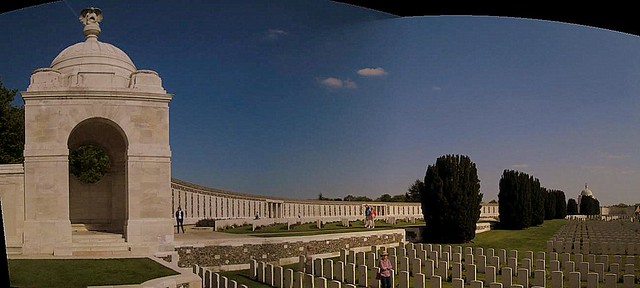
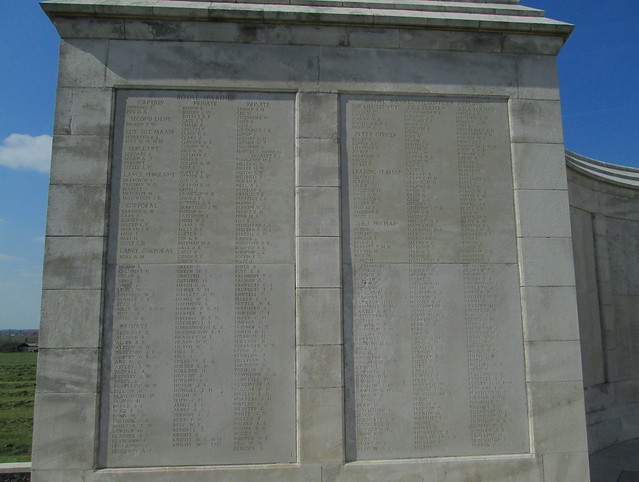
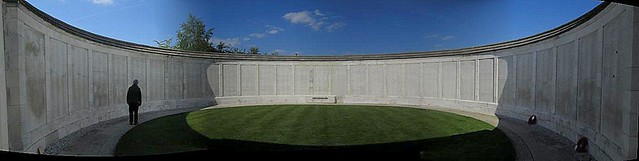
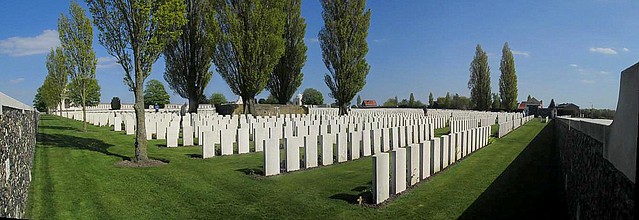
The northern wall of Tyne Cot Cemetery is a sweeping curve. On it are engraved the names of those soldiers of the British Empire who died in the Ypres Salient after 15/8/1917 as it was found that on completion the Menin Gate was not large enough to contain all the names from the Ypres battles.

The Tyne Cot Memorial to the Missing contains 33,783 names of soldiers of the UK forces, plus a further 1,176 New Zealanders (stitch of two photos):-

Tyne Cot Cemetery, Memorial Wall

West End of Memorial Wall:-
Tyne Cot Cemetery West End of Memorial Wall

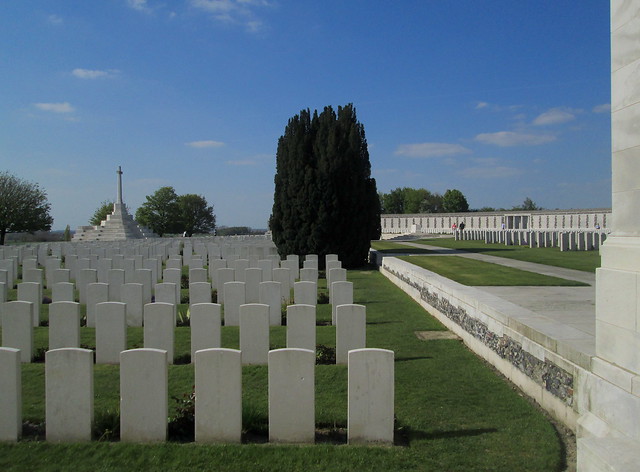
Cross of Sacrifice and Graves, with Memorial Wall to right:-

Tyne Cot Cemetery, Memorial Wall, Graves and Cross

A central apse in the main Memorial Wall is dedicated solely to soldiers from New Zealand:-

Tyne Cot Cemetery, Inset into Memorial Wall

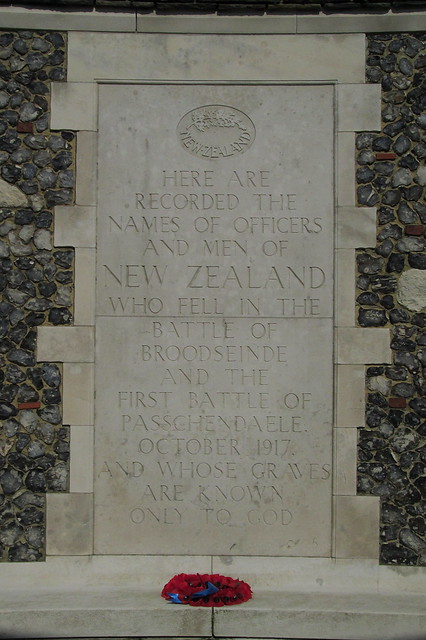
New Zealanders Memorial Dedication:-

Tyne Cot Cemetery, New Zealanders Memorial

Friday on my Mind 133: Maxine’s Parlour

(I had scheduled this for 24/6/16 but a certain referendum result happening and then the anniversary of the start of the Battle of the Somme took up the last two Friday postings. Better late then never.)

You’ve just got to love the name of the band that recorded this. Crocheted Doughnut Ring. So sixties.
The song’s treatment is also very much of its time what with the flute, the drum rolls, mellotron and all.

Crocheted Doughnut Ring: Maxine’s Parlour

Tyne Cot Cemetery (ii)

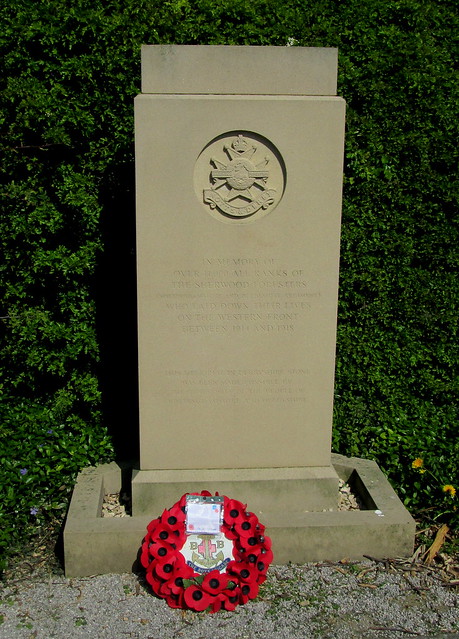
On the path from the car park to the cemetery lie three regimental memorials.

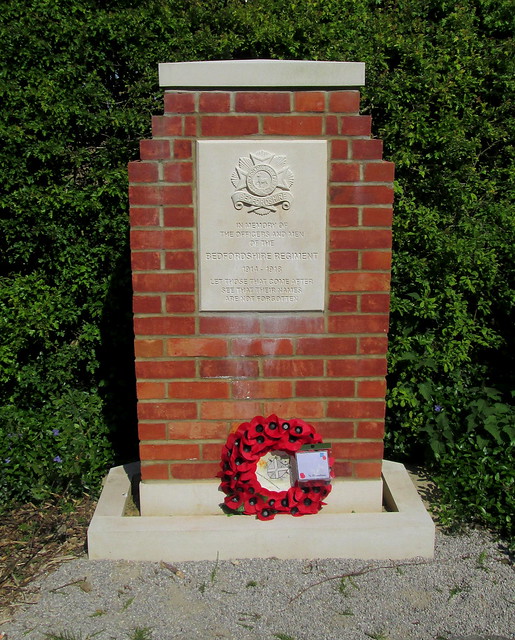
Bedfordshire Regiment:-

Tyne Cot Cemetery, Bedfordshire Regiment Memorial

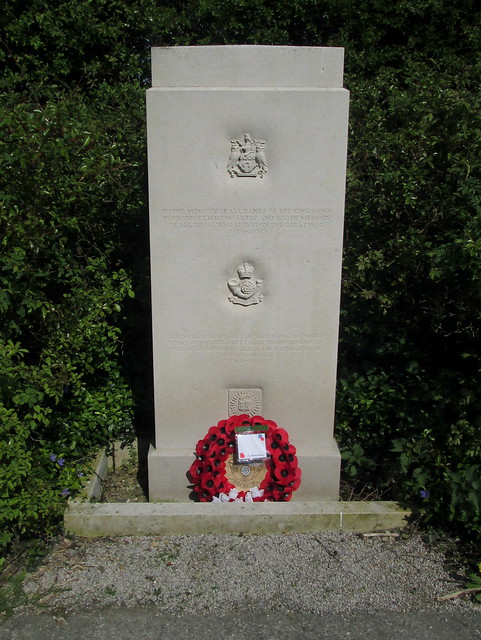
King’s Own Light Yorkshire Infantry Memorial:-

Tyne Cot Cemetery, King's Own Light Yorkshire Infantry Memorial

Sherwood Foresters Memorial:-
Tyne Cot Cemetery, Sherwood Foresters Memorial

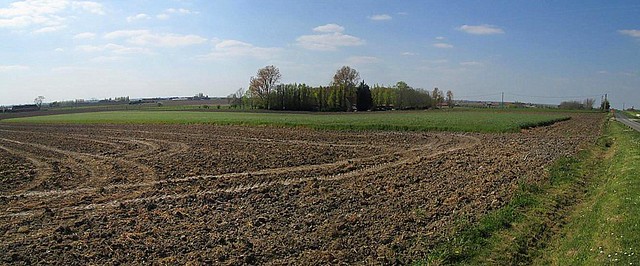
These now peaceful fields lie across the road from the cemetery entrance. The gentle slope down towards Ypres and which gave the Germans an uninterrupted view of activity in and behind the British lines can just be discerned:-

View of Fields from Tyne Cot Cemetery

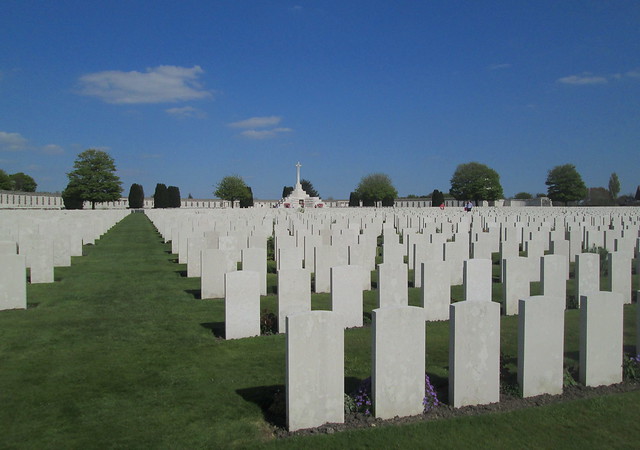
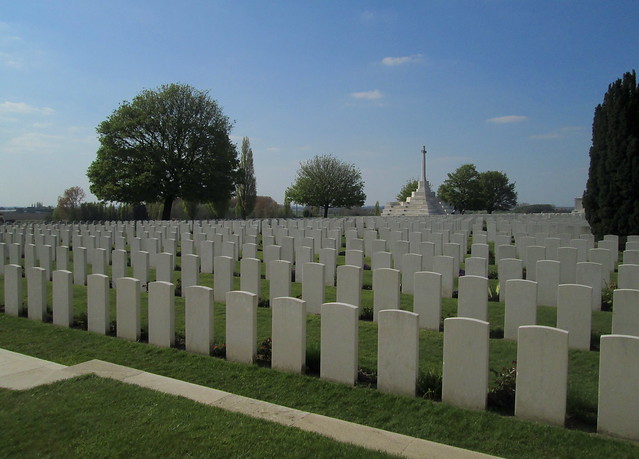
Cross of Sacrifice and graves:-

Tyne Cot Cemetery, Graves and Cross Of Sacrifice

The Freedom Maze by Delia Sherman

Corsair, 2015, 267 p. Reviewed for Interzone 259, Jul-Aug 2015.
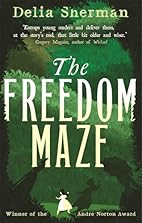
The Freedom Maze cover

It is 1960 in New Orleans. Eleven year old Sophie Martineau is descended from the once grand Fairchilds and through her mother she has inherited the distinctive Fairchild nose. The family owned the Oak River plantation in Louisiana but has now fallen on harder times. Her mother is still fiercely proud of her heritage though, refers to the War of Northern Aggression, has inculcated in Sophie a suspicion of black men and feels herself to be a Southern Belle. Sophie’s failure to live up to her mother’s standards of dress, tidiness and deportment is, then, a source of friction. To add to Sophie’s woes, her parents are divorced and her father has married again. Her mother always harboured suspicions about her ex-husband’s background – muttering darkly about a “touch of the tar brush” – has now had to get a job and has also signed up to train in accounting. To allow time for this Sophie must go to the ancestral home to be looked after by her aunt and grandmother for the summer. The signs saying “coloreds only” at a stopover and references to Negroes “the polite term” remind (or perhaps inform – this is a YA novel) the reader of the legacies of slavery.

At Oak River the former Big House is disused and the maze is in some disrepair. Sophie’s only solace is a book of adventures featuring teenagers who travel back in time. Wishing to be anywhere else she explores the maze one day and hears a voice in her ear. This is a trickster she calls The Creature, which later surprises her swimming in a pool and tells her he “sits at the doorway betwixt might be and is, was and will be, here and there.” At her request it manifests itself; as an odd looking podgy mammal with deer’s ears. After one more altercation with her visiting mother she tells the Creature she wants to travel in time herself. The Creature obliges. The bulk of the novel deals with the consequences as Sophie finds herself on the Fairchild estate in 1860, mistaken for a slave sent up from New Orleans by estate owner Charles’s brother Robert. The spoilt daughter of the estate, Elizabeth Fairchild, is immediately antagonistic towards her but her parents Mr and Mrs Charles Fairchild are less mistrustful and Sophie is given household duties to perform. In following these we are treated to a rather heavy-handedly written conversation about the likelihood of war with the North. Sophie swiftly falls ill and is allowed even lighter duties in order to recover. While in her delirium she hears a conversation between the Creature and a spirit called Papa Legba (who saves her from dying) about the dangers of travelling in time without preparation.

It must be said that, after initial incomprehension at not being recognised as white, Sophie slips very easily into the life of a slave, learning deference quickly and adopting slave speech patterns. It is in this context that the novel strikes a note that seems slightly off. Yes, the Fairchilds are “good” slave owners, though the overseer Mr Akins is not so reticent in this respect, but even if the prospect of a whipping is never far off the slaves’ conditions do not come over as being as grim as might be expected. Similarly the one whipping Sophie does eventually receive does not read as being as devastating. Sherman does highlight other gritty aspects of 1860 life, sanitary protection for instance is very rudimentary.

What plot there is kicks in when Elizabeth’s suitor Beaufort Waters casts his roving eye – not to mention hands – on the slave girl Antigua. It is here that the Creature’s purpose in bringing Sophie back in time is fulfilled. Sophie’s resourcefulness and the usefulness of a Fairchild nose are instrumental in the resolution of Antigua’s situation.

In all of this any fantastical elements are scant. The intervention by Papa Legba could be interpreted as an hallucination induced by Sophie’s illness and the time travel is merely a black box. There is nothing speculative about it, no mechanism for it. It just happens. Sherman merely uses it as a device to precipitate Sophie’s consciousness into the nineteenth century. Her purpose is to tell a story set in the slavery era and to seek to make it relevant to modern times. In this she succeeds well enough. In the end, though, there is as little sense of true jeopardy in Sophie’s sojourn in the past as there was in the stories she so enjoyed in 1960. And it does seem rather to belittle the subject matter to make an overt comparison between freedom from slavery and throwing off parental shackles.

The following did not appear in the review:-
Pedant’s corner: up and moved (upped and moved, surely?) there was horrified gasp (a horrified gasp,) you should look out after her better, Lolabelle morphs to LolaBelle and back again, mistress’ (mistress’s,) “who lived in all the way up in” (who lived all the way up in,) lookingglass (looking glass,) her effort must have showed (shown,) bit (bitten,) made up of several man (men,) Mama appeared the garden entrance.
Tyne Cot Cemetery (i)

The cemetery is in numbers of burials now the largest Commonwealth war cemetery in the world. It is located 9 km north-east of Ypres (Ieper) town centre, on the Tynecotstraat, a road leading from the Zonnebeekseweg. Its name derives from the nickname (Tyne Cottage) given to a German blockhouse by the Northumberland Fusiliers.

11,962 Commonwealth servicemen of the First World War are buried or commemorated in Tyne Cot Cemetery. 8,374 are unidentified. In addition there are four German dead only one of whose identities is known.

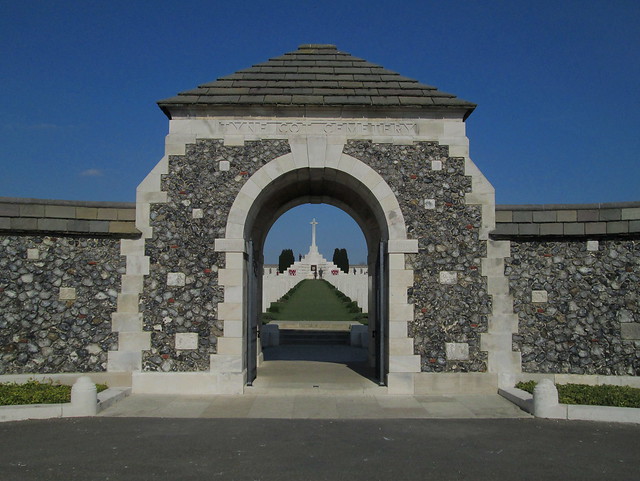
Entrance:-

Entrance to Tyne Cot Cemetery

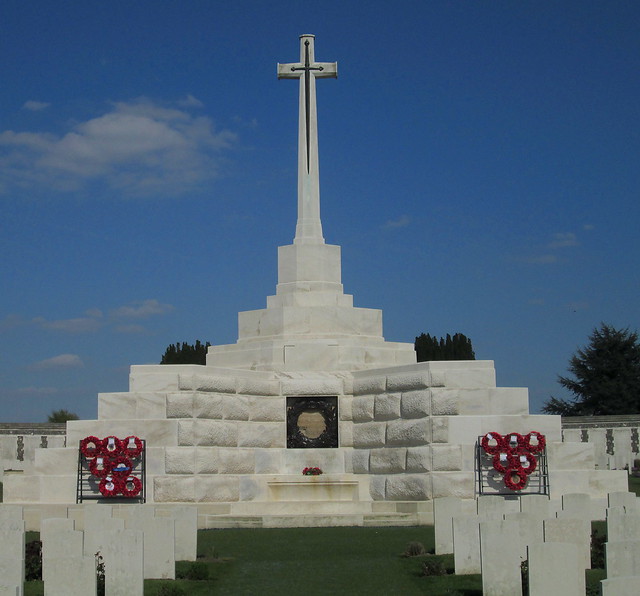
It was said to be the idea of King George V, who visited the cemetery in 1922, to erect the cross above the remains of a German pill box at the centre of the cemetery, a remnant of which was left uncovered by the white stone (centre here):-

Cross of Sacrifice and Blockhouse close

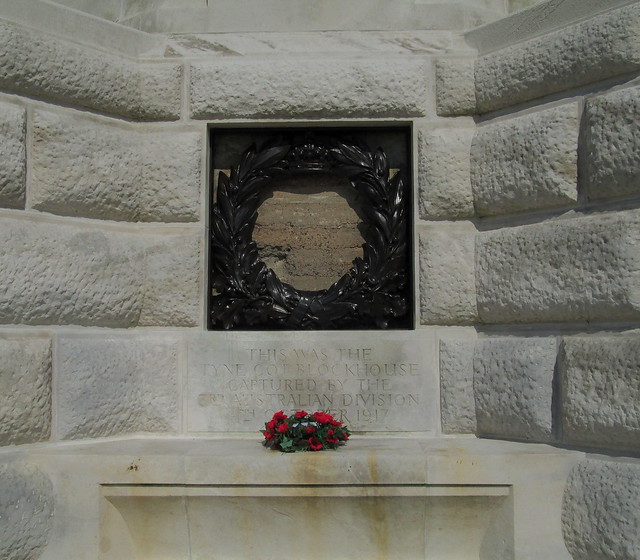
Remnant of pillbox. The inscription reads, “This was the Tyne Cot Blockhouse captured by the Australian Division 4th October 1917:-
Tyne Cot Cemetery, Remnant of Tyne Cottage Blockhouse

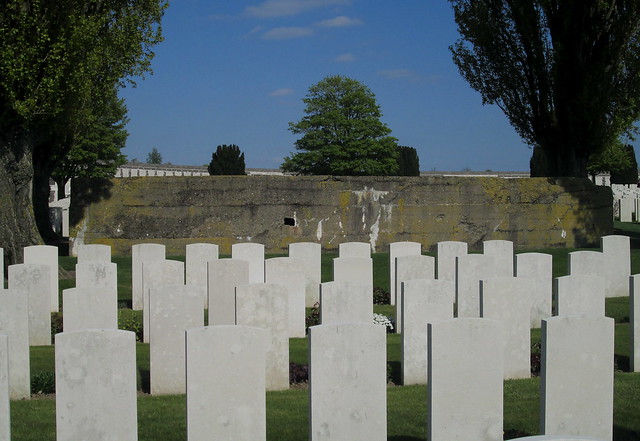
A further blockhouse incorporated into the cemetery is surrounded by graves:-

Tyne Cot Cemetery Graves and Remains of Blockhouse

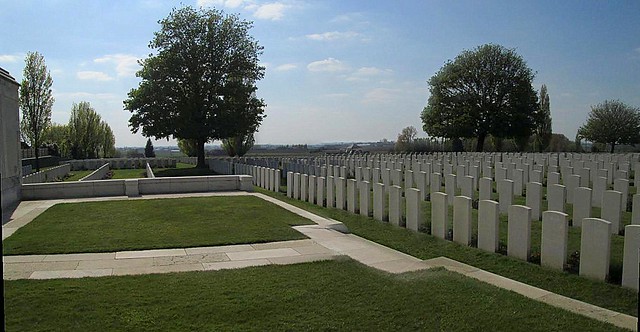
Central area:-

Tyne Cot Cemetery Central Area

Cemetery from North-west corner:-

Tyne Cot Cemetery from North-west Corner

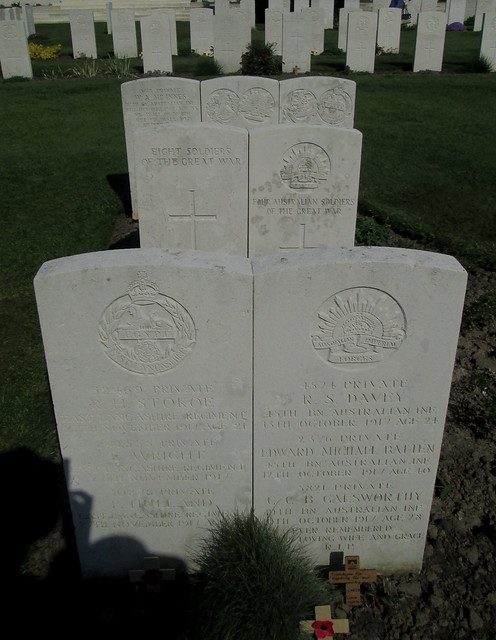
Graves containing the remains of several men:-

Tyne Cot Cemetery, Group Graves

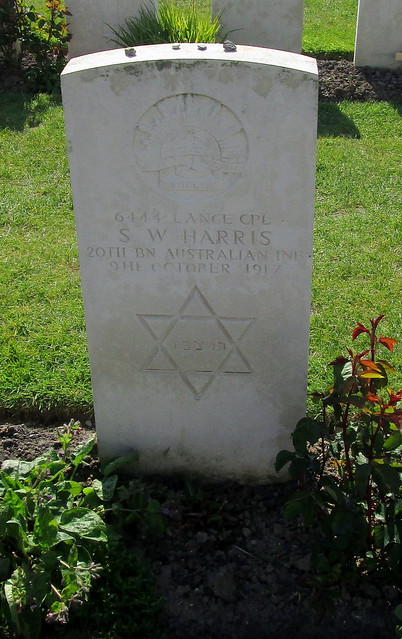
A Jewish grave. It is unusual for a Commonwealth War Grave stone to indicate a religion:-

Tyne Cot Cemetery, Jewish grave

The Planet Dweller by Jane Palmer

Women’s Press, 1985, 152 p.

The Planet Dweller cover

Another Women’s Press SF novel I missed out on when first published. Its feminist credentials are established early. I can’t recall reading another Science Fiction novel which mentions hot flushes, certainly not in its first three words as this one does. The sufferer is Diana who also hears a voice in her head, saying, “Moosevan.” She lives near to a radio telescope where a Russian émigré named Yuri works. He has discovered certain patterns in the arrangement of the asteroids which suggest outside interference. The interactions among the characters here are well delineated, Yuri’s tendency to drunkenness and the local toff Daphne’s sense of entitlement being particularly well captured if a little clichéd. However, in chapter three the story takes a sudden lurch into a narrative which contains what I can only call cartoon aliens who have plans to set off a piece of equipment which will destroy a planet. The planet concerned surrounds the intelligence that is Moosevan (a planet dweller) and soon both Yuri and Diana are transported there where they encounter the Torrans who wish to disrupt the plans of the most dangerous species in the galaxy, the Mott, in their quest to possess new worlds.

The idea of an intelligence surrounded by a planet is certainly interesting but is not taken very far. The Planet Dweller is readable enough but in SF terms certainly belongs back in the 1980s or beyond. It is unfortunate that the SF element is its weakest part. The back cover of Palmer’s later novel The Watcher (which I bought at the same time) says “Another joyous send up of the SF genre,” so I assume The Planet Dweller is meant to be read in that vein. Humour in SF is a difficult trick to pull off. From the perspective of 2016 Palmer doesn’t achieve it here.

Pedant’s corner:- alchohol (alcohol,) scintar (as in “scintars and pulsars” which would suggest it’s a kind of star but I’ve never heard of it and can find no definition of one,) “a light shower of carbon dioxide particles floated gently down through the thin air” (CO2 is invisible [but maybe not to cartoon aliens,]) lackies (lackeys,) shute (chute,) court martials (courts martial,) any other species’ (species’s? it could have been species plural though, the text wasn’t exactly clear,) to see one if those creatures (one of those,) “though she was on the track of quark that would solve the riddle of the universe” (?? – Of a quark? Of quark as a type? )

free hit counter script