Posted in Museums, Trips at 16:00 on 15 November 2016
I didn’t photograph the British headstone as I have posted many of those before.
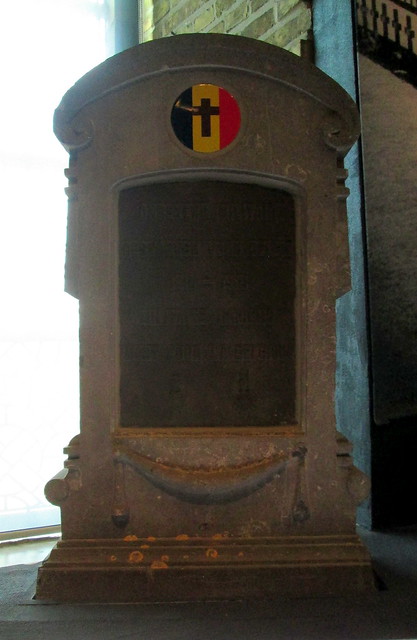
Belgian Headstone:-
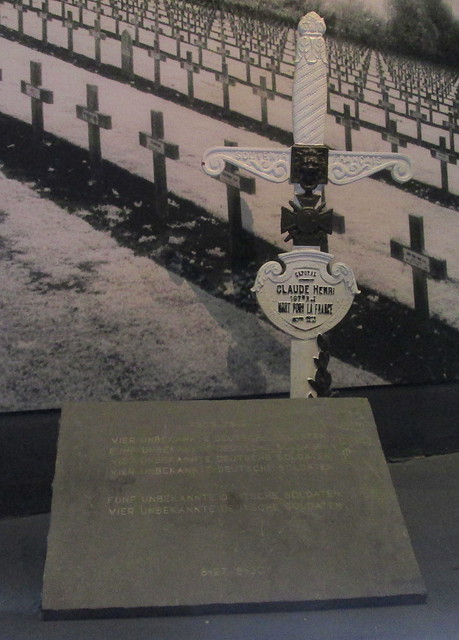
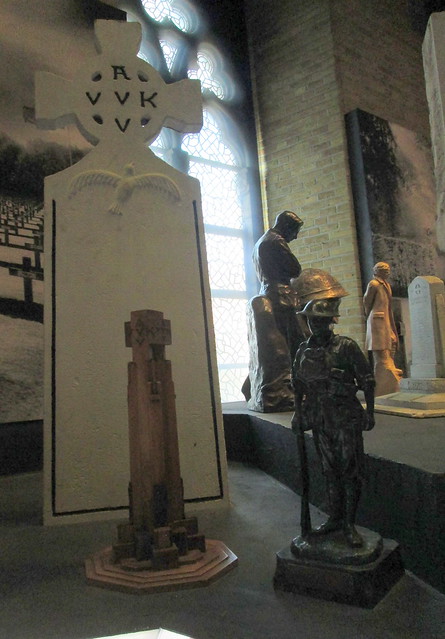
German Grave Marker + French Cross:-
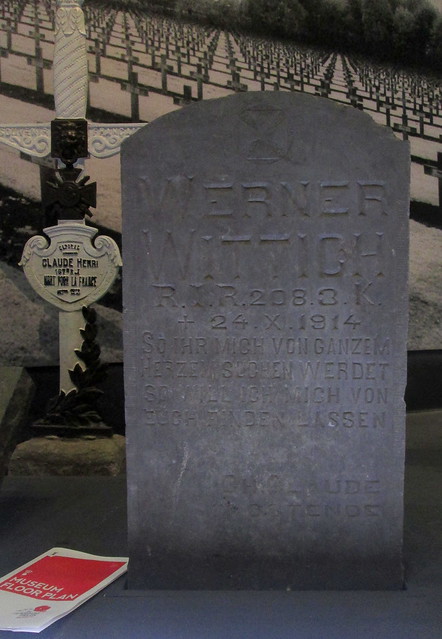
German Headstone. Unusual. The German grave markers are usually laid flat. French Cross behind:-
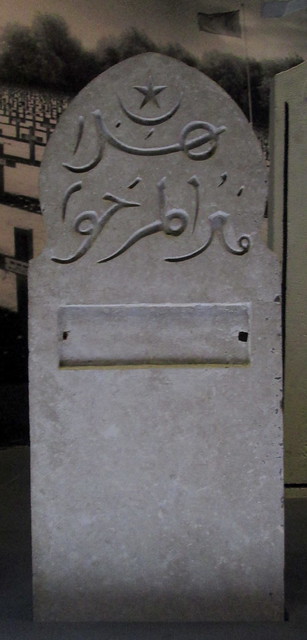
Muslim Headstone:-
Unattributed Headstone plus various commemorative statuary:-
No Comments »
Posted in Museums, Trips at 10:00 on 15 November 2016
Exhibits in In Flanders Fields Museum, Ypres (Ieper) Belgium.
Anti-tank rifle:-

Photograph of survivors of a Canadian battle of the Great War:-

Flame Thrower (Flammenwerfer):-

(The next one was too far behind its glass for the camera to focus properly.) Fritz Haber was responsible for developing Chlorine gas as a weapon. Also without his Haber Process to make ammonia from nitrogen and hydrogen (necessary for producing artificial fertiliser) the Germans would have been unable to make nitrate explosives and so would have been forced to an armistice much earlier. The main exhibit was of an actor speaking Haber’s words:-

Tableau of Horse Ambulance:-

The Wipers Times was a satirical magazine produced by soldiers during the Great War:-

No Comments »
Posted in Trips, War Memorials at 11:00 on 11 November 2016
From the look of them these were planted to commemorate the 100th anniversary of the outbreak of the Great War. They mark the position of the front line.
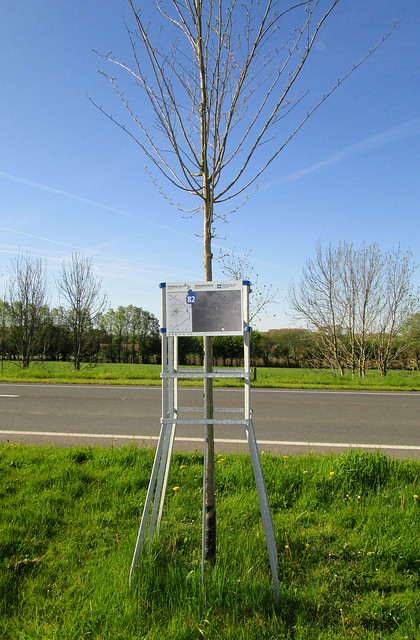
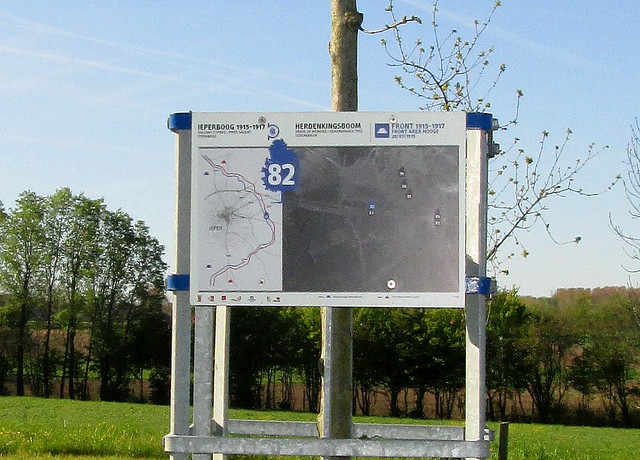
The map shows the British Front Line in blue and the German in red. The numbers refer to the locations on the map. This is on the German side:-
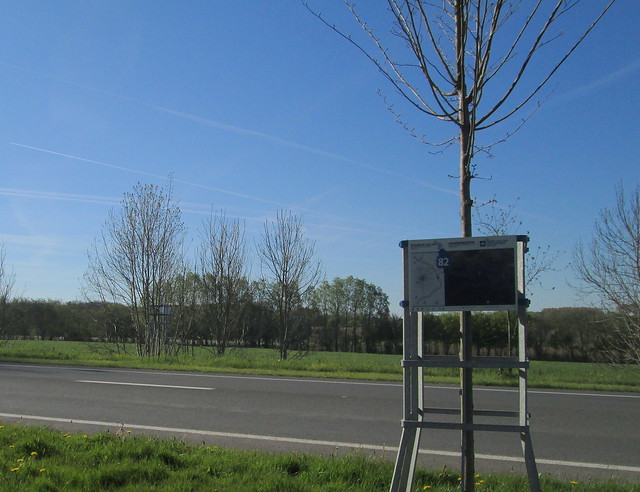
The lines were unbelievably close at this point – the width of the Menin Road. You can see another remembrance tree marking the British Line just the other side of the road, above the middle of the road’s white centre line:-
No Comments »
Posted in Architecture, History, Museums, Trips, War Memorials at 12:00 on 9 November 2016
With the possible exception of Saint Martin’s Cathedral, the Cloth Hall (Lakenhalle) is the most imposing building in the city of Ypres (Ieper) in Flanders, Belgium. (The cathedral’s spire can be seen to the rear.)
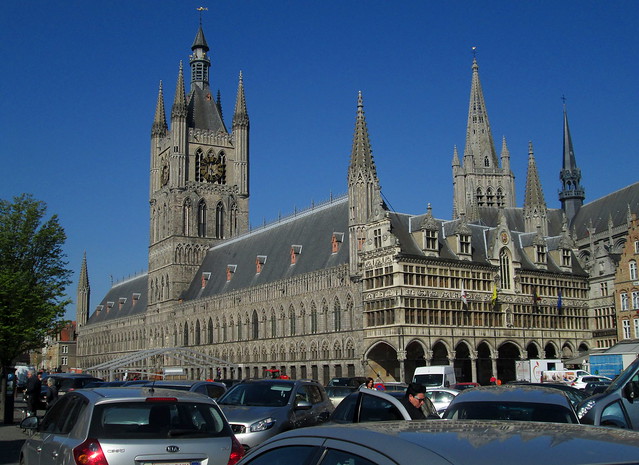
The mediæval Cloth Hall was all but totally destroyed by shelling during the Great War but lovingly restored in the years after.
There is now a lovely fountain in the paving at the front of the Hall.

Flanking one of the doors to the Cloth Hall are two memorials. This one is to the French soldiers who died in defence of Ypres during the Great War:-

And this commemorates the liberation of Ypres by Polish troops in 1944:-

The Cloth Hall now houses In Flanders Fields Museum, formerly the Ypres Salient Memorial Museum:-

No Comments »
Posted in War Graves, War Memorials at 12:00 on 7 July 2016
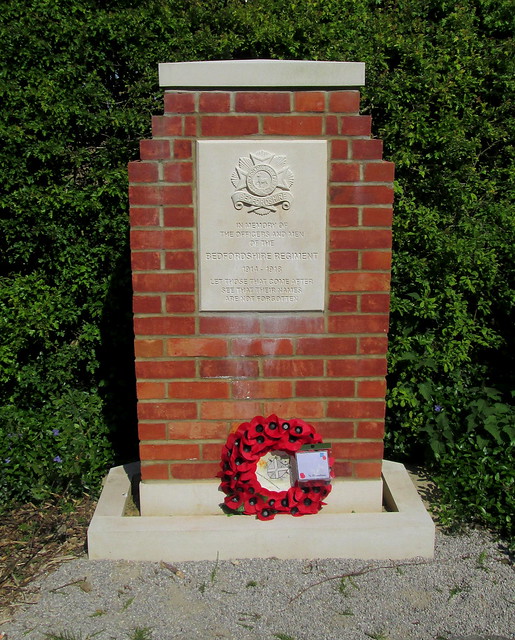
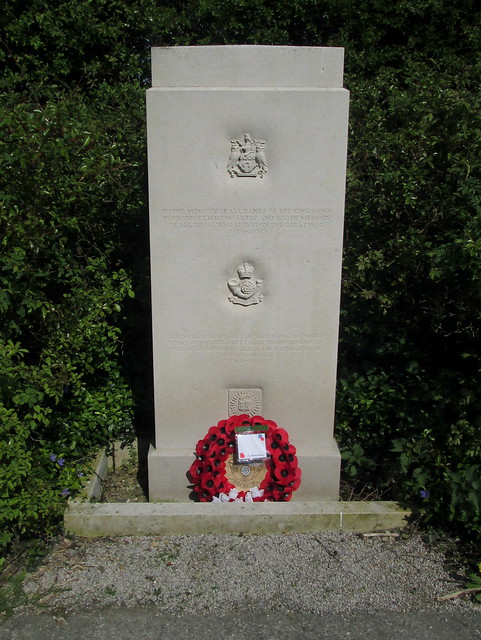
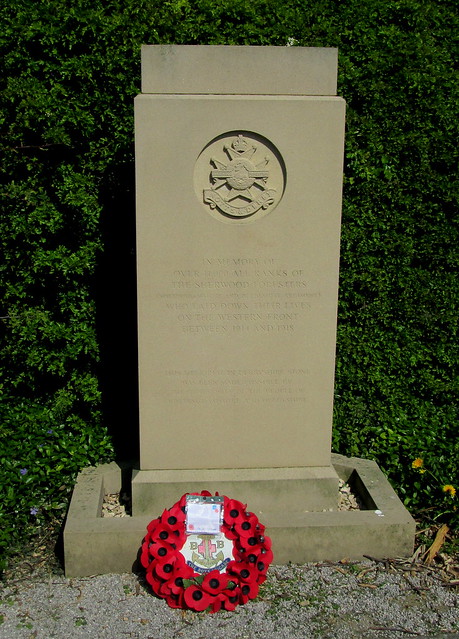
On the path from the car park to the cemetery lie three regimental memorials.
Bedfordshire Regiment:-
King’s Own Light Yorkshire Infantry Memorial:-
Sherwood Foresters Memorial:-
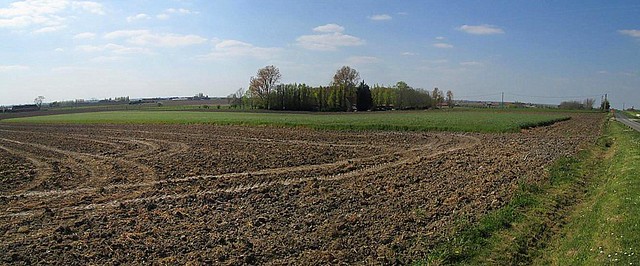
These now peaceful fields lie across the road from the cemetery entrance. The gentle slope down towards Ypres and which gave the Germans an uninterrupted view of activity in and behind the British lines can just be discerned:-
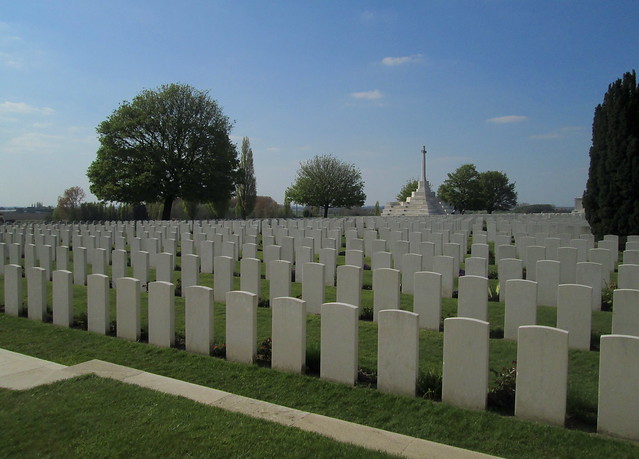
Cross of Sacrifice and graves:-
No Comments »
Posted in War Graves, War Memorials at 12:00 on 5 July 2016
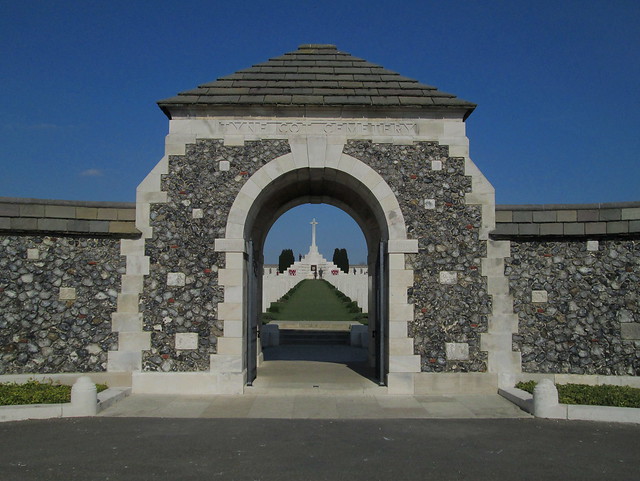
The cemetery is in numbers of burials now the largest Commonwealth war cemetery in the world. It is located 9 km north-east of Ypres (Ieper) town centre, on the Tynecotstraat, a road leading from the Zonnebeekseweg. Its name derives from the nickname (Tyne Cottage) given to a German blockhouse by the Northumberland Fusiliers.
11,962 Commonwealth servicemen of the First World War are buried or commemorated in Tyne Cot Cemetery. 8,374 are unidentified. In addition there are four German dead only one of whose identities is known.
Entrance:-
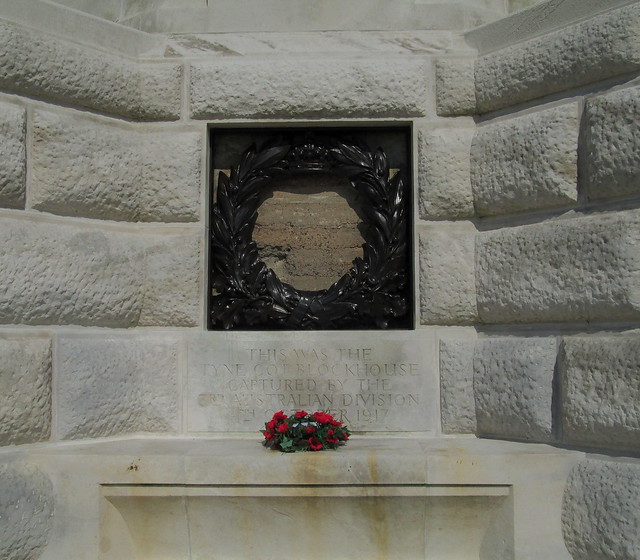
It was said to be the idea of King George V, who visited the cemetery in 1922, to erect the cross above the remains of a German pill box at the centre of the cemetery, a remnant of which was left uncovered by the white stone (centre here):-
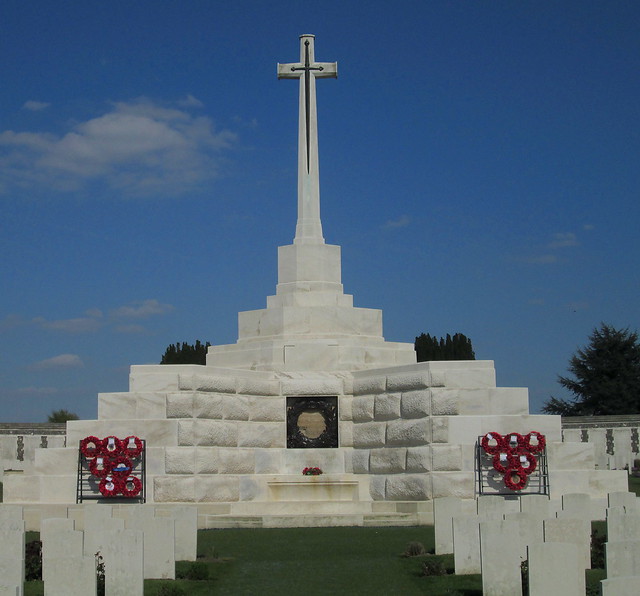
Remnant of pillbox. The inscription reads, “This was the Tyne Cot Blockhouse captured by the Australian Division 4th October 1917:-
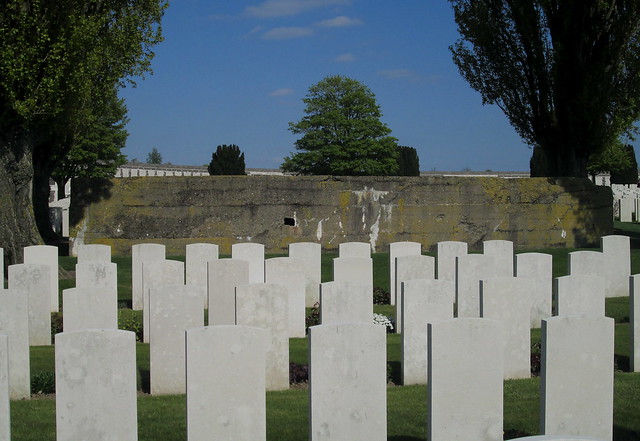
A further blockhouse incorporated into the cemetery is surrounded by graves:-
Central area:-
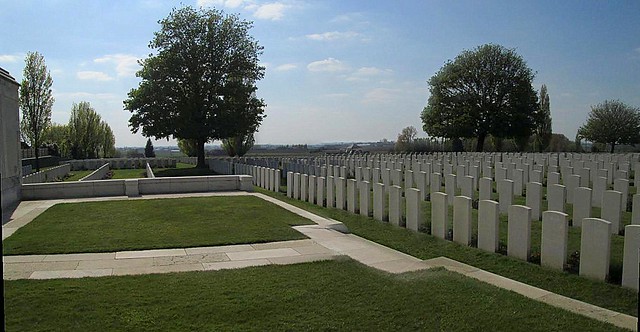
Cemetery from North-west corner:-
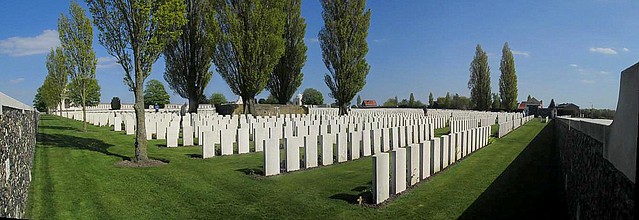
Graves containing the remains of several men:-
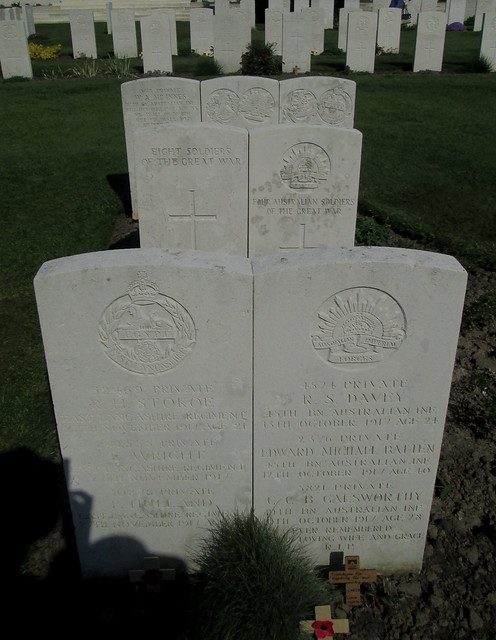
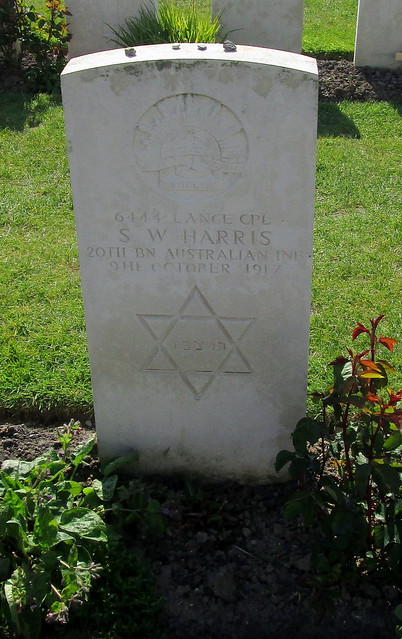
A Jewish grave. It is unusual for a Commonwealth War Grave stone to indicate a religion:-
No Comments »
Posted in Trips, War Memorials at 12:00 on 19 June 2016
Is situated on Coomansstraat just beyond the Cloth Hall, the road leading to the square dominated by Saint Martin’s Cathedral.

It is dedicated to all citzens of Ypres killed in the World Wars 1914-18 and 1939-45.
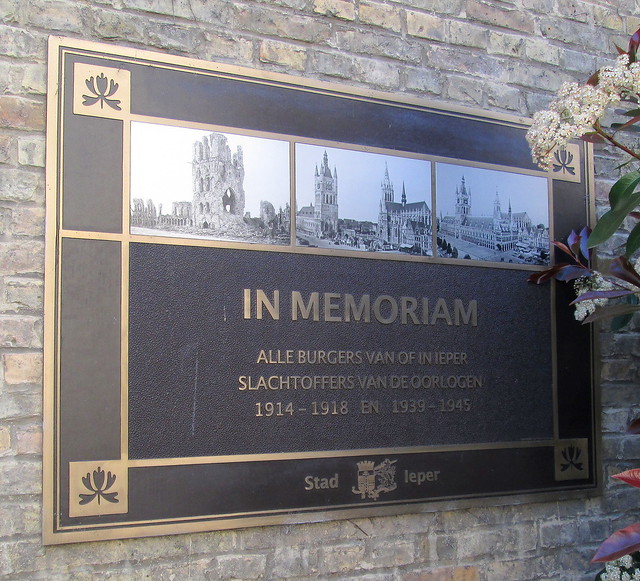
It lies within a small memorial garden:-
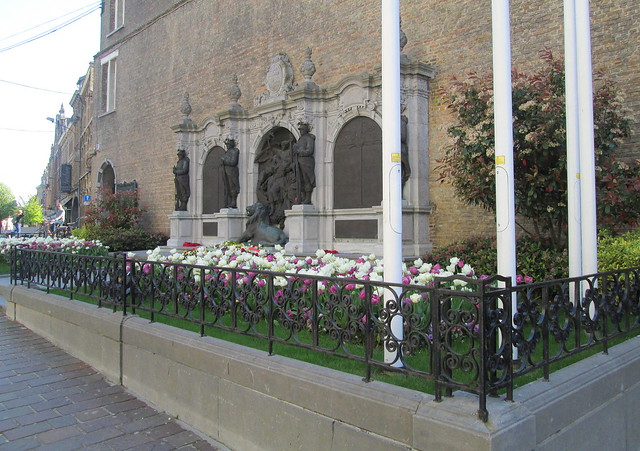
Just to the left of the main Memorial as you look at it is this one to the members of the Belgian Field Artillery incorporated into the British Army from 17/5/1915 to 17/5/1917 (when the unit was disbanded) who died in the defence of the Ypres Salient:-

No Comments »
Posted in History, Trips, War Graves, War Memorials at 12:00 on 15 June 2016
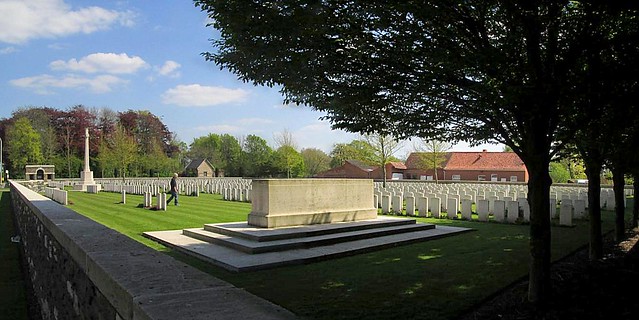
The cemetery is well inside the boundaries of Ypres/Ieper and lies on the edge of the Menin Road. It contains the remains of 1,657 soldiers of whom 118 are unidentified but 24 of these are known or believed to be buried here.
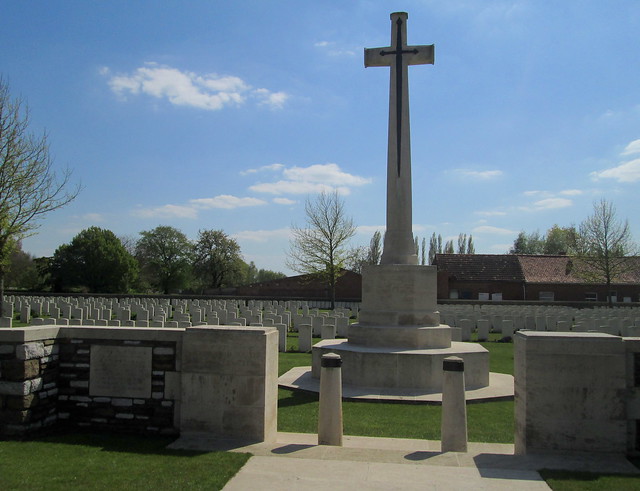
This view from the east shows the Stone of Remembrance, the Cross of Sacrifice and (at the western end) the shelter building containing the cemetery register:-
No Comments »
Posted in Art Deco, Trips at 19:53 on 14 June 2016
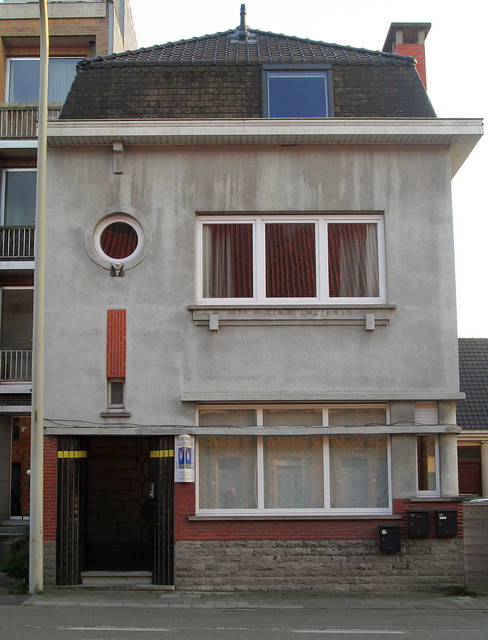
I didn’t expect to find Art Deco buildings in Ypres but what else can you call this?
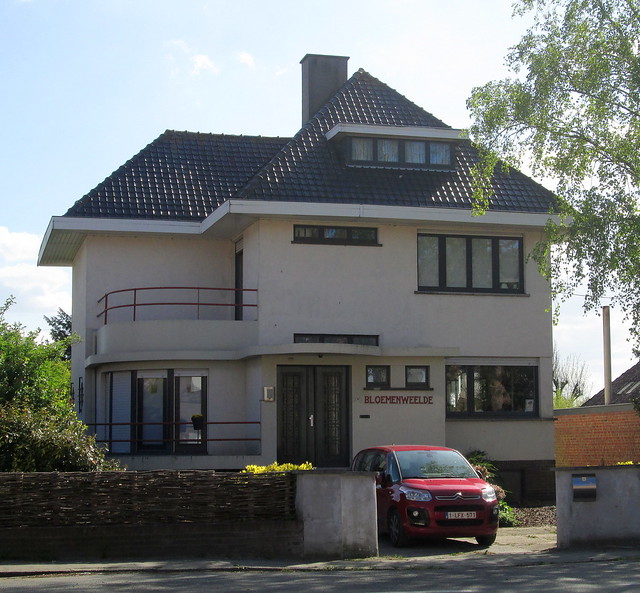
It was on the Menin Road inside the city limits. And it wasn’t alone; the building below was on the opposite side of the road a bit further in.
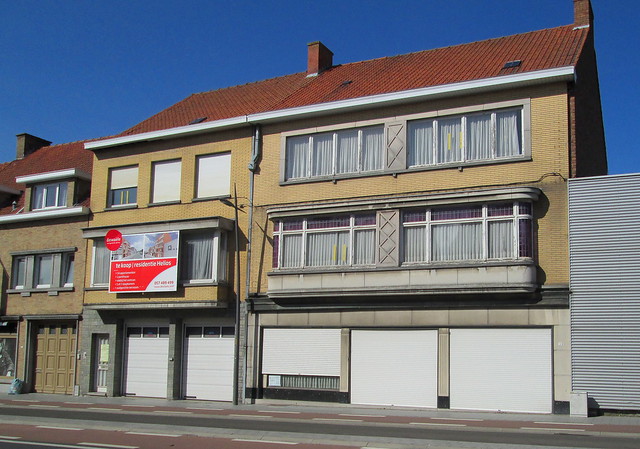
Once I’d started looking I found deco styling quite easily:-
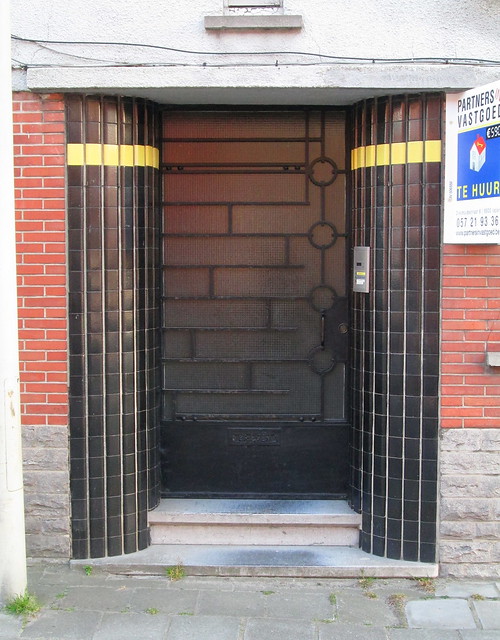
This is the above building’s doorway. Good ironwork here too:-
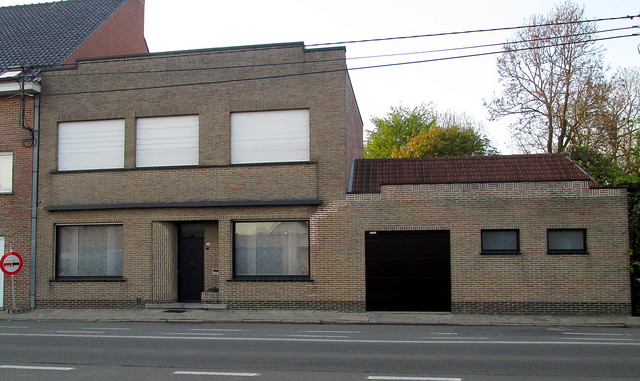
Nearer the outskirts but still on the Menin Road was this brick building:-
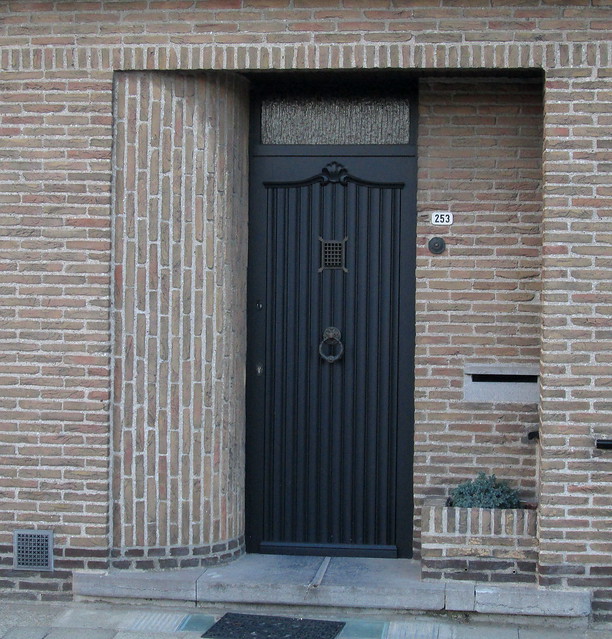
Close-up on the doorway:-
On the Menin Road on the way in to town from our hotel was this. We didn’t have time to visit the museum it houses; there were too many others:- 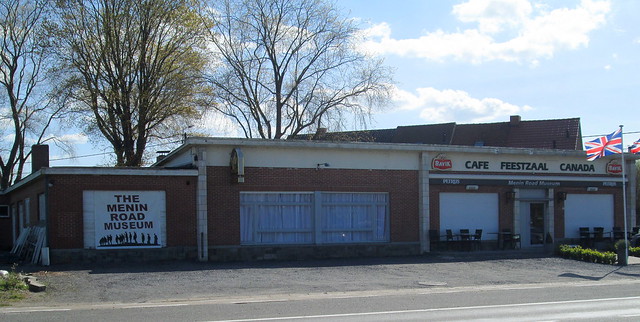
No Comments »
Posted in Trips at 10:00 on 12 June 2016
One of the last things I expected to see on our trip to Ypres/Ieper was ….llamas. In a field by the Menin Road, grazing peacefully on what was a battlefield 100 years ago.

The photos were taken late in the evening when it was beginning to get dark.

I just can’t help it. Every time I see llamas I always utter the quote which I used for this post’s title.
No Comments »
