Archives » Second World War

War Memorial at Latheron

Latheron is a village on the A 9 in Caithness.

Its War Memorial – a figure of a kilted soldier on guard – is labelled as for Forse, Latheron and Latheronwheel and is situated beside the A 9 on the north side of the village.

Latheron War Memorial

Closer view. Names for the Great War:-

War Memorial, Latheron and Latheronwheel

Side view. World War 2 dedication and names – plus two who died in Malaya:-

Side View, Latheron War Memorial

Reverse of Memorial:-

Reverse of Latheron War Memorial

Original Great War dedication and names:-

War Memorial, Latheron

Golspie War Memorial

Golspie is a small town in Sutherland, in the very northwest of Scotland.

Its War Memorial is a Celtic type Cross set in a memorial garden just off the A 9 road in the south of the town.

War Memorial Garden, Golspie:-

War Memorial Garden, Golspie

Golspie War Memorial from Side

Memorial:-

Golspie War Memorial3

Golspie War Memorial Cross Element

Dedication. Under a downward pointing sword overlaid with the names of battle zones – France, Belgium, Egypt, Italy, Russia, Palestine, East Africa, Dardanelles, Mesopotamia, At Sea – “In honour of those who served. In sympathy with those who suffered and in proud and grateful memory of those whose names are recorded here and who fell in the Great War 1914-18. They died that we might live.”

Dedication, Golspie War Memorial 4

Great War names:-

Names, Golspie War Memorial

The reverse contains the World War 2 Dedication and Names:-

Reverse, Golspie War Memorial

World War 2 Dedication and Names, Golpsie War Memorial

The upper portion of the reverse is inscribed with symbols of various kind:-

Top Part, Reverse of Golspie War Memorial

Kemnay War Memorial

Kemnay is a village in Aberdeenshire, Scotland. Its War Memorial is an obelisk rising from a stepped base at the junction of Station Road with the main B 993 road through the town.

Kemnay War Memorial

Kemnay War Memorial, Closer View

Original Great War Dedication. “In Proud and Grateful Memory of the Sons and Daughters of Kemnay who Laid Down Their Lives for Freedom in The Great War”:-

Kemnay War Memorial Original Great War Dedication

Great War Names:-

Kemnay War Memorial Great War Names

Reverse of Memorial:-

Kemnay War Memorial Reverse

The reverse is the aspect with the dedication “1939-1945 Kemnay Roll of Honour” and names for World War 2:-

Kemnay War Memorial WW 2 Names

Hill 62 Trenches Museum, Sanctuary Wood, Near Ypres

The museum is situated on the Canadalaan off the Menin Road, near Ypres (Ieper,) Belgium. I have mentioned Canadalaan before, here and here.

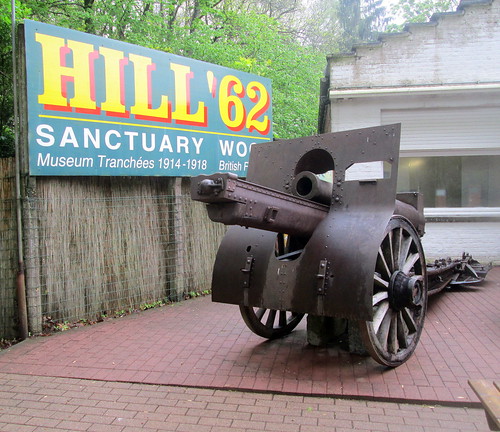
The board describes the museum as a Museum Tranchées (Trenches Museum.)

Two field guns flank the museum’s frontage:-

Gun Outside Hill 62 Museum, Sanctaury Wood, Near Ypres, Belgium

Sanctuary Wood Museum Gun

The museum building contains many relics of the Great War but its main interest is a set of relatively well-preserved trenches to the rear of the building where the trees of Sanctuary Wood have returned.

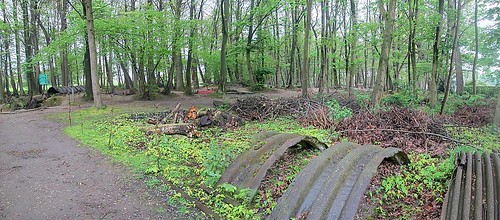
These supports for barbed wire lean against the back of the building:-

Barbed Wire Supports, Hill 62 Museum

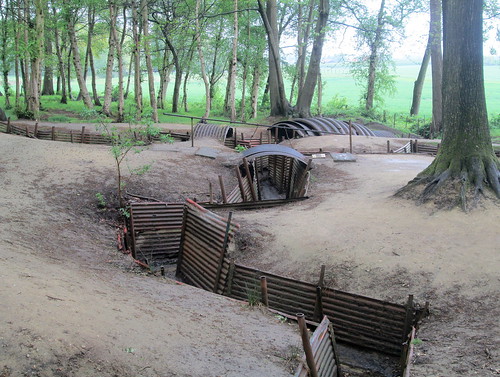
View of Trenches:-

View of Trenches, Hill 62 Museum, Sanctuary Wood

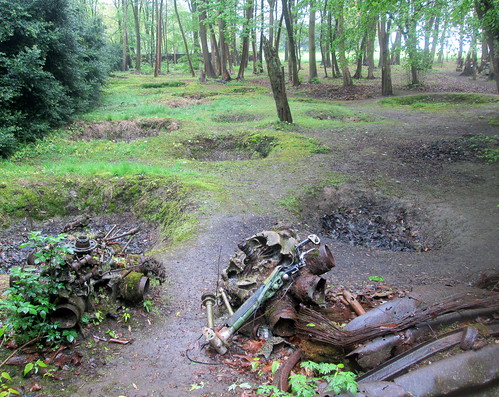
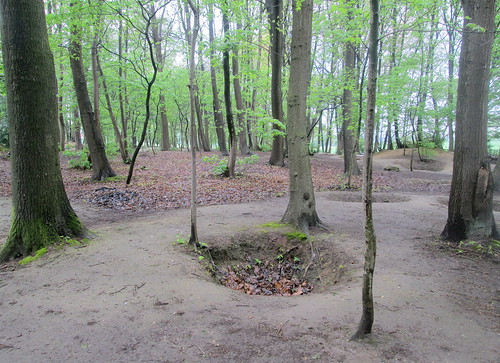
Derelict aero engines and shell craters:-

Craters, Hill 62 Museum

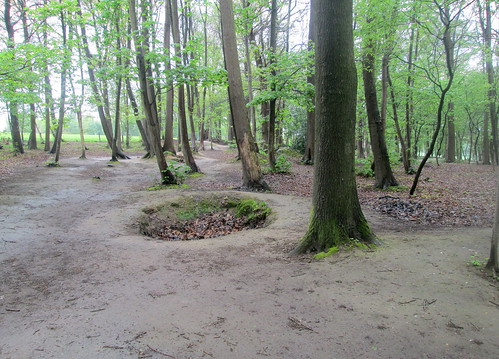
More craters:-

Hill 62 Museum Craters + Trees 1

Craters, Hill 62 Museum

Trench line:-

Trench Line, Hill 62 Museum

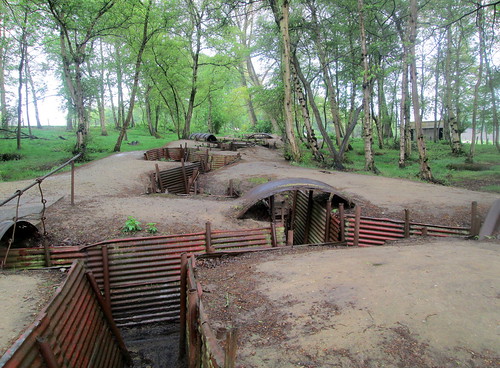
More trenches:-

More Trenches, Hill 62 Museum

Further Trenches at Hill 62 Museum

More Hill 62 Trenches

Trench Zigzag, Hill 62 Museumline 5

View Into Trench, Hill 62 Museum

Trenches, Hill 62 Museum

Hill 62 Museum Trenches

Trenchworks, Hill 62 Museum

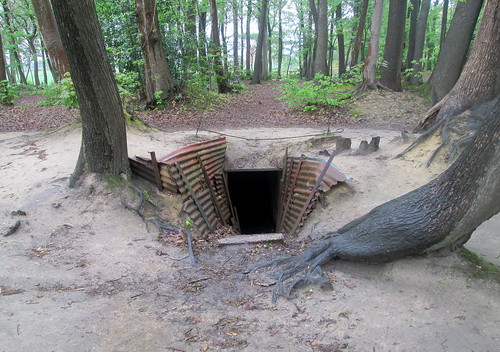
A dugout:-

A Dugout, Hill 62 Museum

Trench mortar and trenches:-

Hill 62 Museum, Mortar and Trenches

Tunnel entrance:-

Tunnel Entrance, Hill 62 Museum

Part of tunnel:-

Tunnel, Hill 62 Museum

Tunnel exit:-

Hill 62 Museum Tunnel Exit

Clydesiders at War by Margaret Thomson Davis

B&W, 2002, 252 p.

This is the third in Thomson’s trilogy which I only picked up because the second of the series had scenes set at the Empire Exhibition held in Glasgow in 1938. This one carries on the interrelated stories of the Cartwright and Gourlay families into the Second World War.

The book starts with the reconciliation of Wincey, who had fled her upper middle class home after the demise of her abusive grandfather – a death for which she erroneously felt responsible – to find refuge with the resolutely working class Gourlays. Davis again contrasts the welcoming acceptance of the Gourlays with the sterility of the Cartwright family’s relationships. Mrs Cartwright, Wincey’s grandmother is a stand out in this regard but has fewer appearances in this third instalment.

Wincey begins to spend her weekends at her parents’ home but still stays with the Gourlays during the week. Her mother, Victoria, is always pained by the fact that she refers to the Gourlays’ house as home. The war, when it comes, impinges on everything. The Doctor who became Wincey’s man friend but whom she can’t quite commit to because of her childhood trauma joins the navy and dies at Dunkirk. Malcy, the widower of Charlotte Gourlay (who was killed in a car accident in book two,) receives disfiguring injuries in the evacuation. Two of the Gourlay sisters are killed in the Clydebank blitz. Wincey’s parents become estranged by their war work; she as a nurse, he in the Home Guard.

All this is told in a workmanlike prose that is always easy to read but somehow unsatisfying. The characters have little emotional depth and sometimes are mere mouthpieces for events in the wider world. The chronology of those events is also frequently out of skew. There is too much telling, not enough showing, and occasional unnecessary asides elaborating on things the reader knew, or can work out for, him- or herself.

Moreover, the central development in the book – the rapprochement between Wincey and Malcy – is psychologically unconvincing. It is almost as if Davis herself had forgotten how things stood between them in Book Two.

Her trilogy is an echo of a past age but not really a close examination of it.

Pedant’s corner:- “‘But she makes that angry the way she treats you’” (But she makes me that angry the way she treats you’,) “the government were telling people” (the government was telling people,) a missing opening quote mark t the beginning of a piece of direct speech, “London was now the bombers primary target” (bombers’,) “‘she doesn’t mean it as slight on you’” (as a slight,) “with Nicholas in the part” (with Nicholas in the past.) “‘Tell her I asking for her’” (I’m asking,) homeopathic/homeopathy (several times; homoeopathic/homeopathy, or, even better, homœopathic/homœopathy,) a missing question mark, “saying’ Grow your own, can your own’” (saying, ‘Grow your own, can your own’.)

Corbridge War Memorial

Corbridge is a village in Northumberland. Its War Memorial takes the form of a cross surmounting a tapering pillar. It’s situated in a churchyard west of the town beside the A 6321 road. It commemorates the dead of the parishes of Corbridge, Dilston, Halton and Whittington.

Corbridge War Memorial

Corbridge War Memorial Dedication with World War 2 names below:-

Corbridge War Memorial Dedication

Great War Names:-

Great War Names, War Memorial, Corbridge

War Memorial, Corbridge, Names

Names on War Memorial, Corbridge

Great War 100th anniversary bench in Corbridge:-

War Memorial Bench, Corbridge

War Memorials in Lanercost Priory Church

Inside Church of St Mary Magdalene, Lanercost.

Great War names above two names for World War 2 on the plaque below:-

War Memorial, Lanercost Priory Church

Great War Roll of Honour:-

Roll of Honour, Lanercost Priory Church

Plaque to two brothers who died in the Great War. Hugh Vaughan Charlton, died near Whytschaete, 24/6/1916, age 32 and John MacFarlane Charlton, at La Boiselle, 1/7/1916, his 25th birthday, 7th and 28th Northumberland Fusiliers:-

Lanercost Priory Church, Great War Memorial Plaque

Broughton, Scottish Borders

Broughton is in Tweeddale in the Scottish Borders. I featured its War Memorial here.

This nice wee bridge is over a burn, the Biggar Water, which flows beside the main A 701 road through the village.

A Bridge at Broughton

Reverse view:-

Old Bridge at Broughton

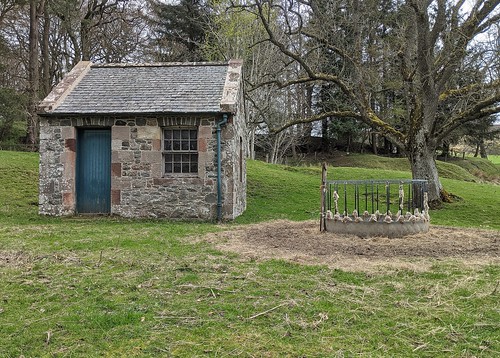
This quaint (shepherd’s?) hut was in the next field:-

Shepherd's? Hut, Broughton, Scottish Borders

Hut and sheep’s feeder:-

Broughton, Shepherd's Hut and Sheep Feeder

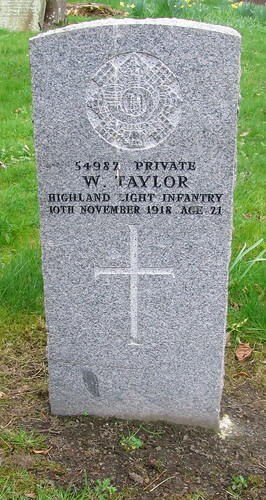
We had a look round the vilage cemetery. I found two war graves.

Private W Taylor, Highland Light Infantry, 10/11/1918, aged 21:-

War Grave in Broughton, Scottish Borders

Flight Lieutenant L E Falla, RAF, 12/9/1945, aged 49.

War Grave, Broughton, Scottish Borders

Memorial to Air Chief Marshal Hugh Dowding

We passed through Moffat on our way down south and decided to explore the park to the south of the town.

I have posted about Moffat several times before.

I discovered there a memorial to Air Chief Marshal Hugh Dowding, head of Fighter Command during the Battle of Britain, who was born in the town.

It could be said he was the architect of that victory over the Luftwaffe which made Britain’s continuing survival possible.

Surmounted by Churchill’s famous quote and flanked by the dates 1882 and 1970, the memorial has the dedication, “With a nation’s gratitude Air Chief Marshal Hugh Caswall Tremenheere Dowding, Baron of Bentley Priory, GCB, GCVO, CMG, leader of the few, Battle of Britain, 1940, architect of deliverance,” with below, “Born in Moffat.”

Dowding Memorial:-

Dowding Memorial, Moffat

Gretna War Memorial

Until I looked in my photo files I’d forgotten we’d stopped off in Gretna on our way down to England last April. We’d never been there but thought since were passing we might as well take a look. (We didn’t bother with the blacksmith shop in the adjoining Gretna Green which is famous for hosting weddings.)

I did however find the Gretna parish War Memorial – a stone cross supported by an octagonal base:-

Gretna War Memorial

Dedication, “To the glory of god and to the memory of the men of Gretna Parish who gave up their lives in the Great War 1914 – 1919. And of 1939 – 1945.”

Dedication, Gretna War Memorial

Names and memorial fence. “Gretna Parish men who died 1914 – 1919 and 1939 – 1945.”

War Memorial, Gretna

Names, Gretna War Memorial

War Memorial, Gretna. Names

I assume the bench is a Great War 100th Anniversary addition:-

War Memorial Bench, Gretna

free hit counter script