Archives » Fantasy

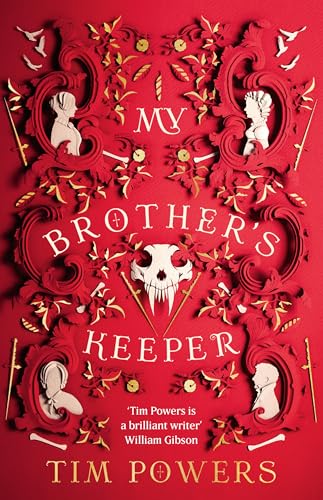
Nordic Visions

I happened to be in my local library the other day. The good lady and myself were looking at the new books section when she said, “What is speculative fiction?”

“SF and Fantasy,” I replied, “Why?” and she pointed out to me a book called Nordic Visions and subtitled The Best in Nordic Speculative Fiction edited by Margrét Helgadóttir.

As well as the editor herself I recognised the names of the three Finns who have contributed, Hannu Rajaniemi, Johanna Sinisalo and Emmi Itäranta (here and here.)

I of course borrowed it on the instant.

Despite its publication date of 2023 and any review of it not going to be timely I offered my review to Ian Whates at ParSec magazine.

He accepted and as a consequence the review will not be appearing on here for some time.


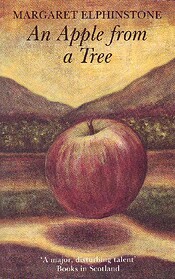
An Apple From a Tree by Margaret Elphinstone

The Women’s Press, 1991, 267 p.

This is a collection of Elphinstone’s short prose works. As usual with Elphinstone the writing is accomplished.

The Green Man. An Art teacher with some romantic disappointments and reasonably unsuccessful exhibitions behind her is walking the disused Dumfries to Stranraer railway line when she comes across an unusual dome-shaped green tent at the lochside near Lochskerrow Halt. Its occupant is a green man, possibly from an alien planet (his tent is not a spaceship, but his culture is other-worldly) who seems able to read her thoughts. Nevertheless their conversation is at cross purposes and frustrating. However, she does not feel threatened by him and agrees to return the next day. She finds herself attracted to him and the inevitable happens. Yet she doesn’t go back again. Her experience feeds into her artwork and her paintings become desirable. When the Loch Skerrow location is identified by one viewer she realises she has put the green man in danger.

Islands of Sheep. A middle-aged academic who has seemingly been unable to sustain relationships with the various women in his life has moved into a bungalow on the Cambridgeshire fens with an ancient mulberry tree in the garden and a view towards a low ridge that was once an island. He takes in as a tenant a young attractive woman psychologist, whom he has difficulty in understanding. As the tale comes towards its end he experiences hallucinations, symptoms of a nervous breakdown.

Conditions of Employment delves into the Matter of Britain. A relatively young jobless woman despairing at her lot in life throws rocks into a stream in her anguish. A few days later she sees a post as a Well Guardian advertised at her local Job Centre. She goes along to the unusual location for the interview. As Well Guardian she finds herself giving advice to people with minor skin complaints or other medical requirements. She also encounters the Watcher of the Sleepers who wants to know if it is the time of danger enough to wake those asleep under Cairnsmore Hill.

The Cold Well features the permanent Guardian of the Well, Oddny, who, at her antlered folkloric counterpart’s request, travels across a stretch of sea to try to undo the source of the sickness affecting the local deer. Reading between the lines, that source is Sellafield.

An Apple From a Tree. The events of this are narrated by a woman to her lover some months after they supposedly took place.  She was in a stand of beech trees in the Botanic Gardens in Edinburgh when an apple fell on her. Biting into it she was suddenly transported to a grassy plain where stood a naked woman, who (later) gives her name as Nisola. Shortly her male companion arrived. Nisola was as discomfited by our narrator – especially her clothes – as she was herself. After some confused discussion Nisola bit the apple and they were transported to Edinburgh. Cue toing and froing trying to ameliorate Nisola’s nakedness, before they work out a solution that will serve both. There are irresistible echoes here of the tale of Adam and Eve.

A Life of Glory is narrated by a disembodied consciousness roaming the universe and looking down on the affair of a couple – one from Edinburgh the other from Colorado – with whom the narrator eventually becomes intimately entangled.

Pedant’s corner:- “Aren’t I allowed to have any secrets?” (She’s Scottish; she would say ‘Amn’t I?’) “would have been mowed smooth” (would have been mown smooth,) “with him arm around (with his arm around,) an unindented new paragraph, “supplicants” (previously the spelling suppliant had been used,) almanack (usually spelled ‘almanac’,) seelings (context suggests ‘seedlings’.) Plus points for die as the singular of dice.

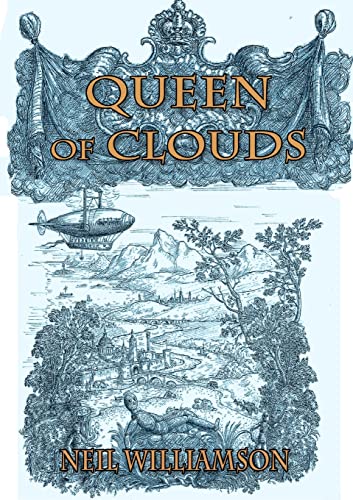
Queen of Clouds by Neil Williamson

NewCon Press, 2022, 331 p.
Billy Braid has been brought up in the Moulspur backwoods, apprenticed to Handmaster Benoit Kim. Kim is able to fashion from the local wood a type of animated treeperson known as a sylvan. (Other creatures can be made too.) The sylvans can speak to Billy in a sybillant tone. One day they warn him of the approach of a stranger. This is Bullivant Smout, a kind of larger than life, cartoonish braggart like something out of Chitty Chitty Bang Bang or Charlie and the Chocolate Factory. He carries a message to Kim from Karpentine, the city Kim had fled before coming to the Moulspurs. The message asks for a sample of his work to be sent back to the city. Despite Billy’s objections Kim has no choice. The message has been written in compellant ink. Kim entrusts Billy with the task of conveying the sylvan, named Seldom, with the instructions: go straight there under your own steam; avoid talking to people; don’t accept gifts; come straight back.

Life, not to mention fiction, is of course more complicated than that. Even before reaching the city Billy has encountered the slightly roguish Ralston Maundy, who agrees to look after Billy’s package while he enters the Tower of Hands to make the expected contribution, and then a woman who asks him to help fix her weird contraption before taking him up into the clouds. For she, Paraphernalia Loess, is of the Weathermakers Guild and the rain is not behaving itself, creating drought in parts of the country from which refugees have descended on Karpentine. Billy is startled to find the clouds are also full of voices, which although inarticulate as yet are more malevolent than sylvans. Paraphernalia turns out to be the daughter of Jelena Loess, Queen of Clouds, though by the end of the book deserves that accolade herself.

Karpentine is a hierarchical place run by the Guilds; Artificers; Printmakers; Constructors; Inkmasters etc. The city itself is also stratified by class, from the lower levels to the upper. Billy soon runs foul of the law (machines have been banished from this world and sylvans seem to be just that. Motes left over from the destruction of the machines are what produce the sentience in sylvans and the clouds.) He is imprisoned in the Institute of Improvement, basically a forced labour establishment whose inmates are helpless due to the compellant ink used to ensure their compliance. Billy’s abilities have been noticed by the Guilds though, and he is released to the Loesses after a bidding war. He is not, as the Law of Man commands, ‘Rightly Bound by the Limits of his Humanity.’ Due to his training, he can fashion wood to some extent but, later, his capacity to manipulate paper becomes more important.

Though Paraphernalia takes him under her wing he is still a servant, but she is almost as constrained as he is, frustrated by the looming necessity to make a marriage alliance to aid her family. For the Weathermakers’ stock is falling. Paraphernalia and Billy gradually from a mutually appreciative alliance.

Though there are several strands, the main plot revolves around the Guilds’ desire for carbon black made from the charred wood of sylvans, as it is believed that will have even stronger compellant properties, and Billy’s desire to protect the sylvans from harm.

Apart from the resourceful Paraphernalia and Billy himself, Queen of Clouds is replete with variously memorable characters; the twin enforcers, Innocent and Erudite Bello, Maundy’s nephew and niece Vern and Clymie, the needy Killick Roach, the haughty Stillworth Crane, the spider-like Moraine Otterbree, the slippery sisters Sin and Skin, and, despite being caught up in the fantastical scenario which surrounds them, even the minor characters here are well drawn and totally believeable.

There are also pleasing Scottish grace notes – a publisher called Blackie, the words skelped and skelfs, Billy being addressed as ‘son’.

This is emphatically not the standard mediævally based fantasy world. It is agreeably complex, well thought through, and despite its repugnant aspects (which world does not have those, and fiction would not be compelling without them,) engaging.

In our present world of communication silos it also acts as a warning to question what you read.

Pedant’s corner:-  “What echoed across the moor were brash caws and clacks” (What echoed … was …) “Whatever sense of adventure Billy had evaporated” (Whatever sense of adventure Billy had, had evaporated.) “He made that the wish that would drive him forward” (He made a wish that … ???) “What surprised him, were the crowds” (no comma; and, perhaps, ‘What surprised him was the crowds.’ If the sentence was turned round I think it’s natural to say, ‘It was the crowds that surprised him.’)  “the only family you need us the one” (is the one,) “that led his and Maundy’s rooms” (that led to his and,) ‘“What’s going?”’ (‘What’s going on?’) “‘Never mind, I already know?’” (is not a question,) “The valuable supply of Noteworth, Kim had used” (no comma needed,) “rather patronisingly, named Diligence Way” (no need for the comma,) benefactor (benefactress?) “The hoi polloi” (Common usage I know, but, strictly, hoi means ‘the’ so the ‘the’ before polloi is unnecessary,) Kinglsey (Kingsley,) “that even these Artificers” (even if these Artificers.) “What little he could see of the courtyards below the nest of roof ridges were in late afternoon shadow”  (What little he could see of the courtyards …. was in late afternoon shadow.)  “Who knew another attempt would” (Who knew if/whether another attempt would,) “in which the aerialists and horsemasters performed their shows in at the Canza fair” (only one ‘in’ needed,) “about emotionally attachments” (emotional attachments,) “‘All the way round to the low for’”  (the low for?) “but she had she didn’t let on” (but if she had she didn’t let on,) an unindented new paragraph, “while she guide it up” (guided it up.) “The base of it, all but touching the Weathermakers’ tower” (no comma needed,) “went meet the governor” (went to meet,) a missing quotation mark as a piece of direct speech is resumed, “Billy suddenly had shocking , vivid image” (had a shocking, vivid,)  “both inside and outside of his head” (doesn’t need the ‘of’,) “the destruction of refugee camp” (of the refugee camp,) “Alicia’s sniffed haughtily” (Alicia sniffed,)  “but he they should have been” (no ‘he’,) “many years in from now” (no ‘in’ needed,) focussed (as I recall this appeared on other pages too but usually had ‘focused’.) “Para got up from settee” (from the settee,) “to the anguish of city” (of the city,) “inside of” (inside,) dumfounded (dumbfounded,) “a ramp that down from the central room” (that led down from,) a missing full stop after ‘sums’,) “‘What the Institutionalised?’” (‘What about the Institutionalised?’) crenelated (crenellated.) “Then their threats changed then to” (only one ‘then’ needed,) “but in then he heard” (but then he heard.) “He right of course” (He was right of course,) “and the reeked of booze” (and he reeked of,) “and that the hallway a mess” (and the hallway a mess,) “a turn in the stairs. The hush of the house forcing him to whisper.” (a turn in the stairs, the hush of the house …,)  “birth right” (birthright.) “Roach’s said thickly” (looks a bit odd. ‘Roach said thickly’???)  phlemy (phlegmy,) “not be depended on have scruples” (be depended on to have,) Vern (needs a full stop,) “‘You have allow us’” (You have to allow us’,)  “And that was the ones who” (And those were the ones who”,) “The only signs  that the pair were still alive was their breathing” (The only sign that,)  “staunch the blood” (stanch the blood,) “done something disappear to, something to change her in body” (I can’t decipher something disappear to,)  “‘to compliment your inks’” (complement.) “‘Stick him in there too,’ he can give her a hand.’” (‘Stick him in there too, he can give her a hand’,)  “looked to on the verge of collapse” (looked to be on the verge.)

I also noticed indentureship. I’ve always considered indentiture as the noun for this condition but I can’t find a reference for it. It may just have been indenture.
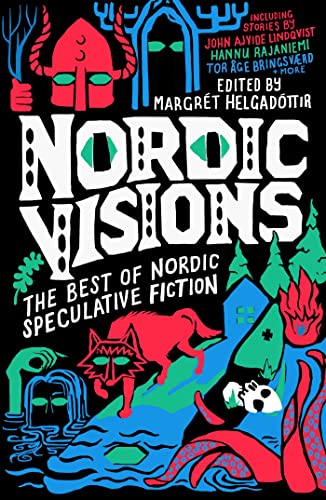
My Brother’s Keeper by Tim Powers

Head of Zeus, 2023, 309 p. Reviewed for ParSec 9.

The Yorkshire Moors make an ideal setting for tales of the uncanny. A thin place. Remote, wild, desolate, atmospheric, and above all, wuthering. A world beyond the world. It is easy to imagine strange goings on, mysterious creatures, ghosts, hidden menace, inhabiting the landscape. But we don’t have to. The Brontë sisters (well, Emily) already did. And now, so too has Tim Powers in a story whose central focus is on the Brontë family and Emily’s dog, Keeper, but also incorporates the author’s usual injections of weird. In particular here we have boggarts, gytrashes, barguests, (the latter two being essentially the same thing,) werewolves, a temple on the moors to the Roman goddess Minerva, double-bladed knives called dioscuri, an ancient creature with latent potency buried inside Haworth Church under a slab with an Ogham inscription. Not to mention clandestine human organisations known as the Oblique and the Huberti.
The prologue sees Branwell Brontë inveigling Emily and Anne along to a cave where they all leave smears of blood on the rocks. This acts as a primer for the subsequent plot, a debt to be called in. (I note again the prevalence of blood in these sorts of invocation.) Later, in his time in London, Branwell is bitten by a dog and more recently pricked by a dioscuri. Emily too has been bitten, though escaped the knife. But both are marked.

Their father Patrick’s great-grandfather, Hugh Brunty, had been on a boat crossing to Ireland when a child stowaway was found whom the crew said was a devil and wanted to throw overboard. Hugh saved the boy, who received the name Welsh (his believed origin,) and adopted him. Welsh was a spirit and possessed Hugh, and later his son, but in the next generation Patrick’s father resisted possession, and with the help of his dog killed Welsh’s body but not its spirit. When Patrick (now Brontë) came to England the spirit followed him. It is to keep any such demons at bay that Patrick fires his gun at Haworth Church every morning.

Emily’s embroilment comes when, near a ruin called Ponden Kirk, she saves a man named Alcuin Curzon from a werewolf. He is one of the Huberti, working to prevent the Oblique reuniting the two halves of their biune god (one half being Welsh and the other the thing under the slab.) Emily in this tale is the strongest of the Brontë siblings, and along with Keeper, whose ghost doppelgänger manifests itself when times are needful, is instrumental in the resolution.

Powers has form with incorporating literary figures in his work. Previous books of his have featured Lord Byron, the Rossettis, and William Ashbless, a poet of his own invention (with James Blaylock.) How much this convinces may depend on the reader’s knowledge of those characters’ backgrounds but in My Brother’s Keeper there is too little of the Brontës as Brontës. It could of course be argued that in the context of the story Powers had little room for this, but while mention is made of the sisters’ initial book of poetry, the manuscript of Wuthering Heights being at a publisher and Branwell’s tendency to see himself as his fictional creation Northangerland, only once do we see the sisters sit down to write. (Branwell’s attempts to do so are depicted as futile, counterproductive and tainted by possession.) That the sisters’ work exists is, however, essential to the way Powers resolves the story and he gives us a supernatural – and also literal – explanation for the disease then called consumption, which in real life was to take both Emily and Anne.

All that aside; as a fantasy the novel is gripping and very well written, as is customary with Powers. Certainly not a chore to read.

Pedant’s corner:- “an uncharacteristic howel” (howl,) “toward he parsonage” (the parsonage,) “in that that wilderness” (only one ‘that’ required,) “none of the Oblique order were very eager” (none … was eager,) “‘has strived’” (I’m sure Emily Brontë would have said ‘has striven’,) ditto “‘a different route than the one’”  (‘a different route from the one’,) “keeper had laid down beside her” (had lain down,) “off of” (it’s just ‘off’ no ‘of’,) “the paralysis had been had been some consequence” (no need for that second ‘had been’.) “‘Where’s your crows?’” (‘Where are your crows?’,) “straps on this shoulders” (on his shoulders,) specactles (spectacles,) metioned (mentioned,) “and laid down between their boots” (lay down.)


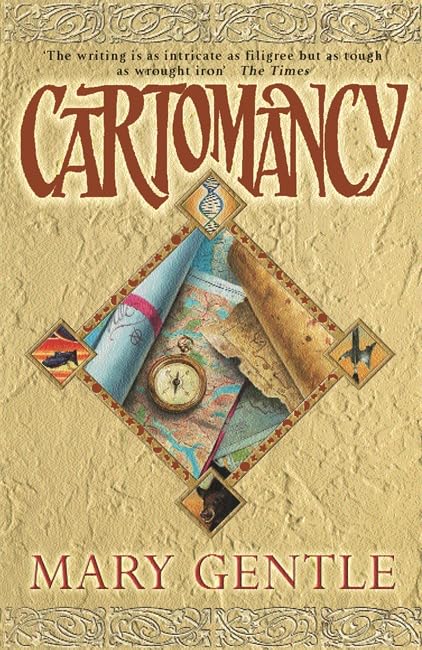
Cartomancy by Mary Gentle

Gollancz, 2004, 317 p.

This is a collection of Gentle’s stories (some of which have been collected before in Scholars and Soldiers.) Each is followed by an afterword describing the story’s genesis, and sometimes evolution.
We start with Cartomancy: An Introduction which is a framing device setting the subsequent stories as animations of maps brought to life by the blood of the elvish Pontiff Elthyriel.

The Logistics of Carthage is set in the same universe which Gentle set out in Ash: A Secret History (and later in Ilario: The Lion’s Eye) in which Burgundy is soon to disappear. It explores the relationship between Guillaume, a mercenary soldier in the Griffin and Gold company, and Yolande, a woman who joined up to protect her fifteen year-old son and of course failed in that. The Griffin and Gold are in North Africa fighting for the Turkish Bey. The plot revolves around both the death of another female mercenary whose body (against all mercenary custom) remains unburied because the local priesthood sees her as an abomination – and pigs.

Kitsune is narrated by Rowena, a “cute dyke” taking classes in the Japanese martial art of iaido. When she meets Tamiko, she falls in love with her at first sight. But Tamiko is – or claims to be – a fox spirit, capable of making anyone fall in love with her, a belief Rowena cannot get to grips with.

The Road to Jerusalem, the first story Gentle set in that universe mentioned above but this time Burgundy did not disappear in the 1500s, deals with a dilemma faced by a female soldier of the Knights Templar in the 1990s where she has to decide between obeying the Pope (here based in Avignon) or observing the rules of secrecy of her order. Incidental details include North America being known as Cabotsland and the Tokugawa Shogunate having a presence on its west coast.

The splendidly titled Orc’s Drift (written with Dean Wayland) is a throwaway tale set in the same universe as Gentle’s novel Grunts. A group of orcs at a remote outpost where the inhabitants have been cleared off the land is challenged by a small creature one of them identifies as a Sand Fairy.

The Tarot Dice is revealed in Gentle’s afterword to be her feeling her way towards ideas she fleshed out more fully in later stories and novels. A woman and a man in a society on the cusp of a revolution have a complicated relationship due to the fact that he in effect brought her up. The dice she employs are loaded, as is the metaphor they embody.

The Harvest of Wolves is a future dystopia where yet again a UK government has butchered the welfare system making receipt of relief dependent on doing something for it. This being a fascistic regime that involves spying on others.

Anukazi’s Daughter is the tale of a female soldier who realises she will never achieve the role of commander despite being better equipped for it than her male comrades. An encounter with enemies who accept same-sex relationships and gender equality changes her life. (This was apparently the first story in which Gentle played with the female soldier idea.)

What God Abandoned features as a minor character a young René Descartes as a member of an army at the beginning of the Thirty Years War. Another soldier is a Weerde, a person who can change sex but whose secret is discovered.

Unusually for Gentle The Pits Beneath the World is pure Science Fiction, set on a planet with seventeen moons orbiting a blue giant star twinned with a white dwarf. Pel is a young teenager accompanying a human expedition who puts herself in danger by revealing to the local inhabitants she isn’t an adult.

In Cast a Long Shadow a woman estranged from the father of her child encounters the creatures of darkness with whom he has made a pact to obtain from him his exercise book containing drawings of them.

A Sun in the Attic is again pure Science Fiction, set in a world whose moon was once inhabited but whose atmosphere is now only patrolled by machines. One of narrator Roslin’s two husbands has invented a telescope but the City Council isn’t keen on change.

A Shadow Under the Sea is set in the same milieu as Anukazi’s Daughter and concerns a sea creature attacking the boats which do the necessary fishing for inhabitants of the Hundred Isles. Spurlock has to go to the far south, past the Cold Lands, to enlist the help of a female shaman to trap the beast.

Human Waste examines an unusual response to the repair of the human body by nanotech.

Cartomancy: Conclusion rounds off the framing device.

In one of the afterwords Gentle mentions her discomfort with the short story form. She is good at long – often very long – fiction but her short work, as here, is certainly better than serviceable.

Sensitivity note: contains the words “niggers.”

Pedant’s corner:- “at Marchès’ look” (Marchès’s,) “laying down on its side” (lying down,) turcopliers, (turcopoliers,) “De Payens’ warm voice” (De Payens’s,) “he takes up shoulder-slung gun” (he takes up a shoulder-slung gun”,) platignum (is a brand of writing pen. This was a colour, platinum,) “nods a greeting, speaks one in a thick … accent” (speaks to one in a thick.) “The Tarot dice lay before her” (present tense narration, ‘The Tarot dice lie before her’,) whiskey (whisky,) “Descartes’ beardless face” (Descartes’s,) halbards (halberds,) racheting (ratcheting,) occured (occurred.) “Shock and the smell of the seaside hits Suze” (hit Suze,) “men and women lay on the ground” (lie on the ground,) “Nats’ shadow” (x 3, Nats’s.)


ParSec Magazine Blog Tour and Discounts!

ParSec magazine, for which as you know I review SF and fantasy books, is having a promotion (see the Facebook post here) where a tour of seven blogs can be found reviewing issues 1-6 + 9 in a succesion of links each of which has a discount code for 25% off issues 1-9. Read and enjoy.

The links start at Fantasy Book Nerd here.


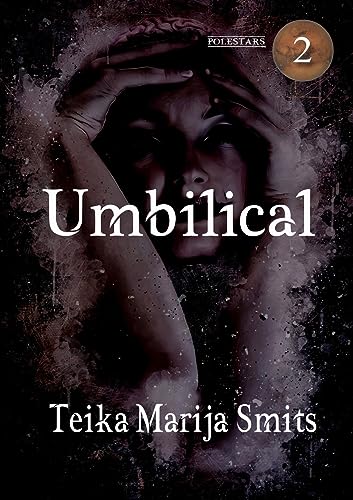
Umbilical by Teika Marija Smits

NewCon Press, 2023, 228 p.  Reviewed for ParSec 9.

This is the author’s first collection of stories, twenty-one in all, plus one poem. Sixteen of them were culled from appearances in a variety of outlets over the past ten years, five are making their first appearance in print. The contents range in genre over SF, fantasy, myth and horror, with stories sometimes crossing over their borders.

In general, literature deals largely with the themes of love, sex and death. Science Fiction tends to be more restrictive (love for example tends to be bypassed and sex for the most part avoided) but its signature feature is in making its metaphors literal. (The outstanding example of that here is the title story, about the bond between a daughter and her mother.) Fantasy, myth and horror act more as warnings and as stripped-down guides to human relationships.

In the first few stories here the theme of death seems to be a connecting thread but this does not then extend to the collection as a whole.

The poem, Icarus Dreams, opens proceedings and partly sets the tone by inviting Icarus to heed his father and rewrite his story. Smits is more than adequately equipped to provide new shapes to old tales. To that end there are herein updated treatments riffing on the Blackbeard and Theseus stories, while the Baba Yaga of Russian folklore meets an AI.

But the author has further strings to her bow. Elsewhere, moles on the skin are a marker of long, perhaps immortal, life, and carry the threat of incarceration to unravel their genetic secrets. We meet an AI repairman whose encounter with his charge becomes reminiscent of 2001: A Space Odyssey. One story (not narrated by Dr Watson) features Sherlock Holmes, but only in a bystanding part as he asks his psychic investigator – and female – cousin to help him. We have tales where a psychological decline follows the break-up of a relationship which had settled into routine, the Green Man appears to rescue a ravaged future Britain, a woman inherits a bookshop with an unusual kind of ghost, AI/human hybrids question each other over their origins – and the nature of God. One story centres on the reliving of bottled memories. There is an African inspired SF/fantasy cross-over. A woman falls in love with her witness protection AI android bodyguard, another tells of the lengths she went to in an attempt to get pregnant, a brother and sister hatch a plot to rescue their twin siblings from VR addiction in a warehouse, a female painter who sells pictures under her brother’s name finds she cannot hide her expertise from J M W Turner (with whom she shares the same reverence for sunlight,) two people celebrate their involvement with the commercial start-up of nuclear fusion at Sellafield, a woman on the point of death remembers incidents from her life while subjectively traversing a fantastical purgatorial maze.

Their telling requires a comprehensive array of authorial registers and Smits handles them all well, with very few infelicities. She is a talent to watch.

Pedant’s corner:- Theseus’ (x 2, Theseus’s,) focussing (x 2, focusing,) a missing comma before a piece of direct speech,  Holmes’ (x 2, Holmes’s, which appeared later,) shrunk (shrank,) focussed (x 3, focused,) sunk (sank,) Geena Davis’ (Davis’s,) “legs akimbo” (I doubt it. It’s extremely difficult to put your feet on your hips,) “and laid down again” (lay down again,) data used as a singular noun (that would be datum, data is plural,) Jesus’ (Jesus’s,) “the settings on each gamer’s capsule isn’t” (the settings … aren’t,)  “‘it’s okay to chop down all the forests and poison the soil.’?” (has that question mark in the wrong place. It ought to be where the full stop is,) “him and Kel had looked to the stars” (he and Kel,) James’ (x 3, James’s; annoyingly employed a few pages later.) “A trail of soapy bubbles stream after his fleeing form” (a trail streams.) Plus points, though, for using maw correctly as a stomach.


The Phoenix Keeper

Another one for ParSec has arrived. (Editor Ian Whates is keeping me busy.)
The book is The Phoenix Keeper by S A MacLean. The author is another who is new to me.

According to the publisher’s accompanying blurb it’s “The Romantasy debut everyone’s talking about.” (Are they? I wasn’t. )

Then comes the line “an irresistible queer romantasy standalone set in a magical zoo.” (Irresistible? Don’t tempt me. I will make up my own mind, thank you.)

It also tells me MacLean is a fantasy romance author from sunny Southern California.


More for ParSec

The latest books I have received for review for online SF magazine ParSec arrived this week.

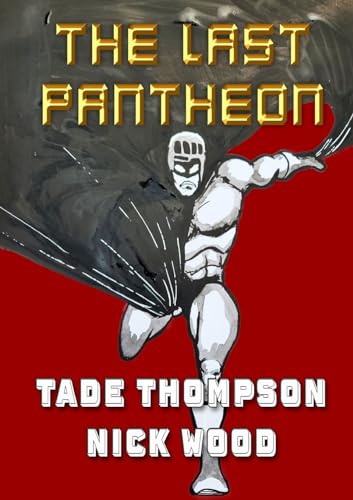
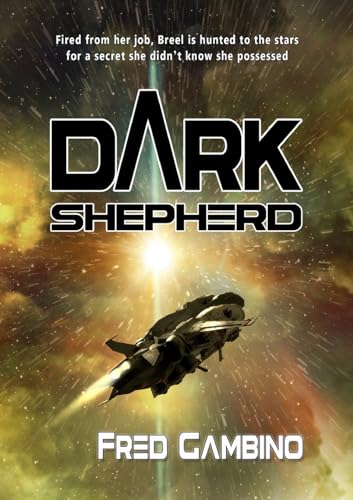
They are The Last Pantheon by Tade Thompson and Nick Wood and Dark Shepherd by Fred Gambino.

I have read books by Thompson and Wood as individuals but not in collaboration. Thompson is Nigerian and Wood South African. It therefore make sense that The Last Pantheon has African (super)heroes. The novel contains illustrations.

Fred Gambino is new to me.

I assume the reviews will appear in ParSec’s issue 11.

Earthsong by Suzette Haden Elgin

The Feminist Press at the City University of New York, 2002, 267 p, including vii p Foreword, xi p Appendix and xiii p Afterword by Susan M Squier and Julie Vedder.

Earthsong is the third in Elgin’s Native Tongue trilogy, the first of which, Native Tongue, was published in 1984 and the second, The Judas Rose, in 1987. This edition is a reprint of  Earthsong’s 1994 publication.

The trilogy’s premise was that due to aliens coming to Earth and requiring translators a group known as Linguists came to have a monopoly on the trade. (As I recall their expertise had been developed by talking with whales and dolphins but my memory may be tricking me.)

Despite the trilogy being set in the 22nd century, society was still largely male dominated and though women linguists were utilised they were very much subservient to the males – as were women more generally with very little in the way of autonomy. Women past child-bearing age go to live in Barren Houses and in these was developed a language (which Elgin named Láadan,) so that women’s perceptions could be expressed more adequately. This was kept secret from the males of course. In The Judas Rose Láadan was introduced to non-Linguist women but failed to catch on and was indeed opposed vigorously. But their new language changed the women and men could not bear being with a woman for longer than thirty minutes – some (not myself) might say not much difference there, then – to the extent that they lived in separate Womanhouses.

Those two books were an interesting thought experiment and, while being perfectly adequate as SF, were marred for me by the fact that seemingly every single man in them was characterised as being incredibly stupid.

In Earthsong, a crisis has been precipitated by the aliens suddenly disappearing from Earth (citing as their reason humanity – for which of course read men – as being too violent.)

A foreword supposedly written by the main protagonist of the earlier two books, Nazareth Joanna Chornyak, warns us that the story, as mediated by trancers channelling her thoughts, is going to be disorganised, told through many different voices, and not in chronological order. The trancers are necessary because Nazareth is dead and in some sort of limbo.

The book proper starts with her great granddaughter Delina Meloren Chornyak petitioning the head of the Pan-Indian Council of the Americas (PICOTA) to allow her to use their ceremonies invoking a vision quest in order to talk to Nazareth to ask her what to do about reestablishing relations with the aliens. When he is finally persuaded and Delina meets her forebear, what Nazareth says to her seems impossible. It is to eradicate hunger.

After a long time Delina realises the question boils down to ‘How can people eat less food and still thrive?’ The answer she finds is in religion. Throughout history ascetics, nuns, monks and so on claim to have got by, flourished even, on little food. The secret, Delina realises, lay not in religion itself but more specifically in chanting. But it turns out that any sort of singing will suffice. By analogy with photosynthesis Delina calls the process of deriving sustenance through song, audiosynthesis. (It was here I felt Elgin had gone over the score. Now we are in outright fantasy land. Sound is a form of energy, yes, but by what mechanism can it be converted to chemical energy. In any case, are these accounts of abstinence credible? Religious adherents have been known to engage in deception to ensnare the gullible, to impress the credulous.)

Yet what would lack of hunger mean? If everyone has access to food (or can gain the necessities of survival elsewhere) then conflict will be reduced, if not eliminated, a means of control of people removed. And, as happened with Láadan, humans would change, they would be in effect a new species, with a new outlook on life.

Elgin’s background is perhaps showing when a (male) character asks, “would you please explain how it happens that the President and Vice-President of the United States” [of Earth] “are always incompetent?” and when given a counter example says, “He thought Presidents were allowed to fix things. He didn’t last long,” which  leans into that pernicious strand of USian thought which distrusts government, which thinks government is a bad thing and which also, therefore, encourages conspiracy theories.

The same character’s assertion that “There cannot be a conspiracy that size to do good! …. Human beings are only capable of really buckling down and working together in groups when their goals are evil,” has simply misinterpreted human history. Co-operation (plus the passing on of knowledge) – not conflict, and certainly not individualism – is what allowed humans to become the dominant species on our planet.

As speculation, as SF, this is all fine, outrageous premises have often been turned into good stories. The story here, though, is only touched on obliquely, its ramifications for future human relationships left unshown.

The novel is our prime way of exploring what it means to be human. It is difficult, therefore, to convey a change in human behaviour using it as a medium. If Elgin doesn’t quite manage to, her attempt can be applauded.

Pedant’s corner:- “there were a number of” (there was a number of,) “had hid” (had hidden,) “the unlikely lay of this land” (lie of this land,) “none of them were” (none of them was,) “had that for search target” (for a search target,) “I’m put back back together now” (only needs one ‘back’.)  “‘For heaven’s sakes’” For heaven’s sake,) “but he was was tolerant” (only one ‘was’ needed,) youall (you all,) a missing end quote mark after a piece of direct speech, strategems (stratagems.)

free hit counter script