Harper Perennial, 2005, 190 p. First published in 1989.
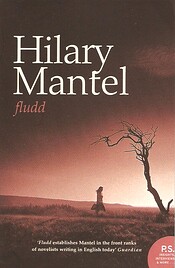 Father Angwin is a Roman Catholic priest in the remote parish of Fetherhoughton in 1956. There is a small convent affiliated to Angwin’s Church of St Thomas Aquinas. The convent and attached school is overseen by Mother Perpetua – called Purpit by just about everyone. She has a fierce grip both on the nuns and the children and a downer on just about everybody except the bishop. Her contempt is particularly strong for Irish people, which is bad news for Sister Philomena who as a consequence gets all the drudgerous jobs.
The bishop is a moderniser in favour of updating the mass by dropping Latin. Angwin, despite being a man who lost his faith years ago is against this, fearing his parishioners would stray. He tells the bishop his flock “aren’t Christians. These people are heathens and Catholics.” Without the statues and their superstitions they wouldn’t attend Church. The bishop, however, insists on the removal of most of the plaster statues of saints in the Church. Angwin’s only solution to this problem is to have the statues buried in the churchyard.
Soon after, a knock comes on the presbytery door. In walks Father Fludd, whom everyone assumes is the curate the bishop had promised/threatened. Fludd is a mysterious character who quickly manages to winkle out Angwin’s and Philomena’s reservations about their respective situations. In one of their conversations he tells Angwin, “‘Common sense has nothing to do with religion.’ It is on Philomena, though, that his influence is most profound.
Oddness and a hint of the supernatural accompany him. Though he drinks Angwin’s whisky, the level in the bottle does not seem to drop. He laments the congregation’s lack of appreciation of what they are saying in their responses – formaligh for foe malign, destrier for death’s dread. He is, he says, in the business of transformation. It is never spelled out as such, but the invitation is clearly there to see him as an incarnation of the Devil.
Fludd is a short novel, but says what it needs to – even if the treatment, a kind of distancing, an opacity (which reminded me a little of the writing of Muriel Spark,) renders it almost dream-like.
Aside: In a foreword, Mantel says the Catholic Church portrayed in this novel bears “some but not much resemblance” to the one in the real world.
Perhaps redolent of the times in which it is set it contains the dismissive phrase, “digging like an Irishman.”
Pedant’s corner:- medieval (mediæval, please, or at least mediaeval,) “the camphor smell of their Sunday clothes” (the smell of mothballs, presumably. Those were made of naphthalene, not camphor,) “alarum clock” (alarum is archaic,) “like genii let out of bottles” (like genies let out,) “Thomas à Beckett” (nowadays written ‘Thomas Becket’.) “‘I’m not afraid will they recognise me’” (I’m not afraid they will recognise me’.)


