Archives » 2022 » August

The Pulsar in the Crab Nebula

This is an arresting image from Astronomy Picture of the Day for 21/8/22. It’s of the area surrounding the Crab Pulsar, a spinning neutron star at the centre of the picture and is the remanants of a supernova witnessed on Earth in 1054.

The image combines visible light from the Hubble Space Telescope, X-ray light from the Chandra X-Ray Observatory and infra-red light from the Spitzer Space Telescope.

The neutron star spins 30 times a second.

Pulsar in Crab Nebula

Rangers B 7-0 Dumbarton

Scottish Challenge Cup,* The moreroom.com Stadium,** 23/8/22.

Embarrassment. Total embarrassment.

Okay it may not have been our strongest eleven but this was against what is in effect a youth team. I also think it might be the worst Sons defeat I can remember. That is not good enough. (Edited to add; it’s actually the joint worst. I must have blanked that out.)

I must admit our utterly abysmal record in this competition had slipped my mind (we have only got past its first round twice I think) but I certainly ddin’t expect this humiliation. To say I’m disgruntled would be an understatement.

All the feel good factor from four league wins in a row has evaporated.

Given our season fell apart last year after a less emphatic defeat than this – the 5-0 drubbing up at Peterhead, even though that was in the league – I now have the fear for Saturday.

*Now named the SPFL Trust Trophy.

**aka The Rock, but this was technically an away game, so we’ll give it its sponsored name.

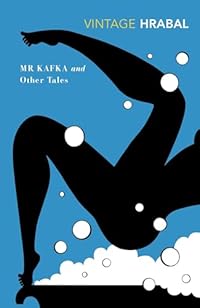
Mr Kafka And Other Tales by Bohumil Hrabal

Vintage Classics, 2019, 150 p, including 6 p Translator’s Afterword. Translated from the Czech by Paul Wilson.

These are stories set in and around Prague in the late 1940s and early 1950s when the city was still recovering from the Second World War. Several of them are situated in a steel works with apparently no safety protocols and with workers culled from various former walks of life. Misogynistic attitudes which in those days would have been unquestioned do not bear much scrutiny to the modern eye.

Concentrating on ordinary encounters and snatches of conversation exhibited in all their bizarrerie Hrabal achieves a kind of heightened realism, emphasising that nothing is truly ordinary, the grimmest of industrial settings assuming a fantastical aspect. In the circumstances that pertained in that time and place, though, the ordinary bordered on the subversive. At bottom, resorting to the ordinary is the only defence against oppression, authoritarian or otherwise.

In Mr Kafka a character named Franz Kafka strolls the streets of Prague describing all the strange encounters he has.
Strange People concerns a labour dispute in the steel works, riffs ironically on the worker’s State and provides a glimpse into the many ways in which people cope with their working environment.
The putative Angel is the overseer of a penal workforce who likes to think of himself as protecting his charges. They themselves perform small acts of human consolation as they get on with their work.
In Ingots a merchant and a doctor of philosophy discuss the times as they load up hoppers with scrap metal while a woman meant to be starting a jail sentence the next day has to succumb to the (lack of) comfort of strangers. The doctor of philosophy says, “And what’ll become of you? The same as all this scrap. The tools of your trade … you’ll be ingots too. This new age is melting you all down.”
A Betrayal of Mirrors presents fragments of a hot summer, boys practising the Czech wall pass, a stonemason repairing a statue of St Jude Thaddeus, submissions to an art exhibition, schoolchildren’s responses to the question of how to make the country an even more beautiful place, the preparations for the demolition of a statue of a figure referred to as the Generalissimo (but in reality Stalin.)
Unusually for this book Breaking Through the Drum is a single-stranded narrative which it is tempting to look on as an allegory of the Cold War. In it, amid some philosophising about the moral nature of ticket collecting, a conscientious ticket collector who has worked himself up to ticket taker for the Prague Municipal Symphony Orchestra in the Waldstein Gardens, which is separated from the St Thomas brewery, where Mr Polata’s Sumava Regional Brass Band plays in the beer garden, by a high wall, the two seemingly in competition, uses a ladder one evening to look over the wall. He sees the beer garden is overlooked by a former monastery now a home for old women and he perceives the patrons there are dancing “for the old women to see, these women who no longer had anyone to touch, who would never again be embraced that way, which was why the old women’s eyes sparkled as they did, why they glowed with longing and envy and resentment; and I saw that there were walls not just dividing symphonic music from brass music, but people from people as well, walls far more real than the one I was sitting on.”
Sharing as narrator the same Kafka as the first story in this collection Beautiful Poldi is Hrabal’s hymn to the steelworks to which he was assigned in the “Putting 77,000 to Work” scheme introduced by the post-war Communist government. Apart from featuring overheard observations on the bus to work and dialogue between Kafka and his colleagues we also see the nightly performance of a woman in the next-door convict barracks, well aware of her male audience peering through the knotholes in the fence. In the end though, “Everything exists in the elasticity of perspective, and life itself is illusion, deformation, perspective ….”

Pedant’s corner:- Translated into USian, organdie (organdie,) “the one who hung himself” (does this confusion between ‘hung’ and ‘hanged’ exist in Czech?) a missing end quotation mark, “reached into to the aquarium” (no ‘to’ needed,) “lay it against his cheek” (past tense, laid it,) “where the part ran through his thick hair” (parting,) “put then into a box” (put them,) “like a aureola” (an aureola.) “Aw shucks” (does not seem to me to be a likely Czech expression,) wolfram (that metal’s modern name in English is tungsten.)

Bishopshire War Memorial

Bishopshire War Memorial is a stone column with inscribed Celtic cross situated in front of Bishopshire Golf Club’s clubhouse off the A 911 road between Scotlandwell and Kinnesswood in the former Kinross-shire part of Perth and Kinross. (I have no idea why the golf club is called Bishopshire except that it must be a local name. In my youth I used to play league badminton against Bishopshire Badminton Club who played out of a church hall in Scotlandwell.)

Bishopshire War Memorial

Dedications. “To the memory of the lads from this parish who fell in the Great War 1914-1918.” Lower dedication, “Also those who fell in 2nd World War.” At bottom, “Their name liveth forevermore”:-

Bishopshire War Memorial Dedications

Stenhousemuir 1-3 Dumbarton

SPFL Tier 3, Ochilview, 20//8/22.

I don’t know what to say about this. I’m gobsmacked.

We’ve only ever once before in my lifetime won our first four league games – in 1959/60. And I can’t remember that.

This sort of thing is so rare in the life of a football fan.

Congratulations to the players and everybody at the club.

A goal for Ryan Blair (though some give it as an own goal,) one by Martin McNiff and the clincher by Finlay Gray.

I will note though that we’ve beaten three out of the bottom four and only one of the top four. But given the situation it’s unlikely we would have beaten the rest of the top five.

Conditioned as I am by many years of disappointment I am now of course fearing the bubble will burst – but hoping it won’t.

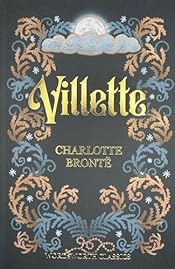
Villette by Charlotte Brontë

Wordsworth Editions, 1999, 476 p, including 10 p Notes, plus ii p Contents, xiii p Introduction by Sally Minogue and iii p Bibliography. First Published 1857.

I think I have remarked before how difficult it is to read a nineteenth century novel with a historical eye, without any knowledge of the development of the form and of readerly expectations in the decades since. Villette might be a case in point. Wordy, discursive, thoroughly preoccupied with religion, it is also something of a tease in the way it sets up a potentially supernatural theme before deflating it in a cursory fashion.

It is the memoir of Lucy Snowe, who spent time every year of her childhood at the home of her godmother Mrs Bretton and her son Graham, where she met a girl called Paulina, whose mother had died and Mrs Bretton had taken the child in. In young adulthood, contact with the Brettons long lost, she finds herself alone and takes up a position as companion to Mrs Marchmont, on whose death with her fifteen pounds wages in her pocket she decides to set out for the continent. By a series of chances she ends up in a teacher in a pensionnat run by Madame Beck, in the Rue Fossette in the city of Villette, modelled on Brussels, but in a country referred to as Labassecour,

Madame Beck is at first distrustful, Lucy spies her ruffling through her belongings, but slowly allows her some latitude in behaviour. Most of Lucy’s pupils go unnamed but the profoundly unserious Ginevra Fanshawe has a plot function, diverting the eye of the pensionnat’s English physician, Dr John. The pensionnat is also said to be haunted by a nun, dressed in black with a white head covering. Another of its teachers is a M Paul Emanuel, an overbearing sort who, on finding Lucy one day in an Art Gallery surveying a somewhat revealing painting of Cleopatra, chides her for her attention to it. Lucy notes that he himself has no qualms about viewing it, nor does he object to the men in the room doing so. A quiet understated feminism is in evidence in the text here, but Lucy herself does not seem to perceive M Emmanuel is perhaps not someone to take up with.

Intrigue involving messages passed into the pensionnat’s grounds leads Lucy to encounter the nun twice, speechless on both occasions. The gothic implications of this are at odds with the decidedly realistic portrayal of other scenes. The resolution of the nun’s identity when it comes is as mundane as it is disappointing.

It may have been a Victorian novelistic practice but many times here a character known to Lucy is described at the start of a scene (or indeed through many chapters) before his or her identity is revealed to the reader. This tendency gets more irritating the more often it occurs. A case in point is that of Dr John, who is eventually disclosed as John Graham Bretton, the son of Lucy’s godmother. He in turn is a subject of Ginevra Fanshawe’s amatory machinations, played off by her against the Comte de Hamal.

A fairly large part of the narrative is taken up with Lucy’s holding firmly to Protestantism, many conversations with M Paul revolve around it as does her strange recourse to a Catholic confessional when she is particularly down one day and roaming Villette’s streets.

Villette is to modern eyes too long and too wordy. Dr Sally Minogue’s introduction says it is in fact two novels, the one we first encounter and the other when we reread it with knowledge of its content, but surely that could be said of all novels? She also cautions against interpreting it as entirely autobiographical and praises Brontë’s transformation of her personal love and pain into something more, but she refers to the author’s other novel which drew on the same experiences, The Professor, as being ‘leaden.’ (Oh dear. I’ve still to read that one.)

In the end though it illustrates the tendency towards gleaning romance of someone who has few choices open to her.

Pedant’s corner:- In the Introduction; Williams’ (Williams’s.) The usual Brontë spellings such as apostacy for apostasy, irid for iris (of the eye,) doat for dote (though I note doted) up-stairs; also strung, rung, swum for sprang, rang, swam etc. Otherwise; bannister (banister – used later,) whiskey (whisky,) “a stuff apron” (stiff?) “old acquaintance were all about me” (was all about me,) retractation (the sense is of retraction,) the indication of note 157 appears three lines above what it refers to, that of note 162 twelve lines above its referent, camelias (camellias.)

Live It Up 96: Invisible – Alison Moyet

This 1984 hit for Alison Moyet was written by Lamont Dozier.

A great talent, sadly missed.

Alison Moyet: Invisible

Old College and War Memorial, Edinburgh

The Talbot Rice Gallery (see posts here and here) is housed in part of the Old College, Edinburgh.

On the way out I happened upon a War Memorial to the former alumni of Old College, set into the wall behind its entrance facade

Old College:-

Old College, Edinburgh

From side. War Memorial wreaths behind:-

Old College, Edinburgh From Side

I could not get the whole of the memorial into one photo. Nor indeed two. Both of those below are stitches of two.

War Memorial Wall 1914-1918 names. Dedicated “MCMXIV To the glorious memory of the alumni of this University who fell in the Great War MCMXIX.”:-

Old College, Edinburgh War Memorial 1914-1918 Wall

World War 2 names. Stones to side inscribed 1939 and 1945:-

Old College, Edinburgh World War 2 Memorial

Salman Rushdie

It ought to be obvious from the fact that on this blog I have reviewed four of his books, but I admire Salman Rushdie as a writer. Not everything he has written of course. Some books are better than others.

As a man however I cannot imagine how he carried on under the circumstances of his life. That perhaps is the most admirable thing about him.

Yet what was the alternative? To back down, to retreat into obscurity, to hide away from the world would have been understandable but it would also have been to give in. Let us be clear that that would have been giving in to bullying, yielding to intolerance, giving up the right to think for yourself.

Some people believe that what they have been told is the word of god trumps whatever anyone else might hold dear. That they may be mistaken in their beliefs does not seem to occur to them. And if their faith cannot stand criticism then it does not say much for what they believe in nor for the strength of that belief. If it is so fragile that it cannot bear criticism it is a poor, misbegotten thing. Maybe that is what these deniers of alternative views are afraid of.

When I read The Satanic Verses I could not see how it had blasphemed against Islam. I did not detect in it any reproof of that (or any other) religion nor, indeed, of its prophet. Only a counsel to treat religious texts judiciously and with due care. The book was, in any case, more concerned with other matters. (Or was it that which perhaps was its offence?)

In the light of the recent attempted murder of Rushdie – in full view of an audience, so making a not guilty plea somewhat laughable – George R R Martin of Game of Thrones fame has written a passionate defence of the right of a writer to write and of freedom of speech more generally. He says it much better than I could.

William Morris Exhibition, Dovecot Studios, Edinburgh, February 2021

Also in February we went to a William Morris Exhibition at Dovecot Studios, Edinburgh. The exhibition is now over.

William Morris was one of the leading proponents of the Arts and Crafts Movement. His wallpaper patterns covered many a Victorian wall and have been fashionable on and off ever since.

Wallpaper Patterns:-

Wallpaper Pattern by William Morris

William Morris Pattern

William Morris Pattern from Printing Block

William Morris Patterns

Three William Morris Patterns

Three More William Morris Patterns

Three Patterns by William Morris

Patterns, William Morris

William Morris Wallpaper Pattern

A printing block:-

William Morris Printing Block

Textiles:-

William Morris Textiles

William Morris textiles

free hit counter script