Sons Flags Flying
Posted in Dumbarton FC at 22:19 on 25 March 2018
Still down after yesterday.
Here are two pictures from a cheerier moment:-


Posted in Dumbarton FC at 22:19 on 25 March 2018
Still down after yesterday.
Here are two pictures from a cheerier moment:-
Posted in Dumbarton FC at 12:00 on 25 March 2018
One Sons fan was showing a sense of humour before yesterday’s game:-

Souvenirs of the Scottish Challenge Cup Final 2018. Black and Gold flags courtesy of Sons Trust:-

Posted in Dumbarton FC at 21:50 on 24 March 2018
Scottish Challenge Cup (Irn Bru Cup) Final, McDiarmid Park, 24/3/18.
I’m a bit deflated at the moment as I’m sure you can imagine. Football can be such a cruel game.
I made the fatal mistake of beginning to hope when Scott Gallacher made the penalty save with about seven minutes to go. But to lose it in the last gasp of injury time was harsh; especially on the players who’d worked so hard.
We had the better of the early exchanges, ranking up several corners (I can’t remember them getting even one in the whole game) and having a shot on target without really troubling the keeper. More worryingly they came into it towards half-time by which time the on target count had become 2-2.
They had more of the second half and did make Scott Gallacher handle the ball a few times. The nearest we came was with a Danny Handling shot which the keeper held. I noticed today that Handling has a terrible habit of turning back with the ball. Who was it back in the day who did that all the time. Paul Quinn? Robert Russell? Not Russell I think, much further back than him.
After his debut for Cyprus yesterday (the Sons’ first full international player since 1932) Froxy came on as a late sub but it was too late for him to affect the game much. The only free-kick he could attempt was from way too far out even for him.
Here’s a photo of my match ticket:-

Before entering the stand I took a few photos of the ground as it’s the first time I’ve been there. Through a frosted glass window I caught Sons’ manager Stevie Aitken in the dressing room probably trying to get a signal on his phone:-

I’m proud of the lads, they did well. But I’m gutted – for them and for me.
They’ll need to raise themselves for Tuesday night’s game now. At least most of the players who were unavailable for today should be in the squad.
This cup run has probably ruined our league season what with all the postponements. We don’t have a midweek free now until the last week of the season.
But when will be the next time Sons are in a national Cup Final?
Posted in Dumbarton FC at 12:00 on 24 March 2018
Today’s the day!
Cup Final day.

I’ve been okay during the week but began to get nervous last night.
‘Mon the Sons!
Posted in War Graves, War Memorials at 20:00 on 23 March 2018
Fortingall is a village in Perth and Kinross, fairly remote. Go to Kenmore at the foot of Loch Tay, take the road along the north shore of the loch and turn right at Fearnan – and you’ve still a few miles to go.
The War Memorial lies in a walled off area just outside the churchyard:-

This is the view of the kirk through the gates seen to the left above:-
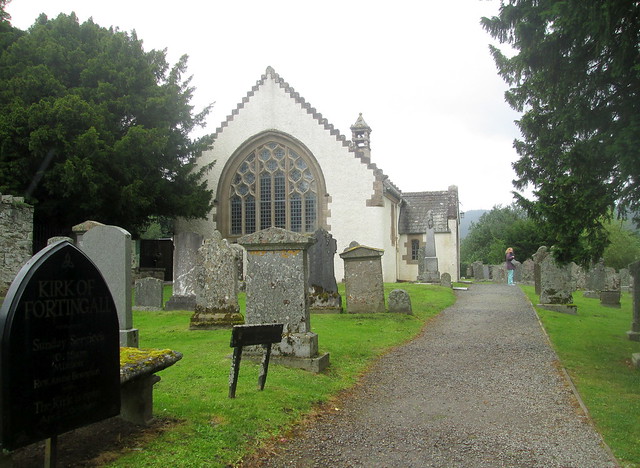
Fortingall’s War Memorial Inscriptions read, “To the glory of god and in memory of those from Fortingall district who fell in the Great War 1914-1919,” and below, “They died that we might live.” Both inscriptions are also rendered in Gaelic.:-

The 1939-45 names are engraved on one side of the Memorial:-

One of the gravestones in the kirkyard has war dedications. Pte Peter Cameron, 43rd Canadians, died of wounds in France, 12/10/1916, aged 29. Corp William Cameron, Scottish Horse, 5/3/1919, aged 36:-

Posted in 1990s, Music, Something Changed at 12:00 on 23 March 2018
Another 90s song that alludes to the Apollo programme.
World Party: Is It Like Today?
Posted in Fantasy, Reading Reviewed, Science Fiction at 20:00 on 22 March 2018
The New Curiosity Shop
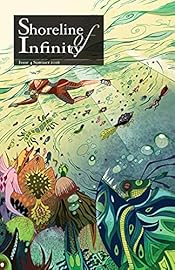
In this issue there are interviewsa with Ken Macleod and Tricia Sullivan by Gary Dalkinb. Duncan Lunan reviews Ken Macleod’s The Corporation Wars: Dissidence mainly by way of discussing other works; Iain Maloney mystifyingly likes Yoon Ha Lee’s Ninefox Gambit and praises publisher Unsung Signals for taking a punt on Dan Grace’s long short (or short long) piece of fiction, Winter, not to mention the work itself. Elsa Bouetc likes Lavie Tidhar’s Central Station, Benjamin Thomasd eulogises Guy Gavriel Kay’s Children of Earth and Sky despite its tendency towards info-dumping, Ian Huntere is less generous to Ian Boffard’s Tracer. Ruth EJ Booth’s first column discusses the effect of winning a first award on a writer. Russell Jones’s introductionf to Multiverse (the poetry section) manages to tell us what the poems are about before we read them.
As to the fiction:-
Well Enough Alone1 by Holly Schofield depicts the cognitive decline of an elderly woman. Keen to get rid of her electronic minder by damaging it, she persuades the repair technician to download its programming into her smartcane while awaiting a replacement. The smartcane has programming of its own.
In Senseless2 by Gary Gibson a future National Unity totalitarian government perverts a medical breakthrough by using a device to remove senses from the prisoners it detains. A blind inmate who has developed compensation mechanisms and concocted an escape plan is suspicious of a new cellmate.
Andrew J Wilson’s The Stilt-Men of the Lunar Swamps3 is a typically exuberant piece of Wilsoniana, a Vernian/Wellsian pastiche in which our intrepid adventurers travel into a cavern in the Moon to meet the titular stilt-men and their even more alien controllers. There’s also a character named MacGuffin.
Model Organisms4 by Caroline Grebell relates the last yearnings of a dying life-form.
In Note to Self5 by Michael Stroh a wannabe Science Fiction writer busily piling up the rejection slips receives a package in the post: his first novel, sent to him by his future self.
Robert Neilson’s From the Closet is the somewhat predictable story of a man who tailors himself – literally – to the profile required by his internet dating partner.
The G4.A of geefourdotalpha6 by Clive Tern is a fighting robot which achieves consciousness when brought down in its final battle, surviving hundreds of years before being unearthed by a human anxious to preserve her hunting grounds.
Beachcomber by Mark Toner is a continuation of the graphic/comic strip series introduced in Shoreline of Infinity 3. This episode manages to combine 1950s UFOlogy with the Broons!
Gay Hunter by James Leslie Mitchell (Lewis Grassic Gibbon) is an extract from that author’s novel of the same title, the latest to be considered under Monica Burns’s7 SF Caledonia umbrella.
Pedant’s corner:- aIn the introduction “Ken Macleod and Tricia Sullivan have both have contributed” (remove a “have”.) b“as an writer of the left” (a writer,) “advances are being made bio-engineering” (made in bio-engineering,) “this conservative tenancy” (tendency.) c“the benefits and drawback” (drawbacks make more sense.) dhonorable (honourable, please.) e”the very imposing, nay, ruthless figure, who” (has its second comma misplaced; it ought to be after “ruthless”.) fDodds’ (Dodds’s.) gIn an appeal for subscribers; super nova (supernova.) 1Written in USian, “an sensible-looking brush” (a sensible-looking.) 2”The guard led pushed Bill into a chair” (led, or pushed? Or led/pushed?) plus a missing comma at the end of a piece of direct speech. 3”is audience were in for” (his audience was in for,) there was an unwarranted change in font size part way through, “hoisted by our own petard” (hoist by our own petard.) “There was ghastly, flatulent bang” (a ghastly flatulent bang.) 4”I have laid immersed” (lain immersed,) kilometers (kilometres,) “spermatozoa multiplies in my ovaries” (spermatozoa is plural; so, multiply. Plus spermatozoa are male sex cells, they would multiply in testes, not ovaries.) 5Written in USian. 6Written in USian, “ – hat’s how the file translated” (that’s.) “At the start of its final battle started G4.A controlled the sector” (As its final battle started G4.a; or, At the start of its final battle G4.A,) “advantage point” (it’s vantage point, no “ad”.) 7”The list of his best loved authors ….include (includes,) “the unique SF canon … go virtually ignored” (goes.)
Posted in Astronomy at 12:00 on 22 March 2018
Okay, this is false colour. But it’s still stunning.
From Astronomy Picture of the Day, for 17/3/18 (and The Daily Galaxy, 18/3/18.)
The Crab Nebula in X-ray, infra-red and visible light:-

Posted in Dumbarton FC at 20:00 on 21 March 2018
From Sons TV’s You Tube channel, a compilation video of the games in this year’s Challenge Cup.
Posted in Reading Reviewed, Scottish Fiction, Scottish Literature at 12:00 on 21 March 2018
Canongate, 2009, 381 p.
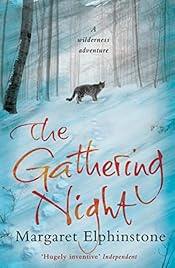
This is set in Mesolithic Scotland, a time about which very little is known. This gives Elphinstone scope to portray a fully imagined subsistence society with its own mythology and belief systems. Its characters live off the land (and sea) and feel close to the animals they hunt and the spirits which govern all their interactions. (Since it makes sense to the people in the book, that the belief system doesn’t actually cohere is neither here nor there. In any case very few such things do cohere.)
The tale is told (literally) by various of the characters taking turns to narrate the central events round a campfire, perhaps at one of the various gatherings the Auk people, around whom the book revolves, attend throughout the year. The people are prone to humble-bragging of the “I’m sorry this catch is so meagre” or “I’m sorry this gift of food is so inadequate” type.
As events unfold the tightness of the plot becomes apparent. This is cleverly done, things that at first appear unrelated turn out to be pivotal, and the characters within are all believable as actors in the scenario and as people full stop. Apart from their belief in the closeness of their spirits and reincarnation (if a child isn’t recognised by a family member within days of birth it will be cast out,) their intimate connection with their environment, they could be you, me, or anyone you meet. “People like to think their lives are very difficult, just as they like to think their troubles are unlike anyone else’s,” applies to any society as does, “I’m old. I know that people have always cared about the same small things, and they always will,” and the lament that, “There aren’t enough tears in this world for all there is to weep about.”
The cover dubs this “a wilderness adventure” but it isn’t an adventure as such. It is a description of a way of life that may have been, of a simpler kind of existence. It occurred to me a few days after reading it that it therefore bears similarities to the same author’s The Incomer and A Sparrow’s Flight. It also aligns itself firmly with the Scottish novel in general in its descriptions of land- (and here especially) seascape.
I’ve yet to be disappointed by an Elphinstone novel.
Pedant’s corner:- Amets’ (Amets’s,) Aurochs’ (Aurochs’s,) “that man would never had given us his name to pass on” (would never have given,) Oroitz’ (Oroitz’s.)
