Archives » Stephen Baxter

Creation Node by Stephen Baxter

Gollancz, 2023, 443 p, including 3 p Afterword. Reviewed for ParSec 9.
In 2255 humanity has recovered from the ravages of climate change on Earth and extended into the Solar System. Earth is dominant, with a stranglehold on the Lunar Consortium’s expansionary plans and its helium-3 extraction exports via control of the supply of nitrogen needed as a buffer gas. However, schemes are in hand for Earth to mine the gas giants for helium-3 to fuel a nuclear fusion engine which will cut journey times across the Solar System from decades to years. A third group called Conservers does not wish to deplete the Solar System’s resources but has sent out the Shadow, a ship powered by solar sails, to the Oort Cloud to investigate the possibility of Planet Nine orbiting there.

Planet Nine, as found, could fall into the venerable SF category of Big Dumb Object, except it’s not big – it’s an apparent black hole, ten times Earth-mass – and it’s not dumb. Salma, a teenager born on the voyage, discovers its Hawking radiation harbours patterns. It is sending out a message. As soon as the Shadow’s crew echoes the signal back, the Hawking radiation changes form and the galaxy’s central core simultaneously turns red from a quasar emanation. As coincidences go this would be an almighty one but how could a signal sent in the here and now cause an event to have occurred thousands of years ago so many light years away? The quasar’s red light bathes the whole Solar System and starts to increase the temperatures of every orbiting body within it, slowly but inexorably. This, however, is a challenge which is nothing but background for most of the book.

Standing off some distance away, the Shadow’s crew then sends the second pattern back to the object. It expands immediately to a larger size and forms a surface with one Earth standard gravity. And on that surface lies a cylindrical container. The three crew members sent down to the surface find it has an alien inside, an alien which resembles a bird but with human resemblances. This is swiftly dubbed Feathers. Creation Node is not just a BDO novel, then, but also a first contact one. Communication with Feathers is almost impossible except by gesture so who, or what, she is, is a mystery. Both the Earth authorities and the Lunar Consortium decide it is imperative to send missions to Shadow’s location as soon as possible.

A lot of the earlier part of the book (sometimes spoiled by information dumping of the ‘she knew’ variety and intermittent references to several of the characters wearing black pendants; a decorative choice never fully explained) is taken up with Earth’s preparations of its fusion powered ship, Cronus, to launch from Saturn orbit and the Lunar Consortium’s unannounced mission to join it. This is something of a drag on the ongoing story in the Oort cloud (albeit with a set piece collision in space to be described.) We could charitably interpret this longueur as Baxter trying to convey the time scale involved. Even with the new drive the joint mission to the changed black hole takes eleven years.

The climax of the novel is almost literally (but not quite, since Baxter tips us the wink to its existence in earlier short chapters) a deus ex machina, the manifestation of a creature with god-like powers which can move both itself and our humans between universes and across space and time. Both Planet Nine and the quasar are under its control, the details of which I’ll leave to the reader to discover. It presents a dilemma to the humans at the site, though.

Baxter’s immersion in SF shines through, Creation Node contains more than a few nods to Arthur C Clarke – sunjammers, space elevators, an enigmatic object that eventually provides a path to elsewhere in the universe – to please longstanding SF buffs. Its invocations of other universes and the vastness of time tickle the sense of wonder but the humans its tale is fashioned around are not its primary focus. Ideas are the thing here. This is good old SF for the good old SF reader.

Pedant’s corner:- “to the second. Hawking set” (has no need of that full stop,) Feathers’ (several times; Feathers’s) “‘when we first found here’” (found her makes more sense,) “had managed to assemble of fair-sized heaps of the stuff” (doesn’t need the ‘of’ before fair-sized,) “desertification was increasing such places as the Sahel” (was increasing in such places,) “seemed to rise to a crescendo” (the crescendo is the rise, not its climax,) “nothing remained to be sucked out” (it wasn’t sucked out, it was pushed out into a vacuum – which Baxter implicitly acknowledges two lines later with “after the initial plume of lost air had pushed stuff out into space,) a missing open quote mark before a piece of direct speech, “‘these are all stones are deep black’” (either ‘these are all stones which are deep black’ or these stones are all deep black’,) “twenty thousand years of emitted a galaxy core heat” (doesn’t need that ‘a’.)

ParSec 9

ParSec 9 has been published and can be purchased here.
I have not yet received my contributor’s copy* but – unless I’ve lost track – this one ought to have my reviews of:

Europa Deep by Gary Gibson,

Creation Node by Stephen Baxter,

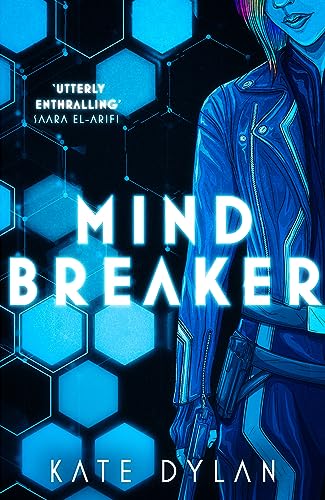
Mindbreaker by Kate Dylan

and My Brother’s Keeper by Tim Powers.

*Edited to add; now received, and I hadn’t lost track. (Except I hadn’t noted that I have a fifth review in this issue, of Umbilical, by Teika Marija Smits.)

Three for ParSec

You may have noticed on my sidebar that I am reading Stephen Baxter’s Creation Node. This is his latest novel and I will be reviewing it for ParSec.

In the same package Mindbreaker by Kate Dylan arrived. I’ll get onto that next. The author is new to me.

In a subsequent list of potential review books I couldn’t resist asking for My Brother’s Keeper by Tim Powers. This is a fantasy centred round the Brontë family and also awaits a read.

ParSec Update

I have finished Gary Gibson’s Europa Deep and sent the review off to ParSec.

In the meantime two further review books have arrived for me to peruse.

These are Mindbreaker by Kate Dylan, an author new to me, and Creation Node by Stephen Baxter of whom that can not be said.

Those two should keep me busy.

Flood by Stephen Baxter

Gollancz, 2008, 478 p.

This could be seen as a revival of the British SF tradition of the disaster novel (sometimes dubbed the cosy catastrophe as there were always survivors just about coping) in the manner of the Johns, Wyndham and Christopher. There are resonances in Flood of The Kraken Wakes, but also of J G Ballard’s The Drowned World. Baxter’s take on it is his own, though.

Sea levels are rising – and not slowly. Very rapidly coastal cities are inundated and the rise continues, indeed progresses faster as time goes on. It is not mere global warming, then, and Baxter has come up with a scenario involving huge reservoirs of subterranean water brought to the surface through thermal vents at tectonic plate boundaries.

His treatment of the tale is episodic – much like that of his novel Evolution – but the time scale here is not that of millions of years but at most decades, and the ongoing scenes feature recurring characters, principally one Lily Brooke.

Just before the floods began she and three others, plus the baby one of them had had during their incarceration, had been freed from five years’ captivity at the hands of terrorists in Barcelona by agents of a corporation known as AxysCorp. Its head, Nathan Lamockson, takes an interest in the welfare of these five survivors (a sixth was killed just as the rest were being liberated) and their lives from then on. Baxter relies on the survivors’ concern for each other as a driver for the reader’s interest. However, in their actions they seem to be relatively unaffected by those experiences and show little sign of psychological trauma. The baby, Grace, the result of the rape in captivity of Helen Gray by a Saudi prince, becomes the subject of diplomatic dispute when she is relinquished by AxysCorps to the Saudis and spirited off to the Arabian peninsula. Only much later is she returned from there.

The main focus of the narrative is on the relentless sea rise, the efforts of humans to flee to higher ground and of the various characters involved to protect themselves and their families. In particular Lamockson manifests his megalomaniac tendencies in a series of ever more elaborate schemes, the last of which is to build a full-scale replica of the Queen Mary,  which he calls Ark Three, to house those of his friends, associates and employees which it can carry. Ark One is a starship onto which Grace is inveigled not long before its launch when what remains of humanity is reduced to living on huge rafts. That leaves Ark Two’s existence or whereabouts unrevealed at the book’s end. (There is a sequel titled Ark.)

Pedant’s corner:- mentions the projected 2018 World Cup in England (this shows the dangers of authorial short term projection of the future,) and regarding that same tournament’s later abandonment says the US team was among the favourites (no comment required,) “peering at streets signs” (usually rendered as street signs, if not it should be streets’ signs,) Himelayas (Himalayas – as in a later appearance,) “the wetsuits were one item that were wearing out fast” (one item that was wearing out.)

Evolution by Stephen Baxter

Grafton, 2003, 766 p.

 Evolution  cover

You can’t fault Baxter for ambition. This is potentially a daunting undertaking, to tell the story of human evolution – from those first small, nocturnal mammals scrabbling about under the feet of the dinosaurs all the way through modern Homo Sapiens to its far future descendants – via incidents from the imagined lives of individuals living at possibly pivotal moments in that great chain. It wouldn’t have been an easy task for anyone.

The story is told in three sections Ancestors, Humans, and Descendants, topped and tailed by a Prologue and Epilogue and interrupted by an Interlude between sections One and Two. There is a further episode set in the same time as these three framing passages though it is included as the last chapter in Section Two.

By its nature the narrative of Evolution tends to the episodic and that, for a novel, can be a problem. The reader is no sooner taken into the lives of our various protagonists than is brought out again, hurrying onward ever onward, usually leaping millions of years, jumping from habitat to habitat. But that, of course, is evolution. Our own experience of life, of story, is not even a blink in those terms.

The early chapters – set in the days immediately before the impact of the Chicxulub meteor (Baxter has it as a comet, with its huge “Devil’s Tail” spanning across the sky in its approach) – can at times read as the transcript of a lecture on palæobiology. Baxter has clearly done a power of research (and of course without that his story would have been much the poorer) but the way he introduces some of the creatures is usually not novelistic. Then there are the information dumping paragraphs describing the geological processes altering the animals’ environments and the Earth’s climate: necessary to the overall picture, but again not novelistic.

The influence of Richard Dawkins on the author’s vision is perhaps evident in the importance Baxter gives to sex, the passing on of genes, in the motivations and actions of his ‘characters’. There is a persistent insistence on the compartmentalisation of early primates’ brains. The beginnings of religion are described as an attempt to make sense of the forces shaping the world via a new way of thinking. The importance of food scarcities on the development of certain human behaviours is noted. By contrast the effect of the beginnings of agriculture on the health of human teeth (not good, the grit in the resultant bread from the grinding of the wheat between stones wearing them away) and of nutritional health more generally (lack of dietary diversity leading to deficiency disease, stunted growth) is almost a throwaway. But ‘civilisation’ lies this way. And its fall is due to the same impersonal forces of nature as did for the dinosaurs, though with a different mechanism. (Sixteen years on such a natural cause need not necessarily be looked to. As a species many of us still seem inclined to blindness to our own possible contribution to a mass extinction event.)

So; does it work? The book is an intellectual undertaking but not on a Stapledonian scale. A lot of the scenarios while differing in detail tend to the similar in their outline; ancestors, humans, or descendants encountering some new phenomenon, species, or climatic pressure. Baxter’s strengths as a storyteller lie in this sphere rather than in characterisation. His protagonists and those with whom they come into conflict are in this case too pragmatically designed to fulfil the niches assigned to them to fully come alive. Some of the future scenes also seemed to owe more than a little to H G Wells. (Baxter has of course since written a sequel to War of the Worlds.) As an introduction to the convoluted history of human evolution, though, this is a good starting place even if more recent discoveries have rendered it slightly out of date.

Pedant’s corner:- Written with USian spellings. Otherwise; “The smoke from the volcano” (we’ve previously been told that the smoke was due to forest fires,) “like an featherless” (a featherless,) “his clan were gone: (was gone,) “forever looking over their shoulder” (shoulders,) “was a kind of primates” (a kind of primate,) a missing full stop, auroras (aurorae,) “the laellyn group were overcome” (the group was overcome.) “But Capo’s troop were responding” (Capo’s troop was responding,) “‘one group of experimenters were’”” (one group was – but this was in dialogue,) “in the shape of their backs, skulls, trunks” (in the shapes of their backs, skulls, trunks,) epicentre (centre,) “Dust had already laid down by the fire” (lain down,) fitted (despite, earlier – and later – the USian form of the preterite, fit,) “just as his spear had flow” (had flown,) tepee-style (tepee-style,) a missing full stop, “where the sun was staring to set” (starting,) “that was why there was so many of them” (there were so many of them,) “raised to shoulder, height above the ground” (no comma after shoulder.) “It took Hononus and Athalaric many weeks reach Jordan” (It took Honorius and Athalaric many weeks to reach Jordan,) Neandertal (is this a USian spelling of Neanderthal?) A sentence lacking a name – or pronoun – as its subject (on page 671,) “for these pits were mouths. These deadly maws” (maws are not mouths. They are stomachs.)

Proxima by Stephen Baxter

Gollancz, 2013, 485 p.

Proxima cover

Proxima is set in the mid-twenty second century after the Heroic Generation has been demonised in retrospect. Yuri Eden was cryogenically stored by his parents till better times arrived. He wakes up on the Ad Astra, a starship bound for Proxima Centauri, one of many caught up in a sweep (press-ganged) to provide colonists for an Earth-like planet tide-locked to that system’s third sun.

Meanwhile back in the solar system — where, on Mercury, mysterious artefacts known as kernels have been discovered and are proving a revolutionary power source — Stephanie Penelope Kalinski is forging her career as a physicist.

Life on Proxima c, dubbed Per Ardua by the colonists, is harsh and brutal. Soon, out of his group of thirteen colonists, only Yuri and Mardina Jones, a ship’s officer of Australian aboriginal lineage, delegated/dragooned/abandoned by her commander to fill a gap in the manifest as the best genetically diverse replacement available, are left, along with an AI robot known as a ColU. Together they watch the local life forms – stick-like creatures they call builders – while trying to scratch a living from the surface. Despite mutual misgivings they have a daughter, whom they name Beth. Despite strict orders to remain where they were set down they have to migrate as their water source – a lake – is moved by the builders. Eventually, meeting other groups along the way they gravitate towards the point on the Per Ardua’s surface immediately below the sun.

On Mercury a further apparently alien device is discovered under a hatch in the bedrock. When it’s opened Stephanie finds a twin, Penelope Dianne, previously unknown to her, and her name has become Stephanie Karen, but everyone else thinks this is how it has been all along. The hatch has altered reality, created ragged edges like Steph’s memories or her mother’s headstone where Steph’s original name remains inscribed. The hatch sequences were somewhat reminiscent of Arthur C Clarke’s The Sentinel (which provided the germ for 2001: A Space Odyssey.) The link between the two narratives is then established.

This is all good, solid Science-Fictional stuff but the characters are not very engaging, limited in scope, mostly at the mercy of the plot, present only to push the story along.

Pedant’s corner:- The edition I read was a proof copy so some of these may have been corrected in the final printing. “People moving around him wearing in green shirts and hygiene caps and masks” (wearing in?) like cvNissan huts (Nissen huts – unless Baxter is essaying a pun.) “A women” (woman,) “‘And we are going -’ He pointed straight up … There.’” (that’s a continued sentence the “he” should not be capitalised,) “she understood that that the” (only one “that”,) “from Earth and moon” (traditionally Earth’s [principal] satellite is afforded proper noun status, Moon.) “The throng gathering …. were” (the throng was,) “not as fast as it would in Earth” (on Earth.) “He’d known here on Mars,) He’d known her on Mars,) “a position were the cuffs” (where the cuffs,) focussed (x2, focused,) “‘..what time it be when’” (time will it be when .) “In her dreams she had been the one seprated from the rest, in her dreams.” (repetition of “in her dreams” is unnecessary.) “The ColU continued to stress was that the” (no “was” needed.) “‘Waiting for the prize, where you?’” (were you,) “‘its relationship, of any,’” (if any,) a paragraph start doubly indented, fit (fitted,) “had been the only way route by which she” (either way or route, not both,) “‘they’ve been are about us’” (either ‘they’ve been’ or ‘they are’, not ‘they’ve been are’,) “the ancient impact created shattered the bedrock” (“created” is redundant,) “the further Proxima rise in the sky” (rose,) put-puts (putt-putts,) “a party of four of them … made their way” (a party made its way.) “On the wall opposite other was some kind of” ) on the wall opposite was some kind of,) antennas (antennae.) “There hadn’t been much opportunities” (‘There hadn’t been much opportunity’, or, ‘There hadn’t been many opportunities’.) None of their families were here” (None of their families was here,) Secretary Generals (Secretaries General,) grills (grilles,) “that the languages of widely scattered groups was so consistent” (either ‘language’, or, ‘were so consistent’,) “of the species and their culture” (its culture,) Lu (elsewhere Liu.) “A couple of crew members were” (a couple was,) “‘will be like atomised when we lift’” (no need for the ‘like’,) “there was no point holding their breath” (breaths.)

Blog Problems Again

I’ve been unable to publish my latest book review post – on Proxima by Stephen Baxter. It wouldn’t schedule nor publish directly, all I got was an error mesage when I tried.

The blog wouldn’t accept the whole thing but I have managed to save an incomplete draft by saving it a paragraph, or less, at a time. But there’s still about half a sentence it just won’t accept. I haven’t tried to schedule it or post it direct though, as previously it has thrown me out contact with the server whenever I did so. My blog administrator suggested all sorts of things like clearing my cookies and cache – thank you, Duncan – but it wasn’t having anything to do with saving the whole post. I’m hoping the problem will somehow go away.

I want to see what happens with this one before attempting anything else.

Fingers crossed.

The Massacre of Mankind by Stephen Baxter

A sequel to The War of the Worlds.

Gollancz, 2017, 464 p.

 The Massacre of Mankind cover

This sequel to H G Wells’s War of the Worlds is authorised by the H G Wells estate and in it, of course, the Martians return to Earth. Since in our timeline they did not ever come in the first place that makes this book an altered history. To make it correspond with the original Baxter has to employ early twentieth century cosmology and speculation as part of his story, in particular the supposedly superpowerful civilisation inhabiting Jupiter’s cloud banks.

Our narrator is Julie Elphinstone, sister-in-law of the narrator of the earlier book. Elphinstone is a journalist (divorced from her husband) and at the start of the novel is working in New York. Britain is under an authoritarian regime, astronomy is banned to the general public – apparently worldwide – but of course everyone expects the Martians to invade again at the next opposition. Elphinstone is invited back to England to hear from her brother-in-law of their imminent arrival.

This time they come in greater force, have adapted their tactics and gained immunity from the microbes that did for them before. Britain’s armed forces, though better prepared, still fight the last war and the Martians swiftly gain a foothold and press their advantage. Two years later landings take place all around the world, allowing Baxter to set more scenes in the US, but much of the book is taken up with how people in England adjust to life under the gaze of the Martians and efforts to strike back against them. Elphinstone becomes an unwitting agent of the government in its attempts to defeat the Martians in the same old way but is instrumental in invoking the power of the Jovians to rebuff the Martians – or at least to make them retreat to the Arctic.

All the familiar Wellsian touches recur, the heat-ray, the red weed, the Martians’ desire for the blood of their conquered foes. (I know this adds to the horror – and Baxter adds in some gruesome scenes to illustrate it – but it is extremely unlikely that human blood rather than flesh could be a prime food source. I find excessive harping on the efficacy of blood in magic rituals and the like, as here, risible.) Baxter makes more of the Cythrereans the Martians have brought from Venus than I remember Wells doing. A strange inconsistency was that despite the Martians targeting motorised transport it is still used later under their eyes.

Baxter’s use of a female narrator is, of course, a reflection of our times rather than Wells’s. In this regard the inclusion of the strongish female character Verity Bliss (who might once have been introduced solely as a love interest for Elphinstone’s former husband Frank Jenkins but actually has much more agency than that) is another nod to the twenty-first century. Baxter also references things about which Wells would have been ignorant, like the Schlieffen War – in the book still raging between the Empires of Germany and Russia – Craiglockhart Hospital, Porton Down, Stapledon, and Ataturk as an Ottoman representative. He has a certain RFC Lieutenant, William Leefe Robinson kill a Martian in an air attack on one of their machines and mentions Wells as the Year Million Man.

But I’m struggling to see the point. Did we need a sequel to War of the Worlds? Does it really tell us anything about ourselves now? Or is it about present day fears? As an illustration of the ills that plague us in Britain – and the Western world in general – I would have thought a story about unfeeling monied zombies bleeding us dry would be much more apposite.

I don’t blame Baxter for taking the project on; it’s an open goal after all and he does accomplish it rather well. And I suppose it’s entertaining enough.

Pedant’s corner:- I read an ARC (proof) so some of these may have been corrected in the final publication. Practise (as a noun, so practice,) “‘I am aware have called some of you’” (I am aware I have called some of you.) “Even the privileged few like myself who had advance warning of the new invasion, this coldly stated news, the reality officially confirmed, came as a dreadful shock.” (Even to the privileged few,) “meant for a comparative trickle commuting clerks,” (of commuting clerks.) “Frank already had an intuition that the percentage of survivors would be small, that the wounded they encountered from the periphery of the infall,” (that the wounded they encountered came from the periphery of the infall,) “Frank said as determinedly as we could” (as he could.) “‘But he’s had no time for his precious fishing that since he was called up for the reserves’” (no “that” required,) “as he was.,” (has an extraneous comma,) “my sister-in-had” (my sister-in-law had,) “the thousand-strong crew .” (should have no space between crew and the full stop,) scuttlebutt (a USian term, so an unlikely usage on a British warship in the 1920s,) Jenkins’ (Jenkins’s, which appears four lines later!) “the contents of the their kit-bags” (of their kit-bags,) “mirroring my own side by riddled with detail,” (mirroring my own side in being riddled with detail,) Ted Land (elsewhere always Ted Lane,) “‘That looks it came off a sewer.’” (That looks as if – or, That looks like – it came off a sewer’) “the next I remember I was lying in on green grass” (no “in”,) “sat on a low twig” (seated or sitting, but since it was a yellowhammer perhaps perched,) “‘I can always use an enthusiastic NCO’” (the British usage is “I could always do with an enthusiastic NCO”,) “supplies of antibiotics” (in the 1920s?) fit (fitted,) “we newcomers were been invited” (were invited; or, had been invited,) priel (prial,) an extraneous open quote mark, Chapter 23’s number and title were not in the larger font size of all the others, ”he based had his calculations” (he had based his calculations.) “Even now it’s hard to recall now” (has an extraneous now,) “”adjusting their positions, And Cherie saw them” (a full stop after positions or no capital A at and,) “from the gitgo” (isn’t it getgo?) “where the fires where” (where the fires were,) “had so nearly had befallen” (has one had too many.) “Straight after the Second War he plunged straight into the Basra conferences” (two straights in eight words.) “‘And he’s as careless of his health as ever he is,’” (as ever he was,) the earth (the Earth, many instances.)

Top Ten Space Operas

Another list.

According to Wikipedia “Space Opera is a subgenre of science fiction that often emphasizes romantic, often melodramatic adventure, set mainly or entirely in outer space, usually involving conflict between opponents possessing advanced abilities, weapons, and other technology.”

Partly as a comment on the sub-genre and also as an attempt to subvert it I provided my own novel A Son of the Rock with the tagline “A Space Libretto” mainly because – while it roamed the spaceways and deployed technology – advanced abilities and weapons were largely, if not completely, absent.

As to Space Opera itself, Gareth Powell has posted a list of what he considers a Top Ten of Space Operas on his website. It leans heavily towards relatively recent works.

As you can see I’ve read all but three of them.

Nova by Samuel R. Delany
The Centauri Device by M. John Harrison
Consider Phlebas by Iain M. Banks
A Fire Upon The Deep by Vernor Vinge
Revelation Space by Alastair Reynolds
Ancillary Justice by Ann Leckie

The Reality Dysfunction By Peter F. Hamilton
Leviathan Wakes by James SA Corey
Space by Stephen Baxter
Excession by Iain M. Banks

free hit counter script