Archives » Nina Allan

BSFA Awards for 2017

The shortlists for the BSFA Awards for last year went live while I was traipsing about down south.

They are:-

Best Novel

Nina Allan – The Rift (Titan Books)

Anne Charnock – Dreams Before the Start of Time (47North)

Mohsin Hamid – Exit West (Hamish Hamilton)

Ann Leckie – Provenance (Orbit)

I have read the Leckie (and will post a review on Saturday.) Two others are in hand.

Best Shorter Fiction

Anne Charnock – The Enclave (NewCon Press)

Elaine Cuyegkeng – These Constellations Will Be Yours (Strange Horizons)

Greg Egan – Uncanny Valley (Tor.com)

Geoff Nelder – Angular Size (in ‘SFerics 2017’ edited by Roz Clarke and Rosie Oliver, Createspace Independent Publishing Platform)

Tade Thompson – The Murders of Molly Southbourne (Tor.com)

I’ve read none of these so far.

Best Non-Fiction

Paul Kincaid – Iain M. Banks (University of Illinois Press)

Juliet E McKenna – The Myth of Meritocracy and the Reality of the Leaky Pipe and Other Obstacles in Science Fiction & Fantasy (in ‘Gender Identity and Sexuality in Current Fantasy and Science Fiction’ edited by Francesca T Barbini, Luna Press)

Adam Roberts – Wells at the World’s End 2017 blog posts (Wells at the World’s End blog)

Shadow Clarke Award jurors – The 2017 Shadow Clarke Award blog (The Anglia Ruskin Centre for Science Fiction and Fantasy). The 2017 Shadow Clarke jurors are: Nina Allan, Maureen Kincaid Speller, Victoria Hoyle, Vajra Chandrasekera, Nick Hubble, Paul Kincaid, Jonathan McCalmont, Megan AM.

Vandana Singh – The Unthinkability of Climate Change: Thoughts on Amitav Ghosh’s The Great Derangement (Strange Horizons)

Best Artwork

Geneva Benton – Sundown Towns (cover for Fiyah Magazine #3)

Jim Burns – Cover for ‘The Ion Raider’ by Ian Whates (NewCon Press)

Galen Dara – Illustration for ‘These Constellations Will Be Yours’ by Elaine Cuyegkeng (Strange Horizons)

Chris Moore – Cover for ‘The Memoirist’ by Neil Williamson (NewCon Press)

Victo Ngai – Illustration for ‘Waiting on a Bright Moon’ by JY Yang (Tor.com)

Marcin Wolski – Cover for ‘2084’ edited by George Sandison (Unsung Stories)
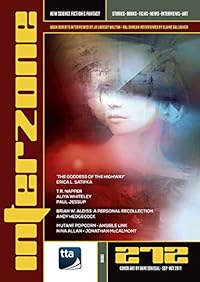
Interzone 272, Sep-Oct 2017

TTA Press

Interzone 272 cover

Andy Hedgecock’s Editorial1 is an appreciation of the late Brian Aldiss of blessed memory. Jonathan McCalmont2 ponders the uses of allusion, contrasting the reductive and lazy with the dense or expansive. Nina Allan welcomes post-SF. Book Zone has an interesting and discursive author interview by Jo Walton3 with Adam Roberts to tie in with his new novel The Real-Time Murders but neglects to review the book. Duncan Lunan4 reviews Paul Kincaid’s book of criticism Iain M Banks mostly by relating his experiences of the late master. There is also Juliet E McKenna’s take on Charles Stross’s Delirium Brief, Stephen Theaker5 on Ada Palmer’s Too Like the Lightning while John Howard reviews Xeelee Vengeance by Stephen Baxter, with the final item a review of Hal Duncan’s A Scruffian Survival Guide by Elaine C Gallagher who also interviews6 the author.
In the fiction:
As the world slowly rebuilds after war and ecological disaster, Blessings Erupt by Aliya Whiteley tells the story of the last of the original plastic eaters, consuming the hydrocarbon-based tumours that afflict the population in return for years of service to the company he represents.
The Music of Ghosts7 by Paul Jessop is set on a generation starship after Earth has been destroyed. The voyagers’ essences are supposed to be uploaded into the library after their death but things go wrong.
In a Melbourne fifty years past any relevance it ever had Ghosts of a Neon God8 by T R Napper tells of two small time crooks who are unwittingly embroiled in a dispute between the Chinese who run the place.
A white mist of unknown origin – possibly alien, possibly human – has “clouded cognitive processes and slowed down conscious thought” and in Erica L Satifka’s The Goddess of the Highway9 people are fitted with plates in their heads in a caste system to suit each to their new roles. Viewpoint characters Harp, a Plastic who monitors a truck criss-crossing the former US, and Spike, a Platinum, come together to try to join the resistance. The titular goddess may be a manifestation of the plates.

Pedant’s corner:- 1Aldiss’ (Aldiss’s.) 2Written in USian, “the crowd are right” (the crowd is.) 3Lord Peter Whimsy (did Roberts actually say that? I believe him capable of such punnery but in English English – as opposed to Scottish English – the correct, Wimsey, and the pun, whimsy, are much less distinguishable,) descendent (descendant,) 4Banks’ (Banks’s,) “human affairs are so complex than any stance (that any stance,) 5“A series of innovations have set this world apart” (a series has,) 6fit (fitted) 7Written in USian, “the sun grew wane and hungry with light” (wan?) “the whirring of machines are chugging” (the whirring is chugging but even that is clumsy.) Ray stops programming for a moment and touches Ray’s hands” (Mark’s hands.) The story is riddled with errors in tense. It’s written in the present but has past tense verb forms intruding, “He’d been training for this day” (He’s ) “And his heart was a wild thing inside his ribs” (is.) “They ran into the storage facility” (run,) “and then she turned” (turns.) 8“Now it may as well not even existed” (exist,) his practiced stride (practised,) focussed (focused.) 9Written in USian, hocking up (hawking,) “the majority of what gets shipped are luxuries” (the majority is,) “intersecting a round sphere” (I’d like to see a sphere that isn’t round!)

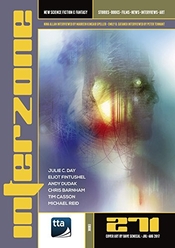
Interzone 271, Jul-Aug 2017

TTA Press

Interzone 271 cover

Roy Gray takes the Editorial and describes a visit to the summer’s Barbican exhibition, Into the Unknown: A Journey Through Science Fiction. Jonathan McCalmont discusses China Miéville’s history of the Russian Revolution October, describing it as the book Miéville was born to write. Nina Allan again reflects on SF’s distinction or otherwise as a genre and the necessity to question and reinvent its tropes. Book Zone1 has appreciative reviews of Nina Allan’s The Rift and Emily B Cattaneo’s collection Speaking to Skull Kings and Other Stories plus author interviews with the pair and also considers novels from Eleanor Lerman, Aliette de Bodard and Taiyo Fuji along with Ex Libris, an anthology of stories set in libraries, not to mention my review of Justina Robson’s The Switch.

In the fiction:-
Julie C Day’s The Rocket Farmer2 has three narrative viewpoints in its 10 pages: the descendant of a long line of Mongolian rocket farmers, her daughter, and one of the rockets. It is the daughter who is the first to truly understand the rockets.
Gods in the Blood (of those who rise)3 by Tim Casson is narrated by a science teacher (who has rather unprofessional biological deterministic views about his charges I must say. But these turn out to be plot related.) The nearby Genomic Innovation Facility is manipulating human epigenetics. All this is tied in with a legend from a Sumerian manuscript.
In If Your Powers Fail You in a City Under Tin4 by Michael Reid a tentacled creature called the God Beast has settled in the sky over the city now called Duolunduo. Some people have developed superpowers as a result.
The titular Chubba Luna5 in Eliot Fintushel’s story is an interplanetary music star in a future where people’s life partners are allotted to them in accord with their biochemistry. This doesn’t turn out any better than choosing them for yourselves.
Chris Barnham’s When I Close My Eyes is a mix of SF and ghost story. It is the tale of the first potholer on Titan, a man who hallucinates his dead wife while encountering extraterrestrial life after being trapped by an ice-fall.
The McGuffin of Cryptic Female Choice6 by Andy Dudak is a spermathecal, a mechanism introduced to the womb by virus which allows women to store various men’s sperm and edit their content to produce a desired genome. The societal backlash is portrayed.

Pedant’s corner:- 1“while allowing they catch up” (allowing them to catch up,) “how do you feel it has effected your life as a writer” (affected,) Goss’ (Goss’s.) 2Written in USian, “so that it spread across the table” (the rest of the story is in present tense, so “spreads”,) practicing (practising.) 3where a bunch of other kids were gathered (a bunch was gathered.) 4Written in USian, ”none of them recognize” (none recognises,) “‘can you come with?’” (with me,) “he shines it on the floor near the figure, trying not to startle them” (not to startle it.) 5Written in USian. 6Written in USian, inside of (inside,) “there used to be hundreds of words for love like Inuit words for snow” (isn’t that snow thing a bit of a myth?)

Interzone 271

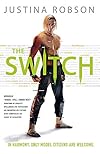
The Switch cover

The latest issue of Interzone, number 271, arrived last week.

Along with the usual columns from Jonathan McCalmont, Nina Allan, plus David Langford’s Ansible Link, there are six short stories.

The book review section features an interview with Nina Allan and Emily B Cataneo focusing on their latest books The Rift and Speaking to Skull Kings and Other Stories respectively, and my review of Justina Robson’s The Switch.

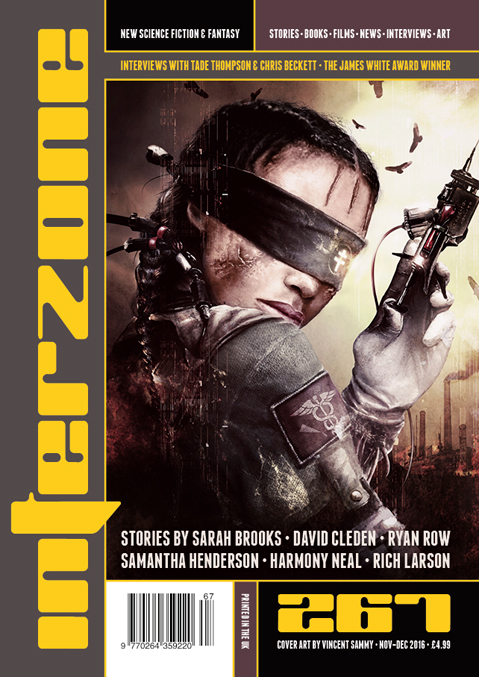
Interzone 267 Sep-Oct 2016

TTA Press

Interzone 266 cover

The Editorial is by Martin McGrath and discusses the continuing importance of the James White Award, whose latest winner* is published in this issue, Jonathan McCalmont’s column1 bemoans the recent trend towards magical policemen solving crimes in old London town as having a reactionary effect while Nina Allan praises Scottish Science Fiction’s engagement with political themes. In the Book Zone I review Dave Hutchinson’s Winter in Europe and there are interviews with Tade Thompson and Chris Beckett.

Alts2 by Harmony Neal is a tale of humans genetically modified by StateCorp into a kind of slavery.
The narrator of Ryan Row’s Dogfights in Olympus and Other Absences3 is a mercenary pilot involved in a multi-party conflict over a planet called Olympus which has a desirable hyper potential energy dense matter core. The relativistic aspects of his 0.2 light year separation from his family affect the relationship.
The Hunger of Auntie Tiger by Sarah Brook is set on a planet where people of Chinese origin, left more or less to their own devices by “the Company” relive myths.
Rich Larson’s You Make Payata4 suggests there is really only a small number of tales that can be written as this one of an attempted scam has a familiar template but is nevertheless well executed and full of Science-fictional gloss.
*Rock, Paper, Scissors5 by David Cleden literalises the game alluded to in its title vinto a contest between the bodily-transformed representatives of two tribes for the annual rights to the hunting grounds.
In My Generations Shall Praise6 by Samantha Henderson a woman on death row is persuaded to have her mind overwritten so that someone else can use her body.

Pedant’s corner:- 1Morris’ (Morris’s,) use of they and them as pronouns for an individual. 2Written in USian. “She wasn’t sure the exact details of his alteration” (of the exact details,) “everyone holding their breath (their; so breaths,) sunk (sank.) 3 Written in USian. “Curealian and silver beams” (Cerulean?) “where his family makes their home” (“makes” is the singular; so “makes its home”,) “above him the naked stars lay out in the dark” (lie out; the narration is present tense,) dying her hair (dyeing.) 4 Written in USian, pretenses (pretences,) “‘when you get the hotel’” (to the hotel,) florescent (is this USian? – fluorescent.) A collection were (a collection was.) 5mold (mould,) vocal chords x 2 (cords,) “growing soft and downy my back” (on my back?) “the Tribe grow quiet” (grows; several more instances of Tribe as plural,) “‘Your foe will keep their distance’” (his distance; his is used later,) “‘when they tire’” (when he tires,) “‘though they beg you’” (though he begs you,) the attack is borne of frustration (born of.) 6Written in USian. “‘Will they let her in short notice?’” (At short notice? On short notice? With short notice?)

Interzone 266 Sep-Oct 2016

TTA Press

Interzone 266 cover

Stephen Theaker’s Editorial muses on awards; their disadvantages and their necessity. Jonathan McCalmont’s column1 discusses Emma Geen’s The Many Selves of Katharine North favourably while Nina Allan reflects on the connections between classical and folk music on the one hand and the weird/faery on the other.
In the Book Zone I review Alastair Reynolds’s Revenger (recommended.) Also gaining approval are Paul Kearney’s The Wolf in the Attic (even if it does require a sequel,) Peter S Beagle’s Summerlong and Gaie Sebold’s Sparrow Falling.
In the fiction, Tade Thompson’s The Apologists is set in the aftermath of an invasion of Earth by aliens who hadn’t realised it was inhabited. Discovering their oversight, they keep six remnants alive on a simulated world.
Extraterrestrial Folk Metal Fusion2 by Georgina Bruce is a tongue-in-cheek tale of the discovery of a signal from outer space which is soon parlayed into opportunities for profit, either personal or monetary.
Narrated by the best friend of the test pilot (who tells him what happened in a disturbing first flight) Ray Cluley’s Sideways3 is an excellent, affecting story about a 1950s rocket propelled prototype craft that can go sideways. That word is deployed strategically throughout the story to underline its strangeness.
In Three Love Letters From an Unrepeatable Garden by Aliva Whiteley the titular letters are to the lover of a gardener protecting a unique but dying flower.
One by one in The End of Hope Street4 by Malcolm Devlin, the houses in the street become unliveable. If you are in them when they do then you die. A tale of neighbourliness in adversity but told in an oddly distanced way.

Pedant’s corner:- 1octopi (it’s not Latin!! The Greek plural is octopodes but octopuses is perfectly good English,) the real meat… lays in (lies in.) 2maw (it was a black hole so I suppose could be interpreted as a stomach.) 3sliver mirror (silver,) 4he was stuck with a … sense of horror (struck?) inside of (inside x2; ditto outside of,) the community prided themselves (itself,) there had been only few major incidents (there had been few, or, only a few,) everyone was on their feet (was, so everyone is singular; so how then, their feet? Avoid such a construction,) the neighbourhood fought to free themselves (ditto, neighbourhood is singular,) to examine it closer (more closely.)

Interzone 265 Jul-Aug 2016

Interzone 265 cover

Jo L Walton’s Editorial welcomes the arrival of the Sputnik AwardsTM. Jonathan McCalmont rightly eviscerates Becky Chambers’s1 the long way to a small angry planet (its title is not capitalised on the cover) for its self-satisfaction and its lack of challenge. Nina Allan’s Timepiece argues that the canon (both SF and the wider literary one) ought not to be restrictive. In the Book Zone Lisa Tuttle is interviewed, I review Extinction by Kazuaki Takano and Two Years Eight Months and Twenty-Eight Nights by Salman Rushdie while Sofia Samatar’s The Winged Histories, James Lovegrove’s World of Water and Guy Gavriel Kay’s Children of Earth and Sky gain approval.

As to the fiction:-
All Your Cities I Will Burn2 by John Schoffstall is set in the aftermath of a 2042 meteor strike on Earth. Humanity has just about survived. Then strange creatures arise from the sea. This story contains fine speculation about the implications for life on Earth from meteor-borne organisms.
The Eye of Job3 by Dan Reade. An alien tower twenty miles high and ten in diameter “covers most of Omaha.” An air force psychologist is still trying to come to terms with the ramifications.
Belong4 by Suzanne Palmer sees gwenna Thirty-Seven rejected for Placement in QuangEngXorp’s exploitation team despite always achieving the highest marks in training.
The title and subject matter of Ken Hinckley’s on the techno-erotic potential of Donald Trump under conditions of partially induced psychosis does of course invite comparisons with a certain J G Ballard short story. Its setting in a high-rise, its harping on the diesel fumes emanating from lorries on a motorway junction below, not to mention a vehicle crash and the matching style of its attendant author information appendix only add to this temptation. As you might expect it is estranged stuff but, to take up the invitation, Mr Hinckley is no Ballard. (Then again, who is?)
The Inside Out5 by Andrew Kozma. The eponymous structure (aka IO) is an abandoned Dyson sphere to which the remnants of humanity have been transported.
A Man of Modest Means6 by Robert Reed relates the encounter between a woman and a man who are both not what the reader first assumes.

Pedant’s corner:- All the fiction was written in USian. 1McCalmont has Chambers’. 2at loose ends (at a loose end?) “I would expatiate my guilt and despair” (expiate, expatiate means something else entirely,) not thrall to his own fears (in thrall.) 3“covers most of Omaha” (granted the tower would dominate the countryside but I’m sure Omaha is more than ten miles across,) Amos’ (Amos’s,) “behind him are a trio of radio towers” (is a trio,) “None of us do.” (None of us does.) 4“in the line from her shoulder down near her wrist” (to near her wrist?) “the enemies lay there peacefully” (lie there,) 5humongous (more usually humungous?) 6wack job (is usually spelt whack job,) “How would describe that gesture” (missing an “I” after would?) a double “the” in the author information.

Interzone 264 May-Jun 2016

Interzone 264 cover

Jonathan McAlmont1 discusses Claire Vaye Watkins’s Good Fame Citrus on the way to concluding that capitalism is similar to a cult. Nina Allan examines film adaptations of J G Ballard novels. In the Bookzone I review Ken Liu’s collection The Paper Menagerie and City of Blades by Robert Jackson Bennett.
In the fiction:-
Starlings2 by Tyler Keevil is couched in the form of a recorded message from a mother to her child, Colum, who is one of the special children designed to leave an Earth doomed to a runaway greenhouse effect by the malfunction of the supposed remedy, the Hadron-Karensky Reactor, for a new start on another planet. Elegiac and
From the (almost) sublime to the hard to credit. Breadcrumbs3 by Malcolm Devlin posits an apartment block and a city suddenly overwhelmed by plant outgrowths and people beginning to change into animals. All of these could merely be the imaginings of viewpoint character Ellie, though.
James van Pelt’s Mars, Aphids, and Your Cheating Heart4 is told from the perspective of a God, who is addressed as “you.” Otherwise the only science-fictional elements it contains are mentions of an ice sheet on Pluto and the movement of a dust grain on Mars (with subsequent avalanche). The story is about a private eye who warms to the subject of his investigation.
Lifeboat5 by Rich Larson. Like many others before it the planet Lazy Susan is threatened with destruction by “synthetics”. A man who helps “rescue” inhabitants from these situations (for money) is faced with a dilemma over rescuing a woman carrying an unusual hybrid fœtus.
The Tower Princesses6 by Gwendolyn Kiste. The titular princesses – whose means of selection are obscure, the process is said to happen overnight – are caged (in materials of various sorts) and have to negotiate life within their restriction. Narrator Mary falls for one of them. The metaphor here is a little overstrained.

Pedant’s corner:- 1Watkins’ (Watkins’s,) “a group of activists are trying to convince” (is trying,) “the group positions itself on the edge of the dune sea and rearrange their vehicles” (“group” agrees with the first verb and not the second, “itself” is not in agreement with “their” so; rearranges its vehicles.) 2birth is used as a verb, anaesthiologist (that would be an anaesthetist, then.) Less respiratory problems (fewer,) “He told me ‘It doesn’t matter now’.” (That should be “He told me, ‘It doesn’t matter now.’”,) phased (fazed.) “He had not wept or showed any sign of emotions (nor shown.) 3”from the where she had lain” (no “the” required,) jimmy open (jemmy,) 4Written in USian – ladybug, sidewalk, skeptical, on the weekends, check (for cheque,) behavior – plus a “soundless avalanche” on Mars (Mars has an atmosphere; there will be sound,) “He must been shot” (must have been,) Tiggs’ (Tiggs’s,) cracks the entire length (cracks [along] its entire length.) 5Written in USian; “poofy” in the sense of voluminous (a usage I had never come across before. It’s not the first meaning that occurs to a Briton.) “That thing is not going to breach right.” (In the context of a birth; so “breech”?) ‘I’m smelling alkaline and vomit’ (alkaline is an adjective [cf acidic,] the noun is alkali.) 6Written in USian.

Interzone 263, Mar-Apr 2016

Interzone 263 cover

In his column Jonathan McCalmont extols the value of experimental narrative while in hers Nina Allan argues that there is such a thing as a daunting book and they may even be necessary. However is it possible that James Smythe’s position on “difficult” books can be interpreted more favourably? His Twitter quote, “Saying that patience is needed to read those books both demeans the books, and suggests that you’re not mentally able to read them … Here’s a novel thought: stop acting like a book is a mountain. Start acting like they’re a thing people read for fun, in their free time,” might mean that people ought to be encouraged to read them rather than discouraged from doing so. In the Book Zone Jo L Walton praises Catherynne M Valente’s Radiance and Ian Hunter suggests Adam Roberts’s The Thing Itself is already one of the books of the year. As to the fiction:-

Alexander Marsh Freed’s Ten Confessions of Blue Mercury Addicts, by Anna Spencer examines the effects of blue mercury, a drug that slows down time – or speeds you up, the experience is the same – but is addictive.
In Spine1 by Christopher Fowler, as an outbreak of deaths by sting occurs in Terrance Bay it seems as if jellyfish have become intelligent pack animals.
Not Recommended for Guests of a Philosophically Uncertain Disposition by Michelle Ann King features two workers at a tourist attraction known as the Fracture, a place where physical laws have broken down. This was neatly done and reminded me of the Eagles’ Hotel California.
In Motherboard: a tale from somewhere2 by Jeffrey Thomas the rather programmatically named Leep seeks refuge from his life by imagining himself into the world he perceives in the circuit boards he works on.
Lotto3 by Rich Larson is set in a transit camp where applicants wait for their number to come up for a slot on a colony ship.
Andromeda of the Skies4 by E Catherine Tobbler has a seven-year old girl fall through ice into a lake and travel two million light years to a cavern by a strange sea.

Pedant’s corner:- 1a missing “start quote” mark. 2Written in USian – except for the spelling “dialogue”, Down syndrome (Down’s syndrome,) space crafts (space craft,) held the circuit board it both hands (in both hands,) 3would make only the whole thing more exotic (would only make the whole thing more exotic,) stared up at quickcrete ceiling (the quickcrete ceiling.) 4the caves darknesses (the caves’ darknesses?)

Interzone 262, Jan-Feb 2016

Interzone 262 cover

Jonathan McAlmont’s column rails against current SF’s inability to conceive of society freed from the shackles of the market and examines the Quatermass series in the light of how “humanity would rather destroy itself than deal with the ambiguities of change”. Nina Allan muses on the pressures of a writer to produce to order and how unlikely that is to suit every writing style. The Book Zone has an interview with Dave Hutchinson and I review Occupy Me by Tricia Sullivan. The fiction has:-
The Water-Walls of Enceladus1 by Mercurio D Rivera. Lily has been infected by an alien virus contracted on an asteroid. Despite the pustules on her body she is still regarded as beautiful by the Wergen, who have given humans advanced technology in return for companionship. Hating other humans reactions to herself she has contracted for a mission on Enceladus with only Wergen for company, Wergen whom she has come to hate. A well enough told story but my sympathies were entirely with the Wergen.
Empty Planets2 by Rahul Kanakia. In a future dominated by The Machine, people can offset the dwindling of their habitats’ prospects by earning shares through performing services or making discoveries.
In Geologic3 by Ian Sales the author calls on his knowledge of deep-sea diving and space exploration to tell the tale of an expedition to the crushingly high atmospheric pressure planet 61 Virginis b and the enigmatic rock structure on its surface. This brought to mindSolaris, except it has a rock instead of an ocean.
Circa Diem by Carole Johnstone is set after an asteroid bypass has caused Earth’s rotation to slow. One group of remnants lives underground, another above, never meeting – until a man from below and a woman from above do.
In A Strange Loop4 by D R Napper a man has been selling his memories to accumulate money to try to rewoo his estranged wife. As a result he doesn’t remember having done so.
Dependent Assemblies5 by Philip A Suggars is set in an alternative late 19th century Buenos Aires run by a homophobic, racist dictator who controls a mysterious substance called lux which can bring inanimate matter to life but does odd things to living tissue. Two male lovers try to use lux to make children from metal and ceramics. Effectively done but a little cursory.

Pedant’s corner:- Stross’ (Stross’s,) Quatermass’ (x2, Quatermass’s.) “But all writers are not the same” (not all writers are the same.) 1Written in USian; one less freak (one fewer,) corner of their eyes (corners,) Enceladus orbited at its greatest distance from Saturn (was orbiting at,) plateaus (plateaux,) providing us a panoramic view (with a panoramic view,) off of, outside of, trying to acclimate myself (acclimatise,) full-fledged (fully-fledged) 2Written in USian; while I laid out on a rock (lay.) 3 Not written in USian but still employs “ass” for arse, “the pilot in their blister” (I dislike this use of the plural for an individual character.) 4leather-bounds books (leather-bound,) Irving held up hand (a hand,) 5 Rojas’ (Rojas’s,) in middle of the night (in the middle of the night,) off of, sat (seated,) were a group (was a group.)

free hit counter script