Posted in Uncategorised at 12:00 on 26 August 2026
Clayton Heights is an area of Bradford. We passed this Memorial on our way to Haworth. It lies at the junction of Stocks Lane and Highgate Road.
The Memorial is a stone cross above a tapering octagonal column on a square pediment curving upwards. It seemed to display only names for the Great War. The wreath in the photo may be covering a Second World War dedication and names though:-

Great War names:-


No Comments »
Posted in Trips, War Memorials at 12:00 on 13 August 2026
Haworth’s War Memorial is a stone cenotaph standing just off the road at the junction of Bridgehouse Lane, Station Road, Brow Road and River View. It stop is inscribed with battle honours for France, Flanders, Gallipoli and Mesopotamia:-

From southwest:-

From east:-

The dedication and names are for the Great War only:-

Edgar Asquith – James E Holmes:-

John Holmes – Lewis Roper:-

Arthur Rushworth – Joseph Wright:-

No Comments »
Posted in Trips, War Memorials at 12:00 on 10 August 2026
St Michael and All Angels Church, Haworth, contains the burial vault of the Brontë family. Patrick Brontë was the perpetual curate there from 182o-1861.

A side chapel commemorates his incumbency:-

Also inside the church are three war memorials/rolls of honour to remember the men of Haworth and Stanbury who died or served in the World Wars.
Great War Memorial:-

Roll of Honour for both World Wars:-

Wooden board Roll of Honour (for those who served?)

No Comments »
Posted in Museums, Trips at 12:00 on 8 August 2026
The Brontë Parsonage Museum contains several items of apparel relating to the Brontës.
Charlotte Brontë’s wedding dress:-

Charlotte’s wedding bonnet and veil:-

Charlotte’s cotton bodice:-

There are other items of memorabilia.
Sealing wafers and Charlotte Brontë’s writing desk:-

Charlotte on a plate:-

Brontë handwriting:-

Brontë possessions:-

Statue of the three Brontë sisters in the Parsonage garden:-

No Comments »
Posted in Art, Museums, Trips at 12:00 on 5 August 2026
The Brontës were not just writers. They also painted.
Portrait of Anne Brontë by Charlotte Brontë:-

Sketches by Charlotte:-

Charlotte’s paintbox and three works:-

Engraving of Geneva by Anne:-

Portraits by Branwell:-

Portrait of Charlotte by J H Thompson:-

Portrait of Brontë siblings:-

No Comments »
Posted in Museums, Trips at 19:00 on 30 July 2026
Piano and chair:-

Stairwell:-

Patrick Brontë’s bedroom:-


Branwell Brontë’s room:-


A bedroom:-

No Comments »
Posted in Museums, Trips at 12:00 on 27 July 2026
Parsonage from garden:-

Model of original building; inside Brontë Parsonage Museum:-

Patrick Brontë’s study:-

Dining room:-

Curate’s room:-
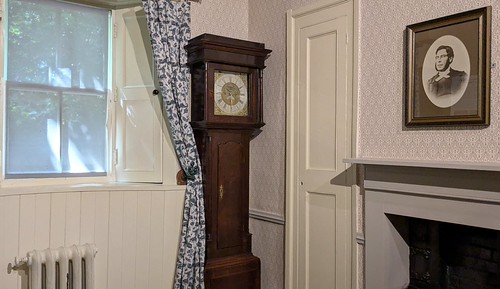
Passage to kitchen:-

Kitchen:-


Stairs:-

No Comments »
Posted in Trips at 12:00 on 27 July 2026
This was a return trip to Haworth.
Main Street, Haworth, looking down the hill. Taken by the Black Bull, Branwell Brontë’s favourite watering hole. In this photo the Brontës’ home at the Parsonage is behind and to the right:-

Further down Main Street:-

Looking back up from further down. This really shows the street’s steepness:-

Graveyard at Haworth Church, Parsonage in background.

It was the packed nature of the graveyard that led to the high degree of disease in the Victorian town, the highest in England. Water from heavy rainfall would flow down from the graves under/beside the church and down Main Street carrying germs to the populace. Eventually it was decided to plant trees and space out graves to help prevent this:-

1 Comment »
Posted in Eric Brown, Events dear boy. Events, Science Fiction at 12:00 on 24 March 2023
This is a post I’ve been dreading.
My dear friend Eric Brown has died.
He had not been well for some time and had borne it with fortitude and good grace (and not a little optimism, or so it seemed when we visited him) but though this outcome was always likely the news nevertheless came as a shock.
A proud Yorkshireman – born and brought up in Haworth – and not shy of living up to the stereotype, Eric was neverthless one of the kindest, friendliest people I have ever met. His writing embodied those attributes and always had a warm, human heart to it but was not appreciated as widely as it ought to have been and never achieved as much success as it deserved.
Among many other things I’ll miss our mutual commiserations about the fortunes of our respective beloved football teams (in his case Leeds United.)
He is a great loss not only to the field of Science Fiction (and with his Langham and Dupré stories to the ‘cosy crime’ genre) and as a friend to the good lady and myself but most of all to his wife Finn and daughter Freya, taken from them far too soon.
Words are not enough.
Eric Brown: 24/5/1960 – 21/3/2023. So it goes.
1 Comment »
Posted in Architecture, Art Deco, Cinemas, Trips, War Memorials at 18:46 on 4 October 2011
During the summer we were in South Queensferry in order to take the boat out to Inchcolm Island.
While there I took a few photos. I hadn’t expected to see a building with Deco styling* but this was on the main street.
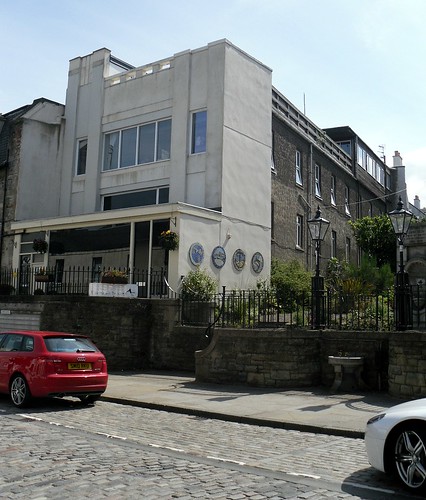 .
.
There was also St Mary’s Church, one of the oldest in Scotland.
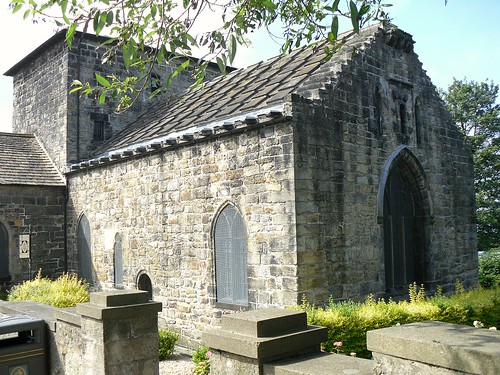
(I remember remarking about buildings in Haworth, Yorkshire and Inchcolm Abbey that, unusually, they had stone roofs. St Mary’s also has stone roofing, shown to best advantage in the above photo.)
The War Memorial is fixed halfway up the wall of another building – the Jubilee Clock Tower – on the main street.
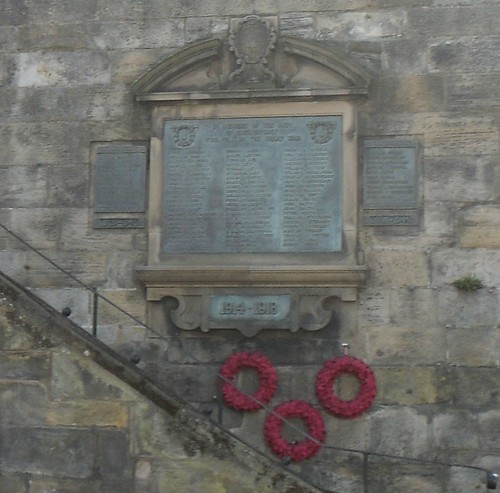 .
.
A couple more photos of South Queensferry are on my flickr.
*Edited to add: Thanks to a comment I have discovered the Art Deco style building was once a cinema, the Regal.
No Comments »
