Posted in Architecture at 12:00 on 5 January 2021
Castle Campbell lies in the hills above Dollar, Clackmannanshire, at the top of Dollar Glen. We visited it in October 2019.
The road leading up to it is quite narrow and the car park is a shortish walk away from the castle itself.
It wasn’t busy the day we went but it may be more so in summer.
Castle Campbell from path:-

Part of castle (with loggia):-

Information board in courtyard:-

Former Great Hall:-

Castle gable:-

Doorway from courtyard to grounds:-

Castle from grounds below:-

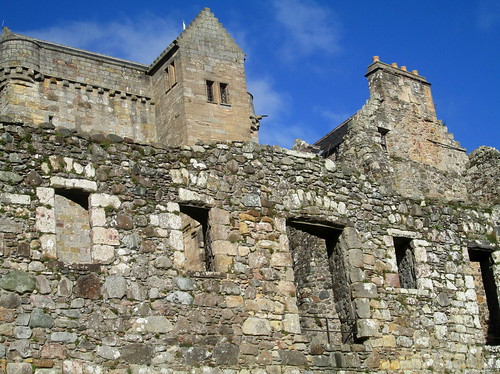
A vaulted ceiling:-

This ceiling has two carvings of faces that look a bit like the Green Man. There are holes at the mouths and it’s thought that lamps probably hung from there:-

Part of roof:-

Information board on the history of the Campbell family:-

View down to Dollar and the valley of the River Forth beyond:-

No Comments »
Posted in Architecture, Trips at 20:30 on 6 December 2020
Castle from its grounds:-

Main tower block:-

Apparently this is William Lord Hastings’s tower:-

We climbed it. All 23 metres of it via 96 fairly steep steps. Knackering. This is a video of the panorama from the top. (All through our visit those church bells were ringing. It was a Saturday – the bell-ringers must have been practicing):-

Formal Gardens information board. There was no way to avoid my shadow on it!:-

This tower was in one corner of the grounds:-

In its heyday the castle was a centre for “noble” sports:-

This nearby field is said to be the jousting ground where Walter Scott set his tournament in Ivanhoe:-

No Comments »
Posted in Architecture, History, Trips at 12:00 on 5 December 2020
We had no idea before we went that Ashby de la Zouch had an old ruined castle, but as we were doing the detour round the town required by the street fair blocking the main road we saw a sign pointing to it.
As old castles go it’s one of the better ones.
From entrance:-

Welcome Board:-
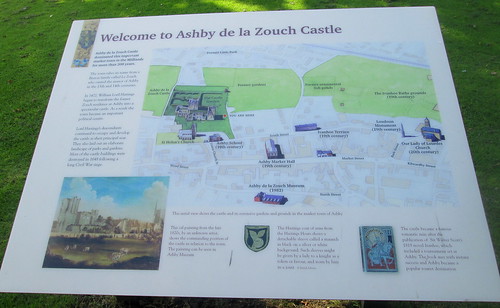
First building:-


Further portion:-

Picture window:-

The fireplace on the left wall has the remains of shields on it:-
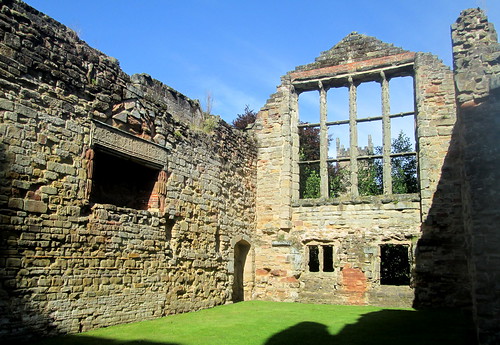
Interior:-

The castle was demolished as the result of the Wars of the Three Kingdoms:-

No Comments »
Posted in Museums, Trips at 12:00 on 14 November 2020
From the top of Ypres Tower (Rye Castle) there is a view across the River Rother – into which the River Tillingham flows just by the Tower – out to the sea. As seen in this photo.

Turning left to look east the building in the foreground below used to be a Women’s Prison:-
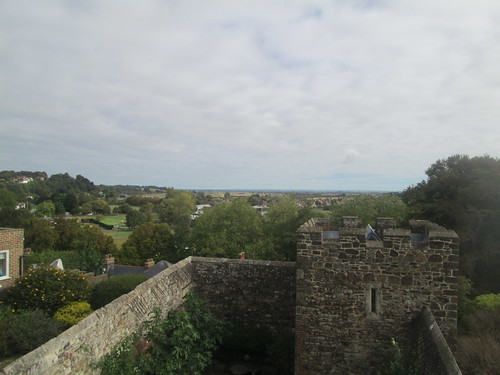
The Ypres Castle Inn also lies just below the Tower:-

I mentioned before that Ypres Tower is a museum. As well as containing exhibits relating to the history of Rye – including a relief map showing how the sea used to lap around the town in Roman Times and its gradual retreat thereafter – there is a broadsword from which part of the Cross of Sacrifice in British War Cemeteries was modelled by Sir Reginald Blomfield.

1 Comment »
Posted in Architecture, History, Museums at 20:30 on 12 November 2020
Rye has a long history. It was once a seaport but the sea has long retreated/silted up.
The older part of the town lies on a hill above the coastal plain. One of the approaches still retains the ancient Landgate:-
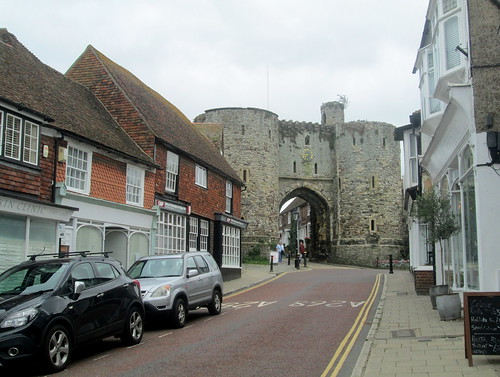
Closer view:-

View down towards gate from higher up the hill:-

Another very old building is the Ypres Tower/Rye Castle which now houses a museum. The tower has nothing to do with the Belgian town of the same name. It once belonged to a cloth merchant, Jean d’Ypres, and the name has stuck.


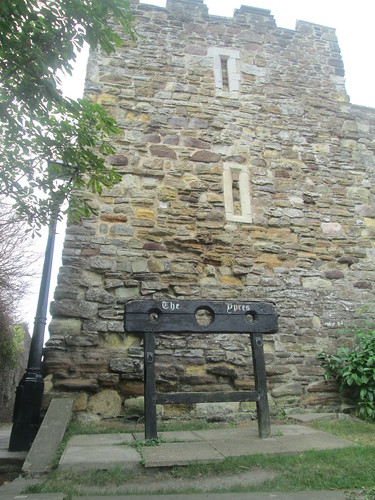
There is an old pair of stocks still standing just outside the east end of the Tower:-
2 Comments »
Posted in Architecture, Trips at 20:30 on 31 August 2020
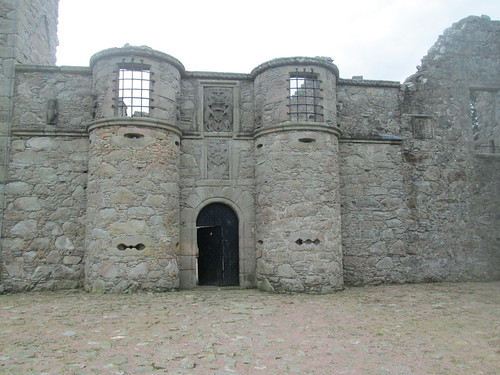
On the way up to Peterhead we also stopped at Tolquhon Castle near Ellon in Aberdeenshire. The access road is quite narrow but still fine. The castle itself is fairly typical but has an impressive entranceway.


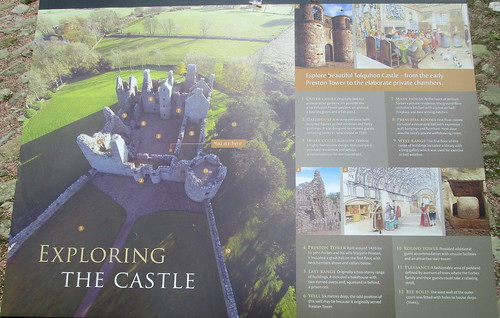
Castle Information Board showing how it looked back in the day:-

Castle courtyard:-

Information diagram:-
Entrance from above:-

Courtyard from above entrance:-

Fireplace:-
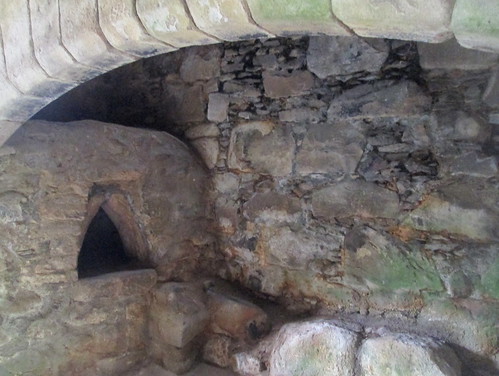
Part of interior (with another fireplace):-

Window and window seat:-

Courtyard from above looking back towards entrance:-

Steps up to solar:-

No Comments »
Posted in Architecture, History at 12:00 on 19 August 2020
Methven is a village directly west of Perth, Perth and Kinross. It was the site of a small battle during the Scottish Wars of Independence but the exact location is uncertain, though there is a signpost on the main road pointing in its direction.
Methven Kirk and Graveyard:-

Lynedoch Mausoleum is a small building in the kirkyard:-

Methven Castle is a seventeenth century house to the east of the village and is privately owned but can be seen from the road:-

Methven Castle in its landscape:-


No Comments »
Posted in Bridges, Trips at 20:30 on 5 August 2020
Annan is a town in Dumfries and Galloway. It is named for the river which runs through it:-

That bridge is well-proportioned:-

View from bridge looking north:-

Somewhere in the park beyond is the remains of Robert Bruce’s motte and bailey castle:-

A statue of Bruce adorns the Town Hall:-

The Town Hall itself from a different angle:-

This is the view south from the bridge. Another bridge (a footbridge) can be seen to top centre right:-

We walked down to get a closer look (and eventually walked over it):-

The footbridge gave a good view of the old railway bridge over the River Annan. the railway is now disused:-

No Comments »
Posted in Architecture, Trips at 12:00 on 21 July 2020
The most outstanding feature of the Lindisfarne skyline is Lindisfarne Castle – instantly recognisable. It’s now in the care of the National Trust.


The castle entrance is very restricted, up a flight of fairly narrow wooden steps, but there is a wider plaza above:-

One of the rooms has a ship model hanging from the ceiling!

Fireplace in kitchen. (This is flanked by a cupboard and a settle):-

Kitchen cupboard:-

Settle:-

Reverse of settle:-

Walled garden from Lindisfarne Castle. The garden was designed by famous gardener Gertrude Jekyll. The surroundings on Lindisfarne are so bleak and windswept there has to be a wall round it in order for anything to grow.

From the island side the castle looks very different:-

Castle from walled garden. Apparently the area just to the left of the castle in the photo above was where the Vikings would coast up back in the day as the sea reached in further then:-

No Comments »
Posted in Architecture, Seaside Scenes, Trips at 12:00 on 18 July 2020
On the way back up from Northeast England last June we took a trip over the causeway (having looked up the tide-tables beforehand) to Lindisfarne, or Holy Island, a place I’d always wanted to visit but somehow had never seemed to find the time before.
It’s an odd experience driving over the causeway – it feels quite long – but the trip was worth it. There was more to Lindisfarne than I’d imagined. Not just the castle and Priory.
Lindisfarne Castle from Approach Road:-

Closer view:-

From the road there’s a good view over the sea to Bamburgh Castle:-

I thought the objects in the next photo were a bit odd, but obviously with some age to them. Only when I got home and looked them up did I find they were Guile Point obelisks and lighthouse. (When lined up the obelisks indicate the safe channel into Lindisfarne harbour.) As seen from Lindisfarne:-

They can be seen again in the background here beyond Lindisfarne’s foreshore with these wooden stumps:-

There is a small village on the island (where lie the remains of Lindisfarne Priory) and a harbour.
Lindisfarne Harbour, Village and Priory from road to Castle:-

No Comments »
