Plus ça change, plus c’est la même chose; or, it’s déjà vu all over again.
This panned out more as I feared than as I hoped. The similarities to a lot of our displays of last season are disquieting.
We were okay for the first ten minutes or so but never troubled their keeper. When they got the ball we looked distressingly open, though. One of their players was booked quite early and almost immediately committed another yellow card offence but wasn’t shown it. He should have seen red.
If we hadn’t given away the penalty (it looked a foul certainly) things might have been different I suppose but we always looked vulnerable. Just before half-time one of their players was shoving ours at a corner and things got fraught with several joining the melee. He was booked as was Mike Doyle for us. While the ref was noting things down their player started up the shoving again and got away with that. Stirling were thereafter diving at every opportunity and the ref was frequently conned into giving them fouls. Frustratingly, exactly the same sorts of challenges by them on us were not punished.
Not that we really deserved anything from the game. In the second half we only started playing after their second goal went in, far too easily for them.
Too many of our players were looking like square pegs in round holes, Deryn Lang and Leighton McIntosh up front were living off scraps.
David Craig in midfield looked sound, Aidan Rice in goal had no chance with the goals and made a great save at 2-0. Josiah Sowa on the left had pace and some tricks but his touch was often awkward (his brain seemed unconnected to his feet) and he went up blind alleys when he did have the ball. New loanee Owen Hartington at least showed for the ball but, sadly, bore no comparison to Smudger (Alexander Smith) late of this parish, who thoroughly impressed at the same venue when he came on and changed the game for us last season.
Things need sorting out quickly. Performing like this against Clyde next week could see us endure a thumping.
Today sees the start of the new league season. The World Cup is barely over and we’ve already played four games in the League Cup.* (Lost three, won one – perhaps surprisingly against a team in the Division above. Due to the pitch at the Rock being replaced with artificial turf our two home games were played at Cliftonhill.**)
So it’s back to nerve-shredding Saturday afternoons, then, starting with an away game at Stirling Albion. Then it’s two home games in succession – against Clyde and Edinburgh City.
I’m fearful that at the end of those we’ll have no points. Our squad is pretty low on numbers -we’ll need to get some more loan players in I think. And while goalie Aidan Rice is back to us on loan, Alexander Smith (Smudger) has opted to go elsewhere for this season. I would go so far as to say that it was his contribution to our cause last season that enabled us to avoid the relegation play-off.
Plus Stirling are nearly always a tough nut to crack, Clyde were pretty good last season and Edinburgh City simply owned us.
I admit I have more trepidation than hope at the moment, but only time will tell.
I would like to see us play some football, though, rather than try to avoid defeat.
Written by Andrew H Murray, another writer new to me though it seems he has published four previous novels, from its blurb it may be intended to be humorous.
I was so sad to hear yesterday of the death of Bill Oddie, comedian, bird watcher and naturalist.
It was as a comedian I first knew of him, through his contributions to the BBC radio show (on the then Home Service for its first series, then the Light Programme and its successor Radio 2) I’m Sorry, I’ll Read That Again, which I have mentioned before. It’s a shame there’s no stand-alone version of The Angus Prune Tune available for inclusion here. (Its lyric is given here, though.)
Then of course he went on to become one third of The Goodies.
His interest in birds was then parlayed into appearances on various nature programmes.
His life was, however, affected by bipolar disorder, not diagnosed till fairly late on.
William Edgar (Bill) Oddie: 7/7/1941 – 25/7/2026. So it goes.
Main Street, Haworth, looking down the hill. Taken by the Black Bull, Branwell Brontë’s favourite watering hole. In this photo the Brontës’ home at the Parsonage is behind and to the right:-
Further down Main Street:-
Looking back up from further down. This really shows the street’s steepness:-
Graveyard at Haworth Church, Parsonage in background.
It was the packed nature of the graveyard that led to the high degree of disease in the Victorian town, the highest in England. Water from heavy rainfall would flow down from the graves under/beside the church and down Main Street carrying germs to the populace. Eventually it was decided to plant trees and space out graves to help prevent this:-
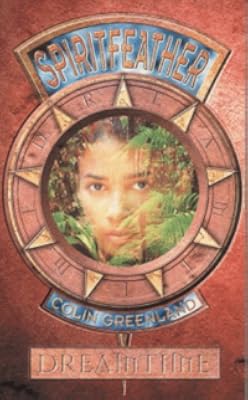
After her father died in an accident Roshana Kemal’s family – mother and younger brother Jino – lives in a caravan in the grounds of the factory where her mother works. At night Roshana has strange dreams involving The Shadowman and a jackal named Shivalu.
All too soon, in Roshana’s eyes, her mother remarries; to a plump businessman called Rajah, making good in the India of the twenty-first century. Even though the family is now much more comfortably off – all Rajah’s business friends show signs of enjoying life – Roshana resents the disruption to her life and the betrayal of her father it represents.
Her friend at school, Jeevamani Anjumbandare, frequently regales Roshana with tales of her sister Smita’s latest boyfriends. This seemingly inconsequential detail has plot ramifications.
There is a slight disconnect between the resolute realism of the depiction of Roshana’s everyday existence and interactions with her friends and the undercurrent of menace in her dreams, aspects of which can pop into her daily life. Menace appears soon enough, though, when Jino is abducted from outside a shop into which Roshana had gone to make a purchase.
Partly it is her dreams which lead Roshana to the discovery of where Jino has been taken.
True to its YA milieu the jeopardy in Spiritfeather is not over the top. A solid, straightforward read through which Greenland’s professionalism as a writer shines.