Archives » Reading Reviewed

World Football Club Crests by Leonard Jägerskiöld Nilsson

The Design, Meaning and Symbolism of World Football’s Most Famous Club Badges, Bloomsbury Sport, 2018, 255 p. First published by Pintxo Förlag, Sweden, 2016.

This book does exactly what its subtitle suggests, exploring the history of football club crests (that is what are called badges in the UK) or club emblems used on shirts, programs and stationery.

The contents are divided by country. There are 27 English club emblems discussed in detail, 12 each from Spain, Italy and Germany, 9 from France, 20 from the rest of Europe, 6 US clubs, 3 Australian and 5 South American. The entries give a potted history of the badge and (some of) its variations – many clubs have not kept a history of the changes – that club’s date of founding, its present stadium and capacity, its nicknames plus names of selected historic players, along with illustrations and descriptions of the relevant badge’s evolution.

As an addendum 126 “notable crests” are illustrated with the relevant badge, founding date, stadium and capacity, nicknames and country.

Sadly, despite its historical importance as the first outright winner of the Scottish League* and its badge depicting an elephant with a castle on its back Dumbarton FC’s striking emblem is not included. I note that Coventry City’s badge also has an elephant and castle and is given as one of the notable crests.

Manchester United’s historic players’ list contains Bobby Charlton and George Best but does not include Denis Law (though he appears with Derek Dougan in a photo on the Wolverhampton Wanderers pages) Sunderland’s list misses out Len Shackleton (I know a Mackem whose favourite, oft-repeated, football tale relates to him.)  Tottenham’s omits Danny Blanchflower. I first supposed the author is perhaps too young to be aware of these illustrious forebears but Charlie Buchan is in Sunderland’s list and he predates Shackleton by twenty plus years.

One of Aberdeen’s nicknames – along with ‘the Dons’ and ‘the Reds’ – is said to be ‘the Dandies’. I must confess that I had never heard of this though it does appear on the club’s Wikipedia page.

This is an agreeably idiosyncratic way of discovering something of the histories of the various clubs discussed.

*Neither is that of the first winners of the (English) Football League, Preston North End, though that too is fairly distinctive.

Pedant’s corner:- The author is Swedish and the book’s first publication was in Sweden so it is perfectly understandable that some infelicities should occur. No translator is listed so the author may have performed that function himself.  I noted a misplaced comma, “the claret and blue colours was the main motive” (the claret and blue colours were the main motif,) “the 1997 Champions’ League sinal” (final,) “forceably relegated” (forcibly,) “(1963/640” (1963/64,) “the Ukraine” (just ‘Ukraine’.) Arguabaly (Arguably,) “one star resembles ten titles” (one star represents ten titles.)
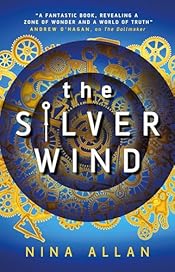
The Silver Wind by Nina Allan

Titan, 2019, 363 p, including 5 p Author’s Foreword and 1 p Acknowledgements.

“Time doesn’t give a damn about the laws of physics. It does what it wants.”

So goes a line in one of the stories in this book, which is made up of a series of connected narratives of varied length, many featuring characters with the same name but whose circumstances are subtly different. Time here – place too sometimes – is slippy. There is a contingency to the narratives, some in third person, others in first, somewhat (though not fully) reminiscent of the œuvre of Allan’s late partner Christopher Priest. Frequently, the characters themselves are not entirely sure of what is going on.

In the first tale, The Hurricane, there is a sense of distance to the telling, an opacity, which I have noticed in Allan’s work before. By the time I reached the last two, Darkroom and Ten Days (both published here under the heading out-takes) either I had got used to it or that opacity had disappeared.

The settings often have the feel of our universe but others quite clearly are not, or not yet anyway.

At least one is set in the aftermath of an unspecified war (possibly World War Two as Hitler gets a mention – though not in a war context – yet the social arrangements feel earlier.) This is (these are?) an England like, yet not identical to, our historical one. One future/present (temporal location in these stories is fluid) is an authoritarian one – under the Billings Government.

Much of the focus is on timepieces and play is made of the fact that a watch, or a clock, is a time machine of sorts. The tourbillon regulator, which stabilises a timepiece’s mechanism, counteracting the effect of gravity, making a watch or clock more accurate. Its inventor, Louis Breguet is here said to have discovered a way of making time stand still.

“The Silver Wind,” a military project to utilise this is “a quantum time-stabiliser that certain military scientists had subverted to their own purposes.” Ghosts are the living products of unsuccessful experiments with a TimeStasis, conducted from a time stream parallel with ours, manifestations of seepage between universes.

With this technology the possibility of time-bridges is asserted, but such time travel is subject to rules. “Time is an amorphous mass, … a ragbag of history. Time Stasis might give you access to what you think of as the past, but it wouldn’t be the past that you remember. The pivotal events in history still occur, even if the cause and effect are subtly different.” Hence the slippage between the stories, the air of unfamiliar familiarity. In several of them appears what at first seems a slightly sinister figure, the Circus Man, parading up and down a beach, but who in one tale administers aid to Martin Newland, one of the main recurring characters. The Circus Man is revealed elsewhere (in another timestream?) to be an accomplished watchmaker called Owen Andrews.

Don’t expect unequivocal rationales when reading any of the stories in The Silver Wind. This is not straightforward Science Fiction, but an examination of contingency.

Pedant’s corner:-  “members of parliament” (Members of Parliament,) “rarer than the both of them put together” (no need for that ‘the’; ‘rarer than both of them put together’,) unfocussed (unfocused,) “it was beginning to grow dusk” (an odd construction; ‘it was beginning to grow dark’ is fine but usually the appropriate phrase would be something like ‘dusk was drawing in’,) “I had spent a half an hour at least talking to….” (no need for that ‘a’; ‘I had spent half an hour at least talking to…’, or ‘I had spent at least half an hour talking…’) “the engine-stoker” (this was of a worker on the footplate of a steam locomotive. He – they were always male back in the day – was called a fireman,) focussing (focusing.)


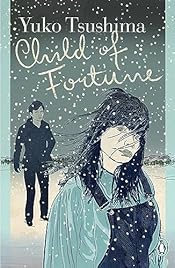
Child of Fortune by Yūko Tsushima

Penguin, 2023, 182 p. Translated from the Japanese, 寵児, (Choji,) Kawada Shobo Shinsha, 1978, by Geraldine Harcourt

Kōko is a divorced mother of eleven-year-old daughter Kayako. She is struggling with her life and her job giving piano lessons is not really enough to sustain them both. For this and other reasons Kayako has moved in with her Aunt Shōko, Kōko’s sister, who thinks of herself as the responsible sibling. Kōko’s memories of her handicapped brother who died when he was twelve colour her feelings towards both Kayako and Shōko. Since her relationship with Kayako’s father, Hatanaka, ended, she has had a long-standing (but now finished) affair with Doi, with whom she also became pregnant but aborted the child. She now feels she would have liked a child to Doi but has embarked on an on-off liaison with Hatanaka’s friend Osada, who acted as intermediary between him and her.

Child of Fortune is a portrait of a woman pulled and pushed between her past and present, and the future she devoutly wishes but is somehow unable to grasp, acutely conscious of the way in which society views women like her. The signs of pregnancy she notices precipitate her crisis.

The novel, though unmistakably Japanese, is not specific to Japan. Kōko’s troubles could be those of a woman anywhere in a judgemental world.

Pedant’s corner:- Dialogue which Kōko remembers is indicated by dashes, in the novel’s “present” (written in the past tense) it is rendered in the usual way. There was also a missing comma before one piece of direct speech.

Best of 2025

Only twelve works are on my best list this year; eight by women, four by men. Five were in translation – plus two more if you count Elif Shafak.

Troubling Love by Elena Ferrante

Queen Macbeth by Val McDermid

Hex by Jenni Fagan

Under the Glacier by Halldór Laxness

The Flea Palace by Elif Shafak

The Voyage Home by Pat Barker

The Photograph by Penelope Lively

One Day in the Life of Ivan Denisovich by Alexander Solzhenitsyn

The Bastard of Istanbul by Elif Shafak

Shanghai Nights by Juan Marsé

The Children of Jocasta by Natalie Haynes

Death and the Penguin by Andrey Kurkov

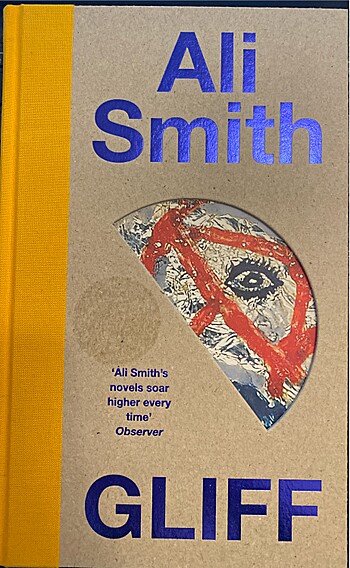
Gliff by Ali Smith

Hamish Hamilton, 2024, 280 p.

Even without reading a word, a glance at the interior of this book would immediately let you know it is by Ali Smith. It has her usual unjustified right margin, giving the text a ragged appearance, the Sabon MT Pro font, and the uncapitalised section titles (here horse, power, lines) rendered in bold type.

As to the novel itself, it is a kind of follow-on to Smith’s Seasons quartet (quintet if you include Companion Piece)  Set in an unspecified future in an apparently authoritarian state (though one never explicitly spelled out as such) where people can be designated UV (unverifiable) it tells the story of Briar (Bri, the non-binary male who narrates it) and their sister Rose.

Their mother kept them off-grid, therefore unverified. She refused them smartphones, told them, “There are different realities, and the net is a reality with designs on general reality, and I’ll prefer it if you both experience the real realities as your foremost realities.”

They had lived with their mother and her man friend Leif before their mother left to look after her sister’s interests. After visiting her one day, they come home with Leif to find the house surrounded by a red painted line, rendering them personae non grata. They have to leave in their campervan. That night the campervan also has a red line painted round it while it is parked. Leif takes off, ostensibly to find their mother and the siblings are left to fend for themselves.

As they are travelling the pair come across a field with horses in it and are accosted by a boy named Colon who says the horses belong to his father. Colon notices their bare wrists and wants to know where their educators are (pointing to where his is) and is confused when they say they don’t have any.

In a later encounter Colon’s brother, Posho, spouts all sorts of mysogynistic nonsense to Rose but lets her know of the Adult retraining centres, Arks, and child retraining centres, Circuses, where the unverified are set to work, on “majorly foul jobs” and, if they refuse, they disappear. Rose takes to one of the horses, calling it Gliff (a word meaning glimpse, or glance, a fright, a brief moment or a gleam of light – or everything and nothing at the same time.)

In later sections it becomes clear Bri is narrating this in retrospect when he has been separated from Rose but accepted into the authoritarian system and is trying to subvert it from within.

Gliff is a propulsive book about forced alienation and the difficulty, as well as the need, to resist it.

The people who need to read Gliff almost certainly won’t. The people who do read it will most likely be convinced of its message before they do.


Pedant’s corner:- No entries.

Death and the Penguin by Andrey Kurkov 

Harvill Press, 2001, 234 p. Translated from the Russian Смерть постороннего (Smert’ postoronnego; Death of a Stranger) by George Bird

This book is an example of why I find translated fiction so attractive. It is difficult to see its premise appearing in a book by an Anglophone author.

Viktor Alekseyevich Zolotaryov lives alone – except for a king penguin named Misha. The local zoo in Kyiv had been giving animals away to anyone who could feed them and Viktor obliged (with fish he keeps in his freezer.) Misha has an enigmatic existence in the book, wandering about the flat lugubriously. But his presence is treated matter-of-factly. No-one bats an eyelid at him: all accept the situation as normal.

Viktor has aspirations to being a writer or at least to seeing his writings in print. Opportunity comes his way through a man called Misha (to prevent confusion referred to as Misha-non-penguin.) This Misha has a murky background but puts Viktor in touch with the editor of a paper for whom he is to write obituaries of people of VIP calibre, from State Deputies to Ministers and factory managers, people who were shady in some way but not liable to normal justice – either through immunity or corrupt judges. After a few of the subjects have died it becomes clear to Viktor that his pieces are the basis for a hit list by an organisation he has no clue about.

Then he is left in charge of Misha-non-penguin’s daughter Sonya, after her father has to disappear for a while, leaving Sonya a large sum of money. Eventually Viktor hires a nanny, Nina, for the child, and she, Viktor and Sonya in effect become a family.

Warnings come from the paper’s editor to lie low for a while and as a result Viktor thinks he may be being followed: Sonya and Nina definitely are. Viktor’s reactions to this read as a hangover from the Soviet era. He knows instinctively what to look for to discern someone  tailing him.

In the meantime he is prevailed on to attend the funerals of some of his obituary victims. Accompanied by Misha, he does so. Soon Misha becomes a desirable accessory at burial ceremonies. Where in an Anglophone novel would anything so bizarre as this appear?

A touch of meta fiction intrudes when Viktor confronts the “fat man” who has been following Sonya and Nina, and he is given his own obituary to read. “His contribution to the political history of Ukraine may well become a subject for research not only by a Committee of Deputies, but by his fellow writers also. And who knows, a novel on that theme may enjoy a longer and more successful life than that of Viktor Zolotaryov.” Is this an invitation to assume that Death and the Penguin is that novel?

However, Misha has become ill and needs a heart transplant. For which the heart of a three to four year old child would apparently be suitable. Viktor arranges for the operation and also to transport Misha to the Ukrainian research station on Antarctica.

Kurkov’s treatment of this surreal scenario is resolutely straightforward; there are no flights of fancy, no purple prose. This, of course, only heightens the surreality of the scenario. Or is the perception of that surreality a result of being a reader from a country whose history has not been authoritarian nor overtly corrupt?

Note: this edition uses the pre-Russian invasion spellings Kyev, Kharkov, Odessa, Donyetsk and Lvov rather than the now preferred Kyiv, Kharkiv, Odesa, Donetsk and Lviv.

Pedant’s corner:- a missing comma before a piece of direct speech, a missing end quotation mark after a piece of direct speech, two new paragraphs were unindented, “where he came from and he was after” (where he came from and what he was after,)

Orphan Planet by Madeehah Reza  

Luna Press, 2025, 187 p. Reviewed for ParSec 14.

At the start of this novella Elif is the sole inhabitant of the apparently desert planet Maoira-I. At twelve years old she has hitherto known only the companionship of the AI, VAS-H, her Vital Auxiliary Support: H-unit, and her knowledge of other humans is derived solely from the films and shows available to her on screen.

Contact from Commander Isabel Aremu of the Interplanetary Mission, based on Polaris, who addresses Elif as Warden, comes to her out of the blue, as does the task she is assigned of growing, or attempting to grow, plants to see if Maoira-I might be a suitable future home for humanity. The Mission is on an indefinite space flight fleeing something unspecified back on Earth. VAS-H retrieves the seeds Elif will need, seeds she had not known were there, from the base’s storage freezer.

Part One centres on Elif via both a third person narrative tightly focused on her unfolding experiences and the log entries VAS-H asks her to compile. While these are not the reflections of an unreliable narrator they are those of one without knowledge of the full picture. Helping to fill in those gaps for the reader there are also two italicised sections dealing mainly with the consequences for Commander Aremu on Polaris of the Mission having to admit that Elif exists and its failures regarding her. This leads to Aremu’s replacement as contact by the much less sympathetic Lieutenant, later Commander, Julian Bishop.

In the meantime Elif uncovers a buried Transporter vehicle on the surface and learns to drive it while Maoira-I’s long-term climatic variations begin to manifest themselves.

Part Two makes a step change. Mission operative Rokeya Khan, whose grandfather Latif was on the original team to land on Maoira-I, has set off on her own to get to the planet and find out what happened. Her arrival shocks Elif but they learn to work together.

Rokeya’s presence is the catalyst for the discovery of what became of the original crew, one of whom, naturally, but against all protocol, must have been pregnant.

It also crystallises Elif’s feelings towards the rest of humanity and towards the only home she has ever known.

There are some caveats to this. The premise does stretch credibility a bit. Could an infant human really thrive under only the influence of an AI and old videos? Could she retain sanity even? Could the original expedition genuinely have been forgotten by the Mission for twelve years?

But Reza has written this well. She captures Elif’s initial ingenuousness and growing confidence. The claustrophobic atmosphere of an isolated environment comes across, as does the slightly sinister sway of an AI companion.

This is an impressive long form debut.


The following did not appear in the published review.

Pedant’s corner:-  shrunk (x3, shrank,) CO2 (several times. It’s CO2,) “wherever the fleet of ships were” (wherever the fleet … was,) fit (fitted,) “than several millions” (than several million,) “about to reach a crescendo” (you don’t reach a crescendo, you reach its end,) sunk (sank.) “Rokeya’s opened her mouth in shock” (Rokeya opened her mouth.)


Busy for ParSec Again

I recently sent off to Parsec magazine my review of Solstice by Ruth Aylett and Greg Michaelson, a book which I picked up* at the first Pictcon in Perth a month or so ago. A very successful first con it has to be said. Pictcon focuses on the Scottish SF and fantasy scene.

Editor Ian Whates has chosen to run it so that review will not appear here for a while.

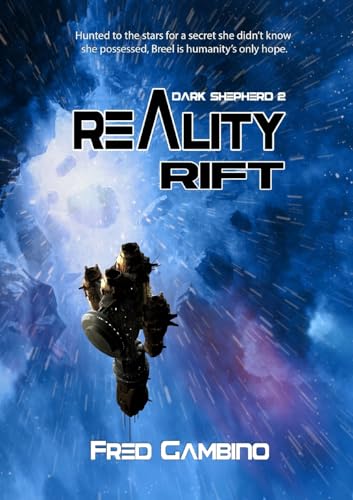
Meanwhile he has sent me Reality Rift by Fred Gambino, a follow-up to that author’s first novel Dark Shepherd.

*By picked up I mean “blagged with the promise of a review on the blog and the chance of ParSec running it.”

Auld Licht Idylls by J M Barrie 

Hodder and Stoughton, (this Uniform Edition of Barrie’s works was published between 1928 and 1931,) 243 p. First published in 1888.

This is one of Barrie’s first books and it sits firmly within the Scottish literature tradition in that it looks back on times past and things lost.

Our (unnamed) narrator is the schoolmaster in Thrums, a small village in rural Scotland inhabited mainly by weavers. He describes many of the characters and legendary tales of Thrums and its surrounding area. Only one chapter is from another viewpoint, that of Davit Lunan, who relates his memories of the General Election of 1832.

As a picture of life in the Scotland of the early and mid-nineteenth century this is a valuable historical account. Incidents are varied and illustrative.

Most of the inhabitants of Thrums were Auld Licht adherents, those who preferred the old, extremely strict, church teachings and beliefs. (This is in contrast to the New Lichts, whose beliefs were merely very strict.) There were also some political differences between the two schools of thought. The narrator tells us Auld Lichts were “creatures of habit who never thought of smiling on a Monday.”  (Did they think of smiling at all?)

However, the tales are not without humour. A prospective Minister was giving a favourable impression with his preaching and hence likely to be appointed until a chance gust of wind blew a set of papers from the pulpit thus showing he had been committing the unpardonable affront of reading his sermon. His sin was compounded by the fact he had hidden the offending pages in his Bible.

One husband had lacked the knack of managing women. His wife left him for the house across the wynd but he then, as if she was dead, organised a last wake for her, setting out the customary tables in the street. This so put the wind up her she returned to him.

Another worthy, Bowie, was once heard to say, “‘I am of opeenion that the works of Burns is of an immoral tendency. I have not read them myself, but such is my opeenion.’”

Though I had visited the house in Kirriemuir where he grew up, and seen his grave in the town cemetery, hitherto all I had known of Barrie’s work was that he was the progenitor of Peter Pan, the royalties from which he left to Great Ormond Street Hospital.

Encouraged by reading this one there are two more books in the Thrums trilogy which I will get round to.

Pedant’s corner:- shrunk (shrank – used later,) sprung (sprang,) Shakspeare for Shakespeare (x 2.)

All Passion Spent by Vita Sackville-West

Virago, 1990, 303 p, including xii p Introduction by Victoria Glendinning. First published in 1931.

When the book opens, Lord Slane, former Ambassador, Viceroy of India and an ex-Prime Minister, has just died. His – mostly unappealing – children gather round to dispose of the estate and decide on what rotation to house their mother in her widowhood. Lady Slane (now the dowager Lady, I suppose,) has other ideas. After a lifetime of following her husband’s path, dutifully performing her roles as Ambassadress and Vicereine, she has no desire to conform to their wishes. Instead, she will take a house in Hampstead – one she saw years ago and has always hankered after.

As a youth she had seen a future for herself as a painter but Henry Holland’s marriage proposal had put an end to that. In the Hampstead house she remembers her confusion at the proposal and the swiftness with which her parents and sisters welcomed it; “never had the rays of approval beaten down so warmly upon her.” But “there was only one employment open to women.” (That would certainly be so for women of her class.)  And the painting never materialised. Ruefully she had reflected that, “It would not do, in such a world of assumptions, to assume she had equal rights with Henry.”

With Genoux, her French maid, she passes the time in Hampstead with desultory visits from her children but more frequent ones from Mr Bucktrout, the housing agent who let it out to her, Mr Gosheron, a builder necessary for renovations, and Mr FitzGeorge, a connoisseur whom she had met in India decades ago and who still holds a torch for her, but withholds that information, with all of whom she has more common ground than with her children. She feels more affinity with her great granddaughter, Deborah, who desires to be a musician and will – perhaps – have more chance of pursuing a career than she did.

Indicative of the times, Lady Slane’s thoughts on her life at one point touch on, “Labour, that new and alarming party.”

Though Sackville-West apparently disliked the term this is undoubtedly a feminist book – outlining as it does the constrictions women endured in the Victorian and Edwardian eras, freed from them only when old age and a husband now gone finally allowed.

Pedant’s corner:- In the Introduction “Keats’ house” (Keats’s house,) concensus (consensus.) Otherwise; “the French government were sending a representative” (the French government was sending,) “a Cabinet Minister of England” (there is no – and never has been an – English Cabinet. That system of government was only introduced well after the formation of the UK in 1707,) “in Genoux’ imagination” (Genoux’s – which was used later. In any case, Genoux surely is not even pronounced with a terminal ‘s’ hence its possessive must have one. There was also a later instance of Genoux’,) “oblivious of” (oblivious to,) “‘me who love him better than anything in heaven or earth’”  (‘me who loves him’ seems more natural,) tight-rope (nowadays ‘tightrope’,) “Keats’ house” (Keats’s house.) Balmy (it meant ‘slightly off his head’, so: Barmy,) “a confidant” (the confidant was female, so ‘confidante’.)


free hit counter script