Cassell, 1959, 214 p including 2 p Preface, 1 p Bibliography, 8 p Index.
 The book’s title is 1914 and it is a history of the events of that fateful year but of course it is its latter half which will inevitably predominate any such undertaking. The year’s early months are all but ignored, Chapter 1 beginning with “That year the summer came ungrudgingly early.” Nevertheless, Cameron sets the scene of that last hurrah of Edwardian life. (Okay, the old King had died four years before but nothing much had changed in the interim.) He runs through life in Britain in the realms of painting, music, theatre (and music-hall,) dance, literature, fashion, and the nascent cinema with some detail. (At the White City, the Anglo-American Exposition proclaimed the “Wonders of the Panama Canal – the Grand Canyon – America’s skyscrapers.”)
In British politics, though the calls for votes for women were becoming ever louder, the Irish question was to the fore: this was the year of the mutiny at the Curragh. Other more normal political divisions were evident. In one of the broadsheets a Mr John Littlejohns from Pontypridd alliteratively thundered, “Mr W Churchill is the biggest braggart of blatant braggadocio in the brutish trituration of bombastic Radicalism!” continuing his diatribe with, “Mr Lloyd George addresses public meetings with the grimace of a mountebank and the spite of a viper. The present Government is a mawkish medley of parasitical lugubriousness, a neurotic contemporary amalgam of mental profligacy, which seeks to disintegrate the empire with persuasive pasquinades, Liberal levity, volatile vivacity, and designed deception.”
No one thought of war. When the crisis came there was no immediate consensus for war; the Manchester Guardian was for neutrality. Yet Europe, and Britain, slid into it just the same.
Despite the warnings from the last century, the US Civil War and the Franco-Prussian War of 1870 (whose treaty arguably pointed directly to this later conflict,) the cost in lives still came to many as a shock. France lost 800,000 men in the five months of fighting in 1914; most in the Battle of the Frontiers. Cameron says, “It was not to recover from this for many a generation.” (It certainly hadn’t by 1940.)
British troops took things stoically for the most part. Unlike the Germans, known to sing ‘Die Wacht am Rhein’ or the French with their ‘Marseillaise’ or ‘Brabançonne’ they did not march to tunes of patriotism, honour, or glory but instead to songs irreverent and frequently obscene: above all to “an inconsequential ditty called ‘Tipperary’, a mild, music-hall number the uproarious, passionate, almost immortal success of which was a mystery never in history to be explained, or indeed repeated.” Its triumph astonished its jobbing vaudeville composer Jack Judge “to his dying day.”
Yet when they had to the Tommies fought fiercely. On August 27 a battalion of Munster Fusiliers, acting as a sort of rearguard during the retreat from Mons, “became detached from the main body of the 1st Guards Brigade. They fought for almost twelve continuous hours against huge odds, and died, as far as was ever learned, to a man.” Cameron says, “Mons itself could have been, almost was a disaster.”
At home rumours abounded – myths of Cossacks with snow-caked boots landing all over Britain to defend the West. This was around the same time as the Russian armies were being surrounded at Tannenberg, where almost every man was captured or killed, including General Samsonoff. (In Solzhenitsyn’s August 1914 Samsonoff is portrayed as committing suicide.) News of this defeat did not pass the Allied censor. Spy fever ensured that “every pull-up and tea-room … fell over themselves to dismiss anyone remotely suspected of alien blood; not a hard thing to detect in the catering trade.”
Though the Germans undoubtedly committed what would now be called war crimes, the soldiers of the BEF was not deceived by the word pictures in the British or even more furious French press. They knew their enemy: “Jerry was a coarse bastard, but if he was the undisciplined sot he was said to be, would he make such a superbly professional job of his sandbag barricades and his trenchings, would he stand in his defensive positions so resolutely and long?”
The steel helmet when it eventually came was apparently “accepted reluctantly, even derisively; it was finally sanctified by a black-and-white artist called Bruce Bairnsfather, who had invented a strange philosophical, whiskered archetype for the middle-aged Tommy whom he called ‘Old Bill’.”
Towards the end of the year income tax was raised for earned income from 9d in the pound to one shilling and for unearned income from 1/3d to 1/6d. Beer went up a penny a pint (a staggering 25% increase,) tea duty from 5d to 8d a pound. All the new taxes would bring in only £65 million. The war was costing £8 million a week. France, Russia, Belgium and Serbia all requested loans from the pre-eminent financial power, Britain.
It was a strange war. Days after the naval defeat at Coronel had been avenged by the sinking of the Scharnhorst, the Gneisenau, the Nurnberg and the Liepzig in the Battle of the Falkland Islands, HMS Bulwark, a pre-dreadnought battleship, inexplicably exploded in Sheerness harbour, with only twelve survivors of its nearly 800 crew. As Beatty was to say at Jutland two years later, there was “something wrong with our bloody ships.”)
This book is an intensely readable overview of those months of peace and war. Though its focus is understandably for the most part on Britain it covers the salient points of the war’s spread into the wider world. It is all the more readable for not concentrating on events in diplomacy or on the battlefields.
Sensitivity notes: Lenin is referred to as having ‘Jewish’ eyes and there is a reference to the thudding music of the negroes.
Pedant’s corner:- The words ‘England’ or ‘English’ is frequently employed to mean ‘Britain’ or ‘British’, England is at one point described as an island. Otherwise; “the land-locked harbour of Port Stanley” (I had no idea of the precise geography here but wondered: how can a harbour be land-locked? I have since looked it up. There is indeed a channel to the sea.)

















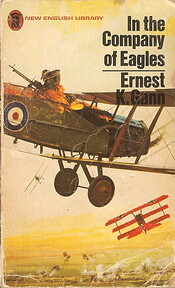 This novel of aerial combat in the Great War focuses on Sergeant Paul Chamay of the 322nd Escadrille in the Service Aéronautique and Leutnant Sebastian Kupper of Jasta 76 of the Luftstreitkräfte. Early in his combat experience Chamay sees his friend and mentor, Raymonde, killed by a German flying an Albatros with a distinctive target painted on its fuselage. Chamay is enraged since, though Raymonde’s aeroplane was incapacitated, he might have survived had Kupper (the Albatros was his) not come in to fire at him again, hitting him in the head. Chamay is from then on fixated on seeking out that Albatros and killing its pilot.






 As its title implies the book concentrates on the sea fights in which Horatio Nelson took part. While some details of his life outside the navy are mentioned these are very much by the way as far as Warner is concerned as they did not impact on Nelson’s conduct at sea. Warner contends that it was Nelson’s victories that made the winning of the Napoleonic Wars possible. Without British sea superiority Napoleon could have threatened India or even invaded Britain. He certainly had plans to do so if the Royal Navy were to be neutralised. Though Warner does not mention it the prosecution of the Peninsular War would also have been impossible without British control of the seas.