Archives » Curiosities

Cove, Berwickshire

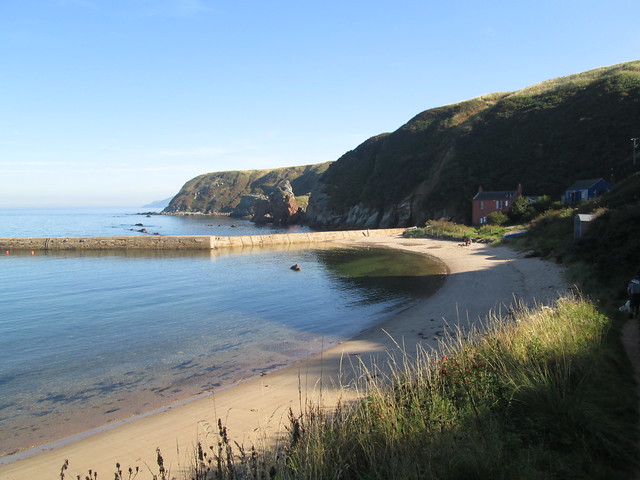
As its name suggests the village of Cove in Berwickshire – just over the A1 from Cockburnspath where my friend Eric Brown lives – is near to a cove.

This cove:-

Cove

Harbour at Cove

Cove Harbour Walls

The path down to the actual cove goes past this memorial which commemorates the women and children left by the fishing disaster of 14th October 1881 when 189 fishermen were lost off this coast. Cove lost 11 out of 21 fishermen.

Cove Fishermen's Memorialmemorial

The path goes through a tunnel cut through this bluff; the cove itself is therefore very secluded:-

Cove, Berwickshire

On the harbour wall there are bollards for boats to tie up to. They show interesting accretions of rust:-

Rust, Cove

More Cove Rust

Bloody Robots!

The blog suffered a DDOS attack yesterday. (Distributed Denial Of Service – I knew the DOS part but not the distributed, which I looked up.)

Sorry for any inconvenience.

It seems robots were responsible and most them have now been blocked.

Fingers crossed for uninterrupted access.

Thanks again to Duncan for putting things to rights.

Blog Embuggerance

I have been having trouble accessing my blog this past week or so.

Sometimes I get a message saying Server Not Found (server at jackdeighton.co.uk not found.) Then suddenly, for no apparent reason I can get back in again.

Goodness knows why. I can’t account for it. I hope no-one else is having the same problem. If so bear with me. My blog administrator is looking into it.

Interior of Monk’s Cell, Mount Grace Priory

The interior of the monk’s cell was far from as spartan as I had previously imagined it would be.

Sleeping accomodation:-
Mount Grace Priory Cell LIving Space

Devotional area:-
Mount Grace Priory Cell Interior

Living space:-
Mount Grace Priory Cell Living Space

Upper floor:-
Mount Grace Priory Cell Upper Floor

Small cloister:-
Mount Grace Priory Cell Cloister

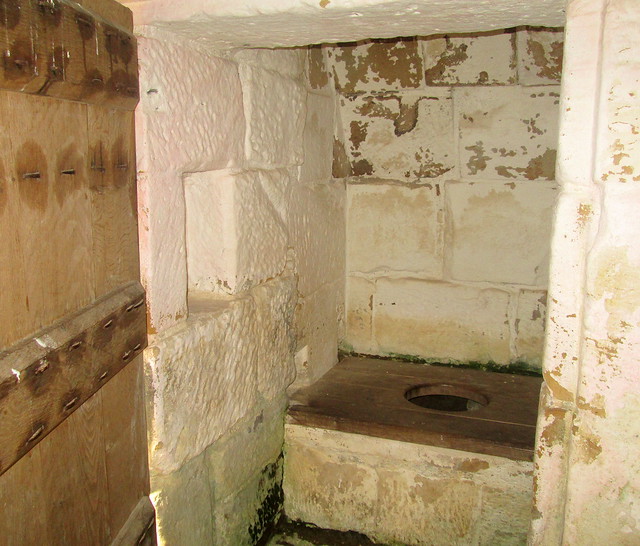
Sanitary arrangements:-
Mount Grace Priory Cell Sanitary Provision

All my Mount Grace Priory photgoraphs are on flickr here.

The Origins of Atoms

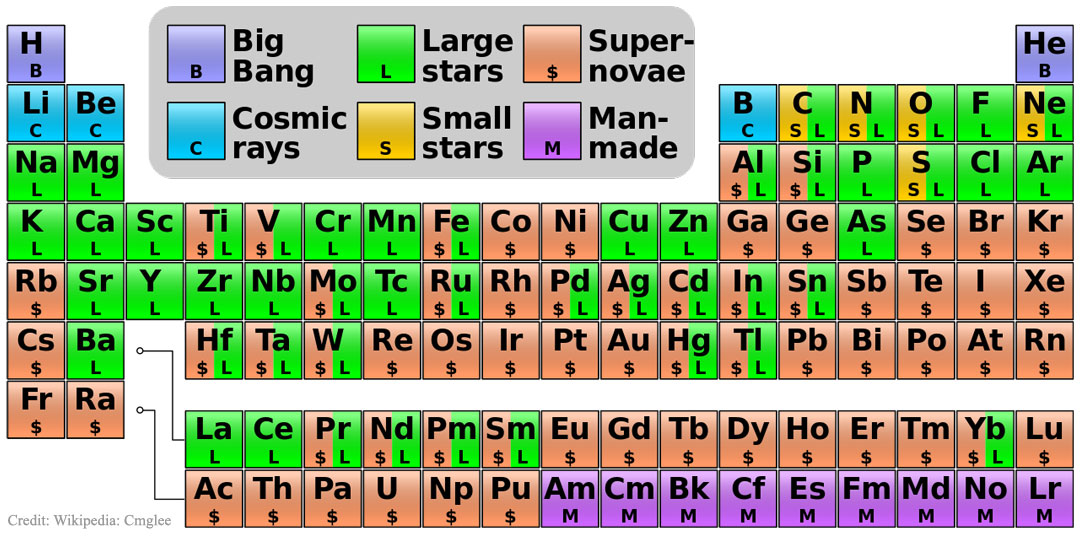
Here’s a Periodic Table with a difference.

Yes, it lists the elements in the usual way but the information within the boxes is distinctive. It tells where the atoms of each element first came into being whether it was in the big bang – for hydrogen and hydrogen alone – or, for most elements, in stars of varying types, or else by human activity.

From Astronomy Picture of the Day for 25/1/16:-

APOD 25/1/16

Edit:- I’ve just noticed the table has helium also being produced by the big bang. I’m sure it’s made by fusion in stars, though.

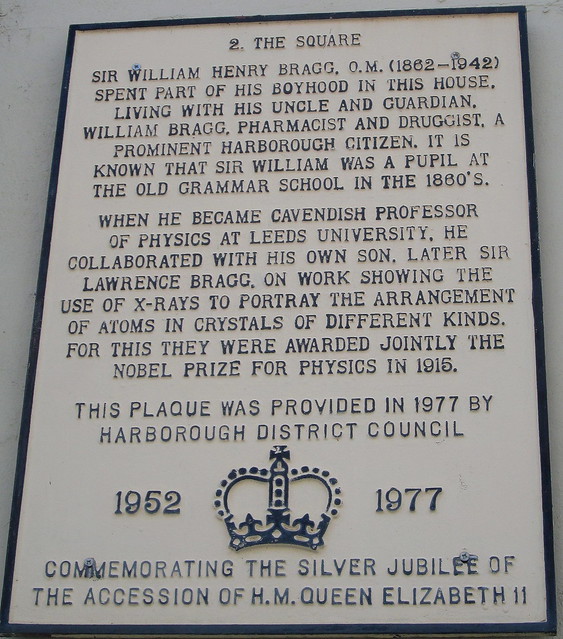
William Henry Bragg Memorial Plaque

Bragg was, along with his son, Lawrence, a pioneer of X-ray crystallography, which helps determine the chemical structure of solid compounds.

I found this on a wall in Market Harborough, Leicestershire:-

William Henry Bragg MemorialPlaque in Market Harborough

The Ford at Geddington

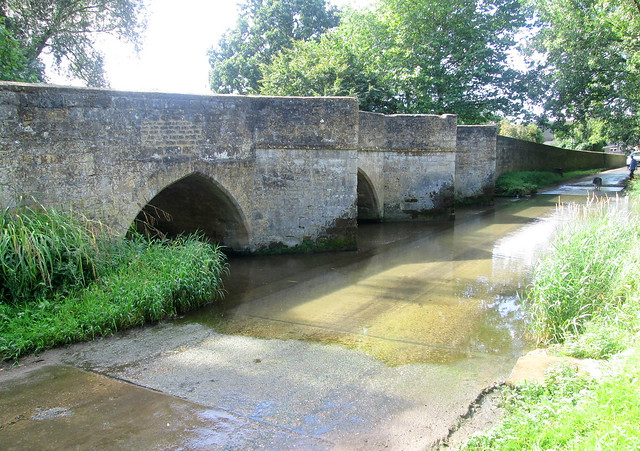
We took a stroll around Geddington (see previous post) and found a lovely bridge. The bridge is only wide enough for one car/vehicle at a time. You can see here the ford beside it which allows simultaneous passage. (We did see a driver chicken out of tackling the ford though):-

Bridge + Ford

View of the ford and river from the bridge:-
The Ford at Geddington

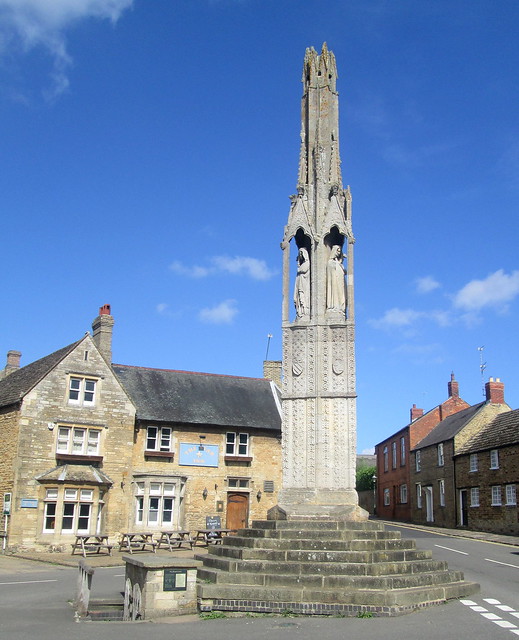
Eleanor Cross, Geddington, Northamptonshire

The other Eleanor Cross we visited was at Geddington:-
Eleanor Cross

Eleanor Cross, Geddington

An information board here shows the route of Eleanor of Castile’s body from Lincoln to London, and the twelve stopping places:-
Information Board, Eleanor Cross, Geddington

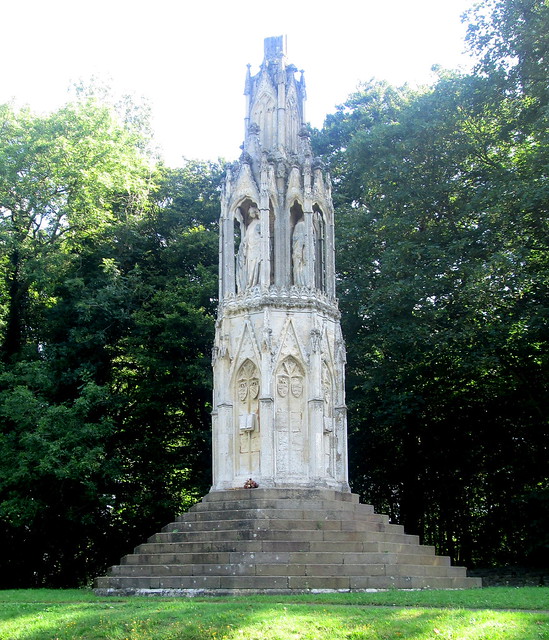
Eleanor Cross, Hardingstone, Northampton

Edward I of England, known as Edward Longshanks, and also Malleus Scotorum or Hammer of the Scots may have been a Middle Ages hard man but it seems he loved his wife, Eleanor of Castile. When she died at Lincoln he had her bodytransported to London for burial and at each stop along the way ordered that a cross be erected in her memory. These are known as Eleanor Crosses.

On our trip down south last summer we were so close to two of these we had to photograph them.

The first was at Hardingstone just south of Northampton:-

Eleanor Cross

Eleanor Cross, Northampton

There is an inscription (pretty much unreadable) in the stone on the wall behind the Cross:-
Inscription near Eleanor Cross, Northampton

The inscribed words are reproduced on the plaque:-
Eleanor Cross Inscription

Another descriptive plaque is on a pedestal nearby:-
Eleanor Cross, Northampton, Descriptive Plaque

Small Change

One thing that niggled me about Jo Walton’s “Small Change” trilogy (which I read recently) was the title of the third volume. After Farthing and Ha’penny came Half a Crown.

Now, a farthing was the smallest pre-decimal British coin value – at least until it was phased out due to inflation rendering it all but useless – and a ha’penny was next up; but half a crown was a large enough sum almost not to be counted as being small change. Walton does use farthing as a pun and the “Half a Crown” is indicative of the levers of power not resting with the monarch and in any case with her being at risk in a coup d’état, but some lovely gradations were missing.

Before decimalisation the British Pound Sterling (£1) was divided up into twenty shillings (20/-) and each shilling into twelve pennies (twelve pence; written as 12d – the d I believe from the old Roman denarius.) In addition there was the halfpenny (ha’penny, ½d) and the farthing (“fourthing”, worth a quarter of a penny, ¼d.)

This seemingly odd arrangement was in fact very versatile as £1 could be divided by 2, 3, 4, 5, 6, 8 and 10 into whole values of shillings or pennies; respectively 10 shillings (10/-), six shillings and eight pence (six and eight, 6/8d), a crown (or five shillings, 5/-), three shillings and four pence (three and four, 3/4d), half a crown (two shillings and sixpence, 2/6d), two shillings (2/-).

All coins had the head of the monarch at their time of minting on the obverse. There were three types of coin known as coppers from their colour and perhaps the original metal used in their minting. The farthing was a lovely coin with a depiction of a wren on the reverse. The larger ha’penny had a ship (Drake’s the Golden Hind.) The still larger penny showed a seated Britannia and shield.

Next in value was the dodecagonal in profile and dirty-goldish coloured three pence coin (known as a thruppenny bit) with Prince of Wales feathers or a portcullis representing the Houses of Parliament on the reverse though earlier silver thruppennies were still in circulation in the 1960s.

The larger value coins were all silver. The sixpence coin was very small in circumference and called a tanner with latterly a floral design; the shilling (or “bob”) had various designs – with a Scottish version, the two shilling (a “florin” or “two bob”) similarly varied in design and the half crown (“two and six” but sometimes nicknamed half a dollar) also varied. There was – and still is – a crown worth five shillings (now 25p) but these were very rare and today’s issues are mainly for collectors but are I believe still legal tender.

The ten shilling denomination of the currency was actually a paper note (known as a ten bob note.)

Only “coppers” were likely to be considered “small” change.

Walton’s sequence, then, goes awry after ha’penny as the next price point was ¾d, three farthings, and the next coinage value was 1d, a penny.

As far as prices were concerned they followed the order:-
¼d – a farthing
½d – a ha’penny
¾d – three farthings
1d – a penny
1¼d – a penny farthing
1½d – three ha’pence (or a penny ha’penny)
1¾d – a penny three farthings
2d – tuppence
2¼d – tuppence farthing
2½d – tuppence ha’penny
2¾d – tuppence three farthings
3d – thruppence
3¼d – thruppence farthing
3½d – thruppence ha’penny, etc etc up to a shilling.

After a shilling there were usages like-
1/3d (one and three; one shilling, three pence)
2/7d (two and seven; two shillings, seven pence)
Any ha’pennies or farthings were added on as in 1/2½d (one and tuppence ha’penny) 7/4¾d (seven and fourpence three farthings.)

Nobody ever asked for a crown. It was always referred to as five shillings.

Wonderful stuff – but I believe it confused foreigners, including visitors from the US, no end.
free hit counter script