Archives » 2016 » November

In Flanders Fields Museum Exhibits (i)

Exhibits in In Flanders Fields Museum, Ypres (Ieper) Belgium.

Anti-tank rifle:-
Anti-tank Rifle, In Flanders Fields Museum

Photograph of survivors of a Canadian battle of the Great War:-
Canadians, In Flanders Fields Museum

Flame Thrower (Flammenwerfer):-
Flame Thrower, In Flanders Fields Museum

(The next one was too far behind its glass for the camera to focus properly.) Fritz Haber was responsible for developing Chlorine gas as a weapon. Also without his Haber Process to make ammonia from nitrogen and hydrogen (necessary for producing artificial fertiliser) the Germans would have been unable to make nitrate explosives and so would have been forced to an armistice much earlier. The main exhibit was of an actor speaking Haber’s words:-

Fritz Haber Exhibit

Tableau of Horse Ambulance:-
Tableau of Horse Ambulance

The Wipers Times was a satirical magazine produced by soldiers during the Great War:-

Copy of Wipers Times

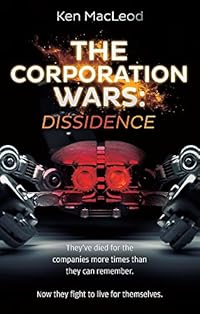
The Corporation Wars: Dissidence by Ken MacLeod

Orbit, 2016, 333 p

 The Corporation Wars: Dissidence cover

Most of the “characters” in this novel are dead, their consciousnesses (or what remains of them) uploaded into a simulation. Others are robots whose “minds” have gained awareness. The first of these presents a problem; one which I have written about before here and here. I know that fiction isn’t a description of the real, it’s all made-up – thinly disguised real lives of the roman à clef aside – but it aspires to that verisimilitude; the people we are reading about ought to feel real, or at the very least plausible, their perils and dilemmas actual to the reader even if at one remove. Breaking the necessary suspension of disbelief is a dangerous activity for an author, with the potential fatally to undermine what is the delicate process of interacting with a fictional text. But if the characters in a novel are themselves dead the distancing goes too far. Put simply, if these people are dead already why should the reader care? There is no real jeopardy; they can be resurrected at the touch of a button. Yes, there is the argument that our “real life” might itself be a simulation so what does it matter if the characters in a novel also are but that falls down on the grounds that we can only suspect it, we do not know it for sure.

The action, and there is a lot of it, takes place on or near an exo-planet long after the Final War on Earth between the more-or-less progressive Acceleration and the counter-revolutionary Reaction. A government known as “The Direction” is nominally in charge but as a result of the development of robot consciousness various companies are now at war either with the robots or each other. Human consciousnesses from the time of the Final War have been preserved, training to fight the Corporations’ wars after being decanted into a virtual reality of the way the exo-planet will be after its terraformation. The story-telling details here are elegant enough, the “bus journey” from the “spaceport” every time they are resurrected from an abortive mission is a nice touch. The shadow of the Final War still hangs over these remnants though. The extension of their consciousnesses beyond their bodies when they are in their (tiny) battle arrays is also neatly handled, instantaneous connectivity feeling akin to telepathy, being able to “smell” the sun etc.

Curiously (or perhaps not, as they may be the most “real” characters in the book as opposed to mere ghosts of electrons fizzing about in a server) it is the robots who seem the most human entities in Dissidence even if their dialogue, rendered in chevron brackets as opposed to normal quote marks, can be a little reminiscent of Dalek in its terseness and detached vocabulary (though admittedly, “Shut up,” is never an injunction I have heard issued by a Dalek.)

As usual with MacLeod there is a degree of philosophical discourse, especially among the robots, and of political discussion. There is also an allusion to please all SF buffs, “I have no mouth and I must gape.” If you can get over any nagging doubts about the “reality” of the dilemmas and situation of the entities here it’s a fine read.

Pedant’s corner: when in their “battle” arrays the “humans” also spoke in chevrons apart from one instance at the close of a section where the quote marks were normal. I didn’t gain the impression they had yet dropped out of battle mode. There was also medieval (long time devotees know I prefer mediaeval or even mediæval,) plus “upside the head” (a USianism, what’s wrong with “on the head”?)

It Just Keeps Coming….

Now it’s Leon Russell……

Never as commercially successful in his own right as he perhaps deserved his songs are better known in their cover versions.

For Joe Cocker’s take on Delta Lady see here.

This is a much less rocky track perhaps most famous in its performance by The Carpenters.

Leon Russell: A Song For You

Leon Russell: 2/4/1942 – 13/11/2016. So it goes.

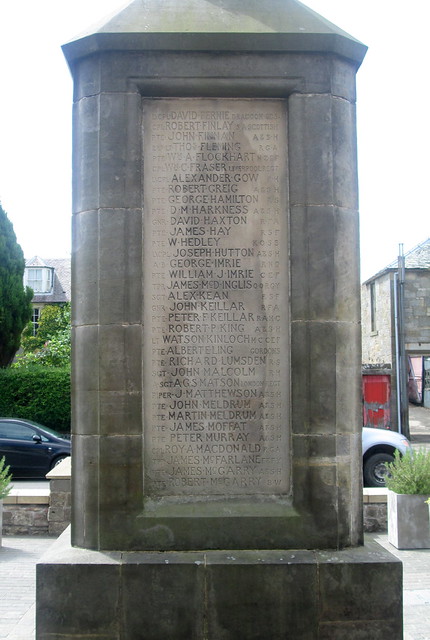
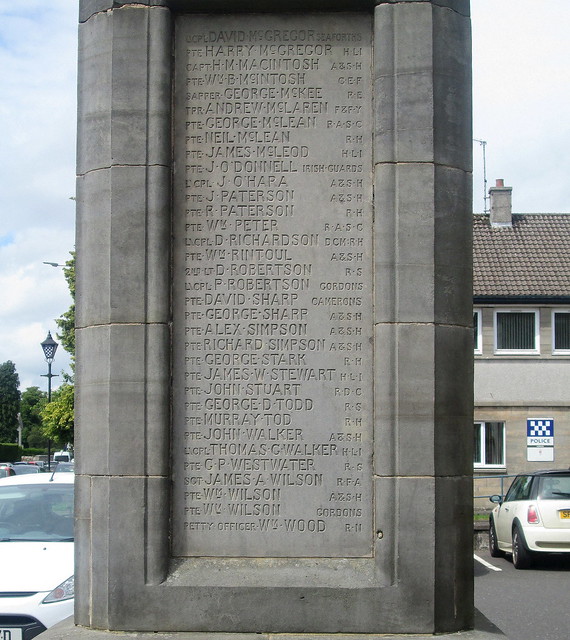
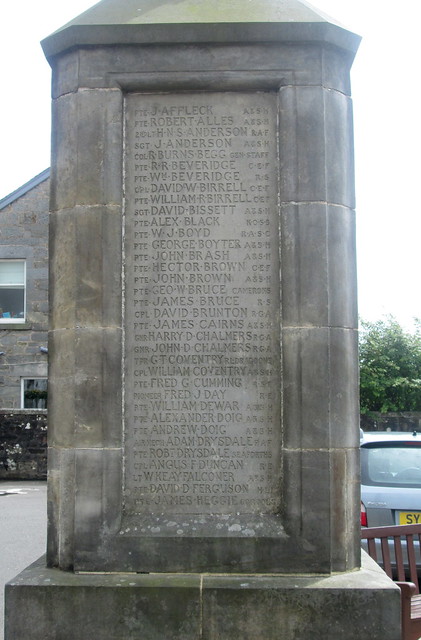
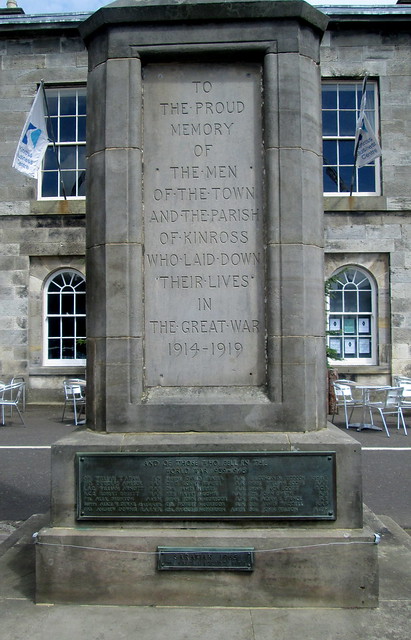
Kinross War Memorials

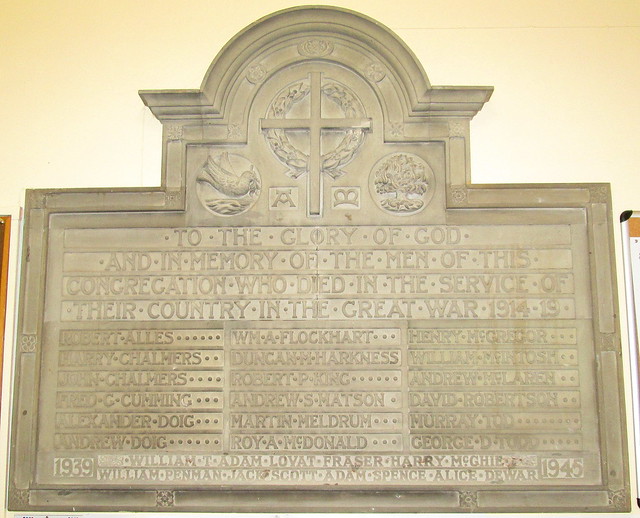
Kinross Parish Church Memorial Plaque. 1914-19; with 1939-45 added below. This is directly in front of you on the wall as you enter what was the Parish Church and is now a community hall complete with tea-room:-

Kinross Parish Church Memorial Plaque

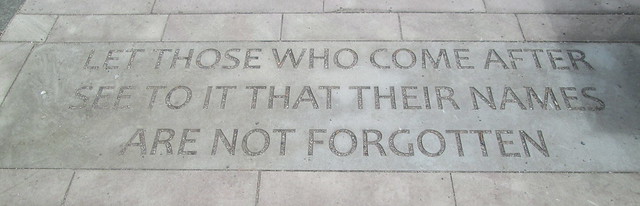
Kinross’s main War Memorial lies just left of the A 922 as you near the town centre coming from Milnathort. There is an inscription on the paving as you approach it from the main road:-

Kinross War Memorial

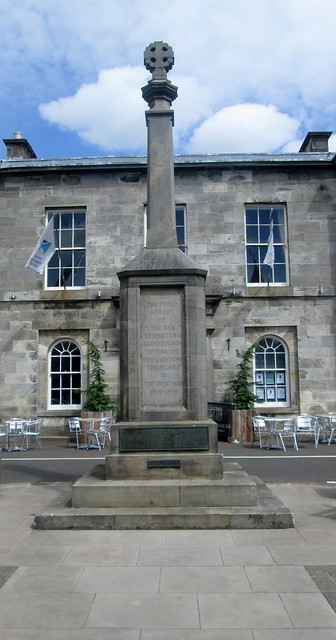
Full Memorial. Square base and plinth, surmounted by square column and small Celtic Cross:-

Kinross War Memorial

East aspect:-
Kinross War Memorial

South aspect:-
Kinross War Memorial

North aspect:-
Kinross War Memorial

West aspect. Inscription for the Great War, lower plaque for World War 2, one for Sarawak 1965:-

Kinross War Memorial

Extra inscription for Janet McL Meldrum, ATS, World War 2:-
Kinross War Memorial

Milnathort War Memorial

Milnathort is in the county of Perth and Kinross and lies a mile or so north of Kinross itself.

Its War Memorial lies just off South Street, the main A 922 road south to Kinross, in a garden area which leads to a small park.

From main road:-
Milnathort War Memorial

Square base with extensions, tapering column, surmounted by globular feature. “In proud and grateful remembrance of the men from this parish who fell”:-
Milnathort War Memorial 2

Name plaques for the Great War (above) plus Second World War inscription:-

Milnathort War Memorial 3

Name plaques for Second World War:-
Milnathort War Memorial 4

Closing Time: Leonard Cohen, Robert Vaughn, Jimmy Young

I had intended to publish remembrance posts today in the one day this year between Armistice Day and Remembrance Day but 2016 just keeps piling it on.

Now it’s Leonard Cohen who has left us.

Not to mention actor Robert Vaughn – aka Napoleon Solo in the Man From U.N.C.L.E. but whose best performance was as a conscientious German officer, Major Paul Kreuger, undone by circumstances in the film The Bridge at Remagen – and, earlier in the week, a voice from my youth (though he was too soft-edged to be a anything like a favourite,) Jimmy Young, once a stalwart of BBC Radio 2.

I suppose everybody will be using Hallelujah to sign Leonard Cohen off. Here instead is one of his songs from 1992, Closing Time.

Leonard Norman Cohen: 21/9/1934 – 7/11/2016. So it goes.
Robert Vaughn: 22/11/1932 – 11/11/2016. So it goes.
Leslie Ronald “Jimmy” Young: 21/9/1921 – 7/11/2016. So it goes.

Macrae Memorial, Eilean Donan Castle

In Flanders fields the poppies blow
Between the crosses, row on row,
That mark our place; and in the sky
The larks, still bravely singing, fly
Scarce heard amid the guns below.

We are the Dead. Short days ago
We lived, felt dawn, saw sunset glow,
Loved and were loved, and now we lie
In Flanders fields.

Take up our quarrel with the foe:
To you from failing hands we throw
The torch; be yours to hold it high.
If ye break faith with us who die
We shall not sleep, though poppies grow
In Flanders fields.

The above poem “In Flanders Fields” was composed by Lt Col John McCrae (who served in the Canadian army in the Second Boer War and again in the Great War as a medic) at Essex Farm Advanced Dressing Station.

A Memorial to all the Macraes who died in World War 1 is located on the outside wall of Eilean Donan Castle, Lochalsh, Scotland:-

Macrae Memorial Eilean Donan Castle

Macrae Memorial, Eilean Donan Castle

Names on Macrae Memorial, Eilean Donan Castle, in various spellings of Macrae. These also appear on a (sc)Roll of Honour inside the castle:-
Names on Macrae Memorial, Eilean Donan Castle

Plaque in memory of Lt Col John McCrae on outside wall of Eilean Donan Castle, Lochalsh, by the Macrae Memorial:-

John Macrae Memorial, Eilean Donan Castle

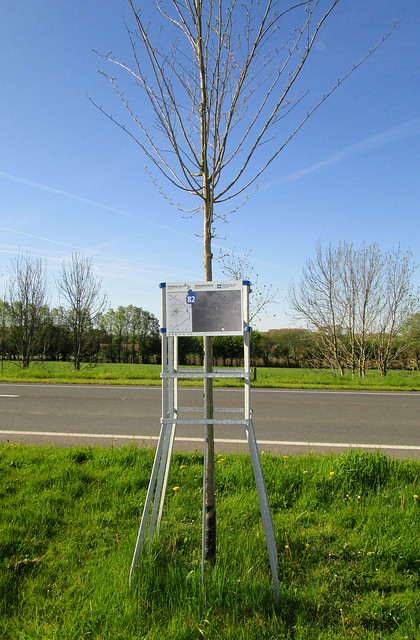
Remembrance Trees, Ypres

From the look of them these were planted to commemorate the 100th anniversary of the outbreak of the Great War. They mark the position of the front line.

Remembrance Tree, Menin Road, Ypres

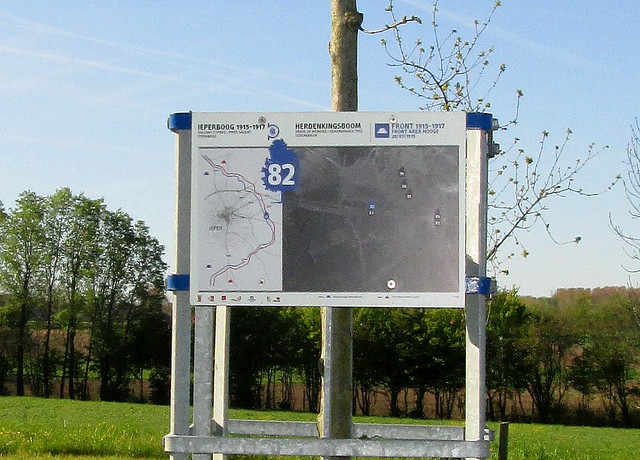
The map shows the British Front Line in blue and the German in red. The numbers refer to the locations on the map. This is on the German side:-

Remembrance Tree Map

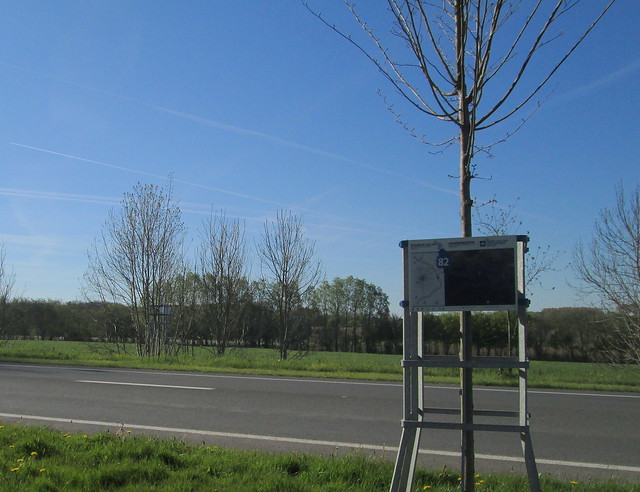
The lines were unbelievably close at this point – the width of the Menin Road. You can see another remembrance tree marking the British Line just the other side of the road, above the middle of the road’s white centre line:-
Remembrance tree

I Miss the Soviet Union

Remember those bad old days of the Cold War? The evil Commies who stamped on people’s rights and stifled individualism?

Well, maybe they weren’t so bad after all.

Yes, life in the Eastern Bloc wasn’t a picnic and freedom of expression is a good thing – provided it isn’t taken too far.

But… The existence of the Soviet Union kept big business in the West honest (to a point.) Inequality was much less pronounced in the UK then than it is now; in the US too I wouldn’t wonder. With the example of a competing economic system to hand there was a brake on excess, those inclined to it restrained their greed. When so-called Communism (a description which was woefully inaccurate, there was little communal about it, it was an autocratic oligarchy) collapsed, the brakes came off and CEOs and executives of big companies let their impulses off the leash. Thoughts of paying and treating fairly the true source of any wealth created by a company’s endeavours, the workers, evaporated. Instead, those workers were squeezed, marginalised, treated with contempt, their abilities to protest curtailed – at least in the UK.

There is a thought amongst certain people – on both sides of the Atlantic – that government is in and of itself a bad thing, “A conspiracy against the people.” (These are probably mostly the same people who want to do whatever they like with no comeback.)

A Trump Presidency may be the experiment that tests that idea.

To destruction.

Unfortunately it won’t be its advocates whose lives will be destroyed. In times of turmoil it rarely is.

Lack of government does not mean freedom, it means anarchy. It means no protection against predators and wrongdoers. It means those with the deepest pockets have no barriers to their avarice prevailing. (It also means they in turn have no protection beyond what they can buy.) In effect, though, it means slavery – either real or (poorly) waged – for the majority.

Regulation of human activity – in any sphere – is actually a necessary constraint. “Freedom from” is as important as “freedom to”.

Which leads to the thought; if you are a woman working in the Trump White House, how safe will you be in terms of your personal autonomy? How free will you be from coercion?

Stop the World: I Want to Get Off

“Now it’s time for America to bind the wounds of division; have to get together. To all Republicans and Democrats and independents across this nation, I say it is time for us to come together as one united people.

“I pledge to every citizen of our land that I will be president for all Americans, and this is so important to me.

“I’m reaching out to you for your guidance and your help so that we can work together and unify our great country” – Donald Trump.

“We will make Britain a country that works not for a privileged few, but for every one of us.

“The Government I lead will be driven, not by the interests of the privileged few, but by yours” – Theresa May.

“Where there is discord may we bring harmony” – Margaret Thatcher.

Well; the last of these three didn’t work out well.

I don’t expect the first two to do so either.

free hit counter script