Archives » 2015 » June

The Hope That Kills Us edited by Adrian Searle

An anthology of Scottish football fiction. Polygon, 2003, 191 p.
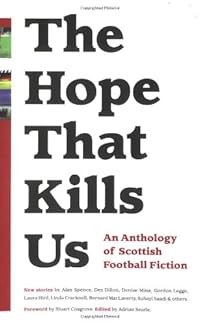
 The Hope That Kills Us cover

From Stuart Cosgrove’s foreword, with its tag of “Anybody who says he disnae like football is a lyin’ bastard,” – a quote from the final story – to that final tale this book is an examination in prose of Scotland’s contradictory love affair with the Beautiful Game – an affair at times not beautiful and not a game. The tendency of Scots to see anything and everything through the filter of football is evident from the contents.

This paperback edition contains additions (by Brian Hennigan and Bernard McLaverty) to the original hardback contents. Each story’s title page is illustrated by photographs taken by Paul Thorburn of different sets of goalposts from round Scotland. Occasional double page photos, overlaid with quotations from the stories, intersperse the book.

As is usual for anthologies and might be expected from the range of contributors the stories are varied in tone and style. The relevance of football to some of them is a bit dubious, though.

The opener is The Thing About Brazil by Alan Spence. On a trip to Brazil, Andrew remembers his dad and their visits to Ibrox, takes in a Flamengo-Palmeiras game at the Maracanã and, later, has his own moment of football glory on Ipanema beach.
In A Belfast Memory by Bernard McLaverty a Belfast man remembers the time that “Charlie Tully called” and the discussion that ensued on the shameful demise of Belfast Celtic.
Linda Cracknell’s The Match is only incidentally about football. A woman is taking a holiday in the Carribean on her own since her husband wouldn’t miss a vital European match. (It could have been any obsession really but I suppose football is the most plausible.)
In This Is My Story, This Is My Song by Laura Hird some Hearts-supporting friends gather for the funeral of one of their number, killed in a van crash. Supporting Hearts is the biggest thing in the lives all of them.
Iain Maloney’s Football Scarves and Richard Kimble tells of a boy’s experience of his first match – a Cup Final – interspersed with his Dad’s reminiscences of how the ending of the TV show The Fugitive, gripping much of the nation at the time, was announced over the tannoy at a night game.
The Hand of God Squad by Gordon Legge is the tale of two (moderate) drinking pals, the hotels they drink in, the Englishman who first of all befriends them then joins in their trips away with the Tartan Army (complete with kilts.) All tied up with the sad end to the qualifying campaign for the 2002 World Cup.
In The Cherrypicker by Jim Carruthers the narrator’s grandfather was a Cherrypicker, so he is slightly disappointed both that no-one famous turned up at the old man’s funeral and at the absence of missives from Liverpool in his effects. Years later, on seeing Glenbuck, he cannot credit the team’s name.
Nae Cunt Said Anyhin by Andrew C Ferguson is narrated in a very broad Fife Scots. It is the story of Tam Johnston and the gift of sublime football talent the fairies passed on to him; a gift almost useless because Tam likes the drink too much (“George Best oan a budget”) and even though he gets to play for Scotland they’re “so shite even Tam cannae make a difference. Couldnae score on Loveboat.”
Billy Cornwall’s Jesus Saves has Wee Davy thrust into a game against older heavier boys, where he imagines himself as Kenny Dalglish.
Heatherstone’s Question by Des Dillon is another not really about football, even if two neighbours in Galloway do support different halves of the Old Firm. Rather, it is about neighbourliness, and reticence.
Alan Bissett’s A Minute’s Silence charts the friendship and rivalry between two boys that sours when they attend different schools and start to support different teams (you know the two.) About sectarianism and how it is not engrained, but learned.
In Denise Mina’s The Bigot a criminal has scheduled the divvy-up from a job for the day of an Old-Firm game. Again, the football content here is really incidental. Revenge, it seems, is a dish best served not only cold but well-planned.
Sufisticated Football by Suhayl Saadi has a man “lying in the cells at the dark bottom of the Old Partick Police Station” being visited by the ghost of Allegro Akbar, a celebrated football coach. Illuminated with words from Urdu and Arabic – ghosht = meat = the ball, pyar = love, and ishq = perfection (as in Zidane, Hampden, 15th May 2002) – illustrating the philosophy of football.
The Tomintoul Deliverance by Brian Hennigan is the humorous story of how Loch Muick triumphed over the ancient enemy Athletico Tomintoul – despite not having played them for years and a season spent losing heavily to the likes of Dynamo Fochabers and Sporting Kilwhinnie (not to mention Unsporting Kilwhinnie) – mainly through managerial exhortation by cliché. A flavour of the tone is given by the sentence, “It was at times reminiscent of the film Zulu, particularly when the Tomintoul attack set fire to the thatched roof of our goal.”
The Last Man in Scotland Who Doesn’t Like Football by Colin Clark tells the story of “Pasty” Hastie, who doesn’t like football so got a hard time at school. The affliction goes on to haunt his adult life.

Pedant’s corner:- non sequitar (sequitur,) sprung (sprang,) its (it’s,) Billy McNeil (Billy McNeill,) “Better tae have to hoopsthough eh?” (the hoops makes more sense,) Queens Park (Queen’s Park,) “Where’s the excitement I that?” (in that, surely?) Thursday through the Saturday (that “through” is USian usage,) what we what we, was was, students’s, allen key (Allan key,) “’And you’ll have you got yourselves kitted out?’” epitomy (epitome,) gets the heads shaved (get,) Robert Prosineski (that’s how it’s pronounced but it’s spelled Prosinecki,) a missing quotation mark, were (where,) alter x 2 (altar – both times,) a few slice of bread (slices,) one and other (one another,) wanes (weans,) Ranger’s (Rangers’,) sliver shelving units (silver?) ranger top (Rangers top,) sleak (sleek,) viscose (viscous,) threw (thrown,) soccer (soccer!!!!) miniscule (minuscule,) deosil (usually deasil,) snuck (sneaked,) nine items or less (ought to be fewer, of course, but it’s a straight quote from a supermarket sign,) a question mark after what wasn’t a question, lead (led.)
Morton Up First

I see from the club’s website that Sons first game of the new season will be away to Morton. The game is scheduled for Saturday 26th July; less than a month away.

Unlike the last two seasons we haven’t been drawn against Stranraer. I had half expected us to get St Mirren since Ian Murray has gone to manage there.

The second round is due on 19th or 20th August. I don’t suppose we’ll be interested in that one.

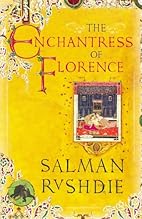
The Enchantress of Florence by Salman Rushdie

Jonathan Cape, 2008, 359 p.

The Enchantress of Florence cover

A foreigner turns up to the court of the Mughal Emperor, Akbar, at Fatehpur Sikri with a claim to be related to him and a tale to tell to justify it. The foreigner has called himself variously Uccello di Firenze, Mogor dell’ Amore (the Mughal of love) and Niccolò Vespucci. So begins this typical piece of Rushdian flamboyance.

Containing elements of fable, fairy tale and Rushdie’s usual dose of magic realism (among other things Akbar has managed to conjure up for himself an imaginary – and therefore perfect – wife) there is nevertheless something about the treatment that does not quite hit the mark. Rushdie has always been fond of digression, word games and allusions (in this case, for example, take the mercenaries Otho, Botho, Clotho and D’Artagnan) but it has to be said; in amongst the showing here, there is a lot of telling. As if to underline this there is a list of works consulted for research given in a bibliography.

Yet, as the author notes, “The untruth of untrue stories could sometimes be of service in the real world.” That is what fiction is for after all. But then again, “Those sceptics who by virtue of their sour temperament resist a supernatural account of events may prefer more conventional explanations.” Indeed.

It might seem, too, that in a novel entitled The Enchantress of Florence that the woman concerned could be expected to appear in the narrative somewhat earlier than two-thirds of the way through but while this is her story it is also the story of Akbar, of the Florence of the Medici (and the monk Giralomo,) and of three friends from that city, Antonino Argalia, last of the condottieri, Niccolò – ‘il Machia’ – Machiavelli (yes, that Machiavelli) and Agostino Vespucci (cousin to Amerigo.) It is also the tale of why the Mughal court had to leave Fatehpur Sikri.

The enchantress is Qara Köz, “Lady Black Eyes,” Akbar’s Great Aunt, sister of Babar the first Mughal, eliminated from the family history when she rejected a return from capture. Her enchantments seem to lie in the ability to entrance men, if only for a while. Her destiny is to pass through the hands of a warlord, to the Safavid Shah Ismail, to Antonino Argalia and finally to the New World with Agostino Vespucci. She has a companion, her mirror in all respects (bar one.) Yet she is an absence in the book, an emptiness around which Rushdie weaves his tale of folly, wisdom, hope and loss. Akbar is at the heart of it, a ruler wise to his surroundings and to the machinations of the power hungry. There is a barbed inversion of insular Western conceptions when Akbar muses that, “The lands of the West were exotic and surreal to a degree incomprehensible to the humdrum people of the East.”

A noteworthy aspect of this edition is that it is endowed with beautiful endpapers picturing at the front a detail from The Building of Fatehpur Sikri Palace from the Akbamama and at the rear from the Carta della Catena showing a panorama of Florence.

Pedant’s corner:- A 16th century Scottish pirate may well have been carrying letters of marque or even diplomatic credentials from Queen Elizabeth (of England) but I doubt he would treasure a locket containing her portrait. Equally he may have boasted of climbing all Scotland’s Munros but not in those terms. They were not named as such for a further three centuries. “I’d keeped her locked up” (keep,) rowboat.

Blameless? I Don’t Think So

In an article in Friday’s Guardian, Nicholas Tucker put forward the thesis that “naughty” words could be got away with in more innocent days.

The trigger for this was the change of name of one of Arthur Ransome’s Swallows and Amazons from Titty to Tatty in a new BBC adaptation of the books, Titty being of course too (err…) tittersome for these days.

He mentions the innocent use in bygone times of “intercourse,” “screw”, “ejaculate” and, in the case of Dr Seuss, “Boners.”

However, the quotation he gives for his next example “cock” – as in a fairground giant cockerel which a maiden aunt of Just William mounts on a merry-go-round – undermines his thesis as the text goes on to say, “It seemed to give her a joy that all her blameless life had so far failed to produce.”

For what is the purpose of that word “blameless”? It seems to me to be present precisely to signal exactly that knowledge which Tucker claims to be absent. Otherwise why include it? If the point was the one Tucker is making then the phrasing, “a joy that all her life so far had failed to produce,” would make it far more effectively, and poignantly.

Tucker then uses the same word to describe Just William’s author, Richmal Crompton, saying she was a blameless ex-classics teacher. But are not the classics – of which she therefore must have had extensive knowledge – full of instances of sexual mayhem? (The Rape of the Sabine Women for one. In case this may be thought to be an egregious example unlikely to be mentioned in school, this incident was one of those encountered by the good lady in her Latin class.)

Tucker says a similar fairground cockerel also appears in an Angela Thirkell story and adduces for her innocence of any double entendre that she was a distinctly snobbish granddaughter of the pre-Raphaelite artist Edward Burne-Jones. As if artists (and particularly the pre-Raphaelites) were entirely free of sexual knowledge and/or shenanigans. Moreover a glance at Thirkell’s life story might suggest rather a lack of innocence.

This Year’s Cygnets

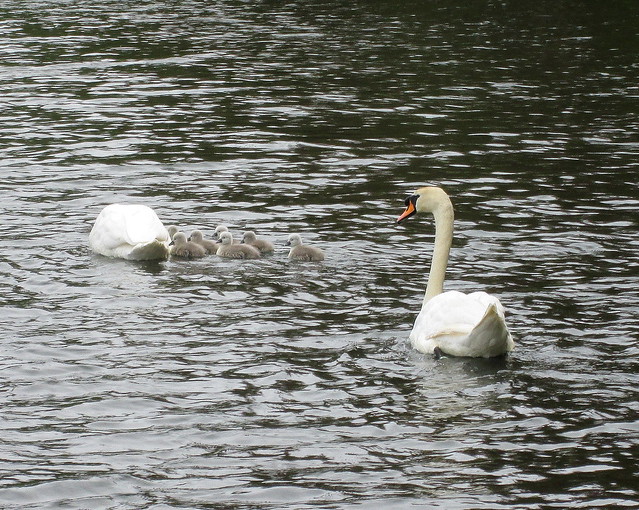
I was in Beveridge Park, Kirkcaldy last month and the swans have seven cygnets this year.

This Year's Cygnets

This Year's Cygnets 2

Friday on my Mind 121: Pretty Ballerina

I’ve just been googling The Left Banke again and discovered that their bassist Michael Brown passed away on 19th March this year.)

He was a co-writer of Walk Away Renee (which I featured here) but this song, Pretty Ballerina, was all his.

The Left Banke : Pretty Ballerina

Michael Brown (Michael David Lookofsky): 25/4/1949 – 19/3/2015. So it goes.

War Memorials at Stirling Castle

As at Edinburgh Castle there are War Memorials on the esplanade of Stirling Castle.

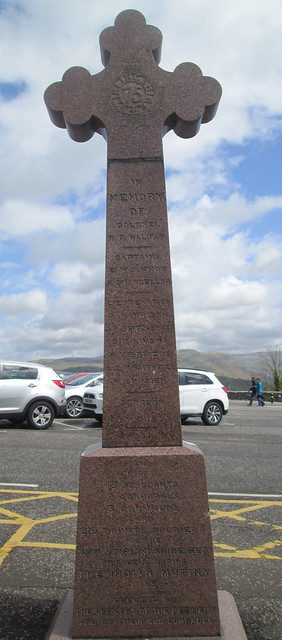
Again there is one to the Indian Mutiny, this one dedicated to the men of the 75th Stirlingshire Regiment who died at Seringapatam, Delhi and in the Relief of Lucknow.

Indian Mutiny Memorial, Stirling Castle Esplanade

The other side of the memorial names the officers (1 colonel, 2 captains, 6 lieutenants and 1 surgeon) but only gives the total numbers of other ranks (13 sergeants, 9 corporals, 3 drummers and 216 privates) – all of the 75th Stirlingshire Regiment – who died in the mutiny, 1857-8.

Indian Mutiny Memorial, Stirling Castle Esplanade

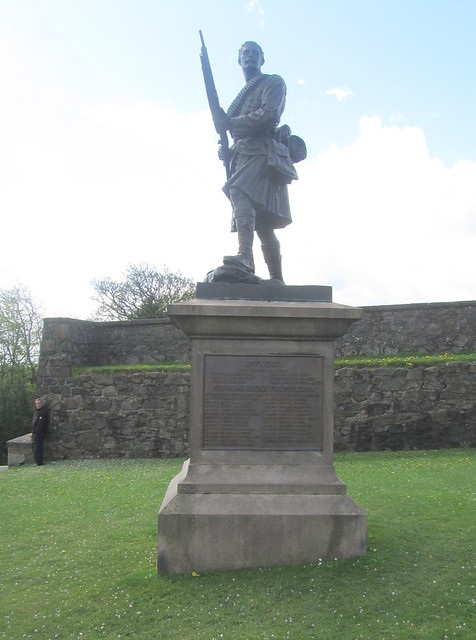
Again too there is a Memorial to the South African War (Second Boer War) dedicated to the men of the 1st Battalion (Princess Louise’s) Argyll and Sutherland Highlanders

Boer War Memorial, Stirling Castle Esplanade

The plaque here gives the names of the officers and non-commissioned officers who died:-

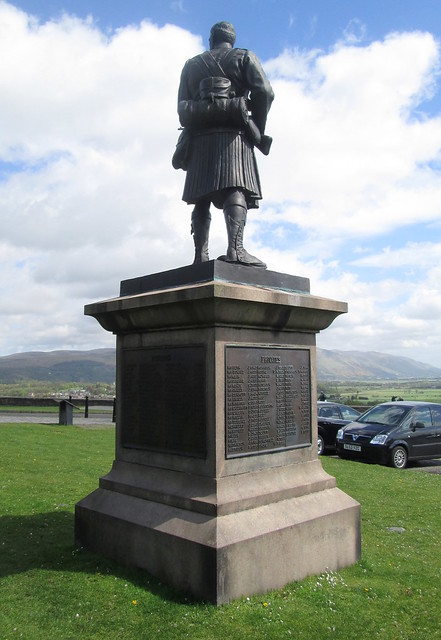
Boer War Memorial, Stirling Castle Esplanade

The plaques on these two sides give the names of the privates:-

Boer War Memorial, Stirling Castle Esplanade

Staring out towards the scene of his great victory at Bannockburn is a statue of Robert Bruce.

Statue of Bruce, Stirling Castle EsplanadeStirling Castle 6 Bruce

Another Memorial to the Scottish Horse

Further to my post about the War Memorials on Edinburgh Castle Esplanade one of which was for the men of the Scottish horse the last time I was in Dunkeld I noticed this memorial on one of the walls in the town square:-

Memorial to Scottish Horse, Dunkeld

Again it commemorates the South African War (Second Boer War.)

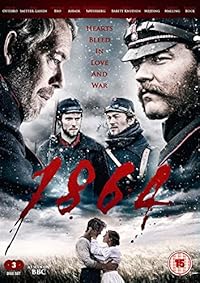
1864

 1864 cover

When this Danish TV series – the most expensive production in Danish television history – was first trailed on the BBC and I saw the blue uniforms I thought it would be about the War Between the States (known on this side of the Atlantic as the American Civil War) as the date fitted. I was immediately interested. I’ve read a lot about that conflict and watched the Jim Burns TV series several times. Looking more closely I realised that I didn’t recognise the painting shown on the trailer or the figures within it (I most likely would have for an American Civil War painting) and of course the uniforms’ details weren’t quite right.

I was therefore even more intrigued when it dawned the series was about the Second Schleswig War as that was something I knew vaguely about from History, at school. Once read, who can forget the comment the UK Prime Minister at the time, Lord Palmerston, made about the intricacies of the Schleswig-Holstein question – which in the series was uttered to that fine actress Barbara Flynn, in the person of Queen Victoria – that there were only three men who ever understood it; the Prince Consort, who was dead, a German professor who had gone mad and Palmerston himself, who had forgotten all about it?

As presented in the series, the war seems to have been provoked by Denmark in a fit of collective insanity. The programme, which has been criticised for historical inaccuracies (it would be difficult to portray any conflict televisually without some of that I’d have thought) certainly presented the Danish Prime Minister, Monrad, as an utter nutter. There seemed to be an element of hysteria in the air that prefigured the Germany of 1939. (Then again there was widespread welcome to Britain’s declaration of war in 1914, so no need to point fingers; except the UK hadn’t sought that conflict – at least not directly.)

However the dire results of the Second Schleswig War for Denmark meant that, to that country’s credit, no Danish military action outside its frontiers again took place until the NATO bombing of Kosovo in 1999.

Scenes were shown from both sides of the conflict and also the sidelines as Palmerston affected to intercede. The subtitles were no intrusion (1864 went out in the BBC 4 European detective slot on Saturdays at 9 pm.) As near as I could tell each nationality in the series spoke in its own language. (I have a smattering of German but no Danish except what I could glean from the dialogue’s similarities to German, English and, occasionally, Scots.)

For the series the necessity of introducing a human aspect to the conflict in the shape of estate manager’s daughter Inge and the two brothers Laust and Peter, with whom she has a special bond, allowed the introduction of those perennial literary concerns, love, sex and death. There was love to be sure, but not much sex – only four scenes as I recall, three of them having not much to do with love, plus another featuring boys attempting to masturbate – but enough death and destruction to slake anyone’s desires. The battle scenes were impressive – and visceral.

Overall the series was magnificent television, well worth checking out if you didn’t catch it, but I thought the elements of mysticism involving one of the soldiers from the village were unconvincing and the framing device wherein a disaffected young woman from our century sent to his house for a form of community service helps read out Inge’s memoirs to an old man (who is Inge’s grandson) was perhaps unnecessary, though it did give the sense of consequences cascading down the years and a contrast to the privations of the soldiers of 150 years earlier.

When I last looked in the BBC shop, the DVD of this was out of stock but the Blu-ray was available.

Edinburgh Castle Esplanade

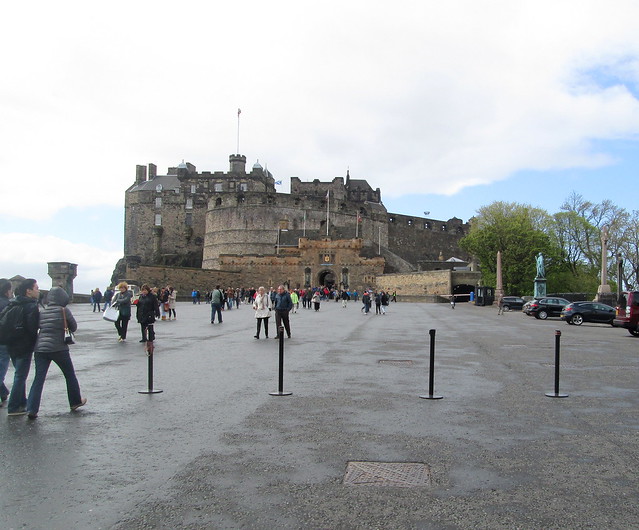
As well as the Ensign Ewart Memorial there are four other memorials to British (make that Scottish) regimental involvements in various wars. Three of them can be seen on the right and one on the left in this view of the castle from the esplanade.

Edinburgh Castle From Esplanade

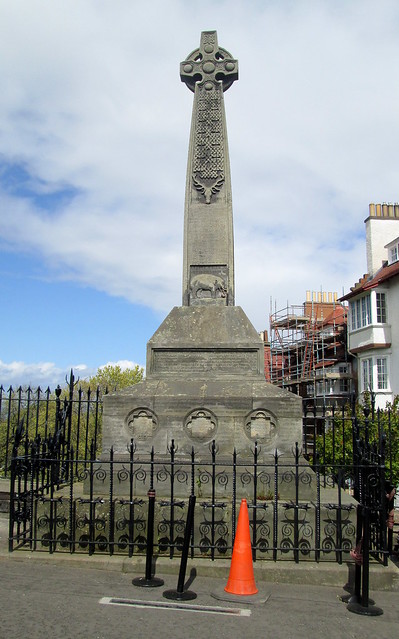
The first was erected in 1861 to the memory of the 256 men from all ranks of the 78th Highlanders (78th Regiment of Foot) who died during the Indian Mutiny. Pity about the traffic cone in the foreground!

78th Highlanders Memorial Edinburgh Castle Esplanade

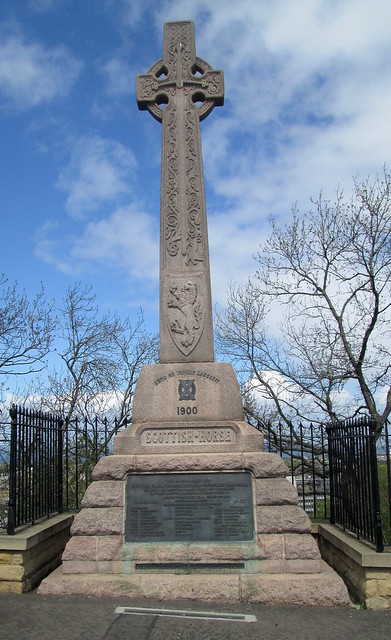
The second was erected in memory of the men of the Scottish Horse who died in the South African War (the Second Boer War.)

Memorial to Scottish Horse, Edinburgh Castle

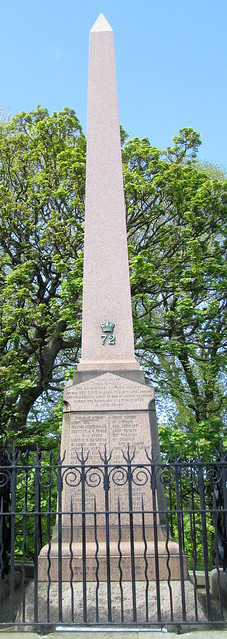
The thinnest one is to the memory to the men of the 72nd Highlanders who died in the Afghan War 1878-80. That was the Second Anglo-Afghan War. (Despite “Never Invade Afghanistan” being Harold MacMillan’s first rule of politics there have now been no fewer than four Anglo-Afghan Wars.)

72nd Highlanders Memorial, Edinburgh Castle Esplanade

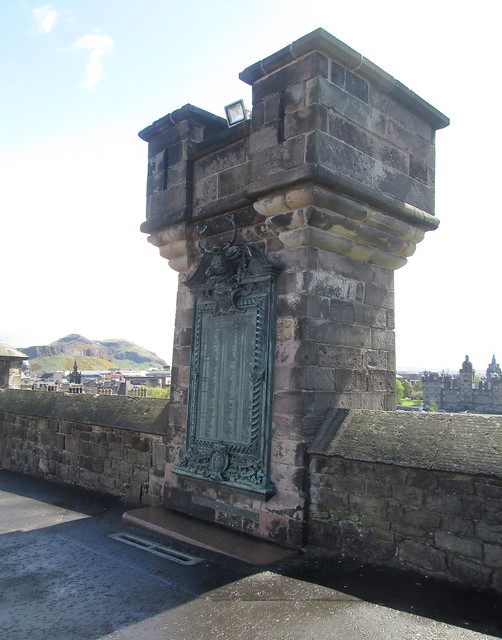
The Memorial on the south wall of the castle Esplanade is to the Gordon Highlanders who died in the Second Boer War, the South African War, 1899-1902.

Gordon Highlanders Memorial, Edinburgh Castle Esplanade

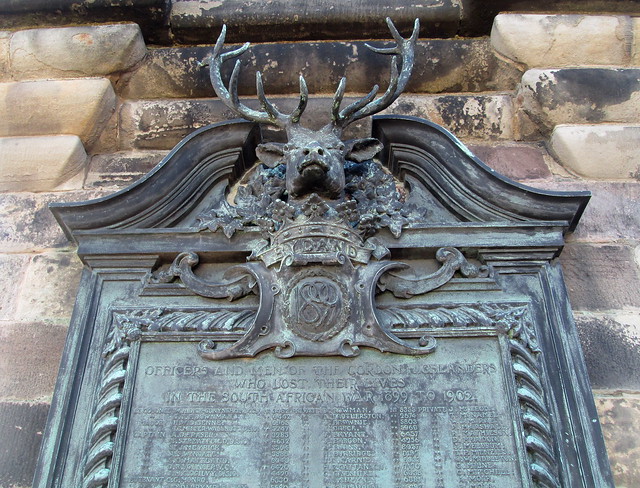
This detail shows a fine stag’s head.

Gordon Highlanders Memorial Detail

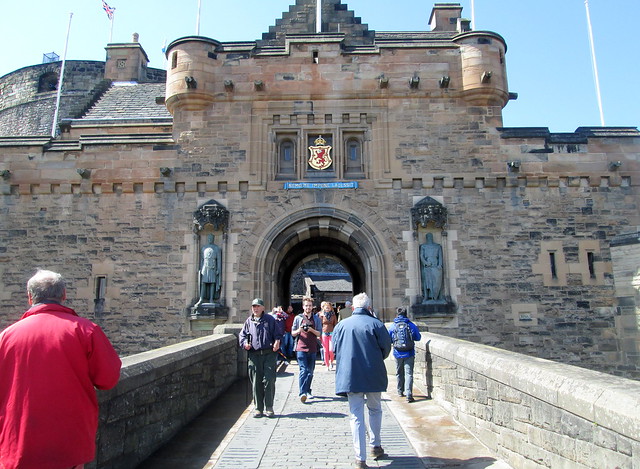
The entrance to the castle itself is flanked by statues to Scotland’s two great warrior heroes, Bruce and Wallace,and surmounted by the Royal Emblem (the Lion Rampant) and motto, Nemo Me Impune Lacessit.

Edinburgh Castle Entrance

free hit counter script