Archives » Ypres

Sanctuary Wood Cemetery (Lest We Forget)

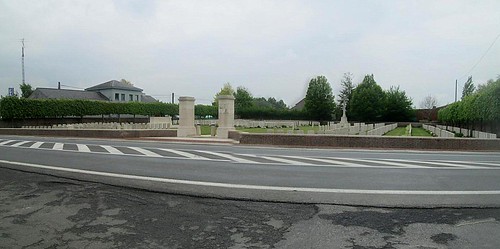
Sanctuary Wood Cemetery is one of the many Imperial (later Commonwealth) War Graves Commission cemeteries that lie in the countryside around Ypres (Ieper) in Belgium.

It lies near T’Hooghe (Hooge) off the Canadalaan (Canada Lane) itself coming off the Meenseweg (the Menin Road of dreadful memory.) Buried or commemorated in the cemetery are 1,989 Commonwealth servicemen of the First World War of whom 1,348 are unidentified. For information about the cemetery see here.

I note from the link that this cemetery is the resting place (in Plot IV. D. 14) of Captain Robert Frederick Balfour, 1st Battalion Scots Guards who died on 28th October 1914, aged 31. He was the son of Edward Balfour, of “Balbirnie,” Markinch, Fife. I live a couple of hundred yards or so from the Balfours’ former home, Balbirnie House.

Sanctuary Wood Cemetery entrance:-
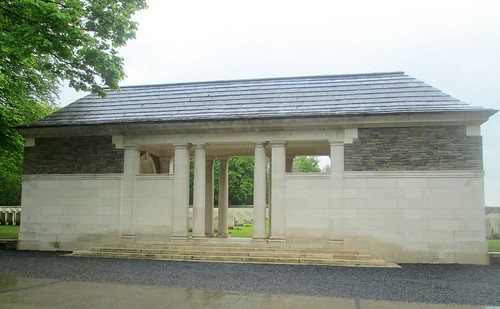
Entrance, Sanctuary Wood Cemetery, Hooge, near Ypres

Stone of Remembrance and Cross of Sacrifice from entrance:-
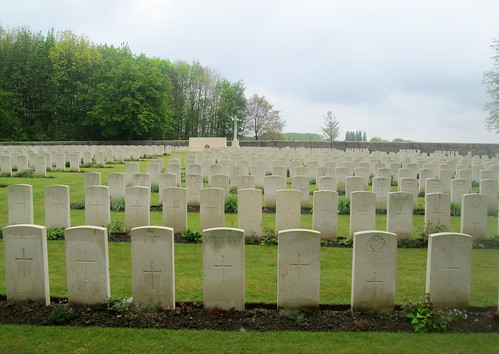
Stone of Remembrance and Cross Sacrifice, Sanctuary Wood Cemetery

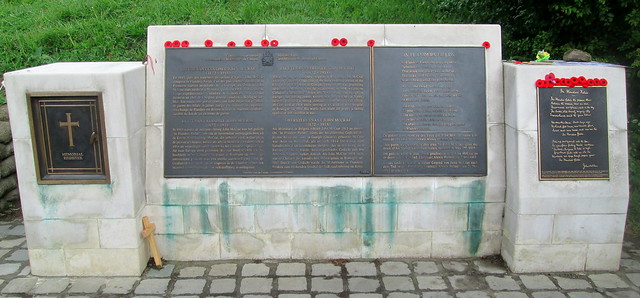
Information board:-

Information Board, Sanctuary Wood Cemetery

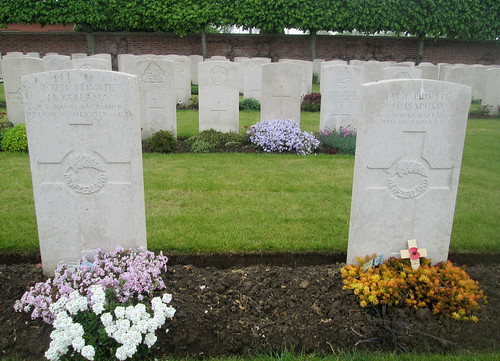
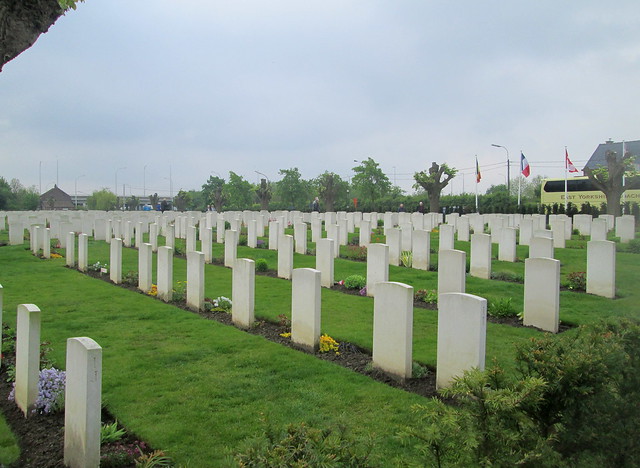
Graves:-

Graves, Sanctuary Wood Cemetery

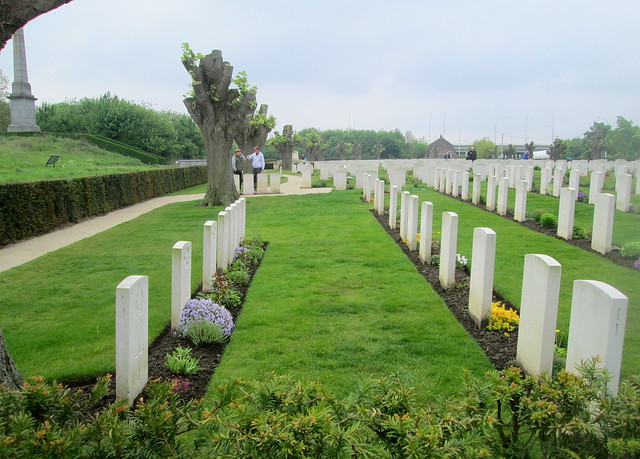
Graves from south:-

Sanctuary Wood Cemetery Graves from South

I found one German War grave in the cemetery, Flieg Hauptmann Hans Roser, F Fliegerabt 3, 25/7/1915:-
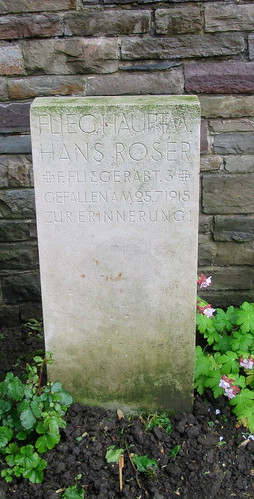
German War Grave, Sanctuary Wood Cemetery

Just outside Sanctuary Wood Cemetery there is a private memorial in memory of Keith Rae, 2nd Lieutenant, 8th Battalion the Rifle Brigade, “who died on this spot, 30/7/1915, in his 26th year.” “Also in memory of his brother officers and men who fell on the same morning and afternoon.”

No individual memorials were/are allowed inside Imperial/Commonwealth War Graves Commission cemeteries. Whatever their differences in life (not least in military rank) in death it was decided that all should be treated equally, with identical headstones. Apart from name rank, number and their regimental insignia (and a special marking in the shape of that award if the deceased had won a Victoria Cross) only an inscription chosen by the deceased’s family and situated to the bottom of the headstone distinguishes one from another.

I presume this memorial was allowed by the Belgian authorities since it lies beyond Sanctuary Wood Cemetery’s boundaries:-

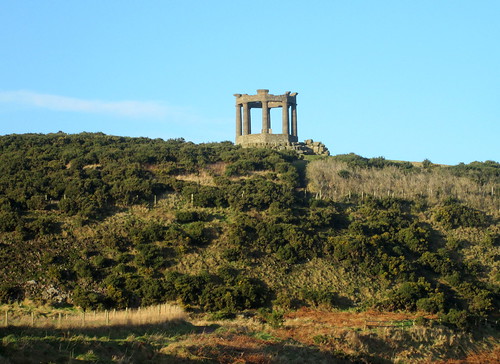
Private Memorial Outside Sanctuary Wood Cemetery

War Graves

I was sad to hear on the news today and read in the Guardian that the Imperial War Graves Commission* failed to ensure that African or Indian servicemen of the Empire in the Great War were accorded the same treatment in death as those from the UK and the Dominions.

I can’t say however that I was very surprised – a clue is in the name: Imperial War Graves Commission.

It’s no excuse for the behaviour of those in charge but the times were different and the attitudes of the powers that were were very unenlightened compared to those that I hope would apply now.

Again, there’s no excuse but it may have been a non-Western Front ruling. There are certainly individual graves of Maori soldiers at Birr Cross Roads Cemetery near Ypres. But New Zealand was of course a Dominion not a colony. (I also remember seeing somewhere a headstone for a Chinese member of the Labour Battalion but not which cemetery his grave was in.)

There are of course collective memorials to Nepalese and Indian soldiers at the Menin Gate as well as names of individual Burmese and Indian soldiers on the building itself.

However, it was and is deplorable that non-white servicemen were at any time not accorded the respect that was – and still is – their due.

*The name was later changed to the Commonwealth War Graves Commission

Stonehaven and Dunnottar War Memorial (i)

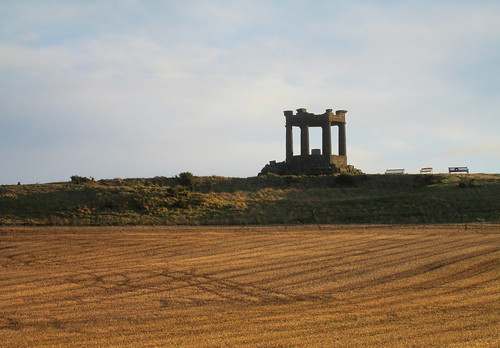
Stonehaven War Memorial sits prominently on Black Hill to the south of the town and is also visible from Dunnottar Castle. The winding path from the castle takes you towards Stonehaven and partly up Black Hill from where you can access the Memorial grounds.

View of Memorial from path leading from Dunnittar Castle:-

Stonehaven War Memorial from South

Stonehaven from Stonehaven War Memorial:-

Stonehaven from Stonehaven War Memorial

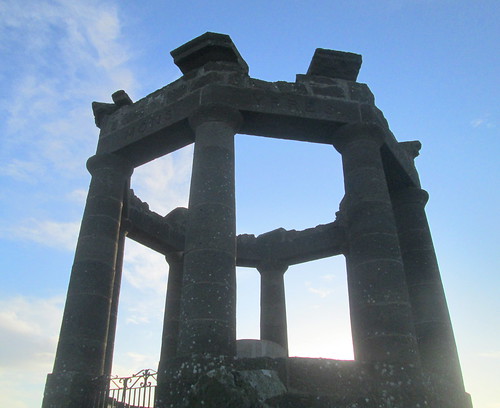
Memorial from west as seen from the road back to Dunnottar Castle:-

Stonehaven War Memorial from West

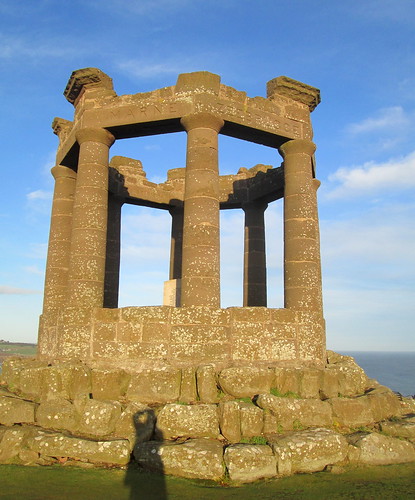
An information board says the memorial was deliberately designed to look like a ruin to symbolise the lives cut short by the Great War:-

Information Board, Stonehaven War Memorial

Stonehaven War Memorial from north:-

War Memorial, Stonehaven

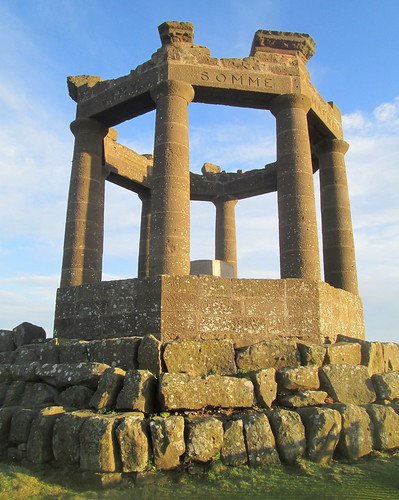
The external lintels are inscribed with the names of Great War battles, here Jutland, Mons, Ypres:-
Stonehaven War Memorial

From south, Zeebrugge, Gallipoli, Jutland:-

War Memorial, Stonehaven

From southwest, Marne, Zeebrugge:-

Stonehaven War Memorial

From west, Vimy, Somme, Marne:-

War Memorial, Stonehaven

From northwest, Mons, Ypres:-
War Memorial Stonehaven

Rye, East Sussex

Rye has a long history. It was once a seaport but the sea has long retreated/silted up.

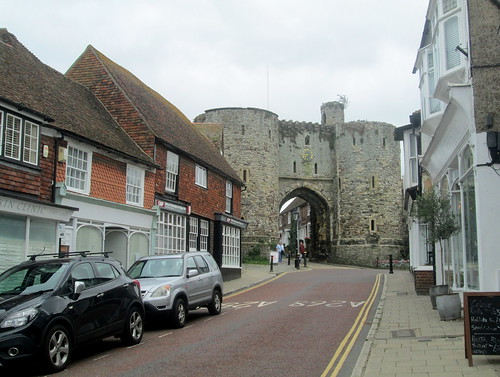
The older part of the town lies on a hill above the coastal plain. One of the approaches still retains the ancient Landgate:-
Landgate, Rye

Closer view:-
Rye Gates, East Sussex

View down towards gate from higher up the hill:-

The Landgate, Rye, East Sussex

Another very old building is the Ypres Tower/Rye Castle which now houses a museum. The tower has nothing to do with the Belgian town of the same name. It once belonged to a cloth merchant, Jean d’Ypres, and the name has stuck.

Ypres Tower, Rye, East Sussex

Ypres Tower, Rye

Ypres Tower, Rye, East Sussex

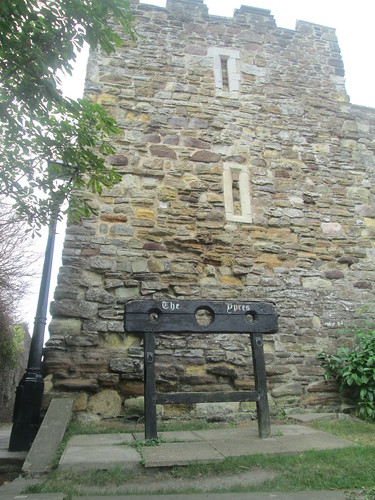
There is an old pair of stocks still standing just outside the east end of the Tower:-

Ypres Tower , (stocks), Rye, East Sussex

Hellfire Corner, Menin Road, Ypres

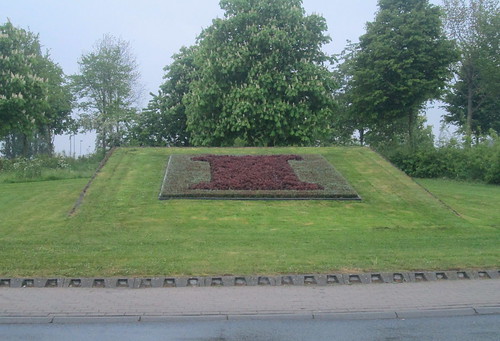
Just down the Menin Road from Birr Cross Roads Cemetery lies what was once the most dangerous place on Earth. The Great War’s Hellfire Corner is now the site of a roundabout on the outskirts of Ypres.

Hellfire Corner, Ypres, From East

Hellfire Corner From North

Hellfire Corner From South

Hellfire Corner From West

Like most of the countryside around Ypres it’s relatively peaceful now (apart from traffic) but during the Great War the corner was a cross-roads over which troops going up to the front line of the Menin Road had to pass, running the gauntlet of German artillery zeroed-in on the site.

I found these videos online showing the canvas screens erected to obscure the view of the German observers as well as how the corner looks today:-

The voice-over artist on this one pronounces Hooge (Hooghe) as “Hooj”. I’m sure it’s really “Hoo-gih”:-

Birr Cross Roads Cemetery, Belgium

Birr Cross Roads Cemetery lies on the Menin Road just east of Ypres/Ieper. One of the many Commonwealth War Graves cemeteries surrounding the city.

The cemetery contains 834 burials, 330 of whom are unidentified casualties. There are 504 identified casualties; from the United Kingdom (375,) Australia (115,) New Zealand (9,) Canada (4) and one Belgian.

From Menin Road. Cross of Sacrifice to right of centre, Stone of Remembrance to left of gates:-

Birr Cross Roads Cemetery from Menin Road

Soldiers of the Great War:-

Graves, Birr Cross Roads Cemetery,

The Belgian grave is of an interpreter to the British Army. It is inscribed, “A la Memoire de De Wattine Camille, L E, Sergent de l’Armee Belge, interprete a l’Armee Britannique. Mort pour la Belgique, la 29 Septembre 1918.” (In memory of De Wattine Camille, L E, Sergeant, Belgian Army, interpreter to the British Army. Died for Belgium, 29/9/1918):-

Grave of an Interpreter, Birr Cross Roads Cemetery, Near Ypres

The nine New Zealanders there include five soldiers from the Maori Battalion.

Corporal W M Karena, New Zealand Maori Battalion, 30/11/1917 and Private H Kanaru, New Zealand Maori Battalion, 30/11/1917:-

Maori Graves, Birr Cross Roads Cemetery, Belgium

Private H R Kereama, New Zealand Maori Battalion, 7/12/1917, aged 26 and Private M Hapuku, New Zealand Maori Battalion, 30/11/1917:-

More Maori Graves, Birr Cross Roads Cemetery

Private H M Power, New Zealand Maori Battalion, 7/12/1917, aged 22:-

New Zealand Maori Battalion Grave, Birr Cross Roads Cemetery, near Ypres

Girvan War Memorial

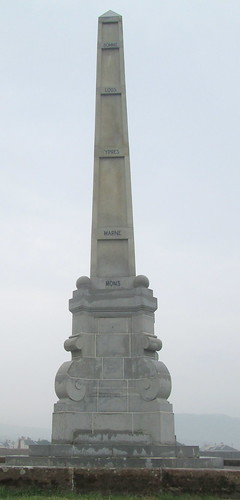
A tapering stone obelisk on a square plinth, this War Memorial stands on an expanse of grass by the side of the Firth of Clyde on the south approach to the town. This east facing side of the obelisk is inscribed Maubeuge, 1918, Cambrai, Flanders 1917, Arras.

Girvan War Memorial

North face. Column inscribed Somme, Loos, Ypres, Marne, Mons:-

Girvan War Memorial North Face

West (sea facing) aspect. Pedestal inscribed with the names of the naval actions at Zeebrugge, Jutland, Falkland, Coronel, Heligoland:-

Girvan War Memorial Sea Facing Aspect

South face. Inscribed for campaigns outside Europe: Palestine, Salonica, Mesopotamia, Gallipoli, Africa:-

Girvan War Memorial South Face

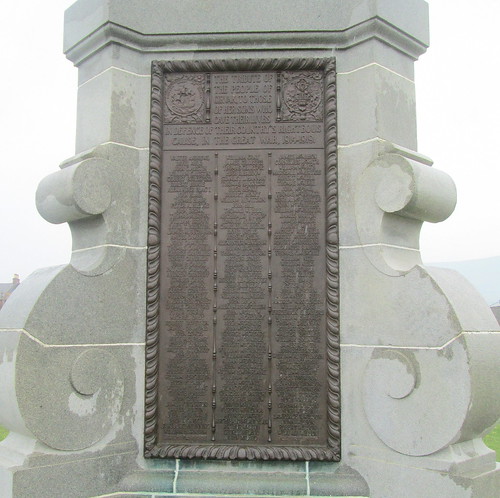
Great War plaque, “The tribute of the poeple of Girvan to those of her sons who gave their lives in defence of their country’s righteous cause in the Great War, 1914 – 1919”

Girvan War Memorial Great War  Plaque

World War 2 plaque, “The tribute of the people of Girvan to those of her sons who gave their lives in defence of their country’s righteous cause in the World-War 1939 – 1945.” Three additional names below:-

Girvan War Memorial, World War 2 Plaque

Gordon Highlanders Memorial, Peterhead

On Kirk Street, Peterhead.

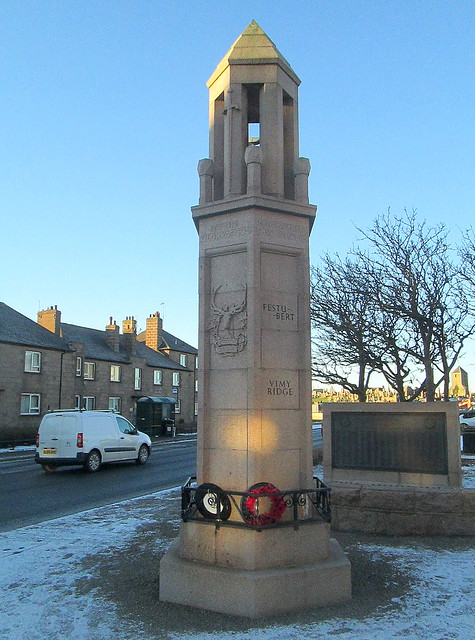
A hexagonal column surmounted by pillars, with a pyramidal apex.

From north. Inscribed with the Gordon Highlanders Insignia and the names Festubert and Vimy Ridge. Great War Roll of Honour behind.

Gordon Highlanders Memorial, Peterhead

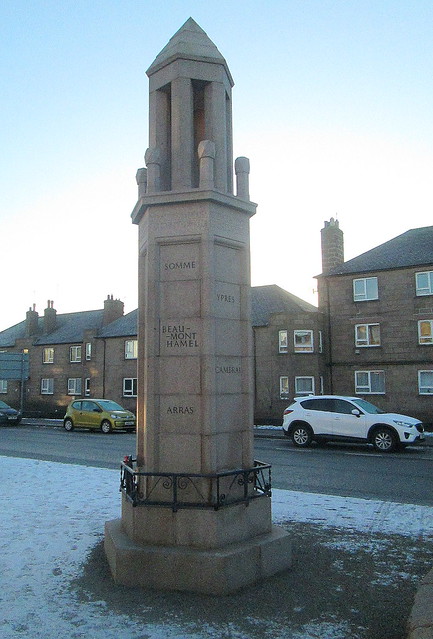
From west. Inscribed Somme, Beaumont-Hamel, Arras, Ypres, Cambrai:-

Peterhead, Gordon Highlanders Memorial

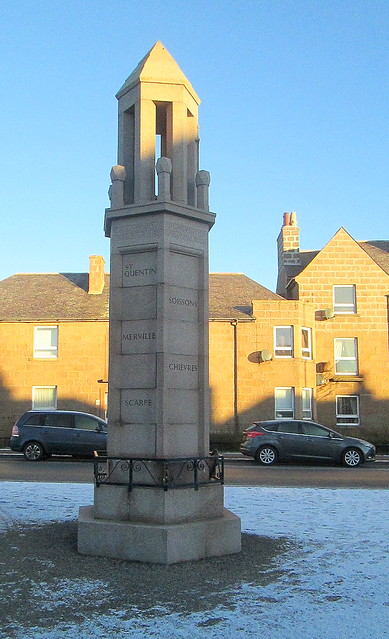
From east. Inscribed St Quentin, Merville, Scarpe, Soissons, Chievres:-

Gordon Highlanders Memorial, Peterhead from East

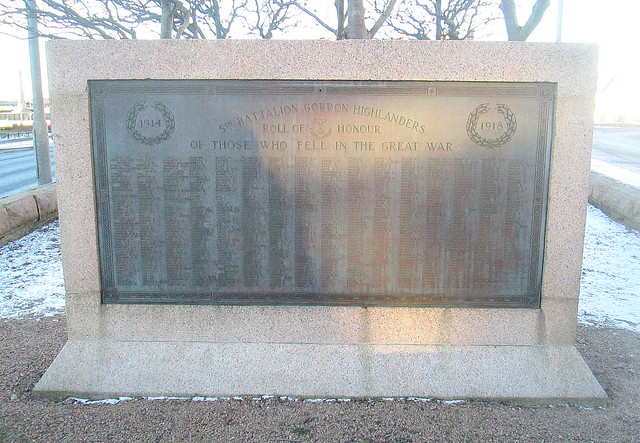
5th Battalion Gordon Highlanders Great War Roll of Honour, by side of Gordon Highlanders Memorial, Kirk Street, Peterhead:-

5th Battalion Gordon Highlanders Great War Roll of Honour, Peterhead

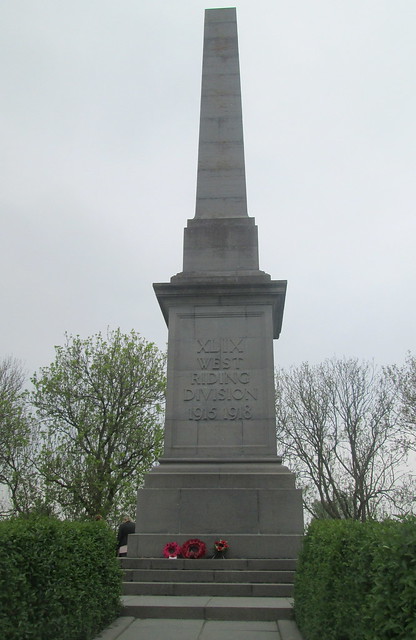
Yorkshire Memorial, Essex Farm Cemetery, Ypres, Flanders

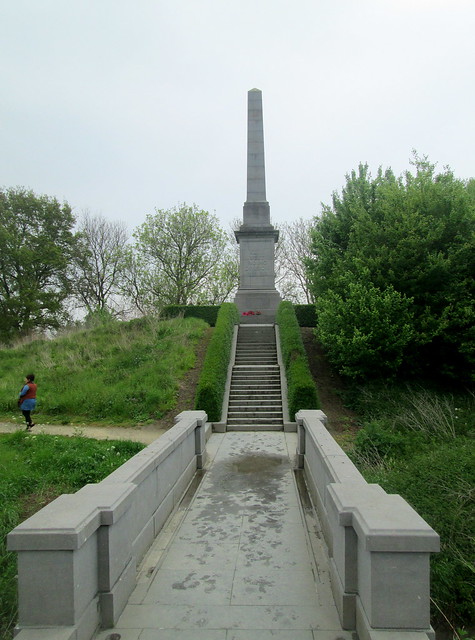
Yorkshire Memorial from Essex Farm Cemetery. The memorial overlooks the Ypres-Yser canal:-

Yorkshire Memorial, Essex Farm Cemetery, Ypres

Closer View. Inscription reads “XLIX West Riding Division 1915 1918.”

Yorkshire Memorial Essex Farm Cemetery Closer View

Dedication, “To the memory of all ranks of the 49th West Riding Division who gave their lives for King and Country in the Great War 1914 1918.”

Dedication,Yorkshire Memorial, Essex Farm Cemetery

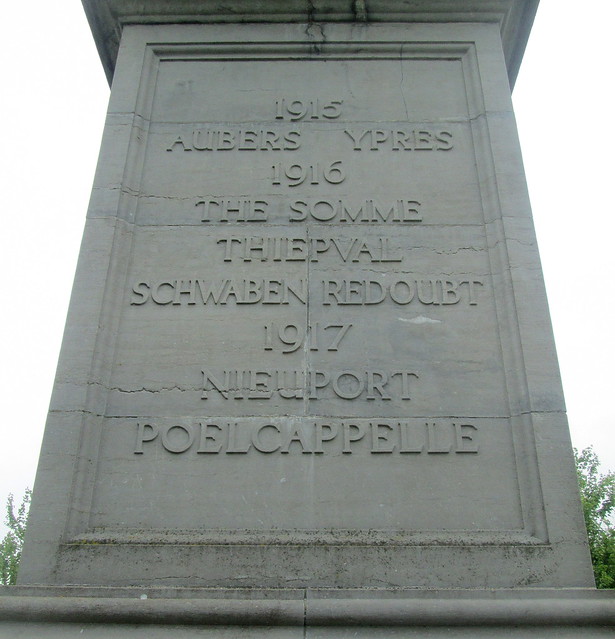
1915, 1916 and 1917 Battle Honours:-

Yorkshire Memorial, Essex Farm Cemetery, 1915, 1916 and 1917 Battle Honours

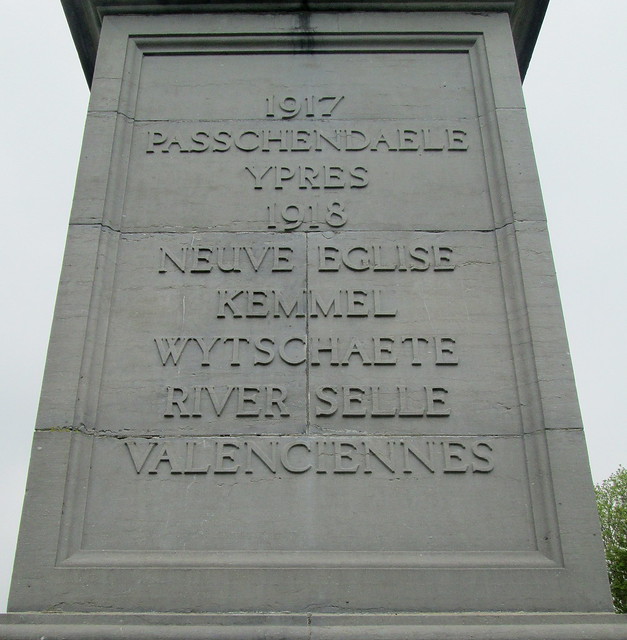
1917 1918 Battle Honours:-

Yorkshire Memorial, Essex Farm Cemetery 1917 1918 Battle Honours

Essex Farm Cemetery, Ypres (Ieper,) Flanders

Essex Farm Cemetery is located on the banks of the Ypres-Yser canal by the site of the Advanced Dressing Station where Lt Col John McCrae was serving as a medical officer when he wrote his famous poem “In Flanders Fields.” I have blogged about him previously in connection with the McCrae Memorial at Eilean Donan Castle in Lochalsh, Scotland.

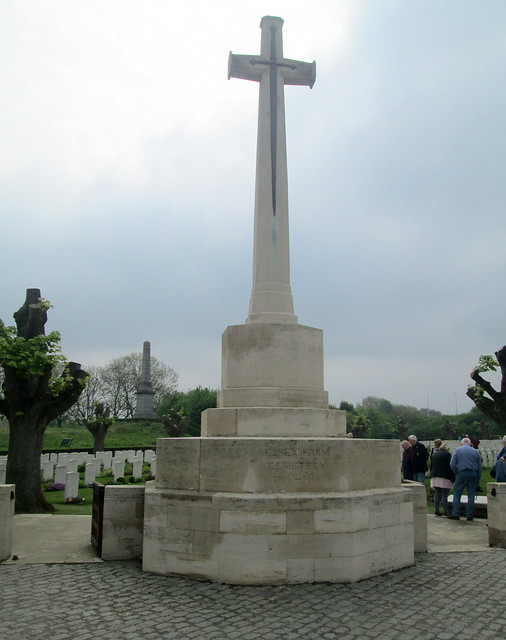
The cemetery contains more than 1,000 graves. Unusually for a Commonwealth War Graves Cemetery its Cross of Sacrifice is located right at the entrance:-

Essex Farm Cemetery Ypres, Cross of Sacrifice

Graves from northwest:-

Graves at Essex Farm Cemetery, Ypres

From southeast. Note Yorkshire Memorial on the canal bank:-

More Graves at Essex Farm Cemetery, Ypres

From northeast:-

Essex Farm Cemetery, Ypres, Graves

From south. Again note Yorkshire Memorial (which I shall come back to):-

Graves at Essex Farm Cemetery, Ypres

Graves from Yorkshire Memorial:-

View of Essex Farm Cemetery, Ypres

Graves from north, Yorkshire Memorial to left:-
Graves at Essex Farm Cemetery, Ypres

A tree trunk has grown round the gravestone of Private J MacPherson, Seaforth Highlanders, who died on 5/7/1917, aged 33:-

Commonwealth War Grave, Essex Farm Cemetery, Ypres

Symbolic of the fact they fought and died over the same ground the cemetery holds a German grave, Franz Heger, RIR, 238, 7/8/1916:-

German Grave, Essex Farm Cemetery, Ypres

Grave of Rifleman V J Strudwick, The Rifle Brigade, 14/1/1916, aged 15, said to be the youngest British Empire casualty of the Great War. (There may be some doubt about this.) It is nevertheless a focus for remembrance:-

Youngest Casualty, Essex Farm Cemetery, Ypres

John McCrae Commemoration stone. Written in four languages, French, Flemish, English and German, with the poem itself also inscribed on the memorial along with a facsimile of the handwritten manuscript:-

John McCrae Commemoration, Essex Farm Cemetery, Ypres

The bunkers at Essex Farm Cemetery where John McCrae worked as a medic:-

Bunkers at  Essex Farm Cemetery, Ypres

Bunker interior:-

Interior of Bunker at Essex Farm Cemetery, Ypres

Another bunker interior:-

Another Bunker at Essex Farm Cemetery, Ypres

Bunkers, looking back up to Essex Farm Cemetery grounds:-

Bunkers at Essex Farm Cemetery, Ypres

Information board with a photograph of how the bunkers appeared during the war:-

Information Board Essex Farm Cemetery, Ypres

Lest We Forget:-

In Flanders fields the poppies blow
Between the crosses, row on row,
That mark our place; and in the sky
The larks, still bravely singing, fly
Scarce heard amid the guns below.

We are the Dead. Short days ago
We lived, felt dawn, saw sunset glow,
Loved and were loved, and now we lie
In Flanders fields.

Take up our quarrel with the foe:
To you from failing hands we throw
The torch; be yours to hold it high.
If ye break faith with us who die
We shall not sleep, though poppies grow
In Flanders fields.

free hit counter script