Archives » WW 2

The Amazing Adventures of Kavalier and Clay by Michael Chabon

Fourth Estate, 2001, 646 p, plus iii p Author’s Note.
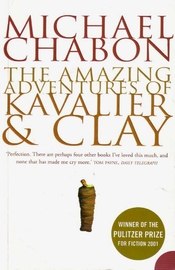
The Amazing Adventures of Kavalier and Clay cover

I was immediately struck by this book’s opening sentence, “In later years, holding forth to an interviewer or to an audience of fans at a comic book convention …. Sam Clay liked to declare … that back when he was a boy … that he had been haunted by dreams of Harry Houdini.” In its essential form this has similarities to the first sentence of Gabriel García Márquez’s One Hundred Years of Solitude, “Many years later, as he faced the firing squad, Colonel Aureliano Buendía was to remember that distant afternoon when his father took him to discover ice.” Not a bad model to aspire to. Chabon’s opening sentence is, however, less stark, more elaborate than Marquez’s, being replete with subclauses and apparent asides. In this it is at one with many of the ones that follow, exquisite, information packed, beautifully constructed sentences unfolding over several lines yet seeming almost effortless, not a word out of place nor too much. Yet other sentences are admirably short. This is a book that has some very good writing indeed. At the same time it is also a compelling story. And it has occasional footnotes. What’s not to like?

The Kavalier and Clay of the title are respectively Joe and Sammy, cousins, both artists, who invent a comic book hero known as The Escapist, inspired by Kavalier’s training as an escapologist in Prague in the 1930s. They meet when Joe Kavalier turns up at the Klayman household in New York after his fraught journey from Czechoslovakia (via Lithuania and Japan) the setting up of which required almost all the money his family could scrape together to save at least one of their number. There are echoes of Márquez’s magical realism in Joe’s escape from Nazi occupation; inside a coffin which also contains the (disguised) Golem of Prague. The Escapist character is a great success – punching Hitler on the nose and otherwise bashing Nazis speaking to a latent emotion – as are other creations of theirs such as Luna Moth, riding the boom in comic books of the time. Despite exploitation by their publisher (the standard contract handed over the rights to their characters) they still manage to make a fair bit of money. Joe is continually worried about his family in Prague and his cash mostly goes to finding out their well-being or otherwise and to bringing his younger brother Thomas and other Jewish children to the US. In amongst details of their personal lives – Joe’s affair with Rosa Luxemburg Sax and Sammy’s incipient homosexuality laying the ground for later developments – Chabon also delivers to us a history of the comic book.

Given my interest in Art Deco and Moderne architecture I was particularly delighted by the scene set in the abandoned remains of “that outburst of gaudy hopefulness”, the New York World’s Fair 1939-40.

In a sentence that has striking echoes for the world in which I was reading the book Chabon says, “One of the sturdiest precepts of the human delusion is that every golden age is either in the past or the offing.” Arguably the real delusion is that there ever was, or will be, a golden age.

The shadow of the wider world never lifts from Joe, even if on joining up on the final entry of the US into World War 2 the navy sends him to the Antarctic rather than to kill Germans. A novel of folk caught up in “interesting times” may be a shortcut to wider significance but, “The true magic of this broken world lay in the ability of the things it contained to vanish, to become so thoroughly lost, that they might never have existed at all,” is as true of more settled eras. And the events in Europe and elsewhere are backdrop to the human stories here. For all that, as well as a story of love and loss, tragedy and redemption (or a kind of catharsis,) at its heart The Amazing Adventures of Kavalier and Clay is a pæan to the comic book. And Chabon has made art out of its history.

Pedant’s corner:- the local Gestapo bureau (this was on the border between Poland and Lithuania, hence before the German invasion of Poland; so no Gestapo. Even if after the German invasion the border would have been between the Soviet controlled area of Poland and Lithuania so still no Gestapo,) beltoids (deltoids?) from which dangle … an array (an array dangles,) Longchamps’ (Longchamps’s,) “a Brooklyn Dodgers football game” (the Brooklyn Dodgers were a baseball team; still are, though they moved to LA,) lists of dramatis personae (dramatis personae plural would be dramatum personae,) “there were a fair number of moths” (x 2, there was a fair number,) aetataureate (an invention by Chabon meaning “of the golden age”,) missing start quote on a piece of dialogue at a chapter start (probably the publisher’s house-style, but annoying just the same,) a number of orders were issued (a number was issued,) maw (for an entrance. A maw is a stomach,) “‘Oh much more than see him’” (seen him makes more sense,) chile con carne (not spelled chile.)
Abernethy

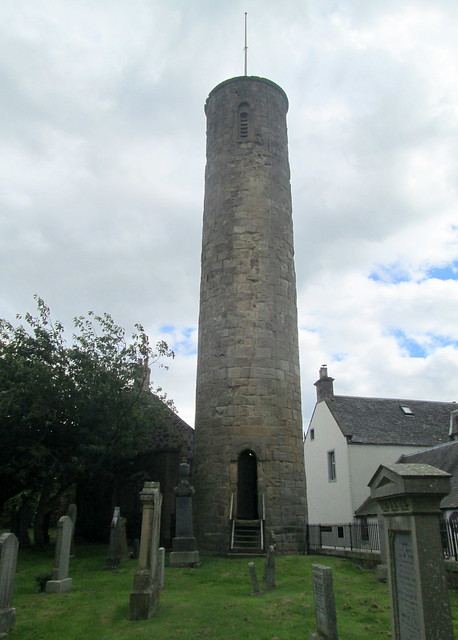
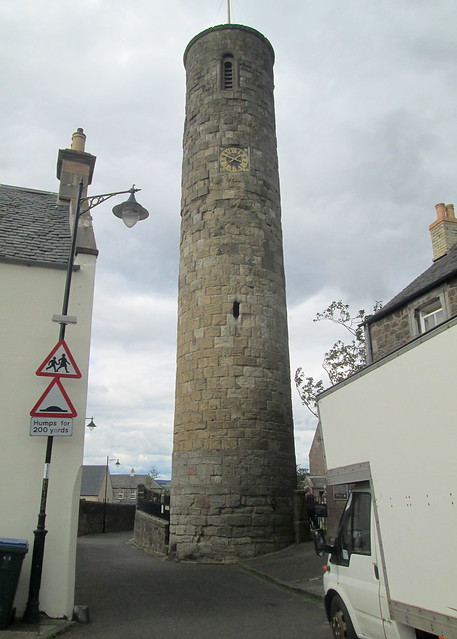
Abernethy is a village in Perth and Kinross. It contains one of only two intact Pictish towers left in Scotland. (The other is in Brechin.)

Tower from street:-

Abernethy  Round Tower 1

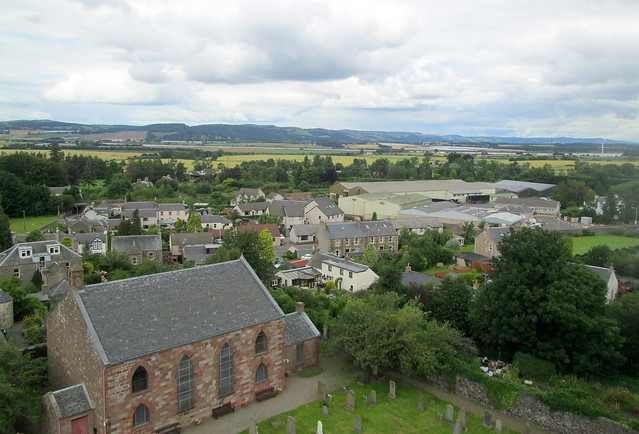
A view from the tower. Graveyard just below:-
Part of Abernethy From Tower

Tower from graveyard:-

Abernethy  Round Tower

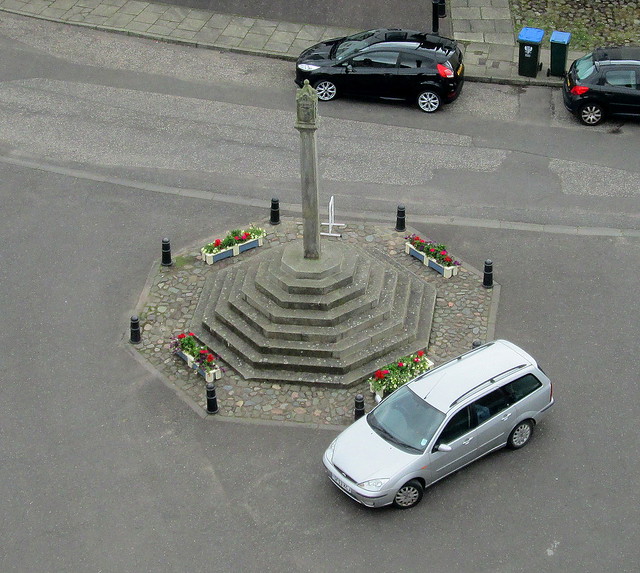
War Memorial from Tower:-
Abernethy  War Memorial

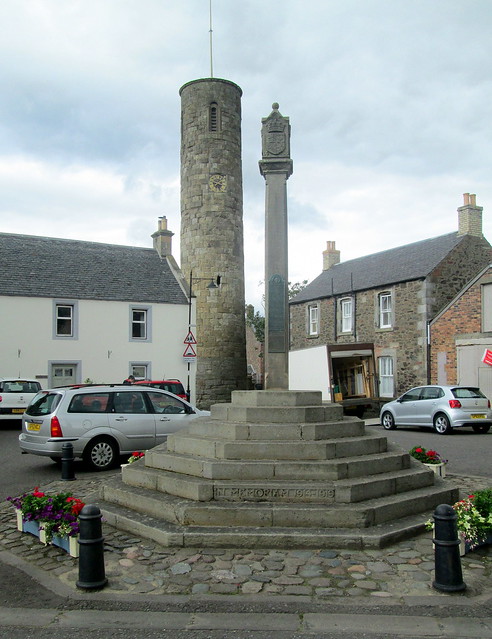
War Memorial from ground level:-
Abernethy War Memorial

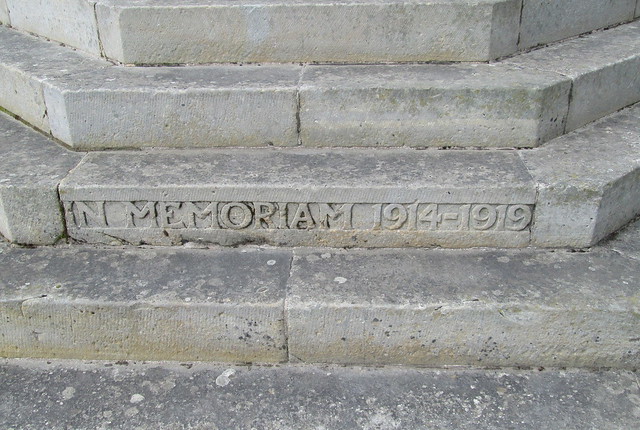
Original inscription carved into plinth:-

Abernethy War Memorial WW 1.

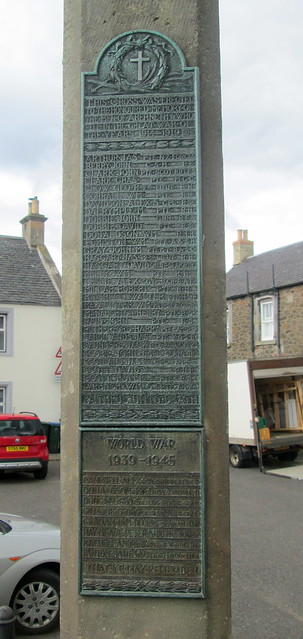
War memorial names. Great War names above, 1939-45 below:-

War Memorial Names

Gloucester War Memorial

Gloucester is only 12 miles on from Cheltenham so we carried on to there the same afternoon.

We chanced upon Gloucester War Memorial and managed to get parked nearby.

I like the restraint of this one and the fact it’s at the edge of a piece of parkland. Unfortunately the road is quite busy, though; but at least that means lots of passers-by will see the memorial.

The cenotaph-like stone is surmounted by a lion and is inscribed to the men of the Gloucestershire Regiment.

Gloucestershire Regiment War Memorial

The long low, curving wall with the central gap is dedicated to the men of Gloucester. Both top lines of names are for the Great War and the lower lines are for the Second.

Gloucester War Memorial

Morecambe War Memorials

On our recent trip down south we stopped off at Morecambe again. This time we stayed the night so I was able to take quite a few photos.

The War Memorial there has an imposing position overlooking the sea. The lion surmounting the plinth is a good touch.

This is the west side, commemorating WW 1.

Morecambe War Memorial west side

There are more names on the north and south sides.

The east side commemorates WW 2.

Morecambe War Memorial east side

You can glimpse part of the Midland Hotel in the background in this angle.

Just to the east of the main memorial there is a small garden area containing a memorial of the Burma Star Association.

Burma Star Memorial, Morecambe 1

The other side of this shows a stone poppy encircling a star.

Burma Star Memorial, Morecambe 2

I assumed the local regiments had been posted to Burma and the Burma Star Association website confirms Lancashire regiments were indeed involved there.

Dundee Law War Memorial

The most prominent feature of Dundee Law is the War Memorial erected there.

The east side commemorates the men of Dundee who died in the First World War.

War Memorial on Dundee Law from east

The west side commemorates the Second World War dead.

War Memorial on Dundee Law from west

The door must allow access to the inside. Apparently the device at the top is a lantern of remembrance which is lit on four occasions through the year:
25th September; in memory of the Battle of Loos,
24 October; United Nations Day,
11 November; Armistice Day
and Remembrance Sunday.

This is the view of the Memorial from just in front of the radio/mobile phone mast which also sits on the summit. You can see the rail bridge across the Tay in the background to the right here.

War Memorial on Dundee Law

Cameronians Memorial, Glasgow

In the gardens surrounding the Kelvingrove Art Gallery and Museum, inside a hedged enclosure just behind where I took the picture in the post linked to above there is a memorial to the Cameronians Regiment, also known as the Scottish Rifles, which has a long association with Glasgow.

The statuary is not, like some, a mawkish example of the form, representing as it does members of the regiment in action during the Great War. Indeed it is unusual in that it seems to depict one of the fallen – which such memorials tend to shy away from.


Front view


Side view


Wording on plinth

Dunoon (Dùn Omhain)

After Inveraray it was off round the headwaters of Loch Fyne. Hooking left at Strachur we went down the Cowal Peninsula. This took us along the shores of the stunning fresh water Loch Eck. The road runs along the (north) east side. In the late afternoon the water looked black in places, reflecting the hills on the other side like a mirror. A beautiful spot for a canoeing or fishing holiday if you’re into those.

Scotland is well served for lochs such as these; usually with steep sides. To my mind fresh water lochs are so much more scenic than sea lochs as they do not have margins scabbed by brown seaweed.

Destination was Dunoon.

I’d only ever visited Dunoon by ferry boat/paddle steamer before – probably en route to Rothesay on a “Doon The Watter” trip and I don’t remember actually setting foot in it.

Its heyday is obviously long past. The main street was shabby and a bit forlorn and the pavements up the town were festooned with weeds.

The Cowal peninsula was the territory of Clan Lamont. In our wanderings we found a memorial to the Lamont dead of the Civil Wars of the 1640s. (Wiki has this titled as The English Civil War but it was way more complicated than that with various shifting alliances involving the whole of the British Isles.)

Lamont Memorial, Dunoon, Argyllshire.

The plaque with the names was a bit corroded so they are difficult to pick out.

.

Down by the seafront just across from the ferry terminal at the pier there is a memorial to the Great War and World War 2 containing names of all those from the peninsula who died. As I recall, it (unusually) gave the names of nurses. Once again (as was also true at Inveraray) vastly more names for the Great War than the later one.

Cowall War Memorial, Dunoon

Round the coast, at Sandbank, there was another, this time dedicated to the more local dead of Sandbank and Ardnadam.

Sandbank and Ardnadam War Memorial

In days gone by, in the background to this memorial, you would have been able to see swathes of US Navy ships, or at least the anchorages they used, for this is Holy Loch which housed (harboured?) a Polaris missile submarine base. Note this is within twenty-five or so miles as the crow flies from Glasgow. Would such a thing ever have been allowed that short distance from London if the requisite deep water had been as close to it?*

*Edited to add:- Britain’s nuclear submarine fleet is based even closer to Glasgow; at Faslane in Gare Loch (the Gareloch as it’s known locally.)

free hit counter script