Archives » World War1

Royal Engineers Memorial, Railway Wood, Ypres

From the Menin Road we could see just on the ridge of a hill a Commonwealth War Graves Cross of Sacrifice. A signpost pointed up a very minor road to RE Memorial Railway Wood. We had to make the last bit on foot – past several Remembrance Trees. The line had shifted up a bit from the Menin Road by 1915.

It was now such a peaceful setting with cows grazing hard by the memorial:-

Royal Engineers Grave, Railway Wood, Ypres

Royal Engineers Memorial, Railway Wood, Ypres:-

Royal Engineers Grave, Railway Wood, Ypres, From Access Road

Unless there are at least forty graves a Commonwealth War Cemetery will not have a Cross of Sacrifice. This memorial commemorates only twelve men but the graves are not individually marked, hence the cross.

Royal Engineers Memorial, Railway Wood, Ypres, from Entrance:-

Royal Engineers Grave, Railway Wood, Ypres, From Entrance

Royal Engineers Memorial, Railway Wood, Inscription 1, 177th Tunnelling Company, Royal Engineers:-

Royal Engineers Grave, Railway Wood, Inscription 1

Royal Engineers Memorial, Railway Wood, Inscription 2, six names:-

Royal Engineers Grave, Railway Wood, Inscription 2

Royal Engineers Memorial, Railway Wood, Inscription 3, a further six names:-
Royal Engineers Grave, Railway Wood, Inscription 3

View Towards Ypres from Royal Engineers Memorial, Railway Wood:-

Royal Engineers Memorial, Railway Wood, View Towards Ypres

Crater, Railway Wood, Ypres, Royal Engineers Memorial in background:-

Crater, Railway Wood, Ypres

Morecambe War Memorials

On our recent trip down south we stopped off at Morecambe again. This time we stayed the night so I was able to take quite a few photos.

The War Memorial there has an imposing position overlooking the sea. The lion surmounting the plinth is a good touch.

This is the west side, commemorating WW 1.

Morecambe War Memorial west side

There are more names on the north and south sides.

The east side commemorates WW 2.

Morecambe War Memorial east side

You can glimpse part of the Midland Hotel in the background in this angle.

Just to the east of the main memorial there is a small garden area containing a memorial of the Burma Star Association.

Burma Star Memorial, Morecambe 1

The other side of this shows a stone poppy encircling a star.

Burma Star Memorial, Morecambe 2

I assumed the local regiments had been posted to Burma and the Burma Star Association website confirms Lancashire regiments were indeed involved there.

Not The Old Vicarage, Grantchester.

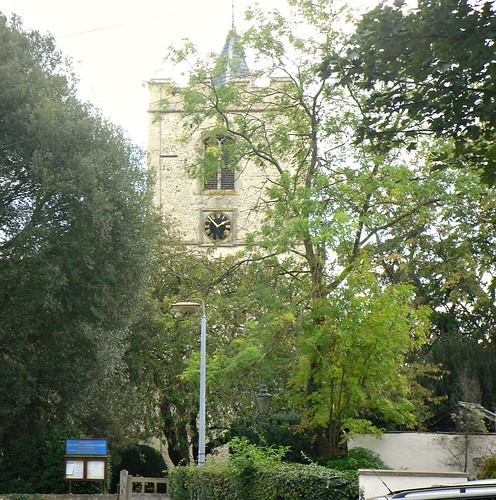
After Newmarket we headed just south-east of Cambridge to the not very well sign-posted village of Grantchester.

“Stands the church clock at ten to three?
And is there honey still for tea?”

As you can see from the church clock in the photo below we arrived an hour too early.

Grantchester Church Clock At Ten To Two.

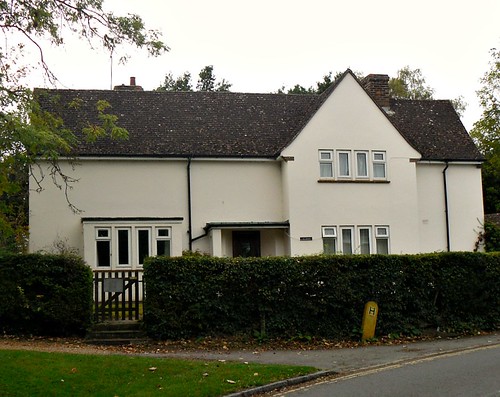
I looked for the Old Vicarage but even though there was a Vicarage Lane the houses’ identities were being closely guarded. Jeffrey Archer (yes, Jeffrey Archer) bought the Old Vicarage in the 1980s. If he still lives there perhaps it’s a blessing I didn’t find it.

I did find a new(er) vicarage right beside the church. Hardly iconic.

New? Vicarage..

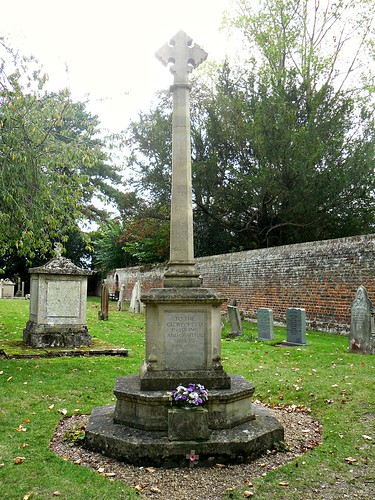
I was, however, delighted to see the War Memorial in the churchyard of St Andrew and St Mary.

War Memorial, Grantchester.

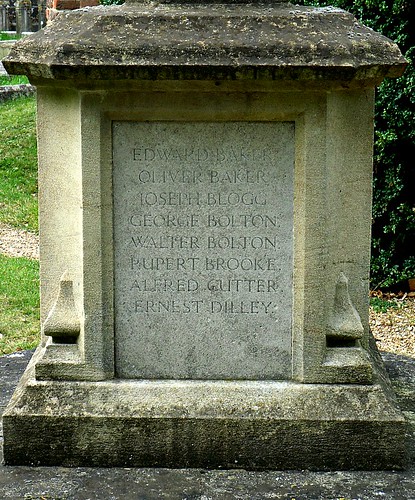
I was even more delighted to see Rupert Brooke’s name there.

War Memorial, Grantchester, Close up.

Brooke greeted the Great War with some enthusiasm, in sonnets such as Now, God Be Thanked Who Has Matched Us With His Hour and The Soldier.

Brooke didn’t die in battle. He developed sepsis from a mosquito bite on his way to Gallipoli and was buried on the island of Skyros in Greece. So some corner of a foreign field is forever, if not England, then at least Grantchester.

He was a casualty of the war, though, as he would not have been in the Aegean but for that.

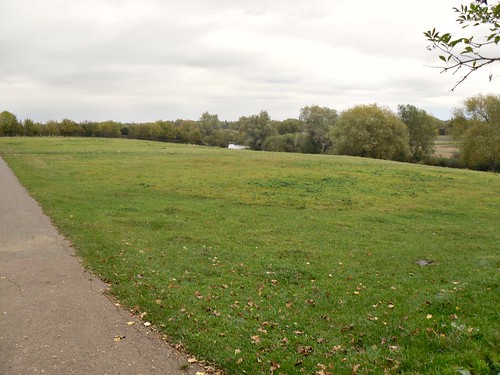
Passing the Green Man pub I saw a sign saying “Grantchester Meadows.” I followed the path down and took this photo.

Grantchester Meadows

This was because Grantchester has another famous son, Pink Floyd’s David Gilmour. The song Grantchester Meadows from the 1969 album Ummagumma, though written and performed by Roger Waters rather than Gilmour, was, I presume, inspired by this.

Pink Floyd: Grantchester Meadows

free hit counter script