The Hothouse by the East River by Muriel Spark
Posted in Reading Reviewed, Scottish Fiction, Scottish Literature at 12:00 on 21 October 2024
Polygon, 2018, 138 p, plus iv p Foreword by Alan Taylor and viii p Introduction by Ian Rankin. First published in 1973.
(I thought I’d posted this review a few weeks ago but it seems I hadn’t. As a result of that thought I deleted my pedant’s corner notes. I kept the review’s text, though, as I also post them on a private blog I follow and contribute to. So here it is.)
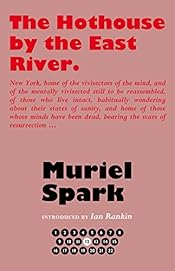 Another of Spark’s enigmatic novels, unusually this time set in 1970s New York. Paul and Elsa are a relatively well off British couple living in Manhattan with a view of the East River. Elsa’s behaviour is erratic and Paul wonders if she is mad. As an emblem of this, great play is made of the appearance of Elsa’s shadow which always falls wrongly, as if she is lit from a different direction. Her analyst, Garven, spends a lot with them and later takes on the job of butler.
Elsa tells Paul she has recognised an assistant in a shoe shop as Kiel, a former German POW whom they had dealings with during the Second World War. Paul insists this man would be too young and, in any case, believes Kiel died not long after their acquaintance. Paul and Elsa had been employed in the war to try to gain as much information from the POWs as possible to which end Elsa went on long walks with Kiel (and it is likely that significantly more happened between them.)
Among the surreal events which take place is the first night of a production of Peter Pan, overseen by Paul and Elsa’s son, with only old people as the cast, brought to a halt when Elsa pelts the actors with tomatoes causing a disturbance large enough to have the police called.
These are tedious people carrying on pointless activities. That they are people who seem in fact to be dead (or in the case of Paul and Elsa’s children never to have lived at all) perhaps explains it all, but that would be little more satisfactory than stating that it was all a dream, rendering the whole enterprise a bit meaningless. If they are dead what relevance do their interactions have to everyday life or to the human condition? What lesson can be drawn from them?
Kate Atkinson dealt much better with this kind of dilemma in A God in Ruins.
Sensitivity note: mentions Negroes.
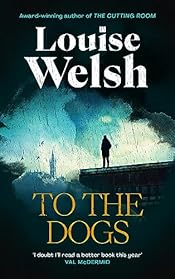 “The reception area had been designed with an eye to vomit and violence.” Thus begins this book, which if you hadn’t already known this was a crime novel would certainly have alerted you instantly.
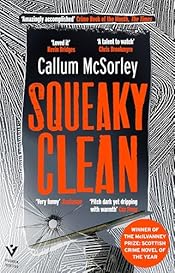 Alison McCoist has been all but shunned in Glasgow’s police after she made a mistake in believing the confession of a man called Knightley to the murder of a young pregnant woman. The real culprit remains at large and DI McCoist – who has enough on her plate already what with her name being similar to a well-known former footballer (‘I’ve heard all the jokes already’) and only seeing her twin children under access conditions at weekends – is as a result widely thought to be on the take.
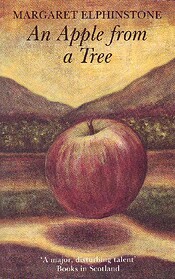 This is a collection of Elphinstone’s short prose works. As usual with Elphinstone the writing is accomplished.
 Being the continuing adventures of Francis Crawford of Lymond, Comte de Sévigny, following on from
 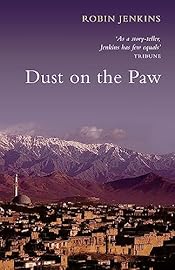 The novels by Jenkins I have read so far have always been situated in Scotland so this one, set among the British diplomatic community in Kabul in the late 50s, marks a digression. (Jenkins did spend some in Afghanistan himself in the mid to late 50s and on the evidence here had a good insight into the country as he displays some sympathy for Afghans and their customs.)
 The events of this novella all take place over one night in the villa by Lake Leman in Switzerland owned by Baron and Baroness Klopstock.
 In this sometime future, humankind has suffered many emergencies – among them a population crisis. Eventually, due to contributions from two people now known only as Him and Her, it settled on what is called Solution Three. To filter out aggression, heterosexual reproduction has been replaced – at least in the mega-cities – by clones of Him and Her. Clone Mums look after these children until they are old enough for strengthening, a process intended to replicate the stresses and strains of the lives of Him and Her and meant to lead the children to wisdom but about which they afterwards do not speak.
 This is Logan’s latest solo collection of stories, her first, The Rental Heart and other fairytales, I reviewed
 This, Stuart’s second novel, is running over much of the same ground as his first,