Archives » Science Fiction

To the Stars and Back

Also in the package from ParSec which contained my latest review copies was a book of short stories in honour of my dear friend Eric Brown, who died last year. This collection is titled To the Stars and Back and has some impressive contributors plus a brilliant cover illustration.

I did attempt to write something for this book (I would have been honoured to have been included) but I couldn’t get it to flow.

I still have four of Eric’s books on my tbr file but have not been able to face reading them. The memory is still too raw.


More for ParSec

The latest books I have received for review for online SF magazine ParSec arrived this week.

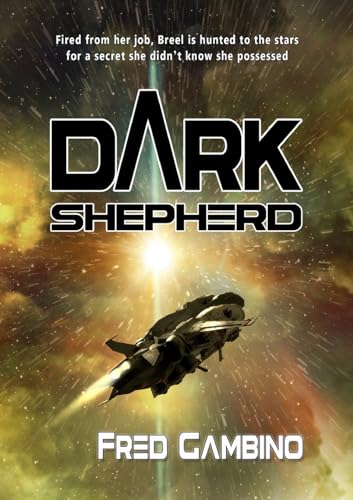
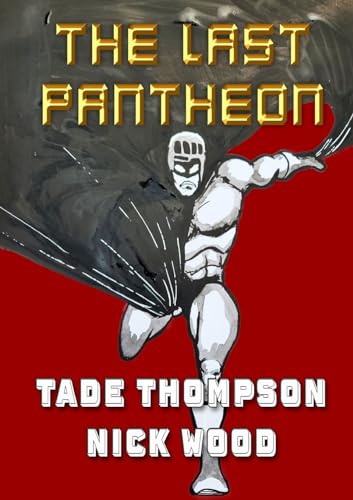
They are The Last Pantheon by Tade Thompson and Nick Wood and Dark Shepherd by Fred Gambino.

I have read books by Thompson and Wood as individuals but not in collaboration. Thompson is Nigerian and Wood South African. It therefore make sense that The Last Pantheon has African (super)heroes. The novel contains illustrations.

Fred Gambino is new to me.

I assume the reviews will appear in ParSec’s issue 11.

Earthsong by Suzette Haden Elgin

The Feminist Press at the City University of New York, 2002, 267 p, including vii p Foreword, xi p Appendix and xiii p Afterword by Susan M Squier and Julie Vedder.

Earthsong is the third in Elgin’s Native Tongue trilogy, the first of which, Native Tongue, was published in 1984 and the second, The Judas Rose, in 1987. This edition is a reprint of  Earthsong’s 1994 publication.

The trilogy’s premise was that due to aliens coming to Earth and requiring translators a group known as Linguists came to have a monopoly on the trade. (As I recall their expertise had been developed by talking with whales and dolphins but my memory may be tricking me.)

Despite the trilogy being set in the 22nd century, society was still largely male dominated and though women linguists were utilised they were very much subservient to the males – as were women more generally with very little in the way of autonomy. Women past child-bearing age go to live in Barren Houses and in these was developed a language (which Elgin named Láadan,) so that women’s perceptions could be expressed more adequately. This was kept secret from the males of course. In The Judas Rose Láadan was introduced to non-Linguist women but failed to catch on and was indeed opposed vigorously. But their new language changed the women and men could not bear being with a woman for longer than thirty minutes – some (not myself) might say not much difference there, then – to the extent that they lived in separate Womanhouses.

Those two books were an interesting thought experiment and, while being perfectly adequate as SF, were marred for me by the fact that seemingly every single man in them was characterised as being incredibly stupid.

In Earthsong, a crisis has been precipitated by the aliens suddenly disappearing from Earth (citing as their reason humanity – for which of course read men – as being too violent.)

A foreword supposedly written by the main protagonist of the earlier two books, Nazareth Joanna Chornyak, warns us that the story, as mediated by trancers channelling her thoughts, is going to be disorganised, told through many different voices, and not in chronological order. The trancers are necessary because Nazareth is dead and in some sort of limbo.

The book proper starts with her great granddaughter Delina Meloren Chornyak petitioning the head of the Pan-Indian Council of the Americas (PICOTA) to allow her to use their ceremonies invoking a vision quest in order to talk to Nazareth to ask her what to do about reestablishing relations with the aliens. When he is finally persuaded and Delina meets her forebear, what Nazareth says to her seems impossible. It is to eradicate hunger.

After a long time Delina realises the question boils down to ‘How can people eat less food and still thrive?’ The answer she finds is in religion. Throughout history ascetics, nuns, monks and so on claim to have got by, flourished even, on little food. The secret, Delina realises, lay not in religion itself but more specifically in chanting. But it turns out that any sort of singing will suffice. By analogy with photosynthesis Delina calls the process of deriving sustenance through song, audiosynthesis. (It was here I felt Elgin had gone over the score. Now we are in outright fantasy land. Sound is a form of energy, yes, but by what mechanism can it be converted to chemical energy. In any case, are these accounts of abstinence credible? Religious adherents have been known to engage in deception to ensnare the gullible, to impress the credulous.)

Yet what would lack of hunger mean? If everyone has access to food (or can gain the necessities of survival elsewhere) then conflict will be reduced, if not eliminated, a means of control of people removed. And, as happened with Láadan, humans would change, they would be in effect a new species, with a new outlook on life.

Elgin’s background is perhaps showing when a (male) character asks, “would you please explain how it happens that the President and Vice-President of the United States” [of Earth] “are always incompetent?” and when given a counter example says, “He thought Presidents were allowed to fix things. He didn’t last long,” which  leans into that pernicious strand of USian thought which distrusts government, which thinks government is a bad thing and which also, therefore, encourages conspiracy theories.

The same character’s assertion that “There cannot be a conspiracy that size to do good! …. Human beings are only capable of really buckling down and working together in groups when their goals are evil,” has simply misinterpreted human history. Co-operation (plus the passing on of knowledge) – not conflict, and certainly not individualism – is what allowed humans to become the dominant species on our planet.

As speculation, as SF, this is all fine, outrageous premises have often been turned into good stories. The story here, though, is only touched on obliquely, its ramifications for future human relationships left unshown.

The novel is our prime way of exploring what it means to be human. It is difficult, therefore, to convey a change in human behaviour using it as a medium. If Elgin doesn’t quite manage to, her attempt can be applauded.

Pedant’s corner:- “there were a number of” (there was a number of,) “had hid” (had hidden,) “the unlikely lay of this land” (lie of this land,) “none of them were” (none of them was,) “had that for search target” (for a search target,) “I’m put back back together now” (only needs one ‘back’.)  “‘For heaven’s sakes’” For heaven’s sake,) “but he was was tolerant” (only one ‘was’ needed,) youall (you all,) a missing end quote mark after a piece of direct speech, strategems (stratagems.)

Super Nova and the rogue satellite by Angus MacVicar

Knight Books, 1969, 151 p, plus 8 p Diagrams and Technical Data.

Super Nova is the name of a(n as yet unused in an emergency) rescue ship based on the Moon.
The scene is set on the Moon base, a relatively large establishment with some married couples and a few children among the otherwise unattached. Not quite in that last category (but also not far from it) are Nurse Janie O’Donnel and Assistant Signaller Steve Murray who are attracted to each other but not as yet actually an (as we would say now) item. Gender roles are pretty much what were recognised as such in the late 1960s. Most of the women are either married and stay at home or have nurturing roles. One of the more unusual characters is Norman the News – whose nickname is perhaps an indicator of the author’s Scottish background – a reporter for Earth based newspapers.

The crisis which leads to Super Nova’s launch comes when a supply ship, the Archimedes, is stopped in space near to the incoming Satellite 907 – which has, incidentally, somehow or other managed to make the round trip to Pluto and back in a matter of days – along with a failure of communications. O’Donnel was originally scheduled to be on the Super Nova but Murray volunteers since the usual signaller is incapacitated but mainly to be near O’Donnel.

There is a large amount of information dumping (the story was intended for young adults though.) More noticeably these days the societal assumptions of its time or, rather, of MacVicar’s time, he was born in 1908 after all, are littered through it.

It turns out that in its pass round Pluto Satellite 907 has been taken over by that (minor) planet’s native intelligences, intrinsically hateful. They had in the past boosted Pluto from orbit round Neptune, a manœuvre which also forced Triton into its retrograde motion round its parent.

Close encounters with Satellite 907 lead to the Super Nova’s crew beginning to develop feelings of antipathy towards each other, leading on to much worse emotions. This is of course the influence of the Plutonians. Relief from these comes when Pluto’s spin takes the relevant transmitter round its edge. (Did they not, I wondered, have a relay system to ensure continuity? Never mind, it’s for YA; let’s carry on.)

The main action involves Murray having to approach the satellite during the transmission lull to deactivate its self-destruct device. For this he needs the relevant tools and Janie offers to take them to him. There is an uncomfortable scene where after he loses consciousness and Janie performs the actual deed she later tells him (in order to protect his self-esteem) that he did it.

One of the characters ruminates that, as a historical phenomenon, “Nobody seemed to like the Jews” then that “this was partly their own fault for being so inward looking, so close and clannish, so rigid in their beliefs.” Victim blaming or what.

But all on Earth is apparently now in harmony, technical and social benefits bind everyone in fairness to contribute in work and example. The Plutonians are somehow managing to undermine these feelings of togetherness and instilling fear and distrust – even hate.

The orbital dynamics of all of the ‘stopped in space’ gubbins are of course nonsense but without them there wouldn’t be a story.

The quaintness of this vision of the future is underlined by one of the characters using a “pocket space-range calculator” (looking like a cross between a set-square and a spirit level!) which was his own invention.

It is unusual to find in a work of SF, let alone a juvenile, as these stories were called back then, references to Goethe and James Hogg.

Similarly, I doubt any other piece of SF has ever employed the Scots word ‘douce’. Kudos to Scotsman MacVicar for that.

Diagrams of Satellite 907, the Archimedes class of ship, Pluto’s escape from orbit round Neptune, the Super Nova, a Moon Bus (with a crane attachment!) a laser-armed scout ship and a lunar vacuum suit appear as an appendix.

Sensitivity note: as well as the reference to Jews above, there is a mention of a Negro mayor, and the phrase “the nigger in the spatial woodpile.”

Pedant’s corner:- collander (colander,) “[responsible] for discovering minerals, oils and other products” (oils? On the Moon?) “dog’s-bodies” (nowadays – and perhaps even in 1969 – dogsbodies,) similies (similes,) span (spun,) “on the base of pure logic” (on the basis of pure logic,) “came to a stop in her orbit” (spaceships are not cars; they cannot just stop, they keep going until something changes their direction. This, as a plot point, ought to have been elaborated on,) 9o7 (907,) I noted the abbreviation ‘mike’ (which is now often rendered as ‘mic’,) the burst of flame from an atomic explosion “would become a towering mushroom cloud” (not in space it wouldn’t. The ‘cloud’ would be approximately spherical in shape,) “a spot of rust having formed” (on a screw fixing on a spaceship. In space the chemical conditions for rusting are not present. [To be charitable I suppose the rusting could have occurred during manufacture on Earth.] But also only iron can form rust [other metals corrode, but the result is not rust] but if they are to be launched from Earth, iron is too dense a material to make spaceships from.)

Dancing Vac by S N Lewitt

Ace, 1990, 240 p.

This is the continuing story of Cargo from Cyberstealth, here drawn by an old comrade, Stonewall, into seeking out Cargo’s former flying mate Ghoster, one of the Akhaid assistants without whom flying in the maze would be impossible. Ghoster had disappeared into rebel Cardian territory at the end of Cyberstealth. This will be delicate as Cargo’s adopted father Bishop Mirabeau is having secret peace talks with Cardia.
Cargo is of gypsy heritage and goes by various names. As a result of previous exploits the name he uses in Cardian territory, Kore Verdun, has become something of a hero there. As such he is brought to a meeting with Cardia’s leader, Ki Shodar, an enigmatic and dangerous individual who is the last survivor of a experiment in genetics in which the Bishop was involved.

Unlike in Cyberstealth there is little flying done here, the book being concerned more with Crago’s mindset. However it does explore the nature of Akhaid existence and their ritual of The Walk and also reveals to us what the maze actually is and so ties up loose ends from the previous book.

Again, as in Cyberstealth, there was a lot of information dumping and telling rather than showing. Reading both that book and this are really necessary to get the most out of either.

Pedant’s corner:-  talley (tally,) ambiance (ambience,) “black current sauce” (blackcurrant is more likely,) arrogent (arrogant,) “The only way he had ever considered combat was a battle between his mind and a machine” (… was as a battle,) “join you partner” (your partner,) “even it he had the authorization” (even if he had; plus ‘authorisation’,) Odysseus’ (Odysseus’s,) “to  be fully aware on the eternal now” (… aware of the …,) “nothing had ever stricken him about” (nothing had ever struck him about,) jailor (jailer.) “‘There maybe a physiological problem’” (There may be,) “such a strange favor” (fervour?) tyou (you.)

BSFA Awards Shortlist

The BSFA has published its shortlist for this year’s awards, for work published in 2023.

I see that the number of award categories has increased and there is now a best translated short fiction category.


Brian Stableford

Last week one of British Science Fiction’s stalwarts, Brian Stableford, died.

Of the more than eighty books he published in his lifetime I have a mere eight on my shelves. He also wrote many shorter works of  fiction, being a copious contributor to Interzone over the years.

I see from the BSFA’s obituary in the link above that he also translated over 200 novels of early French SF and Fantasy into English. Prolific doesn’t cover it.

Brian Michael Stableford: 25/7/1948 – 24/2/2024. So it goes.


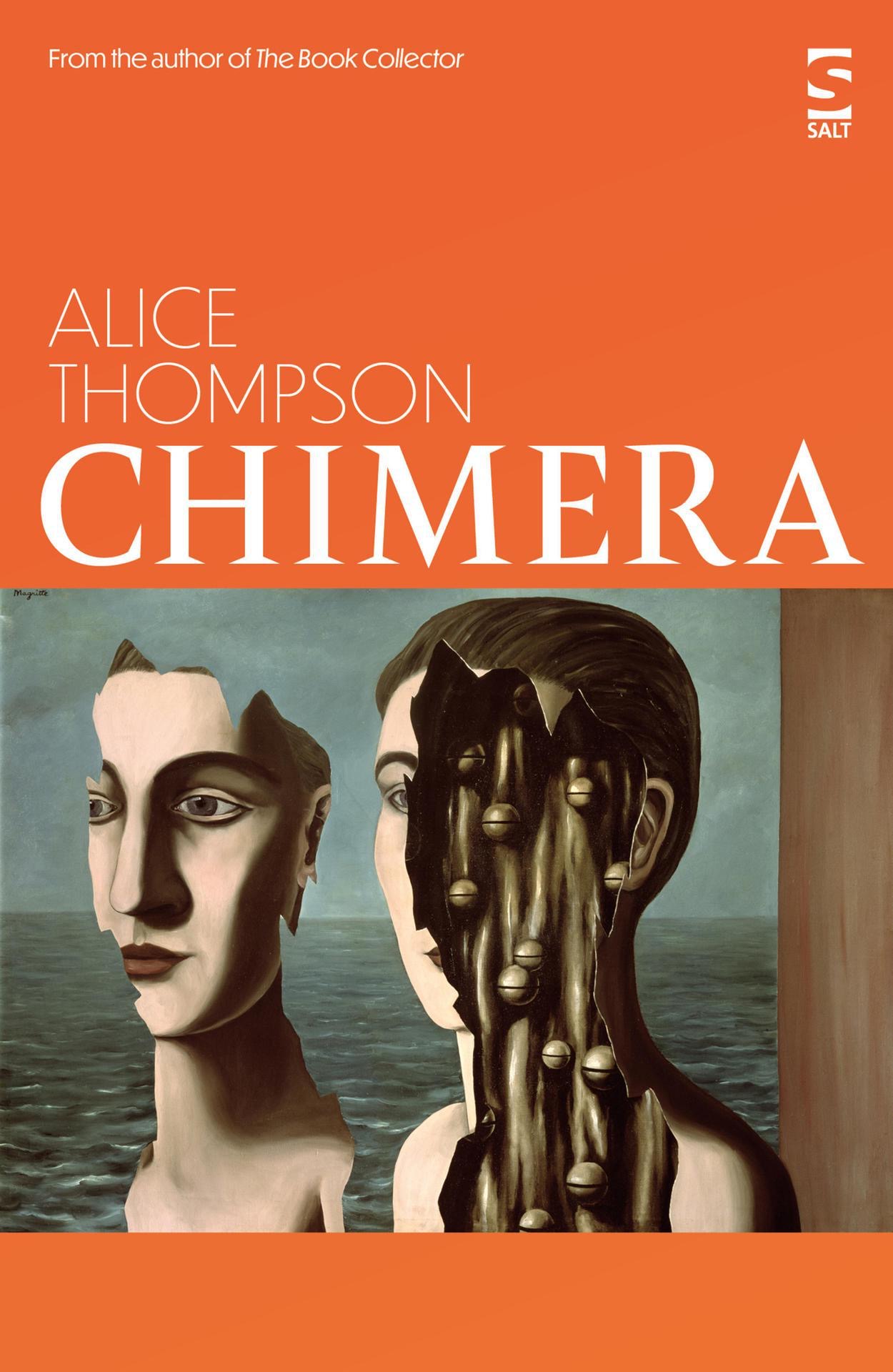
Chimera by Alice Thompson

Salt, 2023, 183 p.  Reviewed for ParSec 8.

Alice Thompson is a veteran of seven previous novels but as far as I’m aware none of them has been Science Fiction. Concerning as it does a voyage to another planet (or, strictly, to its moon) this book could hardly be described as anything else. Yet it is not a typical exemplar of modern SF. Unlike the brashness of the average space exploration story its tonal qualities are more reminiscent of Stanisław Lem’s Solaris or David Lindsay’s A Voyage to Arcturus. Its epigraph, perhaps the most famous quotation from The Tempest, suggests the trajectory that will follow.

A prologue sets up the body of the text as a tale of lost memory. Artemis was the sole human returnee of her crew from their trip to Oneiros on the spaceship Chimera in a search for bacteria that could break down carbon dioxide to obviate global warming. Two dryads, hybrids of computing powers and cloned human DNA provided by anonymous donors, came back with her. Though she has none of Oneiros she is now setting down as a novel, Chimera, the memories she has of the trip.

This odyssey from a beleaguered world where – apart from “the IT elite, the governing body called the elITe” (who do not allow their children access to computers or smart phones) – all humans seem to be in thrall to “widespread automation and the internet of things” and “virtual reality had destroyed downtime and daydreaming” while “in many ways all human progress, except for AI, had stagnated,” is an incongruous endeavour. The crew seems mismatched and detached. Artemis tells us that in space humans are not allowed to dream; it is too unsettling for their daily work. Though she got on the trip more or less by subterfuge and has a slightly unbalanced mental history she is in charge of the medication to ensure this. “Pills suppress rapid eye movement.” Dryads record everything they see and hear. In their ever-lurking presence they come across like HAL from 2001: A Space Odyssey before David Bowman pulled its plugs.

Adding to the distancing effect odd things happen on board. Though it is cruising faster than the speed of light jolts affect the ship’s smooth passage. A dryad alters the temperature controls for no good reason. A bacterium appears on a microscope slide as if out of nowhere. Artemis starts to hear ringing bells. One of the crew, Ivan, disappears.

The oddnesses do not stop there. On Oneiros itself they land miles away from their destination and have to trek across a snowscape to reach the base built for them by automated fabricators. Artemis discovers there had been a previous research ship to the moon, the Siren, but Mission Control, personified in an AI named Cressida, lost contact with the crew and pilot dryads returned the ship. She begins to see shadows.

On a novelistic level the writing here is perfectly acceptable, though the book has flaws. Thompson brings attention to her use of quotations via asterisks and footnotes. That may be all very well in academic tracts but in a novel it distracts from the narrative. Oneiros is a tad too programmatically named. At times the information dumping could have been better integrated but there are also indications of a lack of familiarity with SF as a genre or with scientific processes. Stars are visible through Chimera’s windows even though it’s travelling faster than light. (I doubt light could be seen if it’s moving slower than any potential observer.) Before their trek across Oneiros, the crew take oxygen pills. (Just how are these supposed to work?)

The novel’s central concerns are the relationship between humans and dryads and the nature of consciousness – which Ivan opines may be a fundamental property of matter. The crew’s fate and that of Artemis are bound up with the absence of dreams. How does their loss affect people, how does their lack impact on the dryads?

An Epilogue describes Artemis’s novel’s fate and may be commenting on Artemis’s reliability as a narrator.

Chimera is a solid, very readable piece of work but in drawing comparison to Lem and Lindsay is setting a high bar.

Pedant’s corner:- “She turned to the dryad.’ Why?’” (She turned to the dryad. ‘Why?) “Just logarithms and data” (this was about a dryad. ‘Just algorithms and data’ makes more sense,) bacteria (used as if its singular. Occasionally the proper singular ‘bacterium’ pops up,) focussed (focused.) “our brains our designed to look for connections” (Our brains are designed to.) “There was always had a book of poetry” (no need for the ‘had’,) two sentences couched as questions but lacking their question mark. “Cressida gave him a disarming smile” (gave her,) a missing quotation mark at the end of a piece of direct speech, “she could make out, through the blizzard, snow that covered the entire surface of the moon, with abnormally high mountains in the distance” (a blizzard tends to obscure anything more than a few metres away,) “minus 40 centigrade” (the official designation for that temperature scale is Celsius.) “‘Check for cuts. Frostbite can get in’” (Cold can get in [though it’s actually heat being lost] and then frostbite might develop.) “Their strength and stamina was formidable” (the ‘and’ makes this plural; ‘were formidable’,) “outside of it” (outside it.) “A empty wardrobe” (An empty.) “His brain was wired different” (differently.) Technicolour (I believe it was spelled Technicolor,) “like an idea struck the flat previous” (I haven’t a clue what this is supposed to mean,) “refraction of protons” (this was about light; refraction of photons, then,) “of this moon ?” (the space between moon and the ‘?’ was there to distribute the words in the line evenly but it looked odd.)

The Human Division by John Scalzi

Tor, 2016, 505 p.

It seems this is one in a series of books collectively known as the Old Man’s War series, none of which I have read, so have come upon in the middle of the sequence. The Colonial Union, an organisation of the various human inhabited planets in space, has been caught with its pants down in regard to Earth, which it had kept uninformed of the true interstellar situation but used as a source of colonists and troops for its conflict with the various alien races of the immediate Universe. These have now formed the Conclave, an association of four hundred formerly warring races now united; a conflict which blows hot and cold. After the revelation of the true state of interstellar affairs, relations between Earth and the Colonial Union are now frosty at best and the Conclave is inviting Earth to join it, which would result in the Colonial Union becoming extremely vulnerable.

The Union’s military arm, the Colonial Defence Force, CDF, recruits people aged seventy, rejuvenates them, enhances them (in particular with a BrainPal in their heads, which allows voiceless communication,) and changes their blood for Smart-Blood having a boosted oxygen-carrying capacity. All of these result in the recruits turning green.

The book contains thirteen “Episodes,” which are more or less short stories or novellas and make it seem like a fix-up, plus two addended Extras set in the same milieu. The format leads to a degree of information being repeated in later Episodes. (The Human Division was originally published in e-serial form.) The Episodes feature a recurring cast of characters, CDF Lieutenant Harry Wilson, diplomats Ambassador Abumwe and assistant Hart Schmidt, a space-ship Captain, Coloma, and, a potential love interest for Wilson, Danielle Lowen daughter of a US government Secretary of State.

This last reveals Scalzi’s – actually rather touching – apparent belief that in this future of interstellar diplomacy and war (obviously not a near future,) the United States will still exist on Earth and still have much the same political system as it does in the twenty-first century. (Aw, bless.)

Abumwe’s deputation starts off being thought of as a diplomatic B-team but its successes mean she is given progressively more difficult tasks as the Episodes unfold.

Dialogue can tend to the joky which stands in contrast to the sometimes tragic or violent events which pepper the book.

This is pretty standard military SF type stuff. Diverting but no more.

Pedant’s corner:- “time interval later” count – substantial. Otherwise; questions in dialogue are frequently missing their final question mark. “‘It possible’” (‘It’s possible’,) species’ (singular, so species’s,) “that most if it exists” (most of it exists,) “sooner than later” (sooner rather than later,) “off of” (no ‘of’, just ‘off’.) “The glare of the lights in the airlock were enough to wash out the sky” (the glare of ….. was enough to,) “the screams of the people around him reached a crescendo” (no they didn’t; they crescendoed, to reach a climax.) Bonus points for ‘stanching’.

Beethoven’s Assassins by Andrew Crumey

Dedalus, 2023 , 509 p. Reviewed for ParSec 8.

Crumey’s work has never been marketed as Science Fiction but has many intersections with the genre; not least his exploration of parallel worlds and alternative histories. This is by far, at 509 pages, the most lengthy of his novels yet published. It features some of those earlier preoccupations – music, concepts from Physics, the reliability of memory – yet cannot be said to be truly like any of its predecessors. It is multi-layered, multi-voiced, in parts reading more like a biography of Beethoven than a novel, but never less than readable.

We start off with a memoir from Beethoven’s sister-in-law, Therese, of his last days, but most importantly for this novel, of his last words, ‘Everything is allowed.’ Crumey deploys Therese’s voice beautifully. Practical, no nonsense, down-to-earth; not given to indulge the great man, for all his celebrity. We can utterly believe this is a woman who knew Beethoven and all his faults. But on this point Crumey has a trick up his sleeve.

There follows the first instalment of “Beethoven and Philosophy” as written by one Robert Coyle (the same one as in Crumey’s Sputnik Caledonia) ruminating on that subject – on which he has been asked to write a piece for a book commemorating the 250th anniversary of the composer’s birth. This superficially rambling but actually tightly written account discusses Beethoven’s music, life and connections while describing Coyle’s own circumstances navigating the Covid lockdowns, particularly the difficulties experienced by his deaf and dementia-ridden father and put upon mother. Coyle’s story weaves in and out of the text, interspersed with other sections centred on Axtoun House not far from Berwick Upon Tweed. These narratives are as written by the present-day Adam Crouch, a 1920s writer named J W N Sullivan (a confrère of John Middleton Murry and Katherine Mansfield,) another memory of the house as it was in 1823 delivered by a woman named Marion who was called to act as governess to the owner Colonel Wilson’s all but idiot ward, an 1860 polemical reminiscence from one of Beethoven’s biographers, Schindler, and a recollection of a visit to the Hyle Centre at Axtoun House in 1923 by one Celia Carter. Most of these are returned to, only Marion’s and Celia’s are not.

Marion’s is by far the longest section in the book and, while being read, seems to bear very little relation to the rest. In it Crumey subverts the conventions of the 1820s novel via Marion’s assertive personality (a bit too twenty-first century?) and her taking down in invisible ink of Colonel Wilson’s letters written to a “Dear Brother in The Fold,” a shadowy organisation which Marion initially dismisses. However, in this intricately woven novel it is unwise to discount any detail. As Coyle later says, “We may have a book on everything, masquerading as a novel, or as a criticism of Shakespeare, or as a history of music,” and on the subject of writing a novel about Beethoven further opines, “were it not that the plethora of pre-existing attempts already gave sufficient argument against, others could easily be adduced.” The subject is greater than the imitation and the project would require “a mutual inter-relation of form and content, in a manner I can’t imagine.” A neat deflection of any possible criticism of the present endeavour.

In the 1923 sections we discover that a woman named Martha being treated at the Hyle Centre is under hypnosis recalling (as false memories?) the experiences of Therese and we may infer it is her transcribed speech, some of which J W N Sullivan peruses, whose prose has up to now been presented as that of Therese.

Scientific speculation also peppers the narratives. We are told that while Einstein’s theory enables verifiable predictions and explains certain observed facts, Beethoven’s music expresses, “What is explained or expressed amounts to a kind of knowledge or meaning that enlarges human understanding.” Apparently E T A Hoffmann said, “Beethoven’s music pulls the levers of horror, fear, dread, pain, and awakens the infinite longing that is the essence of romanticism.” Martha’s recalled memories are compared to a kind of telepathy analogous to radio, with transmitters and receivers, possibly even amplifiers. A physicist at Axtoun House mentions reverse causality where an event may be determined by a future condition rather than the past and we are treated to Ouspensky’s thought that time is three dimensional, like space. Coyle comes to the conclusion that “there is no flow to time – we only think there is.”

It is, though, Beethoven’s life and legacy that ties everything here together; or rather “a lost opera by Beethoven, commissioned by freemasons. Like The Magic Flute but altogether darker.” An opera entitled The Assassins, or Everything is Allowed. Later revealed as being set in the time of the Crusades, featuring guardians of a magic elixir said to bring immortality or death to whoever consumes it, Hachichin, whose name may, or may not, have been derived from the drug.

As Coyle, Crumey has a go at those twenties authors who used the “real people as fictional characters technique” and who “turned life into art with fiercely score-settling energy, perhaps because the truth of their passions was greater than any that could be invented, or maybe they just lacked the confidence to make things up.” His own proposed novel will be about the inescapably mediated way Beethoven’s music is now received; as something – “as performance or meme, as story or picture, as succession of emotions, always as ‘as’.” I leave the final ‘as’ for the reader to discover.

The relevance of Crumey’s background in Theoretical Physics to everyday life – and to literature – is stated in the thought, “Quantum physics asks us to imagine forms of matter existing simultaneously in contradictory states. One need only look at human affairs to see such things in effect.”

This is exemplified in literature. It ought to be even more so in Science Fiction, where, as in music, everything is allowed.

Pedant’s corner:- “Vocal chords” (cords,) “suitably discrete” (of sexual liaisons; so ‘discreet’,) “Dr Hines’” (Hines’s,) “suddenly its increased” (it’s,) “and offered to Sullivan” (offered it to Sullivan,) “the kitchen cupboard was a different story when I opened and was rewarded” (when I opened it and was.) “‘Bring it when your ready.’” (When you’re ready.)


free hit counter script