Archives » ParSec

The Mother Code by Carole Stivers

Hodder, 2021, 349 p, £8.99. Reviewed for ParSec 1.
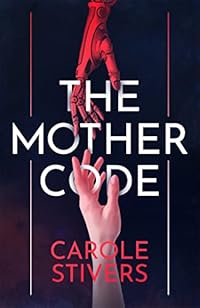
Presumably since for a large part of its history it has been written mainly – though never exclusively – by men, there has not been much of an examination of motherhood in Science Fiction. In The Mother Code Stivers may be trying to redress that a little but if so it is an odd sort of attempt at it. Yes, her mothers are artificial wombs, programmed not only to give birth, but to nurture and teach the resulting children as they grow – yet they are also effectively battle robots, formidably armed and fiercely protective of their charges.

The robot mothers’ deployment has been necessitated as a consequence of the deliberate use by the US military of a supposedly quickly degradable bioagent called IC-NAN to eliminate groups opposed to the presence of US troops in Kandahar. IC-NAN causes lung cells to carry on well past their normal replacement date, growing like a cancer, overpowering good tissue and later invading the body, leading to a slow but certain death. The agent, however, spreads to an archaebacterium and remakes itself to replicate inside that organism’s cells and so begins to diffuse around the world. While the only antidote, C343, is not 100% effective all those working on the project have been supplied with it and the embryos the mothers will carry have been gene-engineered to be resistant to IC-NAN.

The narrative is shared between several viewpoints, one of whom is Kai, a child born inside one of the artificial mothers, and in Part One also jumps in time from when the IC-NAN plague manifests itself in the US and the robots are released, to a period when the children are around eleven years old. This latter reduces any tension around the development of the mothers as we know the initial stages of that project must have worked. In Part Two both strands occur in the same time frame.

James Said is a biologist of Pakistani origin hired to work on the antidote, Rose McBride invents the mother code of the title, computer code meant to embody the very essence of motherhood. To succeed as mothers the bots needed personalities, programmed in from a few human examples (Rose herself being among them as is a Hopi woman, Susquetewa.) Rick Blevins is an army man injured in action whose mistrust of Said’s involvement after a Russian computer hack leads to the mothers being released somewhat prematurely.

In the future sections each child is able to communicate telepathically with his or her mother machine but they have been kept apart by the mothers’ instructions and the limits placed on their wanderings. Interactions with other mothers and children are sought out but they were initially spread out and climate-change induced dust storms are reducing the mothers’ flying capabilities. Over-riding of a source code brings all the mothers together at a base called the Presidio. The mothers’ protective attitudes against the outside world have infected the children who are on constant alert against attack, making the attempts of surviving humans of the project (the Hopi have a natural immunity to IC-NAN) to contact them difficult.

Stivers may have thought her approach is what I believe is now known as woke, but the novel’s stance on prejudice is troubling. OK, she makes one of her viewpoint characters a Muslim by descent but we don’t see it in his daily life, he is effectively irreligious. And what are we to make of, “the London Intifada of 2030 and the suicide bombings at Reagan Airport in 2041 kept alive a healthy suspicion of anyone resembling a Muslim in the West”? Leaving aside the transatlantic misconception of British reality in that London Intifada comment, ponder the use of the word ‘healthy’ in this context. Add in the fact that a black person is considered to be lucky to be employed on the project and the narrative begins to leave a sour taste. Moreover, prejudice becomes a plot point when Blevins authorises release of the mother robots as a direct result of his unwarranted suspicions of James Said.

The Mother Code as a whole is an uneasy mix of techno-thriller and examination of the effects of new technology on human development but has many of the defects of the former, to which it is heavily skewed, and few of the merits of the latter. While it is partly less true of the children the adult characters tend to have attributes rather than rounded personalities. The early pages are also unfortunately crammed with info-dumping. It’s a satisfactory enough read on its own terms but lacks real depth.

Pedant’s corner:- “enormity of the task” (it wasn’t reprehensible, it was big – ‘immensity of the task’,) a capital letter on the first word following a colon.)
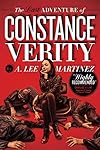
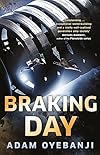
Two More for Parsec

You may have noticed on my sidebar for the past five days a book called The Last ADVENTURE of CONSTANCE VERITY written by US author A Lee Martinez. This will be reviewed for online SF mag ParSec.

I’ve also just received from ParSec a novel titled Braking Day by Adam Oyebanji. This author has Scottish and Nigerian heritage.

Another Two for ParSec

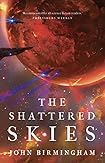
The Cruel Stars by John Birmingham – see also my side-bar under ‘Currently Reading’ – is the latest book I’m reviewing for online SF mag ParSec. It’s the first of a trilogy.

It’s a bit of a bonus since it was published nearly ten months ago now. I had expresed an interest in the second in the series, The Shattered Skies, before I knew it was part of a trilogy and kind Mr Whates, the editor at ParSec, suggested I could read and review both books.

ParSec 2

ParSec 2 cover

The second issue of digital SF mag Parsec was published on Christmas Eve, shortly before midnight.

You can buy it here.

I have three reviews in this one:-

Best of British Science Fiction 2020 edited by Donna Scott.

Three Twins at the Crater School by Chaz Brenchley and

The Second Rebel, Linden A Lewis’s follow-up to The First Sister which I reviewed for Parsec 1.

Scottish Books I Read This Year

It’s that time of the year when people post ‘best of’ lists.

This isn’t a best of, merely a list of the books with Scottish authorship or Scottish flavour which I read this year. A round 30, of which (since Scotland in Space was an anthology* containing stories and articles** by both men and women) 14½ were by men and 15½ by women, 28½** were fiction (Snapshot being about Scottish Football Grounds.)

The Corncrake and the Lysander by Finlay J MacDonald
Light by Margaret Elphinstone
Snapshot by Daniel Gray and Alan McCredie
And the Cock Crew by Fionn MacColla
A Lovely Way to Burn by Louise Welsh
Ringan Gilhaize by John Galt
The Gates of Eden by Annie S Swan
Close Quarters by Angus McAllister
Vivaldi and the Number 3 by Ron Butlin
End Games in Bordeaux by Allan Massie
The Gleam in the North by D K Broster
A Far Cry From Kensington by Muriel Spark
Scotland in Space Ed by Deborah Scott and Simon Malpas
Being Emily by Anne Donovan
The Ninth Child by Sally Magnusson
Big Sky by Kate Atkinson
Their Lips Talk of Mischief by Alan Warner
The House by the Loch by Kirsty Wark
Summer by Ali Smith
Glister by John Burnside
Hamnet by Maggie O’Farrell
Scabby Queen by Kirstin Innes
The End of an Old Song by J D Scott
The Rental Heart and other fairy tales by Kirsty Logan
Republics of the Mind by James Robertson
The Dark Mile by D K Broster
Highland River by Neil M Gunn
The Clydesiders by Margaret Thomson Davis
The Last Peacock by Allan Massie
A Day at the Office by Robert Alan Jamieson

That last one was of course my final (unless I ever get round to Trainspotting) book on the Best 100 Scottish Books list.

I am part way through George Mckay Brown’s collection of short stories, Hawkfall, which would make the above sex ratio of authors 1:1 but am unlikely to post about it here before the New Year. (I’m four behind as it is, though one of those is for ParSec.)

* It was also the only one to be SF or Fantasy.

Another Review for ParSec

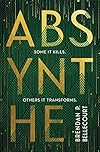
You may have noticed on my sidebar that I am reading a book titled Absynthe by one Brendan P Bellecourt.

This is to be reveiwed for the online SF magazine ParSec.

Mr Bellecourt is an author new to me and Absynthe appears to be his first novel.

I was attracted to by the publisher’s blurb given to Parsec wherein it mentioned “a palace full of art-deco delights.”

ParSec Calling

The latest book that I will be reviewing for online SF magazine ParSec has arrived.

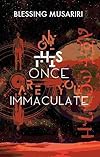
The book is Only This Once Are You Immaculate by the wonderfully named Blessing Musariri, a Zimbabwean who is known for her poetry and as a children’s author.

Another Review Book

 The Second Rebel cover
 The First Sister cover

Another book has arrived from ParSec for me to review.

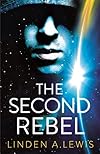
This is The Second Rebel by Linden A Lewis, the second in a series. I reviewed the previous instalment The First Sister in Parsec 1.

This latest review will, I assume, be published in ParSec’s second issue. I’ll get onto it soon.

ParSec 1

ParSec 1 cover

New digital SF magazine ParSec launched today from PS Publishing. It’s a handsome cover image.

You can buy it here.

I have no fewer than four, yes four, reviews within its pages.

This Fragile Earth by Susannah Wise

Composite Creatures by Caroline Hardaker

The Mother Code by Carole Stivers

The First Sister by Linden A Lewis

I’ll be posting those here once a decent time interval has passed.

New Review Books

Via Parsec (see here) I’ve received two more books for review.

These are Best of British Science Fiction 2020 edited by Donna Scott, which I hope will live up to its title, and Three Twins at the Crater School by Chaz Brenchley. This last seems to be the first in a series of “English girls’ boarding school stories. On Mars,” based I assume on the Chalet School books by Elinor M Brent-Dyer, an author whose œuvre I do not remember ever sampling.

free hit counter script