Archives » Irène Némirovsky

Jezebel by Irène Némirovsky

Vintage, 2010, 199 p. Translated from the French by Sandra Smith. © Éditions Albin Michel 1940. First published in English as The Modern Jezebel by Henry Holt and Company 1937.

Jezebel cover

I hadn’t intended reading a Némirovsky again for a while but the good lady picked this up in one of our local libraries – there are five within easy distance; one walkable (but not as walkable as Kirkcaldy Central was when we lived there) – so I took the opportunity to delve once more into her œuvre.

At the start of the book Gloria Eysenach is on trial for the murder of a young man whom she visited frequently in the weeks before the shooting. The trial is described along with Gloria’s inadequate efforts to explain her actions. Thereafter the novel tracks back to her earlier life and follows the train of events that led to her being in the dock.

For a while I felt that this wasn’t Némirovsky at her best; things seemed to drag, the set-up felt almost banal. However with the circumstances leading up to the death of Gloria’s daughter, Marie-Therèse, my interest was regained; though by that point the exact identity of the murder victim wasn’t too difficult to fathom.

Perhaps the most affecting sentence in the book is, “Life is sad when all is said and done, don’t you think? There are only moments of exhilaration, of passion…”

Jezebel ends up as a fine portrait of a selfish woman, too vain even to be aware – still less take care – of the interests of her own children. This is something of a theme for Némirovsky and she is perhaps better when she avoids it. Jezebel is still a fine novel though.

Le Bal by Irène Némirovsky

Chivers, 2008, 142 p. Translated from the French by Sandra Smith.

Le Bal cover

The good lady noticed this (very) large print book in a local library. As every Némirovsky I have read so far has been excellent I immediately borrowed it. This is a thin volume with very large print but still contains two novellas.

Le Bal © Éditions Bernard Grasset, 1930.
Catholic Rosine Kampf is a selfish would-be social climber with a less than reputable past. Her husband Alfred (a Jew who converted on marriage) made a sudden killing in currency dealings to transform their fortunes. Rosine now sees this as her time and sets out to exploit it. They have a fourteen year old daughter, Antoinette, who is straining on the verge of adulthood. As her mother does nothing but scold and deride her Antoinette harbours intense feelings of dislike and frustration. All this has ramifications for the ball (Le Bal of the title) Rosine is planning to hold to lever up the Kampfs’ place in society. In a story as short as this characterisation could be problematic but Rosine is well drawn, as is Antoinette, and Alfred shows that greater degree of indulgence fathers often have towards daughters.

Snow in Autumn © Éditions Bernard Grasset, 1931 as Les Mouches d’automne.
This is another of Némirovsky’s tales of Russian émigrés covering the years just before and after the cataclysm of the Revolution. The viewpoint is that of Tatiana Ivanovna, the aristocratic Karine family’s nanny. In a statement redolent of the pre-war times she reminds her employer, “You know very well that cockroaches are a sign of a wealthy household.”
Left behind to look after the house when the older family members fled to Odessa, she witnesses the murder of the Karines’ son, Youri, in the revolutionary takeover and then treks after them with their jewels sewn into her skirts. Later, in exile in Paris, she tries to uphold standards that seem pointless to people who have lost everything, who are “like flies in autumn” as the French title has it.

There was one curious piece of translation where the description sleeping room (rather than bedroom?) was used.

Like all Némirovsky’s fiction the two stories in Le Bal do not disappoint.

Best of the Year

It’s traditional at this season of the year to list what has most impressed over the past twelve or so months. Except I’ve only done it once before. Twelve months ago.

Once again I find ten books stood out over the year.

In order of reading they were:-

Snow by Orhan Pamuk
Gentlemen of the Road by Michael Chabon
Empty Space by M John Harrison
New Finnish Grammar by Diego Marani
Dark Eden by Chris Beckett
Spin by Nina Allan
The Feast of the Goat by Mario Vargas Llosa
Girl Reading by Katie Ward
Planesrunner by Ian McDonald
Fire in the Blood by Irène Némirovsky

4 are translations, 4 are SF*, 3 are by women. Make of that what you will.

*If you count the last section of Girl Reading, that would be 4 and a bit.

Fire in the Blood by Irène Némirovsky

Chatto & Windus 2007, 153 + xvi p. First published by Editions Denoël, 2007. Translated from the French Chaleur du Sang by Sandra Smith

Most of the handwritten manuscript for Fire in the Blood had been thought lost (45 pages of typescript had been completed) but turned up, along with her later novel Suite Francaise, in the Némirovsky archive given by her daughters to her friend (and editor) for safe keeping in 1942.

It is a worthy resurrection. Despite being barely longer than a novella there is enough insight into humanity and affairs of the heart, not to mention deceit and betrayal, in its 153 pages to grace many a longer novel.

Set in rural France in an area where people know all about each other’s lives and supposed secrets but don’t talk about them, unless while drunk or there is an advantage to be gained. Within families, “In order to avoid scandal, to make sure no one knows anything, all hatreds are hidden. What they fear most of all is that others might know their business.”

The narrator is Sylvestre, who travelled and returned – “A prodigal son. By the time I got back… even the fatted calf had waited so long it had died of old age” – who now lives alone. The fires of youth, “That love, those dreams…. are strangers.” That burning, “devours everything and then, in a few years, a few months, a few hours even, it burns itself out. Then you see how much damage has been done.”

The story concerns the pitfalls of young women marrying older men for security, of marital infidelities and of secrets maintained for years. The themes are of feelings beyond love, fire in the blood, that compels people to commit acts they might regret, and of forgetting forbidden loves as something necessary, plus the inability to forgive someone else’s happiness.

There are frequent bons mots:-
“Countrywomen are never ones to miss a free show, the kind you get with a birth or sudden death.”
“Who knows the real woman? The lover or the husband?”
“There’s no such thing as uncomplicated emotions.”
“You call out for (love.) The wave crashes into your heart, so different from how you imagined it, so bitter and icy.”
“The flesh is easy to satisfy. It’s the heart that’s insatiable …. that needs to love, to despair, to burn with any kind of fire.”

For insights into the affairs of the heart, the recklessness of youth, the loneliness of old age, look no further. This is the best book, with the possible exception of an Iain Banks, I have read this year.

The Wine of Solitude by Irène Némirovsky

Translated from the French, Le Vin de Solitude, by Sandra Smith.

Chatto and Windus, 2011, 248 p. First published by Éditions Albin Michel, 1935.

Hélène Karol is the only child of Bella and Boris Karol. Bella feels she has been forced, for financial security, to marry beneath her – she is self-centred and has expensive tastes. Boris is forced to leave his job as he would be tempted to steal to keep her in style. He leaves for, and makes his fortune in, Siberia. While he is there Bella takes a lover, Max Safronov, who considers the child Hélène a nuisance. Boris refuses openly to acknowledge his wife’s infidelities. Némirovsky notes that “a man needs a certain amount of breathable air, a small dose of oxygen and illusion in order to live.”

The novel traces Hélène’s life from early childhood in Kiev, to St Petersburg, then after the Russian Revolution to Finland and finally France. Hélène loves her father but the only person who has any time for her is her governess Madamoiselle Rose, with whose services Bella eventually dispenses, claiming she has set Hélène against her.

The book’s focus is firmly on Hélène and the effects on her of Bella’s indifference. While still a child she reads a book displaying a happy family she thinks is a fantasy and writes in it, “In every family there is nothing but greed, lies and misunderstanding.” The upheavals of the outside world, the Great War, the Revolution, are mostly off-stage – though one of the scenes in Finland has the White Army gradually nearing the village where the Karols are staying. Even when living through interesting times people still have personal concerns. Wars and revolutions are only the backdrop against which their lives are experienced.

Hélène’s hatred of her mother is such that when she grows up and realises a young woman’s attractiveness to men she determines to win Max’s affections to gain a measure of revenge. More subtly Némirovsky has Max’s mother say to him, in respect of Bella, “Women don’t love a man for himself but as a weapon against another woman,” and doesn’t make those Hélène’s words.

Since Némirovsky was herself Ukrainian and emigrated to France it would be too easy to attribute this novel to autobiography. To do so would be to deny the novelist’s art. As a depiction of an emotionally deprived childhood, and its effects, The Wine of Solitude is exemplary. It also stands as a reminder that those effects need not be determinative. We can choose how to behave.

The translation renders the area of Hélène’s childhood as “the” Ukraine. While this was the Soviet designation and may have been the one in use when the book was written in the 1930s I believe the inhabitants of that country prefer just Ukraine. A pedant’s heart will be gladdened by the fact that in the Finnish scenes Smith rendered a question grammatically correctly as, “Whom were they firing at?” though it does appear fussy to modern eyes.

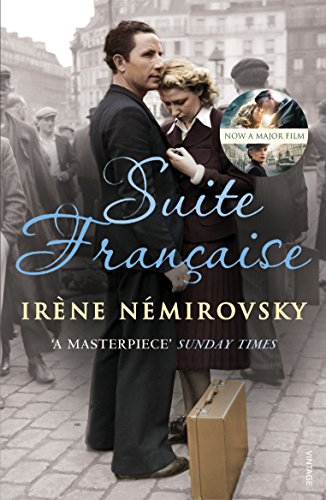
Suite Française by Irène Némirovsky

Vintage, 2007

The story of the manuscript of Suite Française is remarkable. That Némirovsky completed as much of it as she did in the aftermath of the German invasion of 1940 – she was a Russian émigré of Jewish origin living in France but never took (received?) French citizenship – is an achievement in itself; that it managed to survive the turmoil of the war years is a minor miracle. Nevertheless it still lay unread in a suitcase for sixty years as the author’s two daughters found the memories of their mother it evoked too painful to contemplate.

There are two appendices, the first relating to Némirovsky’s plans for the whole work, the second giving some of her correspondence with her publishers and also that of her husband and publishers with various authorities subsequent to her transportation to Auschwitz in 1942 (a fate her husband also suffered a few months later; perhaps as a result of so much inquiring after his wife.)

The first part of the book, Storm In June, is not so much multi-stranded as diffuse. There is an almost scatter shot approach to the narrative where various characters are highlighted, left, picked up again, left again and returned to in no particular coherent order and with very little in the way of plot to sustain it. To an extent this must mirror the confusion of the refugee exodus attendant on the German breakthroughs in 1940, the misery of which is admirably demonstrated in the text without dwelling too much on gore and death.

In the second part, Dolce, the focus is tighter – on the small town life of Lucile Angellier, whose husband is a prisoner-of-war in Germany, and her relationship with the German officer billeted on her mother-in-law’s house, in which Lucile lives. Here Némirovsky eschews the obvious story line (physical consummation of the friendship which of course develops) though another female character is shown with a different attitude towards the German soldiers.

The complexity of interactions between the occupiers and the occupied is well drawn; there is no black and white on either side, the humanity of both is laid out – venality, capriciousness, acts of kindness are not restricted to one nationality. I assume this is how it really was in the early days of the occupation, when hopes of a quick end to the war were high, before it became clear the conflict would drag on and the Germans would lose. It is certainly far from the picture familiar from war films and TV productions set in occupied France. Dolce ends with the dispatch of the billeted German regiment to Russia on the widening of the war in 1941.

Throughout these two finished parts of Suite Française there is an intermittent emphasis on class differences in French society, an illustration of the enmities present in pre-war France which, we are left to infer, perhaps led to the defeat, and are obviously still alive. Class is not quite such a uniquely British obsession, then.

On the evidence of these two parts, Némirovsky had an unusual approach to narration with regard to point of view. This frequently shifts within chapters, within scenes even. This is one of reasons why Part 1 was so diffuse but it occurs also in the more focused Part 2. It lends the narrative a strange air, as if we are following a drifting film camera as it ceases to track one character and shifts to another, then abruptly swings back. This sort of changing of viewpoint is one of the cardinal sins aspiring writers are firmly warned against and yet Némirovsky just about manages to get away with it.

Given the circumstances in which Suite Française was written these are harsh criticisms. The complete work with its possibilities of editing and re-drafting may have negated them.

Appendix 1 makes it clear that the author’s intentions were to put emphasis on the quotidian, to have the war and its horrors off stage, highlighted by the interactions of her characters.

The five part work Némirovsky contemplated may well have been a masterpiece, but it was not to be. I wouldn’t go so far as to claim that Storm In June and Dolce on their own merit such an accolade but they do represent a fine work nevertheless.

free hit counter script