Posted in Museums, Trips at 10:00 on 25 November 2016
German Great War memorabilia in Hooge Crater Museum. In my own Great War collection I have a mug similar to one shown here:-

Trench Art including inkwells in the shape of Renault tanks:-

British Great War memorabilia (above) and German (below.) Again I have some of the featured British items in my own collection:-

More trench art, Renault tank inkwells with poilus’ helmets:-

Trench art cabinet:-

More trench art:-

Mock-up of British dugout:-

If you are ever in Ypres/Ieper I would recommend a visit to Hooge Crater Museum as well as to In Flanders Fields Museum.
No Comments »
Posted in Museums, Trips at 10:00 on 16 November 2016
Italian Field Gun beside horse ambulance in In Flanders Fields Museum, Ypres:-

Machine Gun:-

Stokes Mortar:-

Trench Mortars:-

At the exit there was a list of wars since 1918 – so many I had to take three photographs.
(1):-

(2):-

(3):-

No Comments »
Posted in Museums, Trips at 16:00 on 15 November 2016
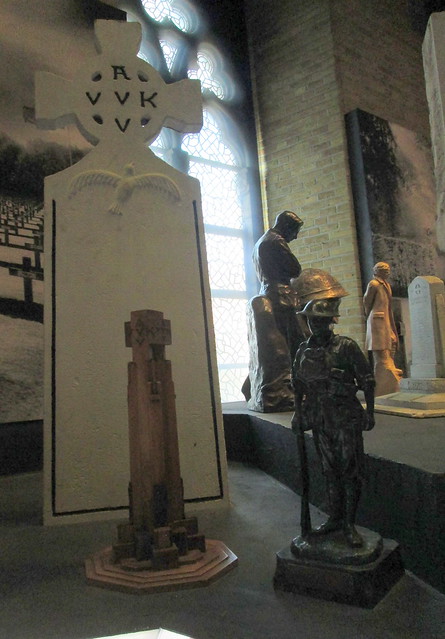
I didn’t photograph the British headstone as I have posted many of those before.
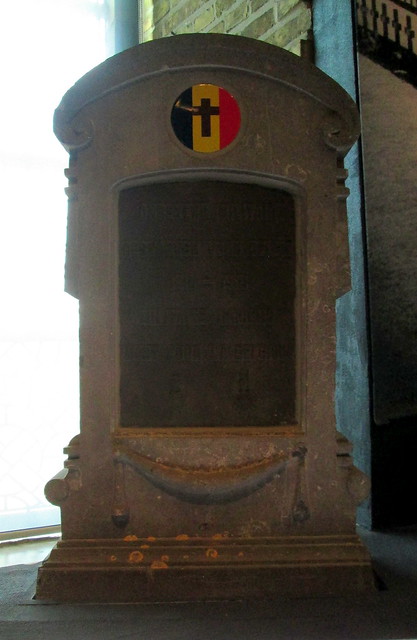
Belgian Headstone:-
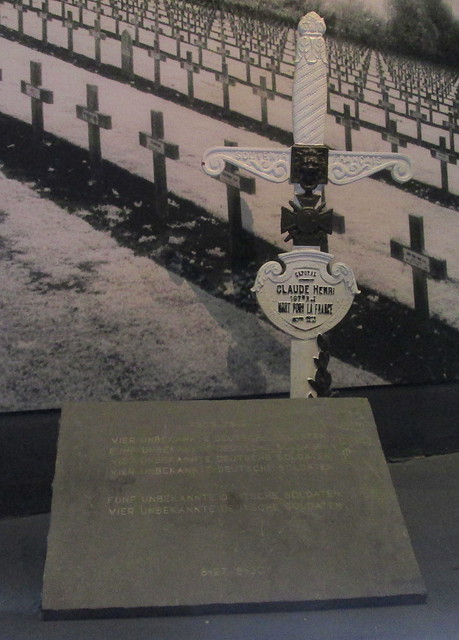
German Grave Marker + French Cross:-
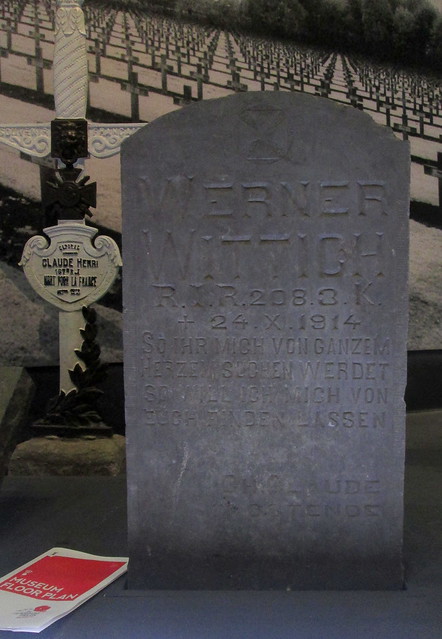
German Headstone. Unusual. The German grave markers are usually laid flat. French Cross behind:-
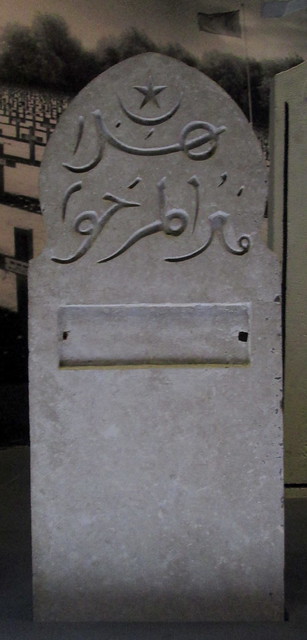
Muslim Headstone:-
Unattributed Headstone plus various commemorative statuary:-
No Comments »
Posted in Museums, Trips at 10:00 on 15 November 2016
Exhibits in In Flanders Fields Museum, Ypres (Ieper) Belgium.
Anti-tank rifle:-

Photograph of survivors of a Canadian battle of the Great War:-

Flame Thrower (Flammenwerfer):-

(The next one was too far behind its glass for the camera to focus properly.) Fritz Haber was responsible for developing Chlorine gas as a weapon. Also without his Haber Process to make ammonia from nitrogen and hydrogen (necessary for producing artificial fertiliser) the Germans would have been unable to make nitrate explosives and so would have been forced to an armistice much earlier. The main exhibit was of an actor speaking Haber’s words:-

Tableau of Horse Ambulance:-

The Wipers Times was a satirical magazine produced by soldiers during the Great War:-

No Comments »
Posted in Architecture, History, Museums, Trips, War Memorials at 12:00 on 9 November 2016
With the possible exception of Saint Martin’s Cathedral, the Cloth Hall (Lakenhalle) is the most imposing building in the city of Ypres (Ieper) in Flanders, Belgium. (The cathedral’s spire can be seen to the rear.)
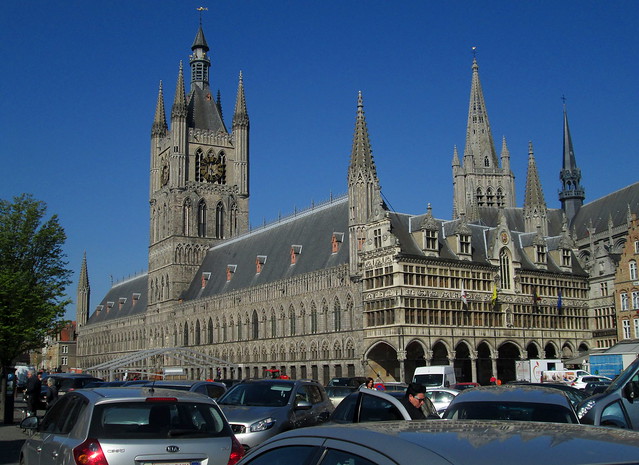
The mediæval Cloth Hall was all but totally destroyed by shelling during the Great War but lovingly restored in the years after.
There is now a lovely fountain in the paving at the front of the Hall.

Flanking one of the doors to the Cloth Hall are two memorials. This one is to the French soldiers who died in defence of Ypres during the Great War:-

And this commemorates the liberation of Ypres by Polish troops in 1944:-

The Cloth Hall now houses In Flanders Fields Museum, formerly the Ypres Salient Memorial Museum:-

No Comments »
Posted in History, Trips, War Memorials at 12:00 on 6 June 2016
There is a stairway halfway along each internal wall of the Menin Gate leading to the upper level. Here are laid wreaths brought to the Gate by various organisations.

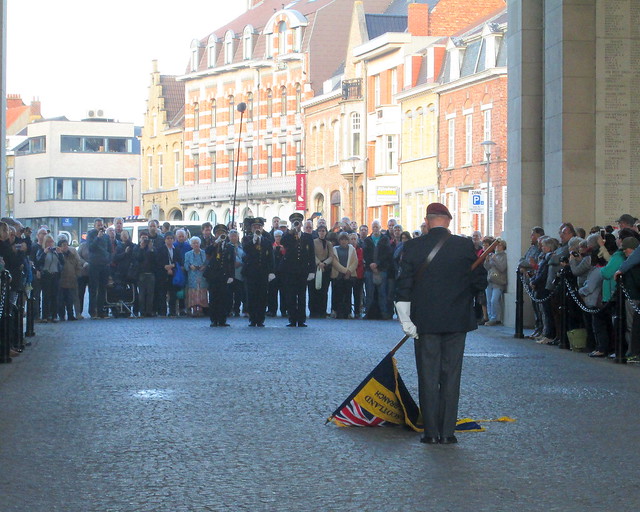
The evening we were there the representatives of several schools performed that duty during the nightly Last Post ceremony to which this flag bearer was the prelude:-

The Last Post is played every evening at 8pm by members of Ypres Fire Brigade, a ceremony only ever interrupted since its inception by the German Occupation in World War 2 when it was apparently conducted at Brookwood Military Cemetery, in Surrey, England. On the evening of liberation in 1944 the ceremony was resumed despite fighting still taking place elsewhere in the city. A photograph of the ceremony in 1964 in In Flanders Fields Museum had few onlookers in it. The Last Post now attracts large crowds no doubt due to the greater ease of travel to Ypres from Britain and the countries of the British Commonwealth:-
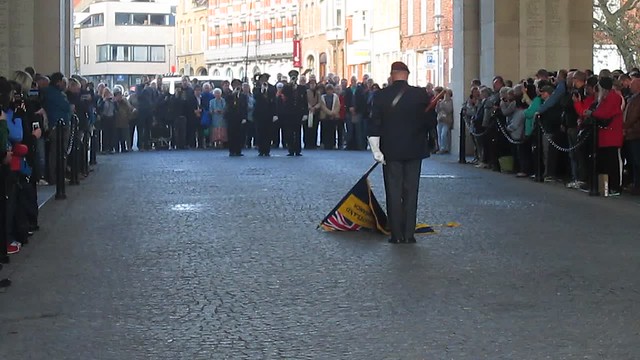
Click on the picture below to go to a short video I shot of part of the ceremony:-
No Comments »
