Archives » History

Càrn Liath Broch (i)

It’s not just Orkney where you can find the remains of brochs.

This one, Càrn Liath Broch, lies west of the A 9 just north of Golspie, Sutherland, Scotland. It’s very well preserved.

Park at the lay-by on the other die of the road – take care crossing, it’s fairly busy – and it’s a short walk to the broch

From the A 9, Moray Firth in background:-

Càrn Liath Broch

From north:-

Càrn Liath Broch, from North

From south:-

Càrn Liath Broch from South

Broch interior:-

Càrn Liath Broch, Interior

An external structure:-

Càrn Liath Broch, External Structure

Information board:-

Càrn Liath Broch Information Board

Crichton Castle

The castle is in Midlothian, by the village of Crichton, which is itself near Pathhead on the A68.

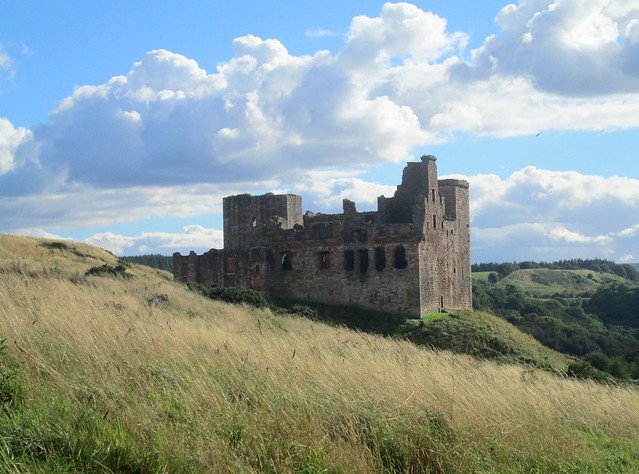
The castle from the access path:-

Crichton Castle

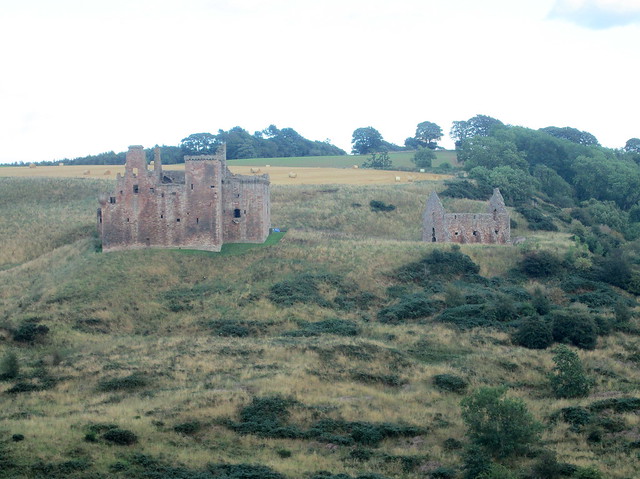
Castle and stables from minor road across the valley:-

Crichton Castle

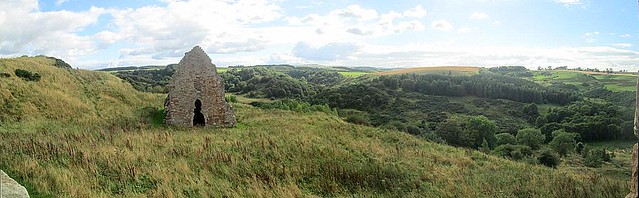
The stables (or they may have been a slaughterhouse or chapel) from the castle:-

Crichton Castle Stables

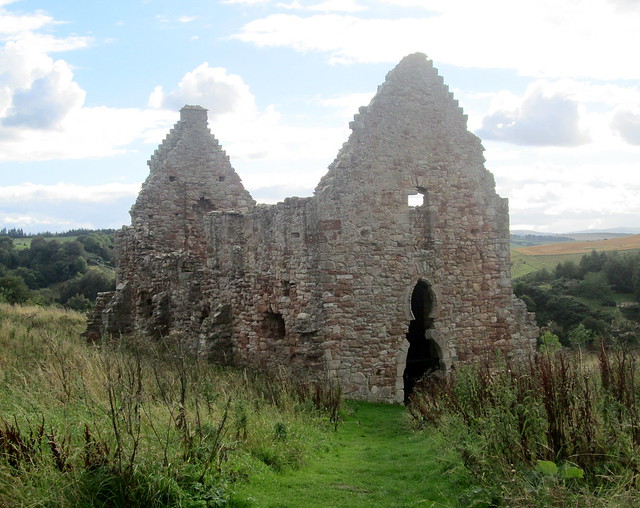
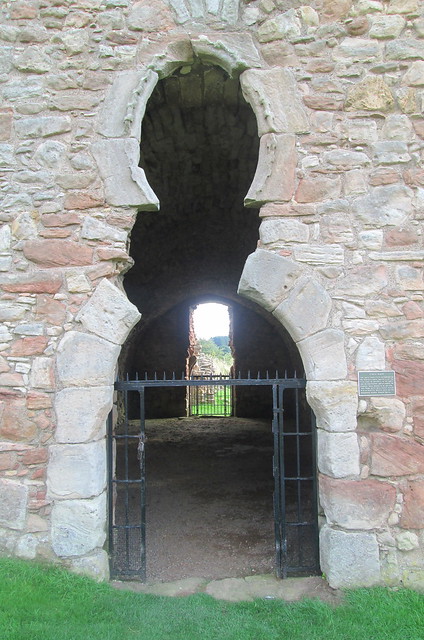
Closer view of stables:-

Crichton Castle Stables Close View

View through stables:-

Crichton Castle, View Through Stables

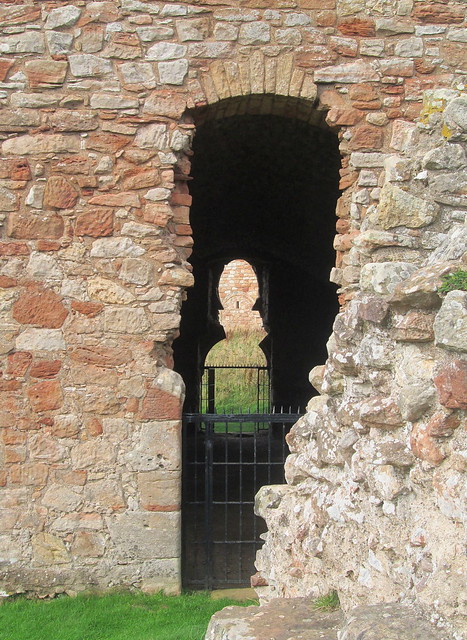
View to castle through stables:-

Crichton Castle, Through Stables

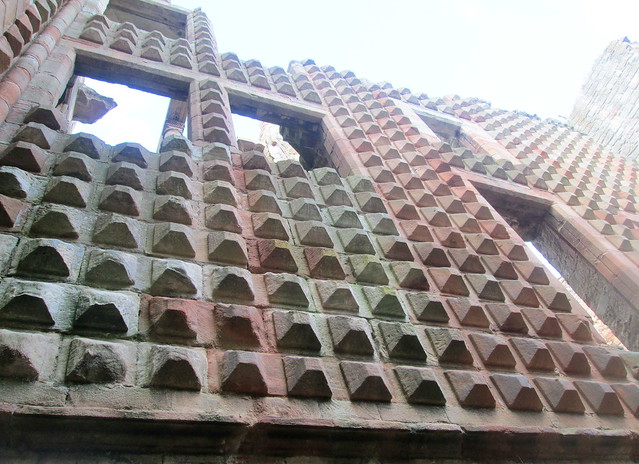
Unusual “pointy” internal wall of castle, apparently Italian influenced:-

Crichton Castle, Internal Wall

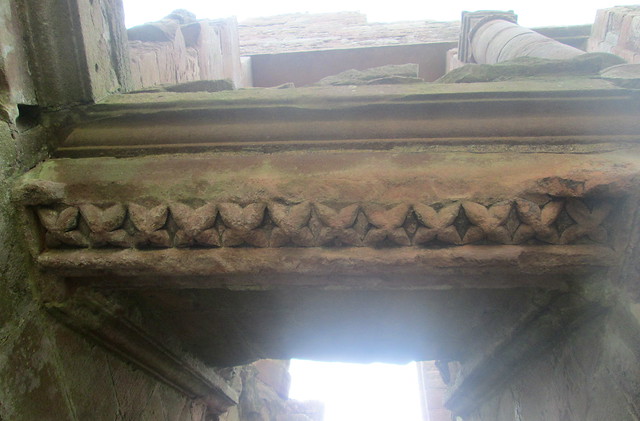
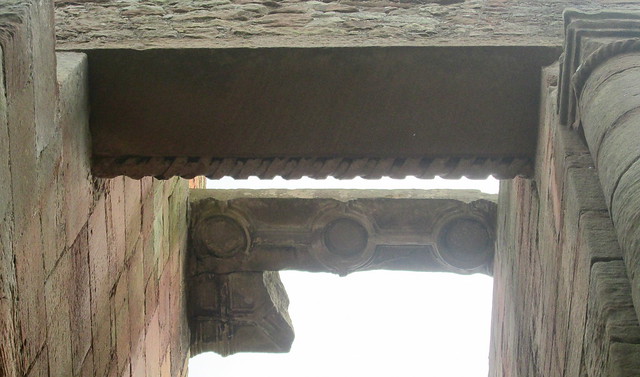
Internal detail on stonework:-

Crichton Castle, Internal Detail

More detail:-

Crichton Castle, More Internal Detail

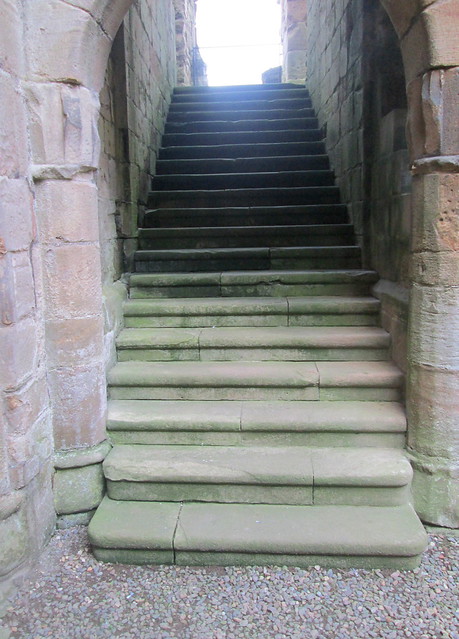
The castle contains Scptland’s first scale-and-platt (ie modern style) staircase:-

Crichton Castle  stairs

The Great War Generals on the Western Front by Robin Neillands

Robinson, 1999, 557 p (including ii p Contents and List of Maps, iv p Acknowledgements and Dedication, 19 p Index, 4 p Select Bibliography,) plus 8 p Photographs.
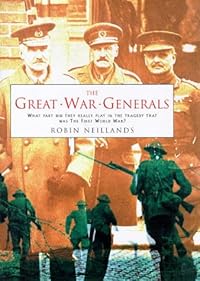
 The Great War Generals on the Western Front cover

The common perception of British generalship in the Great War – as put forth in many depictions of the conflict from at least Oh, What a Lovely War! through “lions led by donkeys” to Blackadder Goes Fourth and beyond – is of cavalry officers with little knowledge of infantry tactics in charge, of widespread incompetence and callousness, of throwing men rather than competence at the enemy, of safely staying well behind the lines. In this book Neillands sets out the evidence for and against these assertions and as a result comes down in favour of the generals. In many respects for me he was pushing against an open door. It has always struck me that if the British generals were so incompetent and useless how come we didn’t lose the war? Add to that the fact that the British (and Empire) force was the only major Allied combatant (setting aside the short – but still bloody – sojourn of the US Expeditionary forces) that did not suffer a large mutiny or rout and the questions ought to be why, if their leaders were so useless, were British soldiers so steadfast? Why were they so willing to follow orders – and keep doing so?

Despite its all-encompassing sub-title the book is chiefly focused on the British generals on the Western Front, though French and German generals are of course dealt with as necessary. Overall, however, it is more of a complete history of the British sectors of the Western Front rather than a summary of the doings of the generals who directed the efforts there.

Neillands states that it is only British generals that have been subjected to such criticisms as a group. No such opprobrium has been heaped on the French or German generals as a whole despite similar propensities to life squandering, particularly the Germans at Langemarck and the French in Nivelle’s offensive. Plus there’s always Verdun.

For all sides this was a new kind of war (though slightly prefigured by aspects of the American Civil War and the Russo-Japanese War.) None of the European agonists had been subjected to industrial war of this kind before, though in terms of numbers the French and Germans were prepared for it, the latter also in terms of artillery. All expected a war of movement – and a quick resolution. As it was the trench system came about by accident; in the attempts of both sides to outflank each other in the “Race to the Sea.” And throughout defence held the upper hand.

Like all British armies at the start of a war the BEF was inadequate to the coming task in numbers and equipment; lacking in machine guns and especially artillery. Its astonishing proficiency in rifle fire could not make up for this. It would take time – years – to provide enough artillery ammunition, to recruit, to equip and to train not only the soldiers but also the staff officers necessary for the army to function efficiently (and of these the staff officers take much longer to train.) Until that came about the generals, like the soldiers, had to do the best with what they had, and to learn the techniques and tactics required to succeed. Plus they were fighting Germans; dogged professional soldiers who never gave in easily, the best army in the field – certainly until the end of 1916 (when the British perhaps took over the mantle.)

Among other beliefs Neillands describes as myths is that all British troops on the first day of the Battle of the Somme moved forward in line and at walking pace. There was in fact a large variation in tactics, the generals on the ground being largely responsible for their own formations’ procedures. The sentence attributed to Lieutenant-General Kiggell, after Passchendaele, “Good God, did we really send men to fight in that?” has no provenance and is likely to be apocryphal. Neillands finds it incredible that any general faced with all the reports from the front, aerial photos, requisitions etc could have been unaware of the conditions. Quite why Third Ypres was nevertheless persisted with is a question harder to avoid.

Some criticisms are easily dispatched. Much fewer than half of the British generals were originally from cavalry regiments while an average of one general a week was lost to enemy action, hardly indicative of distance from the front. They were not hidebound tactically but learned from earlier reverses. However, in response to British innovations in attack the Germans continually adopted new defensive tactics and provided new problems to solve.

Neillands contends that the difficulties of prosecuting such a war have not been sufficiently acknowledged by the critics. The generals were from the outset instructed by the British Government to co-operate closely with their French allies. This in many respects tied the hands of both British Commanders-in-Chief, Sir John French and Sir Douglas Haig. Sometimes this necessary support, as at Loos, led to attacks the British generals did not favour. At the Somme and Third Ypres the necessity to divert German resources to relieve pressure on the French (from Verdun and the consequences of the French mutiny respectively) more or less demanded action.

The static nature of the trench system, the opportunities it gave the Germans to develop defence in depth (from Second Ypres in 1914 till their spring offensive in 1918 the Germans did not launch a major attack on the British Army anywhere along the line,) was a large factor in preventing a breakthrough. Allenby was not a notable success on the Western Front but in a war of movement in Palestine was able to show his capabilities more readily.

The main problem affecting the war’s conduct, though, was communications; which could not be relied on. Amid the smoke of battle, lines of sight were obscured; wireless technology was neither robust nor portable; telephone lines – even buried metres deep – were prone to severance by shellfire; carrier pigeons inadequate. The problem was never properly solved even by the war’s end.

Nor are any alternative strategies entirely obvious. Short of abandoning the war (so allowing Germany to keep its gains) – a course which the Allied Governments never contemplated – there was little option but to carry on.

Another factor affecting the generals was that Prime Minister Lloyd George never trusted them, Haig in particular. Neillands holds Lloyd George partly responsible for the British being forced to retreat by the German “Michael” offensive of March 1918 as he had held troops back in Britain rather than reinforcing the front. The overwhelming force of their initial attack would have caused problems in any case but even in its unstrengthened form the army, though it retreated, nevertheless did not break; the Germans were held.

In passing Neillands decries the “Pommie bashing” of latter day Australian and Canadian historians who variously claim the British “establishment” was biased against their own commanders and treated colonial troops as cannon fodder. While acknowledging the quality of these troops and the abilities of the Canadian General Currie and the Australian General Monash in particular, he shows most British divisions – and not a few generals – were equally effective.

Some criticisms are harder to defray. Typically there was a failure to exploit initial success quickly (in the case of Cambrai a disbelief in the extent of that success and a lack of preparedness for it) and an all too prevalent tendency to keep bashing away when an attack slowed down, in the belief that the Germans were weakening and “one more push” would prevail.

Yet the final victories – and they were victories, the Hindenburg line was breached, the British Army ended up as far advanced from the trench lines as Mons (where its participation in the war had started) – are not given nearly as much attention as the earlier “failures”. That is an indictment of those who give more weight to the generals’ shortcomings than to the achievements of the men under their direction. It was the war, and its continuation, plus the inability of the technology of attack to overcome that of defence that was the problem.

This is a book that, while not ignoring their faults, attests to the good faith of the British generals of the Great War, men doing their best amidst adverse circumstances.

Pedant’s corner:- “Field Marshal Sir William, Robertson’s father” (no comma,) “Seventy-eight British generals were lost their lives” (no “were”,) “led to the way it in which it was conducted (the way in which,) “over 9, 000,000” (there were frequent occurrences in the text of this extraneous space when a large number was cited and the practice wasn’t consistent,) a missing comma before a quote (x 5,) mache timetables (march timetables?) “we have go back” (have to go back,) “the infantry were mustered” (was mustered,) “Lieutenant-General Sir, Henry Grierson” (no comma,) “including the German and Soviet armies” (Soviet armies? Pre-1917?) ulster (Ulster,) “The force of France were already in trouble” (forces,) “and and” (only one required,) “in orders to denigrate” (in order,) “Readers are invited to look again at the message French sent to Smith-Dorrien again” (only one “again” needed,) “the true state of affairs were brought to the attention” (was brought,) General Franchet d’ Espery (d’Espery, x2,) “gave Haig time assess the situation” (to assess,) “just how grievously the Haig’s command had suffered (no “the”,) “the artillery … were…. their stocks of ammunition” (was…. its stocks,) Bellewaarde (Bellewaerde?) “the BEF were now set upon” (was set upon,) “smoke screen screen” (only one “screen” required,) to cut of the wire (off,) earlier in his book (this book,) any battalions fire plan (battalion’s,) “might wander of their axis” (off,) “that the Rawlinson’s attack” (no “the”,) a missing comma. “This family were not wealthy” (His family was not wealthy,) a missing full stop x 5, XV Corps’ (Corps’s,) with with (only on “with” needed,) “and the defences the Germans were building…… was like nothing seen before” (were like nothing seen before,) “four-battalions-to-a-brigade. Dominion division” (“four-battalions-to-a-brigade Dominion division”,) “the bombardment rose to a crescendo” (a crescendo is the rise, not its climax,) “First Army were …. Third Army were …. Fifth Army were …. (in each case “was”,) “to be launched to on” (no “to”,) “force their forces along the coast, either to withdraw eastwards” (no comma.) “Zero hour for was set” (Zero hour was set for.) “Given his a well-earned reputation” (no “a”,) “three years earlier. Currie had been” (no full stop,) Lieutenant General Sir Kavanagh (Lieutenant General Sir Charles Kavanagh.) “The cavalry were to be commanded” (was to be,) “Tuesday 20, November” (no comma,) Hidenburg Line (Hindenburg, elsewhere correct,) the Middlesex Regoment (Regiment,) General Cardona (Cadorna,) “the main theatre in this war the Western Front” (war was the Western Front,) “that the he had always wanted” (that he had,) “the enemy were preparing an attack” (was,) narrow-gange track (gauge,) “the German armies in west” (in the west,) “for the politicians understand” (politicians to understand,) the United State (States,) “to wait and attack, again in 1919” (no comma.) “This is not the say” (not to say,) Austrain (Austrian.) “The learning curve …. and only starting to rise” (started,) “against the Bolshevik” (Bolsheviks,) “he was named. Presidential Chief of Staff” (no full stop.)

Arnhem by Major-General R E Urquhart

Pan, British Battles Series, 1972, 221 p plus 8 p photographs. First published in 1958.

 Arnhem cover

In 1944 Urquhart was the Commander of the 1st Airborne Division which along with 1 Polish Parachute Brigade carried out the ‘Market’ part of the overall ‘Market Garden’ Operation to take the crossings over the Rivers Maas, Waal and Neder Rhine by aerial assault with a ground push intended to relieve them. As such he was therefore in command at Arnhem, location of the famous “Bridge Too Far.”

The book mainly covers Urquhart’s own experiences at Arnhem to the west of the town and bridge but it does broaden out at times to cover other aspects of the operation.

Perhaps a desperate adventure in the best of circumstances, the enterprise was totally compromised by the plans for the complete operation being found by the Germans on the body of a US officer. The German commander, Model, had in any case quickly assessed the likely focus of the attack and made his dispositions accordingly. In addition, from the outset there were problems with British communications, as radio sets failed to function properly. As a result subsequent air supply fell on the places designated before the operation started which were mostly back in German hands by the time the drops took place. Urquhart pays tribute to the dedication and bravery of the aircrews on these missions. They had to fly in a straight line for kilometres sometimes making several passes over the drop zone all in the teeth of German anti-aircraft fire. As a result many planes and lives were lost. So too with the fortitude of the defenders of the Allied positions at the bridge and in the pocket.

A strange circumstance seemed to take place with medical provision for casualties at one location where relatively lightly wounded of both sides were treated in the same building (under German guard) before returning to their respective positions.

Oddly, I felt that a history of the battle might have been better written by someone not so intimately involved with it. Urquhart was perhaps too close to the events to clarify them sufficiently for the general reader.

Pedant’s corner:- Horrocks’ (Horrocks’s,) none the worst (none the worse,) at the feet of a ten-feet-high brick wall (at the foot of,) 82nd Us Airborne Division (US.) “For a while we were enduring…” (For while we were enduring,) “but an forming close defence” (am forming,) XXX Corps’ (XXX Corps).

The Black Jacobins by C L R James

Toussaint L’Ouverture and the San Domingo Revolution

Allison & Busby, 1984, 426 p including 11 p Bibliography and 28 p Appendix plus i p Map of San Domingo, i p Contents, iii p Foreword and iii p Preface to the First Edition. First published in 1938.

 The Black Jacobins cover

C L R James was a Trinidadian historian and journalist whose book on cricket has been described by none other than John Arlott as the finest book written on the game. He was also a Marxist which if you didn’t already know could be divined here from the frequent use of the word bourgeoisie and many mentions of class. Note also, “The rich are only defeated when running for their lives.”

The San Domingo Revolution was the only successful slave revolt in history. It eventually led to the establishment of the state of Haiti. Toussaint L’Ouverture, who changed his name from Toussaint Bréda when he joined the revolt, was its undoubted hero. James says however that “Toussaint did not make the revolution. It was the revolution that made Toussaint.”

San Domingo was a prodigious source of wealth for its white sugar planters and the merchants back in France who traded its product; wealth built on the backs of the slave workers imported from Africa, a slave trade which James says had turned Central Africa from peace and happy civilisation to violence and ferocity, the product of an intolerable pressure on the African peoples. Of those who dispute that statement we have, “Men will say (and accept) anything in order to foster national pride or soothe a troubled conscience.”

Before the revolt San Domingo was riven by differences; between the planters and the bureacracy, big whites, small whites, Mulattoes, blacks. (For some reason I couldn’t fathom James always capitalises the word Mulattoes.) For the small white with not much in the way of property, “race prejudice was more important than even the possession of slaves. The distinction between a white man and a man of colour was for them fundamental.” An illustration of the central importance of colour to San Domingan life was that, “They divided the offspring of white and black and intermediate shades into 128 divisions. The true Mulatto was the child of pure white and pure black, a quarteron was the child of a Mulatto woman and a white man. This went all the way down to the sang-mêlé of 127 parts white and one part black but who was still a person of colour. These distinctions exemplify “the justification of plunder by any obvious differentiation to those holding power.” I note here that James describes pure blacks as negroes. I suppose the usage was common in the 1930s when he was writing but it strikes an odd note now.

Free Mulattoes were able to save, to own property and eventually to lend money. Their threat was such that, “white San Domingo passed a series of laws which for maniacal savagery are unique in the modern world.” But the Mulattoes were too numerous and the colonists had to be satisfied with humiliations such as restrictions on dress, meetings, travel, and so on. Black slaves and Mulattoes hated each other, and those who were more white despised people with blacker ancestry. This internalisation of racial prejudice was still prevalent in the Jamaica of James’s present.

In 1789 San Domingo accounted for 11 of the 17 million pounds of France’s export trade. The beginning of British efforts to abolish slavery was an attempt to undermine this economic powerhouse. “The slave trade and slavery were the economic basis of the French Revolution.” The fortunes made, “gave to the bourgeoisie that pride which needed liberty and contributed to emancipation.” But then came the French Revolution and the ideals of liberté, egalité and fraternité, which took root in the fertile ground of the plantations.

When the uprising finally came James says that the slaves in their vengefulness were surprisingly moderate, far more humane than their masters had been, not maintaining it for long – unlike the systematic and enduring abuse the slaves had suffered. Toussaint himself established early a “great reputation for humanity, a very singular thing in the San Domingo of those days.” The crucial event for the sustenance of the revolt was the abolition of slavery by the Constituent Assembly in Paris, a reason for the slaves to cleave to revolutionary ideals thereafter.

Britain then promptly rowed back on the abolition of slavery and attempted to take over San Domingo. Under Toussaint the former slaves inflicted on Britain “the severest defeat that has befallen a British expeditionary force between the days of Elizabeth and the Great War.” The British lost more men in actual deaths than Wellington did to all causes in the entire Peninsular War, “‘her arm for six fateful years fettered and paralysed.'” Held by Toussaint and his raw levies Britain could not attack the revolution in France.

James has an undiluted admiration for Toussaint (along with Nelson and Napoleon one of the three outstanding personalities of the times) though admits his one fatal flaw. His allegiance to the French Revolution made him what he was; but in the end this ruined him. “His desire to avoid destruction was the very thing that caused it. It is the recurring error of moderates when face to face with a revolutionary struggle.”

The rise of Napoleon is seen by James as the bourgeoisie reasserting itself. Under Bonaparte it was the French intention to restore slavery on the island and their actually doing so in Guadeloupe that led to Haiti’s final independence. Toussaint’s blind spot had seen him acquiesce to the new French Governor, eventual imprisonment, transportation to, and eventual death in, France. It was Toussaint’s more ruthless deputy Dessalines who came to see independence was the revolt’s only hope.

James keeps describing the slaves and their culture as primitive (as he also characterises those of Africa.) Is this as a result of his Marxist view of history and its laws? He notes that slaves brought from Africa were compelled to master European languages, “highly complex products of centuries of civilisation.” There was therefore “a gap between the rudimentary conditions of the life of the slave and the language he used.” (Note also that inclusive – exclusive? – “he”.) It seems to me these sentiments are profoundly condescending – to African and slave alike.

Everything in the book is seen through the prism of Marxism, an approach which seems almost quaint these days as does James’s conclusion that salvation for the West Indies lies in Africa.

Aside:- For a fictional treatment of the slave revolution I would recommend the excellent All Souls’ Rising by Madison Smartt Bell. Having looked that up I discover Bell has published two subsequent books on the subject.

Pedant’s corner:- “All the slaves, however, did not undergo this régime.” (Not all the slaves underwent this régime,) “All of them did not submit to it.” (Not all of them submitted to it,) illtreatment (more usually it’s ill-treatment,) knit (knitted,) “adventurers seeking adventure,” (well, yes,) “72 million pounds’ weight of raw sugar and 51 million pounds of white,” (either use the apostrophe or not, don’t mix them,) the the, “both Hyacinth and another men” (man,) Francois’ (Francois’s,) Laveaux’ (Laveaux’s,) understod (understood,) acutal (actual,) Dessalines’ (Dessalines’s.) “It is a typical example of the cloud of lies which obscure the true history” (the cloud of lies which obscures,) “to neglect the race factor as merely incidental as an error only less grave than to make it fundamental” (as merely incidental is an error,) Maurepas’ (Maurepas’s,) Capois’ (Capois’s,) strewed (strewn,) Clairveaux’ (Clairveaux’s,) wirter (writer,) indpendent (independent,) a missing parenthetical end-comma, tonelle (tonnelle?)

Industry in Avilés

In the Museo de la Historia Urbana de Avilés (Museum of the History of the Town of Avilés) there are many exhibits relating to the town’s seafaring and industrial past as an iron manufacturing town as well as demonstrating the town’s expansion.

The town still has industry as can be seen from this photo taken from the SS Black Watch in port:-

Industry in Avilés

There is a large window on an upper floor to the rear of the museum specially constructed to give a view of Avilés’s oldest building, the Church of Los Franciscanos (see a previous post.)

Below are two views of the same old street from different directions:-

An Old Street in Avilés

Street in Avilés

This was an old colonnaded market we stumbled across:-

Old Market Colonnades, Avilés

Culloden (i)

Drummossie Moor, site of the Battle of Culloden, where Bonnie Prince Charlie suffered his first and only defeat at the end of the ’45, otherwise known as the Jacobite Rebellion of 1745-6 (an event which signalled the end of the old Highland way of life,) is one of the more dispiriting places I have visited. It seems a godforsaken area for men to have died over. I went there again this year when the good lady’s blog friend Peggy was over from the US in May. For some strange reason, though, it wasn’t as depressing this time as last. Maybe it was the presence of a Visitor Centre (built in the interim) which made it seem not so bleak and remote.

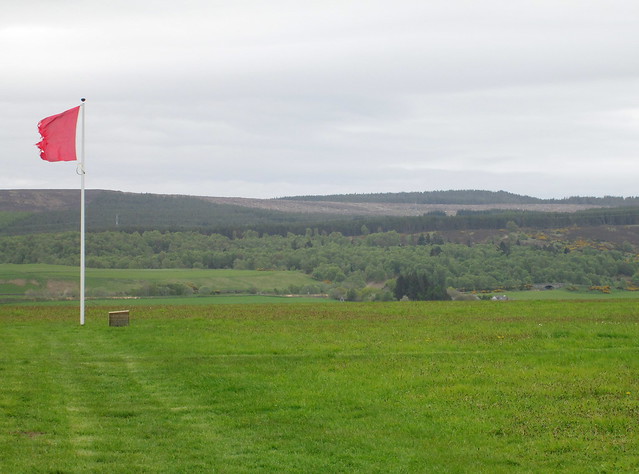
This is a close-up view of the government (Hanoverian) line – marked by the red flag.

Culloden battlefield

Thios one was taken from the centre of the battlefield. Away in the distance (blue flags) is the Jacobite start line.

Culloden

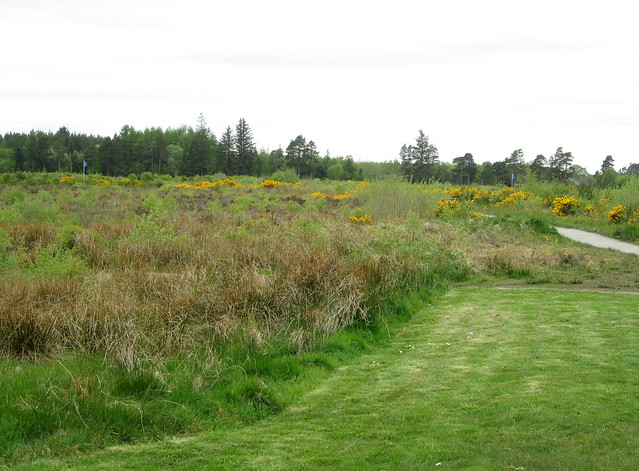
This is looking back to the Governent lines (red flags) from the battlefield’s centre.

Culloden Battlefield

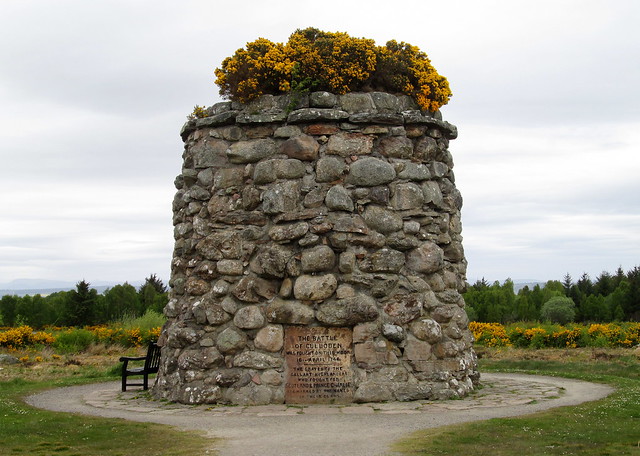
A cairn lies at the battlefield centre:-

Culloden Memorial Cairn

The cairn’s wording is slightly inaccurate. Yes, they fought for Prince Charlie, but in the main they fought for their clan chief (feudally) and not for Scotland per se.

Wording on Culloden Memorial Cairn

Periodic Tales by Hugh Aldersey-Williams

The Curious Lives of the Elements, Viking, 2011, 428 p.

The first thing to say is that, despite its title(s), this is not a Chemistry book. In its index there are eight references to Shakespeare (only one fewer than for the chemist Jöns Jacob Berzelius and more than for any individual scientist barring Humphry Davy, Carl Scheele, William Ramsay, Marie Curie and Dmitri Mendeleev) – four to Goethe, three each to Wagner and Van Gogh. Other seemingly unlikely name checks are given to Wilfred Owen and Barbara Hepworth, not to mention Hunter S Thompson’s novel Fear and Loathing in Las Vegas.

What it is, is a book about how Chemistry permeates our lives, not just in the biological sense – for without Chemistry our bodies could not work – but in the cultural sphere, in our day-to-day existence. (There is even a reference to Irn Bru! – in a frankly bizarre context.) As such the book ought to appeal to the general reader rather than just Chemists. But the importance of Chemistry in painting, sculpture, opera, poetry, fiction, even architecture ought not to surprise. As the back of the book reminds us, “Everything is made of them [the elements,] from the furthest reaches of the universe to this book you are holding in your hands, including you.” English words for white (apart from snow) are bound up with the compounds of calcium they embody, marble, alabaster, chalk, ivory, bone, teeth. (I object, here, that the “White Cliffs of Dover” are anything but; unless seen from a distance.) The Latin calx yields the Italian calcio for what Aldersey-Williams calls soccer, perhaps because a goal is scored by the ball crossing a chalked line. The word for railway in nearly every language except English reflects the iron from which it is constructed, chemin de fer, Eisenbahn, ferrovia, vía fería, järnväg, tetsudou. Akin to gold in its chemical unreactivity, the valuation of platinum – the only element first isolated by pre-Columbian Americans – over gold is a cultural choice; not due to rarity but snobbishness.

The book contains photographic illustrations every so often but they can at times be a little indistinct as they are reproduced only in monochrome.

Like his Swedish compatriot Carl Scheele (who has a fair claim to have discovered oxygen) Jöns Jacob Berzelius is all but forgotten – despite pioneering laboratory staples like filter paper and (the now superseded) rubber tubing for connecting laboratory equipment together, first using the words catalysis and protein, inventing chemical symbology and coming up with the idea that elements combined in fixed proportions and hence chemical formulae. If his name had been attached to these as Bunsen’s was to his – admittedly splendid – invention that might not be the case. But it seems the Swedes were/are reticent about blowing their trumpets. Due to their chemists’ wielding of an essential piece of technology – the blow-pipe – no less than seven elements – ytterbium, yttrium, terbium, erbium, holmium, scandium and tantalum – were identified from ores that came from a single mine near the town of Ytterby but there is now no trace of the mine nor is there a visitor’s centre. The Swedes may be missing a trick there.

Discovery of “new” elements has always to an extent depended on available technology. Better furnaces and higher temperatures explain the historical progression of metal extraction through the Bronze and Iron Ages and the isolation of zinc in India by the 13th century, the alkali metals, highly reactive and thus resistant to chemical extraction, were only torn from their compounds by the greater power of electricity – not harnessed till just before 1800 – the spectroscope enabled elements to be inferred from the incursion of additional lines in the resultant spectra, transuranics could only be synthesised when atom–colliding machines became available. New liquefaction techniques allowed William Ramsay in the 1890s to conjure new elements out of thin air. (Well, since it was liquefied, I suppose it was really thick air.) Ramsay populated a whole previously unknown Periodic Table Group, the noble gases – neon et al – using this method.

Aldersey-Williams has a tendency to employ the words light or heavy instead of low/high density respectively and to refer to an element when strictly it is the presence of its compounds, atoms or ions that is under discussion. Plus he infers ozone is bonded in a triangle. Its atoms may be arranged in a triangle but its bonds are not. He also says “sodium is now the colour of the city at night” as well as “our principal means of knowing this element.” My local street may be “lit from above by the sodium lamps,” but these have been largely replaced by the blueish white of mercury vapour lights on main roads.

He has however written an interesting and informative, at times quirky, book.

The Road To Berlin by John Erickson

Stalin’s War With Germany, Volume 2. Grafton, 1985, 1199p – including 223p of references and sources, 78p of bibliography and a 38p index.)

The Road To Berlin

I read the previous volume on Stalin’s war with Germany, The Road to Stalingrad, last year. Like that, this too is blighted with an alphanumeric soup of Army and Front names. The Red Army had variously:- Shock Armies, Guards Armies, Guards Tank Armies, Air Armies, Artillery Armies, Motorised Divisions, Rifle Divisions, Guards Cavalry Corps etc – designated by prefixes such as 1st, 2nd – all organised into different Fronts – Southern Front, South-Western Front, Leningrad Front, Steppe Front, Voronezh Front, Bryansk Front, four Ukrainian Fronts, three Baltic Fronts, three Belorussian Fronts, which morphed and changed or merged as the war progressed. Added to this is the proliferation of German units some of which are delineated in words (Sixth Panzer Army) or Roman numerals (XLVI Panzer.) Keeping track of it all is well-nigh impossible. Best to go with the flow as the narrative is very broad brush and consists mostly of plans to attack here or there with the various Soviet forces available to whatever Front is being discussed at the time.

The book gets out of these difficulties when it comes to the diplomatic area, being lucid on the various discussions with the Western Allies on Poland, Greece, Romania etc. In the matter of discussions Tito was unusual among the resistance leaders in German-occupied territories as he stood up to Stalin. The Western Allies were hamstrung in their dealings with Stalin as regards the post war settlements as they had no armies in Eastern Europe. A surprise to me was that there had apparently been a German plan to kidnap President Roosevelt from the Big Three conference in Tehran. Otto Skorzeny (who did rescue Mussolini from his mountain top imprisonment after the Italian change of sides) had a look at the possibility but dismissed it. Seemingly an aeroplane did land some German agents but the plot was foiled as the Russians had a spy in their midst. How much of this was genuine, how much a Soviet fabrication is debatable; Erickson says he has seen no documentary evidence.

This volume starts with the aftermath of the encirclement of the German Sixth Army at Stalingrad. Thereafter it describes an almost consistent series of Soviet victories, though there were occasional holdups and slight reverses along the way. The emphasis on the Stavka is lessened here compared to Volume 1, perhaps because there were little or no crises for the Red Army to endure from 1943 on, only extremely bloody slogging. The role of the artillery in reducing German positions prior to Soviet attacks is made obvious – plus the importance of holding back the tanks until the infantry had made the breakthrough.

By this account the halting of the Soviet armies in front of Warsaw was not entirely an exercise in cynicism. They had just made a rapid advance, were at the end of long supply lines, with depleted forces and worn equipment and had suffered considerable losses (nearly 300,000 casualties over the two Fronts concerned in the relevant campaign.) Despite a wide exposure to World War 2 histories I had not been aware till reading this that there had also been an anti-Nazi rising in Slovakia as well as in Warsaw. Then again matters on the Eastern Front have tended to be skimmed by US or British accounts.

It is notable that in this book the war in Italy, D-Day, the breakout from Normandy, the crossing of the Rhine etc are incidental, off-stage, barely mentioned except in terms of co-ordination of attacks. The scale of the Soviet effort comes through loud and clear. In their terms, theirs was the only war. Even some of the German units involved in the Battle of the Bulge were later moved east.

The savage nature of the fighting for Reich territory in East Prussia and in front of and inside Berlin is given note. The 1st echelon of Soviet troops was well-trained, even clean-shaven, and relatively disciplined. The 2nd echelon was a complete contrast, made up either of POWs released by the advance and hurriedly retrained or conscripts from the various recently liberated Soviet republics – all of whom had suffered at German hands (Erickson’s description is “brutalised”) and some of whom may have resented both sides equally.

There is less sense in this volume of Stalin’s controlling hand on the armies, again perhaps due to the victories being won. His impatience comes through, though, and his possible vengefulness.

At one point Erickson gives the figure of over 1,500,000 Communist Party members being casualties in the Great Patriotic War. This underlines the magnitude of the Soviet Union contribution to winning the war as not every soldier would have been a party member. And there were of course the civilian casualties. The final attacks were pushed through with huge losses. Still, even at the end, there were German armies in the field capable of resistance, though some others were going through the motions.

Erickson had the benefit of speaking to some of the Soviet generals involved in writing his history of “Stalin’s War,” It was however written well before the demise of the Soviet Union and may well now have been superseded.

The Road To Stalingrad by John Erickson

Stalin’s War With Germany Volume 1
Grafton, 1985, 814p (including 144p of sources and references and a 26p index.)

I remember seeing a newspaper review of this and thinking, “That sounds interesting, I’ll maybe get it in paperback.” Then I realised it was the paperback. (£7.99 was a lot of money for a book in 1985. And there was the second volume to consider). It was a few years later before I bought both, I believe. They are weighty tomes and I didn’t feel able to give them the necessary time till now.

Originally published in 1975, firmly during the cold War era, The Road To Stalingrad filled a gap by being the first UK history of the Russian Front to focus primarily on Soviet sources.

Its starting point is the disruption to the Soviet armed forces caused by the purges of the 1930s, the rearrangements and lack of preparedness which that caused, all of which was exacerbated by the strange purblindness of Stalin with regard to German intentions in the run up to war. Thereafter it considers the frontier battles, the deep German advance, touches briefly on events behind the German lines, deals with the Moscow counterstroke and the following abortive Soviet offensive in early 1942 with which Stalin thought he might win the war that year, up to the German drive to the Volga and the Caucasus.

The book is strongest on the deliberations within the stavka, the Soviet high command, but really that means the decisions reached by Stalin. Marshal Shaposhnikov, the main military voice within the stavka – even though Zhukov was made Stalin’s deputy in 1942 – seems to have learned early to go with that flow.

Unfortunately it is not till page 538 and the start of the Battle of Stalingrad that the narration comes to life. Here Erickson begins to leaven his account with details of the battle. Up till then he is more concerned with the general sweep of events and is peculiarly fixated on enumerating the switching of multifarious Divisions between the various Soviet Armies, Groups and Fronts. Along the way there is a daunting array of Russian General’s names to deal with.

While the book does have maps, they are very few and only depict large areas. Some showing the smaller movements involved would have provided clarification of the somewhat dense prose.

What, for me, it all illuminated was the unlikelihood of any attack to liberate Europe by the Western Allies being likely to succeed had Hitler’s armies not already been embroiled and macerated in the East. The sheer numbers of troops involved, the scales of the operations, are stunning. As it was, Stalin’s pressing of Britain and the US to initiate a Second Front quickly was deflected as they were as yet not adequately prepared for any such endeavour.

At the end of the 642 pages of narrative we have reached only the encirclement of von Paulus’s Sixth Army, trapped in the city. The second volume of Erickson’s history, The Road To Berlin, awaits. It may be some time.

free hit counter script