Toby’s Room by Pat Barker
Posted in Other fiction, Reading Reviewed at 12:00 on 4 April 2024
Penguin, 2013, 269 p.
 I realised at the end of this after seeing the publisher’s blurb at the back that this is a sequel (of sorts) to a previous Barker novel, Life Class, which features some of the same characters.
The main focus here is on Elinor Brooke, who in childhood formed a very close relationship with her brother Toby, on his part chiefly because she was a kind of replacement for his dead twin. In 1912, Elinor gets a place at The Slade Art School and while studying there she meets Kit Neville and Paul Tarrant who will both be important to the novel’s plot.
The Great War is the pivot of the story (as it was for all of those who matured in time for its trajectory to direct their lives.) Toby, Kit and Paul all join up and Elinor sends time worrying about them all – but especially Toby, even though in its early stages she and Paul had become lovers. His enlistment put a wedge between them, though, and their communications become sparse.
Most of the tale is seen from Elinor’s viewpoint, including various of her diary entries, but increasingly scenes begin to relate more of Paul’s experiences.
Elinor’s fears are confirmed when the telegram arrives with the news that Toby is “Missing. Believed Killed.” The parcel containing Toby’s effects, smelling as it does of the stench of the trenches, is an added trauma. Her parents withdraw into themselves and Elinor begins to fixate on whether Toby is really dead and if so how it happened. She moves into Toby’s room (thus giving Barker her title: and a metaphor for Elinor’s retreat into denial.)
When Paul is wounded Elinor is reluctant to visit but as she wants him to contact Kit, who was in Toby’s regiment, she eventually does so. Kit himself suffers a horrific facial wound and is sent to a surgical hospital for treatment. When Elinor visits him he refuses to give any detail about Toby’s death but while there she encounters her old art tutor Professor Tonks who enlists her to help draw the progression of facial reconstructions as successive surgeries take place on the patients.
Barker has of course previously examined the Great War in her “Regeneration” trilogy. Her writing is immersive and her knowledge of the time lends this tale a great wealth of incidental detail. Another Slade contemporary, Catherine, has German ancestry. She and her family suffer the ostracism enemy aliens – even those born in the UK – were subjected to at the time. The horrors and exigencies of life in the trenches are shown matter-of-factly but unflinchingly. The psychology of it all is convincing enough and Kit’s memories of Toby as eventually related to Paul reveal him to be somewhat different from Elinor’s impression of him, not treating the men as kindly as he should have, a foreshadowing of the revelation about the way in which Toby died.
This is vintage Barker. She rarely disappoints.
Pedant’s corner:- “the whole place must have shook” (must have shaken.) “Somewhere near by” (Somewhere nearby,) “that’s one less to worry about” (one fewer,) putties (puttees – used later,) “a cluster of white-coated doctors and nurses were supervising the unloading of the wounded” (a cluster … was supervising,) “coming up the steep lane that lead from the Embankment” (that led from,) “oblivious of the city” (oblivious to the city.)
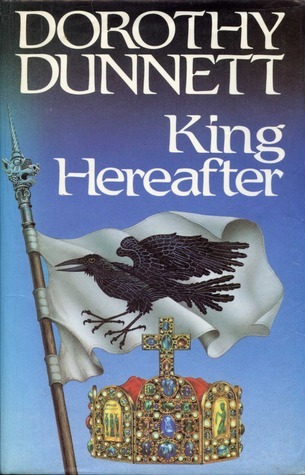 The sparseness of the historical record for Scotland in the Dark Ages leaves something of a blank canvas for the novelist to exploit. In Dunnett’s account of the life of
 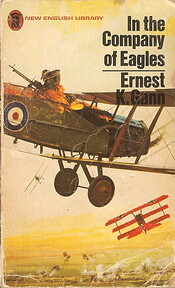 This novel of aerial combat in the Great War focuses on Sergeant Paul Chamay of the 322nd Escadrille in the Service Aéronautique and Leutnant Sebastian Kupper of Jasta 76 of the Luftstreitkräfte. Early in his combat experience Chamay sees his friend and mentor, Raymonde, killed by a German flying an Albatros with a distinctive target painted on its fuselage. Chamay is enraged since, though Raymonde’s aeroplane was incapacitated, he might have survived had Kupper (the Albatros was his) not come in to fire at him again, hitting him in the head. Chamay is from then on fixated on seeking out that Albatros and killing its pilot.
 Mitchell has form with unusual novelistic structures. In Cloud Atlas he embedded several stories physically one within another. Here, in a book about the history of a briefly flaring sixties band (the Utopia Avenue of the title,) he doesn’t go as far but has set his novel out as if its sections were tracks on their three LPs. Each of its six main sections is prefaced by an image of the supposed label of one side of an album and its chapters focus on the lives of the writers of its songs, bassist Dean Moss, ex folk singer Elf Holloway and virtuoso guitarist Jasper de Zoet. The group’s drummer, Peter ‘Griff’ Griffin, didn’t compose but gets one writing credit for devising a drum pattern for one of Elf’s songs. Occasional scenes are seen from other viewpoints but these are rare.
 I’m not quite sure how to categorise this. I’ve seen it described as Alternate/Alternative History (what I prefer to call Altered History) but I can’t see any change in actual history in it. It has no discernible