Posted in Museums, Trips at 20:30 on 12 July 2020
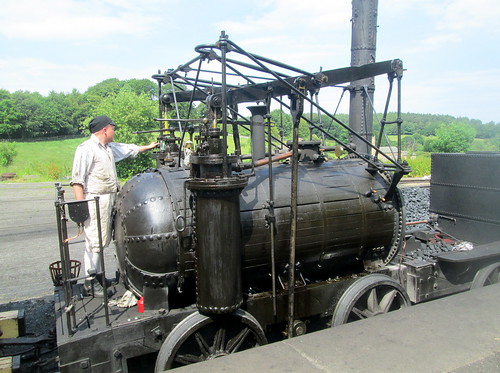
Puffing Billy and train:-

Puffing Billy, old steam locomotive at 1820s wagonway, Beamish:-
Puffing Billy and carriages video:-
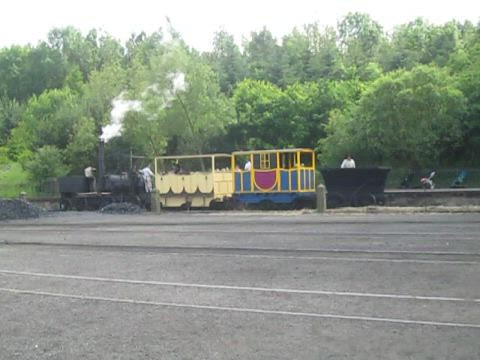
Video of Puffing Billy on the move:-
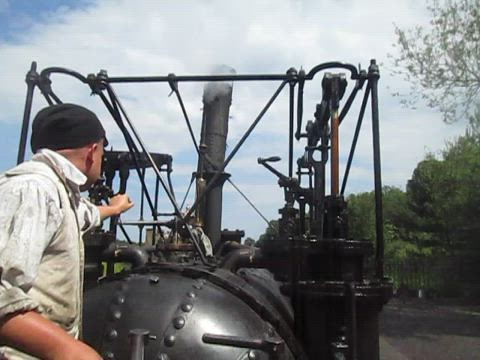
The Steam elephant – in engine shed at 1820s wagonway:-

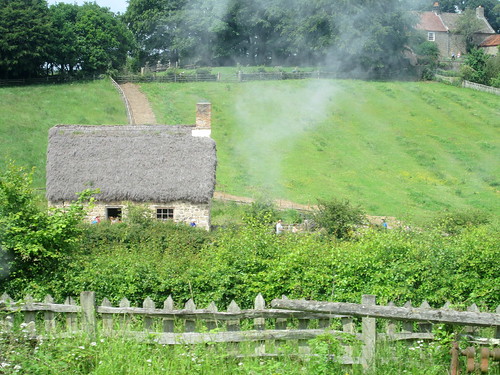
Thatched Cottage:-

Thatched Cottage and steam from Puffing Billy, Pockersley Hall in background:-
Wooden structure at end of wagonway. Old winding gear?

Church and Pockersley Hall from wagonway:-

Pockersley Hall from approach road:-

Pockersley Hall and garden:-

Weathercock at the tram/bus halt for 1820s wagonway and Pockersley Hall:-

No Comments »
Posted in Museums, Trips at 12:00 on 9 July 2020
On our trip to Northeast England last year we took the opportunity to visit Beamish Open Air Museum, a place I’d always wanted to see since first I heard about it. It didn’t disappoint. It’s a wonderful nostalgia fest for those of a certain age.
I liked the transport exhibits – which are functional. Beamish occupies a large area. You could walk round it but it would take you a while.
Trams and a bus:-
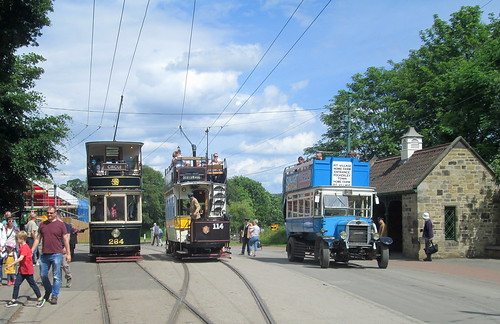
More trams:-

A Porto tram (not on duty that day):-

Tram/bus stop:-

The weathervane on the stop is tram shaped:-

Railway Locomotive and Carriages:-

Dipwood Halt, A small scale railway halt:-

Turntable at Dipwood Halt:-

No Comments »
Posted in Architecture, Baltic Cruise, Museums, Trips at 12:00 on 30 April 2020
Winter Palace Gates. Famously “stormed” in the October Revolution of 1917. Except the film Eisenstein made of it rather overplayed things. There was very little resistance:-

Behind the gates lies a courtyard where there is one of the entrances to the Hermitage Museum:-

Queue for entry to Hermitage Museum:-


Trees in courtyard:-


Looking back to gates:-

No Comments »
Posted in Architecture, Baltic Cruise, History, Museums, Trips at 12:00 on 16 April 2020
This was the big one. I had been to St Petersburg before – when it was Leningrad, on a school cruise back in the heyday of the Soviet Union when we were shown the bullet holes on buildings’ walls still left over from the siege of the city during the Great Patriotic War (as World War 2 is called in those parts) – but my wife hadn’t, and with her interest in Russian history it was a place she had always wanted to see and was the reason we chose to go on this cruise at all.
The city straddles the River Neva (and a bit beyond) which therefore appears in many of our photographs. It is also home to some magnificent architecture, beautiful palaces from the time of the Tsars (in stark contrast to the conditions in which ordinary folk lived, sometimes ten or more to a room in pre-revolutionary days.)
The Winter Palace, St Petersburg, from across River Neva:-

The Winter Palace is part of the famous Hermitage Museum another part of which – along with a couple of ferries – is seen below:-

Other buildings on River Neva frontage-

I got a closer view of the Naval Academy:-

The Peter and Paul Fortress, lies on an island:-

Closer view seen through rainy coach windows:-
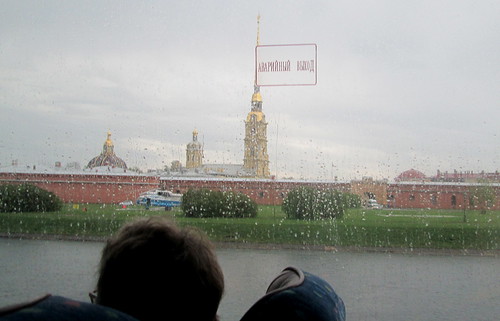
I couldn’t get far enough back to get all of this building in. In St Petersburg terms it’s fairly unremarkable:-

A gilded tower in the city centre. (Note saltire flag in blue on white – St Andrew is Russia’s patron saint as well as Scotland’s, besides other countries.)

Riverfront builidings and St Isaac’s Cathedral beyond:-

No Comments »
Posted in Museums at 12:00 on 21 December 2019
The main attraction at the National Museum of Flight, East Fortune, East Lothian is a real Concorde. It’s housed in a hangar more less all to itself.

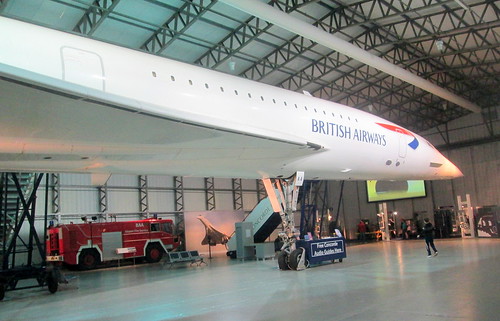
Engines and fuselage:-

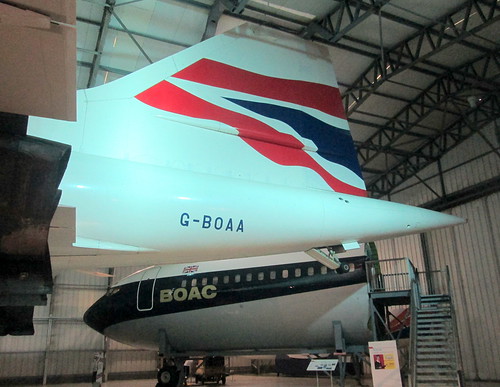
Tail (I forget now which aircraft’s front portion is in the background here):-
Mach and altitude indicators:-

External temperature and speed indicators:-

One of Concorde’s engines:-

Interior looking forward:-
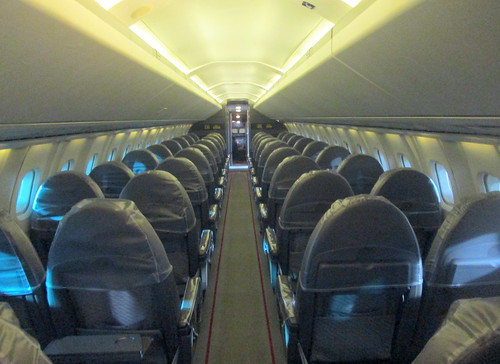
Interior looking aft. It’s pretty cramped looking:-

Cockpit:-

No Comments »
Posted in History, Museums at 12:00 on 18 December 2019
A plaque at the National Museum of Flight at East Fortune Airfield, East Lothian, commemorates the airship R34 which flew from there on 2/7/1919 to make the first crossing of the Atlantic from east to west (landing on Mineola, Long Island on 6/7/1919) and subsequently made the first double crossing by returning (to Fulham) on 13/7/1919:-
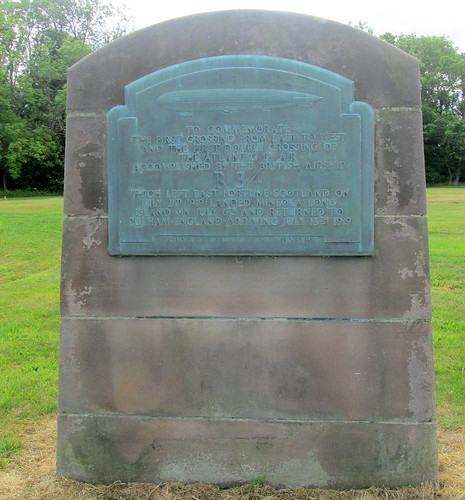
The airship’s mooring block is still in evidence:-

Information Board:-

Model of R34. Sorry about the reflectuons. he model is behind glass and not well lit:-

No Comments »
Posted in History, Museums at 20:00 on 17 December 2019
A Comet in Dan Air livery:-

Its interior:-

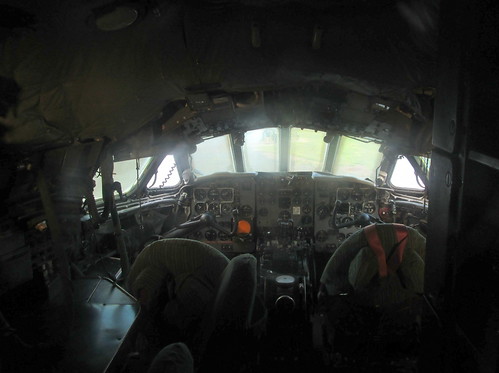
And its cockpit:-
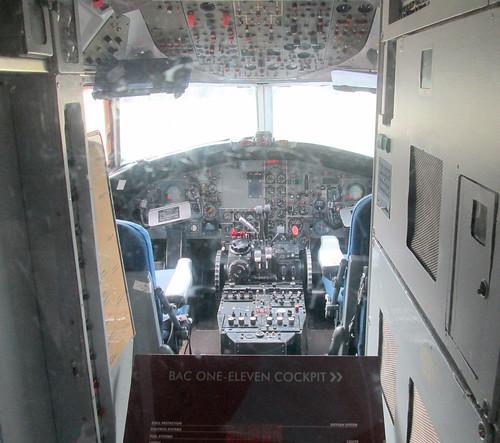
A BAC-1-11 in the colours of British Airways:-

Its cockpit:-
The front portion of a Boeing 707 was one of the exhibits. This is its cockpit:-

Hawker Siddeley Trident Cockpit:-

Sheila Scott’s Piper Commanche:-

I vaguely remember Scott’s flight round the world in 1966 in the above small aeroplane (the damage obvious in the photo was inflicted by the man she sold it to.)

3 Comments »
Posted in History, Museums at 12:00 on 16 December 2019
More pictures taken at the National Museum of Flight, East Fortune Airfield, East Lothian, Scotland.
A Czech S-103:-

Lockheed Lightning. I forget which country’s livery this displays:-

The obligatory Spitfire:-

Messerschmidt Komet. This was a rocket propelled aeroplane as I recall:-

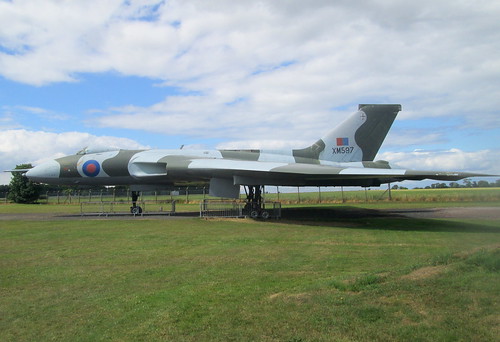
Vulcan Bomber:-

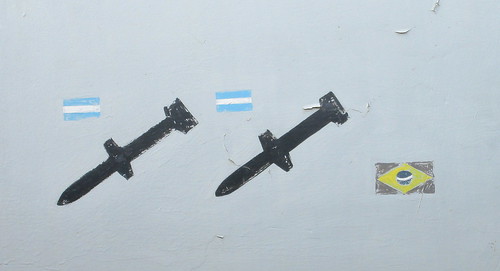
The images of two bombs/missiles under Argentine flags on the fuselage of the Vulcan signal the two raids made by this bomber on the Argentinian forces at Port Stanley in the Falkland Islands during the conflict in 1982. The flag of Brazil is because the Vulcan was forced to detour by engine trouble and land in Brazil after one of the raids.
Hawker Harrier:-

No Comments »
Posted in Fife, History, Museums, War Memorials at 20:00 on 12 December 2019
See yesterday’s post.
Bomb dropped from Zeppelin. (Luckily for the citizens of Edinburgh where it dropped, it seems not to have exploded.):-

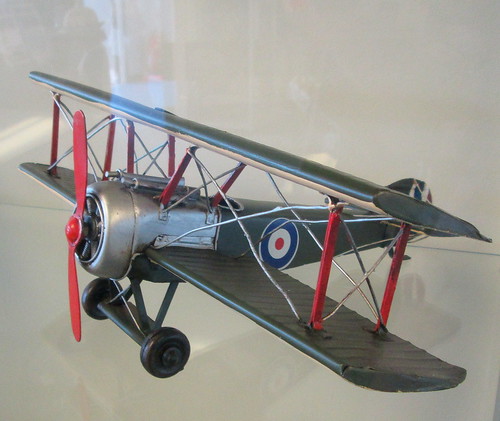
Model (in the shop) of a Sopwith Camel:-
Real seat from a Sopwith Camel. It looks like a garden chair with its legs cut off:-
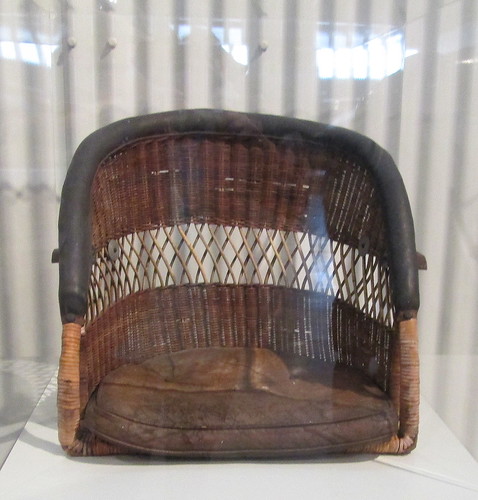
Compare and contrast. A more modern ejector seat:-

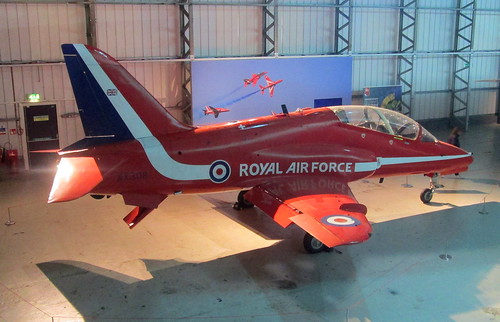
Hawk Training Aircraft:-

A Red Arrows XX308:-
A New Zealand War Memorial. Inscribed, “In memory of the men from the Dominion who served in Scotland during the 1939 – 1945 conflict. Also in heartfelt remembrance of those who, whilst flying from Scotland’s sea and shore in the Royal New Zealand Air Force and Fleet Air Arm, made the ultimate sacrifice. ‘They watch over Scotia still’.”

The 1930s were possibly the high point of aviation displays – exciting and new. This poster advertises one in Fife:-

No Comments »
Posted in Architecture, History, Museums at 12:00 on 11 December 2019
I’d been wanting to visit the National Museum of Flight at East Fortune airfield, East Lothian, Scotland for ages. Last year we finally made it.
It has all the appearance of a Second World War airfield so familiar from films.


Control tower:-

However, the airfield was first commissioned as a Royal Naval Air Station. This was the gate:-

The airfield’s complement was tasked with protecting shipping in the Firth of Forth and preventing airship attacks on Edinburgh or the navy and its base at Rosyth :-

Hangar:-

Hangar Annexe, a Nissen Hut:-

1 Comment »
