Archives » Fantasy

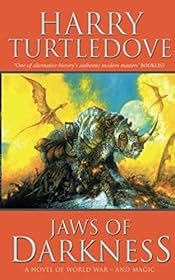
Jaws of Darkness by Harry Turtledove

Pocket, 2004, 574 p, including ii p Map and v p Dramatis Personae.

The usual from Turtledove’s long series fiction, this being the fifth in his Darkness sequence, where he reinterprets the Second World War (at least as it occurred in Europe) in a fantasy setting complete with dragons substituted for aircraft, behemoths for tanks, leviathans for submarines, with added unicorns (for colour,) and magic as the agent of weaponry.

Here, the tide of war has turned, the Algarvian invasion of Unkerlant has been halted and pushed back, and the pursuit of the ultimate theoretical magic is on the verge of being put to systematic use in Turtledove’s equivalent of the Manhattan Project. This can apparently cause devastating earthquakes via spells which also seem to involve a degree of time twisting.

Along with common soldiers (and not so common; this is a world of overweening Kings and servile subjects – at least to their king’s face) we have partisans, resistance groups, people playing one side against the middle, others hiding from the occupying power, even recruits from conquered nations enlisting in their vanquisher’s cause.

It has all the faults I have noted previously, the constant repetition of information the reader already knows or of characters’ thoughts, the utilitarian prose, the lack of depth to most characters, the sexism and misogyny.

I still can’t make up my mind whether Turtledove approves of any of these or not: but he does depict soldiers’ resignation and weariness. As far as racial prejudice is concerned, though, he is clearly against it. As should we all be.

Pedant’s corner:- On the Map Kuusamo is spelled Kuusano. Written in USian. Every name ending in ‘s’ is given s’ for its possessive rather than s’s. Otherwise; blond (blonde,) “a little village of her own” (of his own,) “who’d taken over for the departed Mosco” (who’d taken over from the.) “In a whisper even he had trouble even he had trouble hearing” (unnecessarily repeated ‘even he had trouble’,) “walked thought the door” (walked through the door,) “lese majesty” (x 2, lèse-majesté,) “which weighed more nearly as much as he did” (why that ‘more’?) “‘We’ll better drive ‘em back over the river’” (‘We’d better drive them back,) “‘doesn’t seem to worried’” (doesn’t seem too worried,) “and those who followed him trust no one who’d fought the redheads on their own” (trusted no one who’d,) “‘and you to, milady’” (‘and you too, milady’,) “Ilmarinen came up to Sabrino” (the scene had changed; it was Fernao whom Ilmarinen came up.) “Fernao want to take her in his arms” (Fernao wanted to,) “at Leino’s jointing the war” (joining the war,) “Phalanx of Valmieran” (elsewhere always ‘Phalanx of Valmiera’,) “something else instead of hold their little eggs” (something else instead to hold,) “a company of Yaninan soldiers were ..” (a company … was,) “when I set home to Vanai” (when I get home,) “outside of” (no ‘of’, just ‘outside’,) “he hoper their was a bridge” (he hoped there was.)

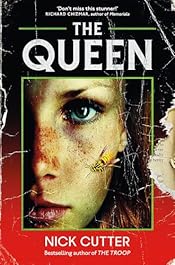
The Queen by Nick Cutter

Arcadia, 2024, 380 p. Reviewed for ParSec 13.

It is a usually unspoken assumption that it is the duty of a reviewer not to imbue a review with spoilers. Yet what to do if to give some flavour of the contents (something necessary to any review,) makes that all but impossible? Not that in this case any comments would really be much of a spoiler. The manner in which the story is told along with the structure of the book manage to do that without requiring any assistance. The main narrative is told in four Parts but its title (The Queen) is a hefty pointer to the contents, and the title page itself, plus those introducing the Prologue, each Part, the three separate sections of Part IV, plus the Epilogue, are blazoned with pale drawings of wasps. The Queen? Wasps? Some sort of vespine nightmare, pheromone driven, is surely being not merely hinted at, but promised. Moreover, the Prologue pretty much embodies the climactic scene, so anyone reading that already knows what the spoilers are. The rest of the text describes how the scenario got to that point.

The main action unfolds over a period of around twenty-four hours in June 2018 in the town of Saint Catharines, Ontario. Margaret June Carpenter (Cherry) has closeted herself at home since the disappearance of four students from her school, Northfield, several weeks before: three boys, Chad Dearborn, Will Stinson, Allan Teller, who are remembered fondly and worriedly, and Margaret’s best friend Charity Atwater (Plum,) who isn’t.

Margaret’s isolation is ended when a surprise package arrives containing a mobile phone. The texts on it appear to be from Charity as they mention things that only she would know. They insist Margaret follow the instructions she is given. These lead her to the school where in Margaret’s absence a mysterious girl called Serena – about whom the only thing anyone can remember is that she is ‘hot’ – has been instigating confusion. So far so High School story but there follows a very well written scene where a teacher, Mr Foster, is clearly under mental coercion while revealing to a shocked class avidly filming his confession on their phones an act of inappropriate conduct towards Serena. Here, too, Margaret is joined by Harry Cook, her boyfriend of sorts, and there is talk of a gathering remembered as Burning Van from the burnt-out vehicle where its events, the trigger for the plot, centred.

Another strand relates the back story of an Elon Musk-like billionaire called Rudyard Crate, who as a child witnessed his elder sister eaten alive by a swarm of dorylus, or siafu, ants while barely escaping himself, which has naturally haunted him ever since but given him an unhealthy fixation. He has instigated Project Athena, designed to introduce insect phenotypes (mostly of wasps, but also of other genera) into human DNA to produce a hybrid creature. The most successful of these is Subject Six, indistinguishable from a human child until triggered by a “time of dynamic bodily or neurological change like human teenage-hood.” Subject Six: a wasp in the nest of Northfield.

When she meets Crate, Margaret notes his Businessman’s laugh, a phenomenon her father warned her of. “‘It’s as fake as a three-dollar bill, Margaret. Never trust a man who’s perfected his Businessman’s laugh.’”

The June 2018 setting is, perhaps, an authorial mis-step given that in the book the climactic events are well publicised and discussed but of course readers in 2024 have never heard of them. In all, though, The Queen is a well written but curiously unconvincing tale from the area where Science Fiction, Fantasy and Horror overlap – at least unconvincing to those like me who normally don’t read horror stories – until we reach Part IV, Ever After, and a section where in an article reprinted from a magazine, Chris Packer, a journalist born and brought up in St Catharines, compares and contrasts the post-happening world-wide reactions to Margaret and Charity and so the novel begins to comment on itself and take on wider concerns.

Packer remembers from a case of abduction and killing years earlier that not all missing girls were treated equally. The one from the better-off families was spoken of with adoration: the one from the wrong side of town dismissed. It was ever thus.

Two more shorter bits of Part IV provide further perspective and reflections on the story’s events – even a touch of hope.


The following did not appear in the published review.

Pedant’s corner:- Written in USian. Otherwise; “He had no other companions other than” (has one ‘other’ too many,) sunk (x 5, sank, which did appear once,) “hung myself” (hanged myself.)  “Plum and me had been” (Plum and I had been,) “left raw wheals on its ankles and wrists” (raw weals.) “Queens force-feed it to her drones and attendants” (force-feed it to their drones and attendants.) “The larvae hatches” (The larvae hatch – larva was used correctly as the singular a few lines later,) “Mussorgsky’s ‘Night on Bald Mountain’” (usually translated as ‘Night on the Bare Mountain’,) sprung (sprang,) “their DNA helixes” (helices?) sanitarium (sanatorium,) staunch (stanch,) “she shrunk in the swing” (shrank.) “The song rose to its glittering crescendo” (the crescendo is the rise, not the end of the rise.) “Outside of” (no ‘of’ please, just ‘outside’.)


Strange Beasts by Susan J Morris

Hodderscape, 2024, 374 p. Reviewed for ParSec 12.

In September 1903 Samantha Harker is a librarian at The Royal Society for the Study of Abnormal Phenomena, an organisation which investigates mysteries and monsters and whose field agents hunt them. Since her grandfather suddenly disappeared, leaving only an enigmatic message in Morse code – a series of numbers, probably a book cipher – Sam has been anxious to find out what happened to him and if he is still alive. A report from Paris of incidents being called the Beast murders excites her because an illustrating photograph shows the same series of dots and dashes as in her grandfather’s note. She petitions the Society’s Mr Wright to be assigned the case only to be told it has already been allotted to Dr Helena Moriarty (daughter of the “infamous” Professor who had “snuffed out” Sherlock Holmes.) Hel is one of the Society’s best agents but her last three assistants were all killed in various ways. Only if she assents can Sam accompany her. Despite misgivings, she does.

Another of the Society’s field agents is Jakob Van Helsing, son of the Professor who helped trace and kill Count Dracula. Sam has known him since childhood as her parents were Mina and Jonathan Harker who had also been enmeshed in Dracula’s activities. Indeed, Sam was apparently conceived while Mina was under Dracula’s influence. Van Helsing is wary of Sam as he believes, rightly, that she can channel, is able to feel the influence of spirits, a fact Sam needs to keep from the world for fear of being put in an asylum.

What we have here, then, is a riff on two of the nineteenth century’s most well-known fictional creations; only set a couple of decades later. As a result of that and its mostly Parisian mise en scène the book has a fin de siècle feel (though – given it’s 1903 – perhaps début du siècle would be a better description.)

Morris does not pastiche Stoker nor Conan Doyle, though. She has her own approach and intentions, with her book also a vehicle for the deployment of a thesaurus of beasties and things that go bump – or worse – in the night. As well as vampires, there are mentions of a glaistig, trolls, duendes, a cockatrice, a grindylow, barghests, kelpies, drudes, wolpertingers, rusalkas, a carcolh, boggarts, a basilisk, púcai and werewolves – though the werewolves have all been exterminated decades ago.

The grisly Beast murders, the victims’ bodies eviscerated, their hearts torn out and likely eaten – and perhaps meant to invoke the real-life Whitechapel killings by Jack the Ripper (but with the sex of the victims changed) – have all been of well-off men who had mistresses. A banner reading The Wages of Sin is Death has been left at each murder scene. Sam’s facility to detect odours leads her to the pre-eminent perfumier in Paris, Arsène Courbet, to see who might have commissioned the scent she identifies the deaths have in common.

Along the way to the denouement we have encounters with an entirely human quasi-revolutionary underground organisation called The Wolves of God whose logo is also displayed beside each victim, an odyssey into the voluminous catacombs which underly Paris, and a night at the opera where Sam tries to prevent another murder.

This is incident packed stuff but still finds plenty of time to explain Hel’s extremely estranged relationships with her father and her brother Ruari, who are both manipulating the circumstances of Hel’s life and of others around her. Through it all Hel and Sam are very engaging company.

That we have two strong female characters at the book’s focus and occasional anachronistic uses of language, like an invocation to “Get it together” and the phrase “I’m in recovery,” signal that this is indeed a modern novel, not an hommage. The murders are of course solved but enough in the scenario is left unresolved to provide scope for a sequel or two. Which readers are likely to welcome.

The following did not appear in the published review.

Pedant’s corner:- written in USian, “not one of which has returned” (the ‘which’ were people so ‘not one of whom has returned’,) imposter (impostor,) “magnum opuses” (fine in English I suppose, but the Latin plural is ‘magna opera’,) professionality (professionalism – used later,) rarified (rarefied,) “none of the victims were religious” (none of the victims was religious,) parliament (Parliament,) craniums (crania?) “an pain aux raisins” (a pain aux raisins,) “the chimes rung out” (rang out.) “To think, Sam had regaled Hel with” (no comma required after think,) “like a black and shipwrecked sea” (can a sea be shipwrecked?) “mortar and pestles” (mortars and pestles,) “row houses” (that would be “terraced houses” – they were in Wales, not the US,) “she seemed like to make” (an odd usage; ‘she seemed likely to make’ is more natural,) “trapping púca in her backyard” (the plural is púcai.)

Plus points for ‘wills’-o’-the-wisp’.


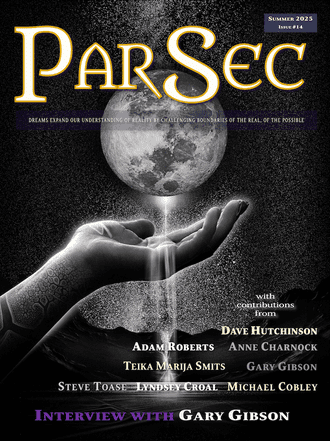
ParSec 14

Issue no 14 of ParSec magazine is now available.

Among its other goodies this one has my reviews of:-

If the Stars are Lit by Sara K Ellis

Orphan Planet by Madeehah Reza

The Hamlet by Joanna Corrance

Dark Crescent by Lyndsey Croal


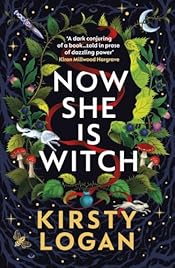
Now She Is Witch by Kirsty Logan

Vintage, 2023, 343 p

Lux was brought up by her mother in a house by the forest. Her mother was a healer and maker of poppets and possets, subject to suspicion because her baby had arrived suddenly with no man on the scene. Her mother gone, and Lux returned to the house after a sojourn in a sanctuary subject to strict religious rules, she is living alone when a woman, Else, arrives seeking her help to poison the local lord “‘who calls women witches so that he has an excuse to kill them.’” That same night Lux’s house is attacked by some of the local boys. They are driven off by a wolf, which may be Else in transfigured form, but not before the house is set on fire. Lux and Else set off together into the forest. The rest of the tale follows both – but mainly Lux – until she eventually finds employment in the lord’s castle, with Else tending to the herb/poison garden, and their misadventures there. I note here that Logan attributes to the lady of the manor more agency than a woman in her situation is likely to have had.
After a “Before” prologue which is unpunctuated (apart from dashes) and printed in italics and with no capital letters, the story is told in five parts. Parts One and Three have section titles all beginning with “Now She Is” followed by one word (in order these were Outcast, Prey, Maiden, Servant, Sacrifice, Whore, Poisoner.)

Part Two is “Lux’s Story” and is given to us also unpunctuated and printed in italics with no capital letters (apart from the words He and Him when describing the lover she had in the sanctuary.) Part Four, “Else’s story,” was similarly unpunctuated but had capital letters where appropriate.

Part Five’s sections have no titles and are in numbered order.

We are here, though, firmly in default faux-mediæval fantasy territory though there is some additional colour, a land bridge between the south and the north, the sea rising, there has been fire in the sky, poison vapours, ash, a sickness spreading supposedly from the north, whose sign is black roses on the skin.

Logan’s almost relentless theme is man’s inhumanity to woman.  “Women are, as Father Fleck used to tell them at the sanctuary, less intelligent, more suggestible, and have more entry points into their bodies. All those orifices ready for a devil to creep into.” In Else’s story she tells Lux “it turns out all that really matters in this world is what a man wants because you either give it to him or he takes it and gives nothing in return” but “Beauty is dangerous. Beauty has power. Beauty has violence.” She outlines “the only available options, Maiden, Wife, Nun, Widow,” adding, “And I could not be any of these even if I wanted to. But there is one other option for a woman and it is the worst of all. Witch. Witch. Witch.”

The plot unfolds slowly to the point where we find the reason for Else’s attachment to Lux.

I suppose it is difficult to write in a contemporary setting a story about the best option for a woman being a witch but I’m really tired of tales such as this adopting a historical template.

On a sentence level Logan is good and her characterization is more than adequate. The whole thing seemed a little bit by the numbers though.

Pedant’s corner:- “Jesus’ birth” (Jesus’s,) “her tongue would not lay still” (would not lie still,) “aren’t I?” (Logan is Scottish; the correct usage is “amn’t I?”)

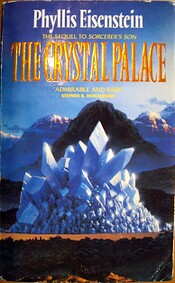
The Crystal Palace by Phyllis Eisenstein 

Grafton, 1992, 414 p.

Sadly not a book about last season’s FA Cup winners nor indeed the building erected in Hyde Park for the Great Exhibition of 1851 (subsequently moved to Sydenham in 1852 before it was destroyed by fire in the 1930s) and after which that football club was named. Neither is the palace built of crystal, nor even glass. Instead, it’s an ice palace, built in the realm of Ice from a seed planted by the demon Regneniel.

Though Cray, son of sorceress Delivev Ormoru of Castle Spinweb, familiar from Eisenstein’s previous book Sorcerer’s Son, is the nominal protagonist of this sequel, it is actually Aliza, Cray’s heart’s desire as revealed in the mirrored web constructed by his friend Feldar Sepwin, around whom it revolves. After many viewings where he saw nothing in the mirror, she first appeared to him as a girl, then over the years grew into a young woman. Only much searching in the realms of Air, Water, Fire and Ice (each realm has its own kind of demon) by Cray’s mother’s demon lover, Gildrum – not a hyperbolic description, Gildrum is literally a demon in this scenario, but that does not necessarily mean he is demonic – finds Aliza’s location in the titular Crystal Palace. It is effectively a prison where she has been placed by her grandfather Everand, a minor sorcerer, to be taught to be a great sorceress by Regneniel whom she believes to be under her control but is really beholden to Everand. This involved Everand removing Aliza’s soul and hiding it somewhere in the palace.

Prior to the book’s opening Cray had freed as many demons as he could from their enslavement to their masters. For a certain kind of sorcerer this made him their enemy. Everand did not need Cary’s interest in Aliza to feel animosity towards him.

Everand is, though, an unsatisfactory antagonist, too one-dimensional and blinkered to be any sort of foil for Cray and his chums.

I only really read this one as I had already read Sorcerer’s Son. I prefer Eisenstein’s stories of Alaric the Minstrel to these ones.

Pedant’s corner:- Nothing to report.

The Voyage Home by Pat Barker

Hamish Hamilton, 2024, 292 p.

This is the third in Barker’s Troy series. Unlike the first two, which were narrated by Briseis (the former princess of Lyrnessus, a town sacked by the Greeks before they ventured on to its ally Troy, with Briseis being given to Achilles as a prize of war,) this novel’s main narrator is Ritsa, a friend of Briseis, but now a possession of Machaon, physician to Mycenean King Agamemnon, and body-slave (or, as she puts it, catch-fart) to Troy’s Princess, Cassandra, herself Agamemnon’s bed-slave, though they had gone through a form of marriage.

Cassandra is famed for her gift of prophecy; a gift bestowed on her by the God Apollo, whose priestess she was, but also cursed by him never to be believed since she refused his advances.

Ritsa’s tale is narrated in first person past tense but some chapters of the book are in the third person present tense from the viewpoints either of Cassandra or of Agamemnon’s wife Clytemnestra. This is useful authorially as of course Ritsa cannot have access to scenes where she is not present.

The book’s title is, of course, ironic. The home they journey to was never that of the Trojan women; only of the Greeks who took them captive. It is also slightly inappropriate in that the sea voyage to Mycenae is over before the book is even halfway through – though less so in the sense that by the novel’s end Cassandra’s journey home is utterly complete.

Some of the prose and dialogue is in a modern register which might jar with the ambience of myth which Barker is dealing with. But in looking at these events/stories with a modern eye (Barker’s controlled indignation, even rage, at the treatment of women in these tales, while not getting in the way of the story she tells, is never far away) an up-to-date treatment is absolutely appropriate. There is also some inter-sexual politics at play when Ritsa notes that, “She” (Cassandra) “was speaking in a Daddy’s-little-girl voice, the kind that some men find mysteriously attractive and makes every woman within earshot want to slap you.”

Ritsa bitterly contemplates Cassandra’s question about a description of the ship’s figurehead Medusa (another misrepresented woman?) as a monster, “Who decides who the monster is?” and Machaon’s reply, “The winner.”

Medusa did not win, and neither has Ritsa, whose monsters lie in front of her: the Greeks who have the temerity to call Trojans barbarian, while themselves being the purveyors of savagery. Only the Medusa’s captain, Andreas, treats her as worthy of respect. (Or is that only because he has always fancied her?)

Agamemnon is prime monster, even if he is haunted by visions of his daughter Iphigenia, sacrificed to the gods to secure fair winds for the voyage to Troy. (His palace in Mycenae is also haunted: by the hand and foot prints of his cousins, killed by his father, Atreus, and their bodies fed by him to theirs, Thyestes, with their feet and hands shown to Thyestes to prove he had eaten them. Greek myth is a horrifically bloody edifice.)

But the heart of this story doesn’t lie with either Cassandra or Ritsa; nor Agamemnon. This is Clytemnestra’s time of reckoning. Ten years ruling in Agamemnon’s stead – and ruling well – only to be ignored the moment he returns; ten years worshipping her dead daughter, erecting a temple in her honour which no-one arriving by sea could avoid seeing; ten years devising a calculated, elaborate revenge for Iphigenia’s death. A dish served cold, with relish.

But every action has its conseqences. Revenge begets revenge. Clytemnestra’s remaining children, Electra and Orestes, will be sure to avenge their father.

Not that Ritsa will be around to see that. Barker instead contrives a more hopeful fate for her.

Pedant’s corner:- Three sentences of Ritsa’s narration are for some reason given in the present tense. “Achilles’ child” (Achilles’s; most names ending in s were given only s’ rather than s’s when possessives, Aegisthus’, Andreas’, Orestes’, Iras’, Briseis’, etc,) “more like, a bowl of barley porridge” (doesn’t need that comma,) “that some men find mysteriously attractive” (ought to be ‘that some men mysteriously find attractive’,) had never showed” (had never shown.) “The guard come toward us” (The guard came towards us.)

City of All Seasons

Recently arrived from ParSec magazine and now on my sidebar, a new book to read and review; to wit City of All Seasons by Oliver K Langmead and Aliya Whiteley.

I haven’t read any Langmead up till now but have read a couple of Whiteley’s books. She writes well.

The deadline for ParSec 14 is probably a bit too imminent for the review to make that issue but there will be ParSec 15 to come.


Laughs in Space. Edited by Donna Scott 

The Slab, 2024, 354 p. (No price given.) Reviewed for ParSec 12.

Notwithstanding the success of The Hitch-Hikers Guide to the Galaxy and the Discworld series (both of which editor Donna Scott mentions in her introduction) I have never found Science Fiction and humour to be easy bedfellows, though I do admit to having a few guffaws when reading Eric Frank Russell’s Next of Kin many (many) moons ago. Indeed, I read the first few Discworld books and was only amused once – by an outrageous pun. (In Equal Rites in particular I thought there was a more serious book struggling to emerge from under its surrounding baggage.)

But we all need a good laugh in these disturbing times. So, with a will, to the contents.

As with all anthologies the quality and execution vary but in one with a premise like this it is inevitable that the tone of each story tends towards being similar.

One story that certainly hits the spot is Sundog 4 by Alice Dryden. A homage to the corpus of Gerry and Sylvia Anderson – familiarity with that œuvre may be required for a full appreciation – its plot has the breathless yet carboard quality of the different puppet series (and of the ones with actors whose dialogue might as well have been uttered by puppets) while slipping in direct references to those many shows. Very enjoyable. One might even say FAB.

Elsewhere we have a marriage broker on a Venus where every inhabitant – even the tentacled ones – seems to be Jewish, struggling to find a match for his client. A man signs up for an Intergalactic Cultural Exchange Plan with predictable unlooked for results. There is a warning about the implications of (mis)using an up to four-dimensional photocopier, particularly as regards photocopying arses – or ex-girlfriends. A minor convict set to do community work in an old people’s home is surprised by the inhabitants’ behaviour. A bored spaceship Captain leaves an AI in charge of his ship while he goes into cold sleep: after a 60 year delay in waking due to a meteorite strike he finds the ship’s bots have gone rogue. A robot cobbled together from spare parts by an aged Professor to commit burglaries for him fails in its final attempt; but he doesn’t. A bunch of Spiderbots battles against Mandroids® and Robosapiens® to try to save the human world. A family finds their virtual holiday goes wrong; for a start they’re not all on the same one. A scenario where every living thing has its own type of Grim Reaper, De’Swine, De’Fungi etc, and they have a philosophical problem with the big one, De’Ath. On a world plagued by sand an experienced, not to say old, female drug smuggler has to negotiate yet another double cross. Would-be students of a Present Studies course are encouraged to kill Hitler via time travel while their attempts are monitored by a course tutor who knows those attempts will fail. Dating Apps are beyond old hat when 4C (foresee; get it?) comes along to show users a trailer of how any relationship will evolve: a situation itself not beyond manipulation. In a future depression where eggs have become horribly expensive a banjo player makes his money by his seeming ability to make chickens lay freely; but he’s really selling something else. A mad scientist invents a process rendering his body incorporeal seemingly only in order to torment his stepson (who is savvier than he thought.) Aliens attracted by Earth’s radio and TV emanations abduct a woman to explain it all: they remain baffled; she puts the experience down to a spiked drink. People who shuffle through existence after the bombs fall cope by going to open mic nights. A religious woman who dies in undignified circumstances – though not anything like as shameful as her husband’s demise – gets a surprise in the afterlife. An explanation of the history, and future, of humans’ fear of spiders. A waitress in an Australian restaurant discovers the menu’s ‘kangaroo in orange sauce’ option is a manifestation of an alien invasion. The malfunctioning of a teleportation device poses an ethical dilemma for the duplicates it spews out every twenty minutes. To pep up an ageing lothario from a long line of such with an affinity for ginger, his doctor arranges for him to attend a Ginger Girls Gala, a convocation of those delightful lovelies. A transcript of a Prime Ministerial Press conference where it is repeatedly denied that time travellers have come back from the year 2345 to interfere in the present day, and where the questions spiral into more and more bizarre territory. A report outlining the genesis and results of five failed experiments in eugenics. A newly married man buys the naming rights of a star for his wife: twenty years (and an impending divorce later) they find themselves transported to that star’s system, where they are being worshipped as gods. A rich man’s attempt to remove any influence of trade unions on business practice, by travelling back in time to have a law passed, has unexpected consequences: not least for him.

Comedic fiction can be hit or miss in the eye of the beholder. Laughs in Space has more than enough hits to satisfy the jaundiced reviewer.


The following did not appear in the published review.

Pedant’s corner:- Two stories’ titles are missing from the contents page – though they follow the starting title Random Selection. There are some uneven paragraph indentations. Otherwise; “‘He’s brain in a jar!’” (He’s a brain in a jar!) ambiance (ambience,) “then the girl up and asked” (upped and asked,) a piece of direct speech opened with a single quotation mark but ended with a double one, “a cut-and-dry case” (the phrase is ‘cut-and-dried’,) “and laid back” (and lay back.) “A horde of Flergians were spread out in the garden” (a horde … was spread out,) antennas (antennae [as used elsewhere],) “yelled to the top of his lungs” (yelled at the top of his lungs,) Jims’ (x2, Jims’s,) “the skin on her arms not as taught” (not as taut,) slipperier (what’s wrong with ‘more slippy’?) smidgeon (smidgin or smidgen but definitely not smidgeon,) “off of” (just ‘off’. Please?) “a per centage” (a percentage,) Professors’ (Professor’s,) Professors (Professor’s,) epicentre (centre,) “a trail of bone-white husks litter the highway” (a trail … litters the highway,) “none of them … have a clue” (none of them … has a clue,) miniscule (minuscule,) “Woward meister” (Meister,) “of a film … of a bean growing, its roots uncurling,” (its shoots surely?) “but he’s no idea” (but he’d no idea.) “‘Who’s Wendy,’ Candy asked’” (‘Who’s Wendy?’ Candy asked,) “the image pixilated (pixelated; pixilated means drunk.) “‘It was just figure of speech’” (just a figure,) D’Apes (elsewhere De’Apes,) “lay a … hand on” (laid a … hand on,) “into De’Apes face” (into De’Apes’s face.) Mortallity (Mortality – spelled correctly one line later,) “looked pointedly looked downwards” (only one ‘looked’ needed,) “steadied themselves” (x 2, in both cases this was an individual; steadied themself?) “‘And who come for them?’” (comes.) Gavrilo Principe (Gavrilo Princip,) “had lain the table” (had laid the table,) “Dai lay down the hammer” (laid down,) “‘I can say with them for good’” (I can stay with them for good,) “when you know fully well” (the idiom is ‘know full well’,) “the rest of the room are hanging on his every couplet” (the rest of the room is hanging on… ,) “from whence they came” (whence = from where, from whence then = from from where, just ‘whence they came,) a full stop after the closing quotation mark of a quote instead of before it, “it as too real” (it was too real,) “for six and a half decade” (decades,) in one story though not in others the convention of a repeated opening quotation mark on a new paragraph within an extended piece of dialogue was not followed (x 2,)  a missing full stop, “before fished them out” (before I fished them out,) “ginger nut biscuits and ginger snaps” (aren’t they the same type of biscuit) bikkies (x 6, this affectionate term for biscuits is usually spelled biccies.) Games of Thrones (the author probably intended the plural of Game,) “‘since record began’” (records,) “the committe were somewhat mollified” (the committee was…,) two out of five of one story’s subheadings were italicised when the first three were not, “seven hundred ninety two” (seven hundred and ninety two,) “taught and impressive muscles” (that’ll be ‘taut’, then,) “were stood” (were standing,) “were sat” (x 2, were sitting,) “it had taken her taken her quite a long time” (remove one ‘taken her’,) “‘this the leader of our army’” (this is the leader,) “barring Pilates’ way” (Pilates’s way,) “‘Ready!’ came Pilates reply’” (Pilates’s.) “Stood at either end of the generator they each pulled a leaver” (Standing at either end of the generator they each pulled a lever.)

ParSec Strikes Again

I have received another book for review.

This is a collection of short stories plus a novella, taking inspiration from “Scottish folklore, landscapes, superstitions and omens” and written by Lyndsey Croal. It is titled Dark Crescent.

Ms Croal seems to write mostly in the fantasy genre.

free hit counter script