Archives » Scottish Literature

Allan Massie

I saw in yesterday’s Guardian that Scottish writer Allan Massie has died.

Regular readers will know I have followed his fiction closely: indeed he is one of my sub-category entries under Scottish Fiction. I think I have read all of his fiction works.

You will find my reviews of most of his books on the blog if you search.

Massie was also a journalist and critic, especially for the Scotsman newspaper.

A sad loss.

Allan Johnstone Massie: 16/10/1938 – 3/2/2026. So it goes.

The Green Isle of the Great Deep by Neil M Gunn

Polygon, 2006, 276 p, plus 5p Foreword by Diarmid Gunn. First published 1944.

In this book we return to the pairing of Young Art and Old Hector from a novel which I read in 2016.

After a night where the adults of Clachdrum talk about ongoing events in Hitler’s Germany and the terrifying thought that your mind could be broken, the pair go on a fishing expedition.

While attempting to catch a salmon they fall into the pool and apparently drown, waking up in another world, the Green Isle of the Great Deep of the title. This is a place which is recognisably Scottish rural, but with variations. A watcher tells them to travel to the Seat of the Rock and warned only to stay at the Inns along the way.

The land is fertile and fruit abundant but they are warned not to eat it, only to eat at the inns. However, Art is fractious, does not want to stay at the inns and eats the fruit, with no ill effects.

There are, of course, biblical connotations to this, but also questions of free will. On the Green Isle, life is regimented – an allegory of Nazi Germany, true, (there is talk of expansion into other lands,) but equally applicable to the feudally circumscribed life of the Highlands.

While Art makes the most of his ability to roam, escaping the clutches of the authorities Hector falls into their sway. He finds that fruit was forbidden “so that man would be restored to his original innocence,” be without blemish, the perfect worker, do all things he was told to do, all to ensure perpetual order. Hector is told “obedience is the highest of virtues.”

Art is sought out by the Hunt but continues to evade his pursuers, which leads to doubts spreading at the Seat.

There are echoes in the novel of George MacDonald’s Phantastes (though Gunn is much the better writer) and similarities to Gunn’s later novel The Well at the World’s End.

Many of Scottish fiction’s dealings with the fantastic feature meetings with the Devil. The Green Isle of the Great Deep is different in that here Hector demands from the Seat a meeting with God – and gets it. This gives Gunn the opportunity to philosophise about totalitarianism and freedom, knowledge and wisdom, thinking and feeling and the necessity for governance to be tempered by wise counsel, armed with which Hector and Art can return to life in Clachdrum.

Pedant’s corner:- a missing comma before a piece of direct speech, focused (focused,) “spoke to her husband an pointed to” (and pointed to,) “their bodies quivered and shrunk” (and shrank,) ogam (now spelled ogham.)

The Takeover by Muriel Spark

Polygon, 2018, 241 p, plus vii p Introduction by Brian Morton and iv p Foreword. First published 1976.

Some people swear by Spark. For myself I struggle to see what the fuss is about. There is just something about her writing that strikes me as off.

I suspect this one was meant to be a comedic novel. Its tone would certainly suggest that. However, its bittiness and lack of characters with whom the reader can be sympathetic – the book is peopled with an assortment of chancers, frauds, swindlers and charlatans – make it something of a chore to read.

Hubert Mallindaine claims to be a descendant of the union between the Roman Emperor Caligula and the goddess Diana. He is renting a villa at Nemi from Maggie Ratcliffe, fairly recently the new Marchesa di Tullio Friole, who also has a house in the vicinity as well as residences elsewhere. Maggie is much exercised by her collections of jewellery and valuables – paintings, Louis XV chairs etc. The local Italians are not too pleased about these foreigners having houses in the town.

Maggie wishes to evict Hubert but he has various ploys to avoid this, among them setting up a religion based on his claim to be descended from Diana. He treats his secretary Pauline contemptuously and is also systematically replacing Maggie’s paintings and chairs with copies/reproductions.

Maggie meanwhile is having sex with her factotum, Lauro, who is, Brian Morton’s Introduction tells us, “a priapic opportunist” (for which read ‘all-but rapist’) “and kleptomaniac.” In addition, Lauro has fathered a child on a local girl (but blames her as a calculating bitch) and without warning jumps on Maggie’s daughter-in-law Mary, giving her little choice but to succumb to his advance. He tells her that next time she should relax. Not one to brook dissent.

That Introduction describes the motley crew of thieves and conmen surrounding Maggie as, “All as respectably dressed and gentlemanly as the Devil must be in a Scottish narrative.”

Things get murkier as the narrative proceeds; it seems there are other claims on the land the houses are built on, while a dodgy financial adviser worms his way into Maggie’s affairs.

There was a review and article – one each – in The Guardian Weekend supplement on both Sat 07/06/25 and 14/06/25 about the latest biography of Spark (Frances Wilson’s Electric Spark – The Enigma of Muriel Spark. Personally I find her the complete opposite of electric.) The review comments on her elision, “Spark knew what to leave out.” Perhaps it is those “odd gaps” which I find so problematic about her œuvre.


Pedant’s corner:- More than a few USian usages, vide infra.

Inter alia pantyhose (tights,) “a vodka-tonic” (vodka and tonic,) boy-friend/girl-friend (several times: both all one word; boyfriend/girlfriend,) station-wagon (estate car.)

Otherwise; “as if treading a mined field” (why not ‘minefield’?) “set at nought” (set at naught. Nought is the number, zero; naught has the meaning of ‘nothing’,) a missing comma before a piece of direct speech (x 2.)

Nothing Left to Fear From Hell by Alan Warner 

A Surreal Chronicle, Polygon, 2023, 149 p, including 7 p Afterword.

Nothing Left to Fear From Hell is one of publisher Birlinn’s Darkland Tales which re-examine Scotland’s history from a modern perspective.

In it, a tall man, accompanied by several companions, is making hazardous journeys by small boat between the islands of the Outer Hebrides, mostly under the cover of darkness. They are on the run and at one point the man has to disguise himself as a serving girl, when he is given the name Betty Bourke.

We are of course following the flight of Charles Edward Louis John Sylvester Maria Casimir Stuart (to give him his full complement of names, never used in the text,) otherwise known as Bonnie Prince Charlie, down on his luck but ever hopeful fortune will favour him in the end.

Though the Young Pretender has featured as a character in many of them, most novelistic examinations of the Jacobite inheritance – a perennial subject of Scottish fiction – have focused on that cause’s adherents and their (mis)adventures. I certainly have not before read one in which the Prince is the protagonist. But my acquaintance with the subject is by no means exhaustive.

Warner inhabits the time and its susceptibilities very effectively, presenting a picture of Charles Stuart as a human being, with every necessity and function we all have, along with his convictions of divine right, plus the all but unthinking deference of his comrades. Not that the text confines itself to the viewpoint of the Prince. A particular highlight is a servant girl’s view of the kenspeckle and overly presumptuous Betty Burke

A quirk of this publication is that on even numbered pages between chapters – and before the Afterword – are depictions of that minute pest of the Scottish summer, the midge, with which the travelling party is plagued, starting with one and going up to ten.

In that Afterword Warner speculates on the conundrums of historical fiction, the difficulties of portrayal. As he says, “they were so like us, and they were so unlike us.”

But apart from the drier and necessarily more restricted approach of historical record and academe, fiction is the only way we can explore past times such as these.

This novella gives us Charles Edward Stuart as a believable, if misguided, human being. But he was trapped by his birth; as most of us are.

Pedant’s corner:- “was like a liquified putrescence” (liquefied,) “he crashed items akimbo” (he crashed items with his arms on his hips?) “the riding party were headed onwards making a cover of what might lay over the roads ahead” (the riding party was headed onwards making a cover of what might lie over the roads ahead,) “Robert Forbes’ remarkable” (Forbes’s,) “Winifred Dukes’ The Rash Adventurer” (Dukes’s.)


Xstabeth by David Keenan

White Rabbit, 2020, 172 p

The book is prefaced with a biography of one David W Keenan who committed suicide in 1995, lists his interest in occult matters, his published pamphlets relating to his home town of St Andrews and that he self-published one novel in his lifetime, Xstabeth by David W Keenan, Illuminated Edition with Commentary, reproduced in full thereafter – including various commentaries (as by diverse academics) interpolated between the narrative chapters.

With this I found myself in Russia again, seemingly in the immediate post-Soviet era, though this time St Peters (not for some reason St Petersburg) rather than Moscow where narrator Aneliya is the daughter of a famous musician, who is friends with one “even famouser,” Jaco, though the story later transfers itself to St Andrews.

Jaco is not the type a respectable girl ought to be getting mixed up with. He drinks and frequents strip clubs. But Aneliya is drawn to him nonetheless, with the consequences we might expect. During one of their encounters, in which Aneliya describes one of Jaco’s sexual kinks, she has the disturbing thought that Jaco had performed similar deeds on her mother.

The mysterious Xstabeth enters the story when an impromptu performance by her father in a club is secretly recorded on an old reel-to-reel recorder by one of the staff who is so besotted by it he determines to release it pseudonymously. The music has a force all to itself which is mesmeric but an acquired taste.

The transition to St Andrews is somewhat surprising but gives Keenan an opportunity to display his knowledge of the town. The street known as The Scores – thought to be named after golfing record cards – is said to be a place to pick up prostitutes (think about it) but little evidence is given for this in the text. Nevertheless, the famous golfer – never actually named but sufficiently accomplished to be tied for the lead in the tournament ongoing in the town – Aneliya has met at the hotel asks her to attempt to ply the trade there. It is only he (the famous golfer, who opines that Russian whores are the most desirable,) who obliges himself though.

Aneliya tells us “Naivety gets me every time. Knowledge can be cynical. It just gets used to undermine things. Sarcasm and irony are horrible. Naivety is the deepest form of belief. It’s closer to reality. To wonder. Plus it has more love in it” and “Writing is always starting from scratch. On the blank sheet. Always beginning again. Even when you think you’ve cracked it.”

David W Keenan’s Xstabeth is a strange but compelling confection. The narrative parts are written in short sentences. Sometimes broken up. Into even shorter ones. The effect is as if we are listening to someone speaking to us in staccato fashion. The addition of the commentaries makes David (without the W) Keenan’s Xstabeth even more idiosyncratic. Like the music it is named for, Xstabeth is a genre of one.

Pedant’s corner:- famouser (why Keenan chose to employ this for some while rather than the more familiar ‘even more famous’ is obscure,)  “the lay of the land” (x 3. It wasn’t a tune. The correct phrase is ‘the lie of the land’,) neck-in-neck (it’s neck and neck,) confectionary (confectionery.)

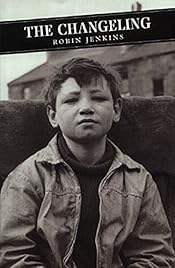
The Changeling by Robin Jenkins

Canongate Classics 22, 1995, 191 p, plus viii p Introduction by Alan Spence.

Charlie Forbes is an English teacher married to Mary, with a daughter Gillian and son Alistair. To the scorn and dismay of his headmaster and colleagues he considers one of his pupils, Tom Curdie, to be highly intelligent and worthy of encouragement. For Tom’s home is in Donaldson’s Court, ‘one of the worst slums in Europe’ and his dress matches that environment. Tom’s mother, her bidey-in – the crippled Shoogle not Tom’s father – and Tom’s brother Alec and sister Molly all share a single room in the Court. That Tom is sensitive – shown by his essays and choice of song at a competition – is a testament to him.

Forbes conceives that taking Tom on their annual holiday with his family “doon the watter” to Argyll will be to Tom’s benefit. (This is set in the grand old days when such expeditions by Clyde steamer were all but mandatory for Glasgow folk.) Forbes’s wife begs to differ about the prospect, Alistair is not bothered either way, but Gillian is suspicious. Prior to the trip we are made privy to Tom’s instincts when he breaks into the school at night to steal some money he knows has been left in a teacher’s desk. Nevertheless, Jenkins engages our sympathy towards him by revealing the circumstances of his home life.

As they approach the holiday destination, Forbes thinks to tell Tom, “‘In no other country in the world, not even in fabled Greece, is there loveliness so various and so inspiring in so small a space,’” but an inner voice, echoing one of his teaching colleagues, says to him “it’s guff, a lot of guff.” On landing, observing the other passengers disembark, Forbes recalls a coast landlady had once told him Glasgow folk were ones to splash the siller, East coasters and the English were far cannier.

A curiosity here is that Jenkins mentions other Clyde ports of call such as Kilcreggan, Craigendoran, Tighnabruaich, Largs, Millport and Rothesay but calls the Forbes family’s destination Towellan and its neighbour Dunroth rather than the Innellan and Dunoon on which they are obviously modelled.

Key incidents involve an encounter with a myxomatosic rabbit, Gillian spying on Tom on a trip to Dunroth where she witnesses him stealing two items of little worth but buying a more valuable present for Mary, the arrival of Tom’s friends Chick and Peerie and later of his mother and her brood, Shoogle and all.

While Forbes oscillates between being understanding to Tom and feeling there is nothing to be done to help him there is an evolution of others’ attitudes as the book progresses. Gillian eventually warms to Tom while Tom himself, having seen the possibilities life could have held for him turns in on himself. To reveal any more would constitute a spoiler.

As always with Jenkins the writing is assured, the insights sharp and his compassion for his characters shines through.

Sensitivity note. The text describes a photographer as a Jew.

Pedant’s corner:-  In the Introduction; V S Naipul (V S Naipaul,) Jenkins’ (x 2, Jenkins’s.) Otherwise none.

Things We Say in the Dark by Kirsty Logan

Harvill Secker, 2019, 234 p, including 2p Contents and 2 p Acknowledgements.

This is Logan’s latest solo collection of stories, her first, The Rental Heart and other fairytales, I reviewed here. I have also read her novels The Gracekeepers and The Gloaming.

The stories here are chiefly burdened with overly long titles eg Birds Fell From the Sky and Each One Spoke in Your Voice or We Can Make Something Between the Mushrooms and the Snow. As the title implies the subject matter tends to be dark. On the whole the collection is tinged with magic realism or outright fantasy and often tips over into horror.

The stories are prefaced and interspersed with what at first appear to be authorial interjections about the circumstances of writing the book and the author’s private life but these short passages soon evolve into what is obviously as much of a fiction as the stories which surround and envelop them.

The book is divided into three sections: The House, The Child and The Past. The first story in each is composed of four short pieces labelled respectively First Fear, Second Fear, Third Fear, and Fourth Fear but most of the stories deal with fear of one sort or another. These fears tend to be female concerns: childbirth and the things attendant on it (apprehensions about what is gestating, what has appeared, is the child safe and well? Am I a good enough mother?) abduction, rape, domestic restriction. One, about seeing a Punch and Judy Show and recognising its hideousness, is told almost entirely by way of footnotes. Another takes the form of a questionnaire – including its rubric. Another alludes to the story of Snow White but takes it in an even darker direction.

From my experience of her writing so far (see links above) Logan presents herself best, as here, at short story length.

Pedant’s corner:- “and fold it on itself” (‘fold in on itself’ makes more sense,) “for heaven’s sakes” (is USian. Britons say ‘for heaven’s sake’,) “into his screeching maw” (stomachs don’t shriek,) “aren’t I?” (Scots say ‘amn’t I?)

Young Mungo by Douglas Stuart

Picador, 2022, 397 p.
This, Stuart’s second novel, is running over much of the same ground as his first, Shuggie Bain. Again we have a mother who is neglectful due to being an alcoholic, and her three children, of whom, here, like Shuggie, Mungo is the youngest. As Shuggie did Mungo has an older brother and sister, in Mungo’s case Hamish (Ha-Ha) and Jodie respectively. Unlike in that first novel the narrative of Young Mungo does not focus on the mother, here Maureen Hamilton, who, because she wants to feel she is still young herself, that she still has a chance in life, insists on being called Mo-Maw rather than Maw, but is mostly seen from Mungo’s viewpoint. The only exceptions to this are passages relating to Jodie’s brief hours of escape from feeling responsible for Mungo – with a married man, one of her teachers no less, not much of an escape – and a brief relation of a telephone call by one of Mungo’s tormentors to his own estranged family.

Mungo is devoted to his mother a fact which Jodie in particular finds irritating. He is also unsure of how to be a man. Perhaps as an indicator of Mungo’s uncertainty Stuart has given him a nervous itch on his face, an itch he keeps scratching.

The novel as a whole is composed of two intermittently interweaved strands which recount events in “The May After” and “The December Before.” The setting is Glasgow sometime in the mid-1980s – Jodie mentions the AIDS epidemic.

In “The May After” Mungo has gone on a fishing trip up north with two men known as Gallowgate and St John. Mo-Maw consented to this as an attempt to toughen Mungo up, to make a man of him. The fact that she knew little of these two, having only met them at Alcoholics Anonymous meetings, does not bother her until too late. They take the bus north, soon coming upon “the green hills of Dumbarton.” Well, yes. Compared to Glasgow Dumbarton is green – or the green around it is more easily perceived.

“The December Before” is more the core of the book, describing Mungo’s daily life, tholing Mo-Maw’s prolonged absences from their house, making do as best he can with the help of Jodie’s administrations, his meeting with James Jamieson, who has a doocot on a scrap of waste ground backing onto a motorway, the constant chiding by Hamish (who is the local young hardman) to be more like him. Ironically it is the trip north which does that.

The inhabitants of the close where the Hamiltons live, put-upon Mrs Campbell in the flat below and Poor-Wee-Chickie on the ground floor, the latter the subject of suspicion as being thought to be gay and likely a child molester but who doesn’t care about that, are both kind souls, looking out for Mungo and Jodie. It was in December that Mungo met James and the pair began their friendship which soon grows into something deeper and to which Hamish takes great exception. For two reasons, James is Catholic and Hamish hates them (though he can’t articulate why, only that meting out violence in their direction is fun) but more importantly any hint of Mungo liking boys will reflect badly on Hamish’s standing.

A sentence describes those from more fortunate areas of Glasgow, “Middle-class Glaswegians had no loyalty, when it suited them they draped the city about themselves like a trendy jacket but they knew none of its chill, none of its need. These Glaswegians were acceptably foreign and endlessly entertaining to the English.”

Stuart writes well, his prose is well above serviceable, but I was less enamoured with the violence portrayed. Moreover, the similarities between Young Mungo and Shuggie Bain tend to detract from the impact of either book. In his next book Stuart really needs to break free from the template he has used in his first two.

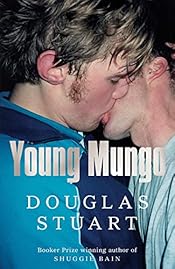
The cover actually does this book a disservice. The two youngsters kissing have too much facial hair to match the description of Mungo in the novel and the kiss is more passionate, much more uninhibited, than anything that occurs between Mungo and James in the text.

Sensitivity note. Refers to “the Paki shop,” but people did in the 1980s.

Pedant’s corner:- “inside of” (just inside, no ‘of’,) skillful (USian, the British spelling is skilful,) ball-peen hammer (more often spelled ball-pein.) “Other’s didn’t like the way” (Others didn’t like..,) snuck (sneaked,) “by her stocking feet” (stockinged feet,) fit (fitted,) “as his eyes slid towards to the soundless television” (either ‘towards’ or ‘to’; not ‘towards to’,) sprung (sprang,) “Stanley knifes” (Stanley knives,) a missing comma before a piece of direct speech, “had to tilt his head backwards to breath” (to breathe,) “trying to make a man of out you” (a man out of you.)

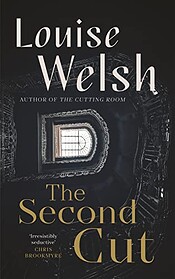
The Second Cut by Louise Welsh

Canongate, 2022, 373 p, including 3 p Afterword.

This one was published twenty years after Welsh’s first novel The Cutting Room and in it she returns to the central character of that book, Rilke, an auctioneer for the financially troubled Bowery Auctions. Rilke is gay and the intervening years gives Welsh, through Rilke, the opportunity to comment on the evolution in attitudes towards homosexuality that has taken place in that time. (Some prejudice still appears here but on the whole the other characters – even those he is meeting for the first time – by and large accept who and what he is.)
This starts from the first scene where Rilke is attending the wedding of the two Bobbys, where the parents of one of the two grooms were never to be mentioned. Rilke has to escort one of the guests, Jojo, out of the reception to avoid the possibility of a scene. Jojo gives Rilke a tip about the wind-up of an estate at Ballantyne House in Dumfries and Galloway whose owners are looking to sell off the house contents, a commission which might save Bowery Auctions’ somewhat failing fortunes. The next day Jojo is found dead in an alley.

As Rilke delves into the circumstances of the death via Jojo’s lodger, an art student calling himself Sands, he gets embroiled with gangster Jamie Mitchell and encounters a strange situation regarding the affairs at Ballantyne House and farm, where there was a car crash a week or so before and the auction crew rescue a frightened Vietnamese refugee, Phan, on a nearby road.

Welsh is always on top of her material here and interweaves her plot intricately. We are almost incidentally given glimpses of the more outré aspects of Glasgow’s gay scene.

Her talent for characterisation is illustrated by the on-off relationship between the auction house’s owner, Rose, and police Inspector Jim Anderson. There was the neat observation, “He had slicked his wet hair back from his face, like Brian Ferry before the cardigans set in.”

This doesn’t quite reach the levels which The Cutting Room did, but it is still a very good piece of crime fiction. A cut above you might say.

Pedant’s corner:- Burns’ (Burns’s,) “the frail women’s exit” (frail woman’s,) “a pair of storm doors” (on the top floor of a tenement? Storm doors are external. I think Welsh meant ‘vestibule doors’,) Sands’ (many times; Sands’s,) “black surplice” (on a minister at a funeral. Surplices are traditionally white and can be worn at funerals. If they’re black they’re most likely not a surplice but an ecclesiastical gown.) “Rose looked out of place the lady of the house” (needs a comma between ‘place’ and ‘the lady’,) “aren’t I?” (The speaker was a Scot. We say ‘amn’t I?’) “a group of youths were huddled” (a group … was huddled,) “people who never had no luck at all” (the sense demands ‘people who never had luck at all’,) “Sand’s said” (Sands said,) “some bullets” (these were for a shotgun, which traditionally is loaded with cartridges, not bullets. As indeed this shotgun was, later,) “let off three quick shots” ([again traditionally] shotguns can fire only twice before needing reloaded,) distributer (distributor.)

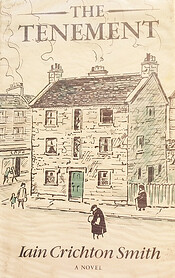
The Tenement by Iain Crichton Smith

Victor Gollancz, 1985, 157 p.

As its title betokens this novel is about the lives of the inhabitants of a tenement which is old, built of grey granite in a town on the east coast of Scotland, and is personified in the first chapter as being somewhat intolerant of young people, preferring its inhabitants to have lived a little. As we start there are no children living in the building.

On the top floor we have Mrs Miller, a now reclusive widow embittered by the death of her husband in a lightning strike. She has visited her daughter in Rhodesia, and has all the prejudices against “the blacks” which that engendered.

Opposite live Mr and Mrs Cameron. He is a dyed in the wool Protestant, hence naturally a rabid supporter of Rangers. He is profoundly anti-Catholic and beats his wife.

Below them are the Masons, still young and expecting a child. Mr Mason feels guilty that he does nothing to confront Cameron’s violence. On the same floor lives former teacher Trevor Porter who claims to be a poet but is unpublished and has regrets about the lack of attention he paid to his now late wife.

On the ground floor are Mrs Floss, left relatively well off when her husband died, who takes cruises – and lovers while she’s at it – and retired milkman Mr Cooper who has a summer job as a lavatory attendant, tales of which he regales to Mrs Mason, which she finds a bit creepy.

Each impinges on the others but mostly in passing until a celebration of the Masons’ baby leads to the novel’s signal act.

The novel has some insights but there is something curiously inconsequential about it all and nobody in the tenement the reader can really root for. It could have done with a leavening of the humour found in the author’s “Murdo” stories.


Pedant’s corner:- “There had been …. widowed, men” (no need for that comma,) “he had wakened up” (woken up,) “James’ car” (James’s,) mediaeval (hurrah!) “a Rangers’ supporter” (‘a Rangers supporter.’ No-one would write, for example ‘a Motherwell’s supporter.’)

free hit counter script