Archives » 2024 » May

Rijksmuseum, Amsterdam (vi)

One of the oddest things we saw in the Rijksmuseum was this display of woollen hats:-

Woollen Hats, Rijksmuseum

A unique harpsichord he only surviving one of its type which plays one-fifth above normal pitch. Made by the Ruckers family from Flanders:-

Harpsichord, Rijksmuseum

The top floor of the museum is reserved for more modern exhibits. This biplane was designed during the Great War by Dutchman Frits Koolhoven for the British Aeronautical Transport Company:-

Biplane, Rijksmuseum

There was a chess set whose pieces looked like Great War crested china memorabilia but was designed by German Georg Fuhg “to glorify Nazi Germany’s urge to conquer.” It was shown in the Rijksmuseum in 1941 exhibition Kunst der Front organised by the occupier. The text in the border refers to countrie soccupied by Germany in 1939 and 1940:-

Chess Pieces, Rijksmuseum

Rijksmuseum, Chess Pieces

A cloth book for children which, as I recall, was made during the German occupation:-

Cloth Book, Rijksmuseum

Rijksmuseum, Cloth Book

Plaster model for the sculpture The Destroyed City by Ossip Zadkine, made to commemorate the bombing of Rotterdam in 1940. Zadkine said of it “I have sculpted tears.”:-

Destroyed City, Sculpture, Rijksmuseum


The Spartans 2-2 Dumbarton (agg 3-4)

SPFL Tier Three Play-off Final, Second Leg, Ainslie Park, 17/5/24.

I’m still processing this.

For so long this season promotion looked a long way off, but seven wins out of the last eight games in the last quarter gave us momentum and in the play-offs themselves the team handled the situation perfectly.

Mind you after three minutes of this one I had that familiar sinking feeling. I knew as soon as the cross was hit a goal was coming. And so it was.

Thank goodness we got back into it quickly so that there was no possibility of nerves getting the better of us. Jinky Hilton’s corner was well met by Sean Crighton and – not for the first time at Ainslie Park this season – their keeper spilled it. I didn’t see who scored. I was on the grass banking behind the goal near the corner flag and Ainslie Park is tight and does not have good sight lines when there’s a big crowd. Only when I got home did I find out it was Michael Ruth.

From them on the first half was quite dour with Jay Hogarth having only one save to make and their keeper not much troubled either. The most worrying thing was Sean Crighton having to go off injured. Aron Lynas has played at centre half for us before though he’s really a right back but up against the foot taller Blair Henderson I feared for him. Yet despite losing their first mutual challenge easily he pretty much handled him relatively easily. 1-1 at half time and a nervous 45 minutes (plus) beckoned.

We came out better than Spartans in the second half. First Finlay Gray hit the post after good work by Kalvin Orsi and Michael Ruth. I wondered if we’d rue that not going in. But then Michael Ruth stood up to be counted. A brilliant first touch near the halfway line saw him set off on a run at their defence. He cut inside and then placed a shot back across the goal, leaving the keeper stranded. Superb stuff.

Only once did Spartans threaten our goal but a combination of a defender (Cian Newbery?) and Jay Hogarth forced their player wide and it went out for a goal kick. Then they were given a penalty in stoppage time. I was too far away to see what had happened for it to be given. As it turned out there was too little time for Spartans to capitalise on their equaliser.

The final whistle nevertheless still came as a relief .

So now 2024 joins 1972, 1984, 1992, 1995, 2002, 2009 and 2012 as promotion seasons I have witnessed.

Even if Mark Durnan has been a defensive rock since he came back from injury it was fitting that Michael Ruth secured promotion for us. Throughout the season he has been our best player.


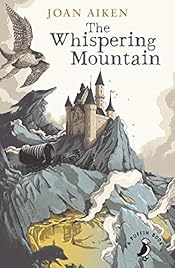
The Whispering Mountain by Joan Aiken

Puffin, 2016, 369 p, plus 2 p Map and 12 p Extras.

This is set in Aiken’s world of The Wolves of Willoughby Chase where the Stuart King James III is the ruler of Great Britain, but being a kind of prequel does not feature most of the characters from those stories.

Our protagonist here is young Owen Hughes who lives in the town of Pennygaff in Wales. His mother is dead and his father serving in the navy somewhere in Asia. As a result he stays with his grandfather, the keeper of the town’s museum whose most precious holding is the golden harp of Teirtu.

Pennygaff lies under the lea of the local mountain Fig-Hat Ben which makes a sound when the wind is up, hence the book’s title. It is also rumoured to be the home of small, possibly magical, humans who are only occasionally glimpsed.

The local laird, Lord Malyn, wants the harp for himself but Owen’s grandfather disputes his title to it since it belongs to the last survivor of an order of monks. Malyn sets two criminals, Prigman and Bilk – who converse throughout in thieves’ cant – to steal the harp. Queering the pitch is the mysterious foreigner, The Seljuk of Rum, prone to speaking like a thesaurus. Sand somewhere in the neighbourhood, incapacitated by a hunting accident, is David James Charles Edward George Harold Richard Tudor-Stuart, the Prince of Wales. Who for some reason speaks in a kind of cod Scots.

Other notable characters are itinerant Tom Dando and his daughter Arabis who make their living by selling herbal remedies and the like and whom Owen met on his way to Wales from London.

When the harp is stolen from the museum Owen is kidnapped by Bilk and Prigman and given the blame for it. Many scrapes and adventures ensue including meetings with the clan who live secretly in the mountain and gave rise to the rumours of people living there. Their Middle-Eastern origins – they use camels for transport – tie them to The Seljuk of Rum.

The text deploys a lot of Welsh words but there is a glossary of them to be found among the Extras. The thieves’ cant might have been a hindrance to a young reader but context usually makes it obvious what is meant.

In these books we are never in any doubt as to who is good and who the baddies are. Aiken characterises the latter in just enough of an over the top way to ensure that while her heroes and heroines are all resourceful and competent they have to struggle to overcome them.

It’s all a jolly good romp and as is to be expected in YA fiction, all’s well that ends well.

Pedant’s corner:- “the castle of Balmoral” (in our timeline the royals did not acquire the Balmoral estate until the mid-nineteenth century and then built the castle there,) Yehemelek (elsewhere always Yehimelek,) “there were numerous opening leading out of the big cave” (openings.) “‘I hope your lassie wisna come to harm’” (willna come to harm.) In glossary of welsh words; perwinkle (periwinkle.)

Reelin’ in the Years 236: Mr Blue Sky. RIP Richard Tandy

I mentioned Richard Tandy’s passing a couple of weeks ago.

He was a mainstay of The Electric Light Orchestra (ELO) being Jeff Lynne’s right hand man in the group.

I note that the lyrics scrolling along the bottom of this video misrepresent the last vocoded words (which apparently Tandy voiced.) They are not “Mr Blue Sky” but instead “Please turn me over.”  Mr Blue Sky was the last track on side three of the album Out of the Blue.

Electric Light Orchestra: Mr Blue Sky

Richard Tandy: 26/3/1948 –  1/5/2024. So it goes.

Do Ho Suh Exhibition, Modern One, Edinburgh

The current Exhibition at Modern One, Edinburgh, is Tracing Time by the Korean artist Do Ho Suh, of whom I hadn’t heard until the exhibition came on. It ws quite interesting, though some of the exhibits were a bit of a miss rather than a hit.

The outline of this reminded me of the shape of the Korean peninsula:-

Do Ho Suh 1

A fairly crude drawing of an odd subject:-

Do Ho Suh 2

Circles or swirls feature in a lot of the exhibits:-

Do Ho Suh 3

Do Ho Suh 4

Do Ho Suh 6

A somewhat scatological drawing:-

Do Ho Suh 5

This seems to be just a shape:-

Do Ho Suh 8


Houses, too, are a feature:-

Do Ho Suh 7

Do Ho Suh 9

Do Ho Suh 10

This walk-thorough installation recreates the entrances to several of the homes in which the artist has lived:-

Do Ho Suh 11

The Exhibition is on till Sep 1st.

Dumbarton 2-1 The Spartans

SPFL Tier Three Play-off Final, First Leg, The Rock, 14/5/24.

We started slowly (or Spartans started fast.) Then we began to come into the game. The weather was awful. I’m glad I decided not to make the long trip and opted for BBC Alba coverage instead.

Our first had an element of luck. Gallagher Lennon was definitely trying to cross the ball but the wind took it and made it into a “shot on target.” Their keeper really messed up his attempt to deal with it though. He ought to have pushed it over. As it was he simply pushed it into the area and Tony Wallace steamed in to put it past him.

The second by contrast was superb. Michael Ruth rolled his man and sprinted down the left hand side. His cross in was perfect for Finlay Gray to score. I’m not sure about our disallowed goal for offside. The TV didn’t have a conclusive angle. It did show though their centre half deliberately stamping on Michael Ruth at halfway. The ref was only eight yards away and looking right at it!

To rub salt in the wound that was the guy who scored their equaliser three minutes in to the second half. The randomness of football. He just stuck a leg at it.

From then on it was like water torture (even if the weather had improved.)

So it’s finely balanced for the second leg on Friday night. I don’t know if my nerves will stand it.

Confessions by Jaume Cabré

Arcaia Books, 2014, 742 p, plus 9 p Dramatis Personae. Translated from the Catalan, Jo Confesso, (Raval Edicions SLU, Proa, 2011,) by Mara Faye Lethem.

How to describe a book that is so unlike anything else I have read yet at the same time has echoes of so much I have? Simultaneously a history, a biography, a love story and a tale of friendship; with moments of joy, moments of sadness, moments of betrayal, moments of horror. Twisting, shifting and refusing categorisation, it contains multitudes. Humanity in all its guises, many of them unappealing.

Confessions is a long, complex, but nevertheless still easy to read, novel, ostensibly the life story of Barcelona native Adrià Ardèvol, whose misfortune it was – as he tells us in the novel’s first sentence – to be born into the wrong family. He describes it as an unforgivable mistake. This is not quite a paraphrase of Tolstoy’s aphorism about families but it does prepare us for the frosty nature of his relationships with his parents, neither of whom he thinks ever loved him, or each other. Indeed, he wonders why they bothered to get married in the first place.

Possibly as a result of this coldness the young Adrià personifies his toys, Sheriff Carson of Rockland and the Valiant Arapaho Chief, Black Eagle, who act as a sounding board for his thoughts and conscience since they talk back to him – sometimes even initiating the conversation. This discourse diminishes through time but never entirely disappears.

Adrià’s father was a dealer in manuscripts, incunabula, antiquities, curios etc (given the unprincipled nature of his transactions I hesitate to call them objects of virtu – but of course the objects themselves would be blameless) and kept a shop in Barcelona. One of his gifts to Adrià was a Storioni violin, made in Cremona in 1674, whose sound is better than a Stradivarius. The novel is also the story of that violin, named Vial, of its creator and its ownership.

The narrative is frequently addressed to “you”, and at first this “you” might be assumed to be the reader but then it is found to be Sara, the love of Adrià’s life, to whom he is relating his life story – and his sins. The text contains repeated instances where the word confiteor is repeated as a single sentence.

That love is Sara Voltes-Epstein, an illustrator of artistic talent, who is a Jew and incurs the suspicions of Adrià’s mother, who think she is after the Ardèvol family’s money and hence scuppers any chance of Adrià marrying her. Here the familiar arc of boy meets girl boy loses girl takes shape and indeed the two do get together later – years later – but that strand, though the central tragedy of Adrià’s life, is only a small part of this voluminous book, one of whose historical scenes implicitly draws parallels between the mediæval treatment of Jews and its ultimate expression in the Holocaust. That Sara is Jewish is central to Adrià’s story and his ultimate anguish.

The narrative is not straightforward, slipping between first and third person (I and he/Adrià) seemingly at random, conversations switch from direct to reported speech then back again with no punctuational signals, descriptions within them of past events are presented as a historical account of what those speakers would have said (or did say.) The setting can change years, decades – or centuries – within a single paragraph or even sentence. Often someone’s speech is suddenly cut off midline by an interruption. We witness the same scene from several different viewpoints sometimes hundreds of pages apart. Yet this all seems organic, all natural. Everything flows.

It is the violin which ties the whole together, acquired by Adrià’s father for a knock-down price from a former SS officer who took it from its rightful owner inside the gates of Auschwitz-Birkenau, given to Adrià to play – but he has no desire to have a career as a violinist. In contrast his friend Bernat does do so but in turn wants to write stories which Adrià tells him have uninspiring prose and he should stick to the violin. All interleaved with the unfolding of Adrià’s life, we see scenes of the violin’s construction from a cache of uniquely treated wood and its subsequent passing down through the generations, the shutdown of the monastery of Sant Pere del Burgal in the 15th century, the significance of the number 615428, the resonance of the Urgell painting in Adrià’s childhood home of the Sant Maria de Gerri monastery receiving the light of the sun setting behind Trespui and much, much more. Occasional, highly intermittent, sections are rendered in italics, apparently written by Bernat which in the end cast an utterly different light on what we have been reading before.

This might all seem too elaborate a construction to balance but Cabré is entirely in control of what he is doing and is not afraid to show it. “Many years later, as he faced the firing squad” is a straight quotation from Gabriel García Márquez though Adrià does not actually face a firing squad – except metaphorically. The nearest literary comparison to the effect Cabré creates that I can think of is Kurt Vonnegut, but Vonnegut is more off-beat, more fanciful. Confessions deals entirely in the human sphere. “Evil existed before the war and doesn’t depend on any entelechy, but rather on people.”

There is a comment on the changing of attitudes over time when a lecturer says, “‘In the eighteenth century, if you weren’t wearing a wig, makeup, stockings and high heels, they wouldn’t let you into the salons. Today, a man wearing makeup, a wig, stockings and heels would be locked up in prison without any questions being asked.’” This was in Franco’s time in Spain, which Adrià – and Cabré – experienced. That dictatorship is only lightly touched on in the text but adds an undertone of colour.

Adrià tells Sara through his memoire, “you will continue living in these lines every time someone reads these pages,” but it is his overall story of greed and hate, but also friendship and love, the enduring constants of human interactions, that will linger.

Confessions is a tour-de-force.

Pedant’s corner:- On the inside cover blurb “reaches a crescendo” (reaches a climax.) Otherwise; “which much hve been immense” (which must have been,) Mrs Canyameres’ (Canyameres’s.) “Even thought I was very young” (Even though,) “wile away my time” (while away,) “the only thing that kept him in Cremona were the attentions of the dark, passionate Carina” (the only thing … was the attentions,) “having caught me in fragranti” (in flagrante,) “but the silent was thick” (silence,) “off of” (x 2, no ‘of’, just ‘off’,) “inside of me” (no ‘of’, just ‘inside me’.) Obersturbahnführer (Obersturmbahnführer,) Fèlix Morlin (elsewhere always Félix Morlin,)  “inside out fatherland” (our fatherland.) “‘Who knows.’” (Who knows?) Planas (Plensa?) “worse for the wear” (no ‘the’, just ‘worse for wear’,) “you mouth dropped open” (your mouth,) the perfect place to sooth the torments” (to soothe; to sooth would be a different thing entirely,) “the strict silence that accompany the twenty four hours” (accompanies,) Complin (Compline,) insuring (ensuring,) Germany (German,) “his licence exam” (his driving test.) Strumbahnführer (x 4, Sturmbahnführer?) “‘Where’d you get that come from?’” (‘Where’d you get that from?’ Or ‘Where’d that come from?’,) “as if she had shook off a few years” (shaken off.) “Kamenek, with a smile, slide the microphone towards” (slid the microphone,) “to stab he who pauses” (to stab him who,) forrage (forage,) “for a several years” (no ‘a’,) “to be hear it for myself” (no ‘be’,) consierge (concierge,) an extraneous quotation mark. “I was wracked by my bad conscience” (I was racked by.)

Rijksmuseum, Amsterdam (v) Library

The Rijksmuseum has an impresive looking library, taking up several floors:-

Library, Rijksmuseum, Amsterdam, Upper Shelves

Library Shelves, Rijksmuseum, Amsterdam

More Shelving, Library, Rijksmuseum, Amsterdam

Library, Rijksmuseum, Amsterdam


Rijksmuseum, Amsterdam (iv) Model Ships

Whether it’s because I was brought up in a shipbuilding town or not (though the main shipyard shut down when I was six years old) I’m a sucker for models of ships.

The Rijksmuseum certainly fulfilled any desire for them. The Dutch, of course, have a maritime history equal to that of Great Britain.

Model of Prins Willem:-

Prins Willem, Ship Model

It’s majestic:-

Model of Ship Prins Willem

Information board:-

Prins Willem Information Board

One case was full of models:-

Model Ships, Rijksmuseum

From side:-

Rijksmuseum, Model Ship

Other view:-

Rijksmuseum, Model Ships

Model Ship Hulls:-

Wall of Model Ships, Rijksmuseum

Wall of Model Ships:-

Rijksmuseum, Wall of Model Ships

Stirling Albion 0-0 Dumbarton (agg 1-2)

SPFL Tier Three 3 Play-off, Semi-Final, second leg, Forthbank Stadium, 11/5/24.

Like water torture. This was indeed a long 90+ minutes.

Albion looked a side lacking in confidence, not surprising when you slide into a relegation play-off spot.

In the first half they only threatened our goal once, after a bit of ping-pong in the box following a corner. Jay Hogarth saved the first effort but when the rebound was played across goal their attacker air-kicked a sitter.

We ought to have scored when a great move culminated with Div Wilson going for the near post but just shaving it into the side net. (Just for a moment it seemed he had scored.)

In the second half Albion came out to throw everything at it even going to three at the back. As a result our midfield was overrun at times but Jay Hogarth never really had a save to make. One shot did hit the post but that was it.

We had a few counter-attacking forays but tended to overcarry the ball when a pass was on (Kalvin Orsi and Finlay Gray I’m looking at you) or else players strayed offside so we never put the tie to bed. (Curiously, the linesmen flagged at the earliest opportunity, something which is very rare these days.) Michael Ruth was again superb up front but never got the clear chance his hold-up and general play deserved.

The final whistle was more of a relief than anything else even though Stirling never looked like scoring.

So it’s on to the Rock on Tuesday evening for the first leg of the Play-off Final against The Spartans then to Ainslie Park (of ill memory but also great memory) on Friday.


free hit counter script