Archives » 2014 » March

Flitting

Posts may be a bit sparse around here for a while.

I’m moving house at the end of the week and things are a bit hectic.

Between us the good lady and I have far too many books (we even added nine to the total on Saturday afternoon in Edinburgh) and the number of boxes strewn around is unbelievable.

Sunset Song by Lewis Grassic Gibbon

In “A Scots Quair,” Hutchinson, 1966, 180 p. First published 1932. The cover shown is of a Canongate edition.

Sunset Song cover

The Scots Quair trilogy is widely seen as Gibbon’s major work, Sunset Song as one of the most important Scottish novels of the twentieth century. Set in the estate of Kinraddie, in the Mearns area, between Laurencekirk and Stonehaven, where Gibbon lived, the lyrical descriptions of the Mearns countryside speak of a deep attachment to the land.

Sunset Song in the main tells the story of Chris Guthrie, daughter of an overbearing father, John, and a mother, Jean, who is so ground down by childbirth that she kills herself and her young twins when she finds herself pregnant for the sixth time. Kinraddie is said by a new minister of the local kirk, a man called Gibbon, to be “fathered between a kailyard and a bonny brier bush in the lee of a house with green shutters,” despite their being no house with green shutters in the whole of Kinraddie. This of course is the author placing his novel firmly within the ongoing sweep of Scottish literature.

I have read nearly all of Gibbon’s novels – whether originally published pseudonymously as by “Gibbon,” or under his real name of J Leslie Mitchell. Sunset Song and The Speak of the Mearns are the most rooted in his home area, hence liberally sprinkled with Scots words. A prefatory note begs the indulgence of English readers in this regard. (I confess I have only a limited background in Scots – especially of words to do with agriculture – but found a lack of knowledge of precise meanings was not a barrier to comprehension. English or USian readers may beg to differ. However, I understand more modern editions contain a glossary.)

The novel is carefully structured to reflect the phases of Chris’s young life. It has a prelude, “The Unfurrowed Field,” which unfolds the history of and introduces the characters inhabiting the Kinraddie estate, followed by four sections, titled respectively Ploughing, Drilling, Seed-Time and Harvest, then an epilude – a word seemingly coined by Gibbon – also titled “The Unfurrowed Field.”

Kinraddie is depicted as a community that thrives on gossip. That would, in the old Scots phrase, be “minding everybody’s business” (which is in my experience immediately followed by the words “but their own.”) It also thrives on argument. At one point Chris tells her brother, “I don’t believe they were ever religious, the Scots folk. They’ve never really BELIEVED.” The kirk had just been a place to collect and argue, and criticise God.

In Kinraddie people are quick to think the worst of others – and never expect the same will apply to them – but still gather round to help in an emergency. Set in that pre-Great War era when mechanical devices were on the way but a rarity on most farms – though the small size of the holdings in Kinraddie make them more like crofts – life is hard and opportunities for harmless pleasure few, and savoured. The number of pages given over to Chris’s wedding (where everyone musical, and some who are not, give their party pieces or provide accompaniment to the dancing and Chris herself sings that great Scottish lament The Flowers of the Forest) – even though it did coincide with the arrival of a New Year – serves to highlight this. On music Chris reflects, “how strange was the sadness of Scotland’s singing, made for the sadness of the land and sky in dark autumn evenings, the crying of men and women of the land who had seen their lives and loves sink away in the years.”

In Harvest, all is ripped apart by the impact of the Great War. Not only are relationships within the community slowly eroded, the woods which protect the land are cut down to make aeroplanes and the like, and several young men do not come back from France. As its title implies the novel is a eulogy for the lost way of life. In the epilude, at the dedication of the War Memorial, a piper plays the tune of The Flowers of the Forest, the music of which is rendered in the text, a threnody to that now dead past. But the key sentence of the book is perhaps, “Scotland lived, she could never die, the land would outlast them all.” It has, it does, it will.

A couple of phrases appear which are unlikely to feature in a modern novel. After firing the whin bushes Chris’s brother Will is said to be “black as a nigger” and “fit to freeze the chilblains on a brass monkey” is nowadays usually expressed more scatologically. Yes, Sunset Song is a novel of its time – but it is also not of it. The Scotland that Sunset Song depicts may be no more, the people it describes are not.

Livingston 1-2 Dumbarton

I wasn’t at the game but was listening to the radio during the second half. At 1-0 down I was thinking we were right into a slump, our status as high scorers was looking something of a joke and any possibility of fourth place was gone. Then I heard of the sending off and thought we don’t usually play all that well against ten men.

Then it was 1-1 and suddenly 2-1. Great!

We’re now three wins ahead of Cowdenbeath and they only have five games left. I can’t see this team throwing a lead like that away.

The promotion play-off dream is still on.

Reelin’ In the Years 81: Benediction

This is perhaps my favourite Stealers Wheel track.

It was never released as a single as far as I know and came from the third Stealers Wheel album Right or Wrong. By the time it appeared the group had long since ceased to exist and both its leading lights, Gerry Rafferty and Joe Egan, were no longer working together.

From the outside I would say that the lyric maybe says a lot about a West of Scotland RC upbringing.

Stealers Wheel: Benediction

Falkirk 2-0 Dumbarton

SPFL Tier 2, Falkirk Stadium, 25/3/14.

Well, this was dire. A farrago of misplaced passes, poor crossing and a general lack of closing down. Falkirk were afforded far too much time and space to play the ball around in. For all that I wasn’t much impressed with them – but they didn’t have to be scintillating to beat us here.

We looked tired and out of sorts. Not the best augury for three more games in the seven days starting on Saturday. Scotty Linton had to go off and Chris Turner didn’t look fit either.

At half time every single result in the division was going against us. At least by the end Raith hadn’t made up any ground on us.

The officiating at this game was quite awful. Every 50/50 decision went the way of Falkirk. Even an absolute 100/0 one for us went to them. In addition Falkirk’s players were manhandling and shirt-tugging all over the place and not being punished for it. Their second goal came in the aftermath of one of these unwhistled blatant fouls. The sending off of Hugh Murray for his second booking was as a result of his first for first half dissent at one of the ludicrous decisions. Loads of Sons players were protesting but it was Murray who got the card.

Not that we deserved anything from the game, we simply weren’t at the races. I’m a bit worried now.

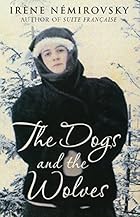
The Dogs and the Wolves by Irène Némirowsky

Chatto & Windus, 2013, 216 p. Translated from the French Les Chiens et les Loups by Sandra Smith. First published by Éditions Albin Michel, 1940.

The Dogs and the Wolves cover

Of the four Némirowsky novels I have now read this is the one that most engages with the Jewish experience. As in The Wine of Solitude the narrative starts in Ukraine (once again the text has “the” Ukraine) and later shifts to France but the parallels of the main character here, Ada Sinner, with Némirowsky’s own life are less close.

Ada is born into that stratum of Ukrainian society not quite in the ghetto but not elevated from it. Her father is a trader and moves between the milieux. As a girl she catches sight one day of her rich relative Harry and is instantly fascinated. When the inevitable pogrom comes she flees with her cousin Ben and ends up in the richer part of town where the pair temporarily throw themselves on the mercy of their richer cousins, who are horrified by this sudden arrival disrupting their cosy existence.

Years later, in Paris, Ada, now an artist, sketching a party at Harry’s house from afar, mislays the payment for seamstressing work she is taking back to her Aunt Raissa, who throws her out. Ben, besotted with her since childhood, proposes that they marry. Despite her lack of love for him, Ada agrees. On the eve of Harry’s wedding Ada contrives to give him a book in which she knows he’s interested. He in turn is intrigued by her paintings in the book shop window. Eventually they meet as adults and the consequences unfold.

While life in Paris is less on the edge than in Ukraine the sense all the Jewish characters have of never being more than one step away from disaster is brought across firmly. In Ukraine a refrain when any adverse event – drought, famine, disease, political rumblings – occurred the adults would say, “We’re in for it this summer…. or this month, this year, tomorrow,” which I must say is also a very Calvinist, and therefore Scottish, sentiment.

The writing contains the usual bon mots. In one of her father’s trading conversations Ada overhears a nice variation on “fell off the back of a lorry,” in, “What would you say to a batch of ladies’ hats from Paris, just a tiny bit damaged from a railway accident?” Musings during a child’s invented game included, “The grown-ups would be only too happy to be free of all the children! Well didn’t they hear their parents moaning endlessly?” The text also contained aperçus such as, “With that knowing feminine instinct that can aim straight at the vulnerable place in a man’s heart she had sought, and found, the worst insult,” and, of Aunt Raissa’s style in argument, we learn, “Unfortunately she had one fault that was common in women: she loved winning.”

Némirowsky, it seems, never disappoints.

In addition it was again pleasing to see Sandra Smith’s translation, which never felt awkward, utilising the grammatically correct use of whom. “Whom could she turn to? Whom could she beg for help?”

The Adjacent by Christopher Priest

Gollancz, 2013, 419 p.

My fourth BSFA Award book out of this year’s five. Aren’t libraries wonderful? The Adjacent is also on the Clarke Award list.

Over the course of the last two decades or more Christopher Priest has been exploring various themes to do with the nature of illusion and reality. Recurring preoccupations have been photographers, doppelgängers, the Second World War, stage magic, the strange world of the Dream Archipelago. He returns to all of these in The Adjacent.

In the mid twenty-first century, photographer Tibor Tarent’s wife Melanie has disappeared from the field hospital in Anatolia where she was working and to where he had accompanied her in a misguided attempt to stop their marriage crumbling. She is presumed dead. He returns to what, from the descriptions of women’s clothing, the habitual greetings of its inhabitants and its designation as part of a Kalifate, is presumably the Islamic Republic of Great Britain but is only ever referred to as the IRGB. (The provenance of this political entity is never satisfactorily explained. It seems somewhat gratuitous, the novel would work as well without it.) A strange new weapon whose deployment is accompanied by a bright light is making whole areas disappear, flattened, leaving only a triangular crater. London has been badly hit. It was an event like this in which Melanie disappeared.

Tommy Trent is a stage magician drafted in by the Royal Naval Air Service to help make their aeroplanes “invisible” during the Great War. On his way to France he meets one Herbert George Wells. What this section contributes to the overall picture beyond allowing considerations of the craft of stage magic – distraction, misdirection, hiding in plain sight and so on – is moot. It could, of course, be a distraction itself.

The progenitor of the Perturbative Adjacency Field, Thijs Rietveld, is interviewed at his home. Almost incidentally a Tibor Tarent is the photographer for this project. Rietveld seems to be able to make a conch shell appear and disappear at will. He explains the effects of a perturbative adjacency field to the reporter.

Michael Torrance, an aircraftman at a Second World War bomber base in Lincolnshire, meets a Polish woman member of the Air Transport Auxiliary who relates her life history up to the point where she had to leave Poland due to the German invasion.

On the Dream Archipelago island of Prachous there is a camp city called Adjacent which no-one is supposed to know about or visit. Tomak Tarrant journeys through this with an emigmatic woman known as The Spreader of the Word. Also on Prachous, Thom the Thaumaturge finds a young female assistant for his stage act. This helps him to secure a week of performances at ‘The Grand Aviator Palace.’

Nothing in this book is as it appears. Similar events occur to, similar things are said by, different people in different times and different places. Characters are mistaken for other people. What at first seem to be the same events as seen from different perspectives turn out differently, names are subtly altered, transitions from location to location can occur at times without a mechanism while at others there is one. Not a straightforward read then.

Everything here is all very accomplished and worked out. Priest undeniably writes like a dream. But.

Is it all just smoke and mirrors?

There are two ways of looking at this. One is to say that this is a writer at the height of his powers demonstrating the arbitrariness and unknowability of the world. Another is to question if this is the spectacle of an author writing his cake and eating it. In particular, the drawing in of the Dream Archipelago to The Adjacent, as if in an attempt to bring all of Priest’s recent fiction into a linked whole, may have been a misstep. The Archipelago is certainly a reflection of our world and therefore illuminates it, but it is also distanced from it. The connection with it that Priest establishes here renders it somehow more prosaic.

Priest is, though, an author of considerable gifts and insight, not to mention a searching intelligence. He is entitled to the benefit of any doubt.

All writing is the creation of illusions. As readers we like to think we can penetrate the mist in which they are wrapped. The Adjacent suggests that mist might be all there is.

Pedant’s corner:-
Span count 1 – though there was a spun on the same page – and signs of catering to the US market (fit for fitted, Kalifate for Caliphate.)

Dumbarton 0-1 Dundee

Judging by the comments on the Pie Shop we should have won this. But we don’t get much luck against Dundee – at least recently – especially with refereeing decisions.

However, we’re stil fifth (if only on goal difference and with a game in hand) and by my calculations we cannot now be relegated automatically as we have two points more than Morton could possibly accrue.

Onwards to Falkirk on Tuesday, Livingston on Saturday then Morton in the next midweeek.

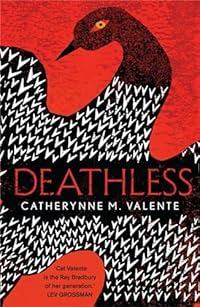
Deathless by Catherynne M Valente

Corsair, 2013, 352p. Reviewed for Interzone 248, Sep-Oct 2013.

Valente here has reworked a traditional Russian folk tale, or perhaps several. Lack of familiarity with this source material may obscure some of its nuances but fear not. In what could have been a dizzying whirl through the unfamiliar – we have to deal not only with the tale itself but with the typically Russian patronymics and diminutives – Valente’s writing, with the occasional exception, is fluid and expressive. Her powers of description and similes can be striking, but her Americanisms stand oddly against the novel’s setting.

The story signals its fantastical elements early on. In a house on a long, thin street during the time St Petersburg became Petrograd, then Leningrad – and the street also changed its name twice – Marya Morevna knows there is magic in the world when she sees a bird fall off a tree – “thump, bash!” – change into a man and ask for the girl in the window. Twice more the same thing happens. (As in fairy tales repetition is a key feature of the novel, though the repetitions may have minor changes.) Each manbird takes away one of her three sisters. She then befriends the domoviye (house imps) who hold soviets behind a door in the stove and tell her Papa Koschei is coming.

Marya regrets missing seeing her bird “thump, bash!” into a man. This is Koschei Bessmertny, Koschei the Deathless, the Tsar of life, who nevertheless, in a mechanical vehicle that is also a horse, spirits her away to Buyan, a land where his previous lovers – all called Yelena or Vasilisa – sew soldiers onto cloth and breathe them into life.

In Buyan Koschei’s mother/sister/sometime wife Baba Yaga – relationships there are somewhat involuted – sets Marya tasks to assess her worthiness as a wife for Koschei. These include subduing Baba Yaga’s traditional method of travel, the mortar and pestle. A nice touch during one of these was the scene which is effectively Little Red Riding Hood in reverse. A character Marya befriends in Buyan expresses to her what is perhaps a very Russian sentiment but with universal application, “You will live as you live in any world; with difficulty and grief.” Koschei’s brother Viy, the Tsar of death, turns up uninvited at the marriage and thereafter there will be war between the brothers.

Birds or eggs occur frequently in the text. Marya kills a firebird; in one of her tasks she fetches an egg she believes contains Koschei’s death; a friend turns into a bird; she spends some time in a place named Yaichka which turns out to be an egg; Alkanost, a firebird-like creature, imparts words of wisdom; she is told the world tries to make stories turn out differently – as perfect as an egg.

In a sudden temporal jump we find a human man, Ivan Nikolayevich, wandering into Marya’s life. In the interim she has become one of Koschei’s generals, but the war is going badly. (The war is always going badly.) Koschei is dismayed as Ivans habitually take his wives from him. Marya chides him for his attitude and takes Ivan as her lover, despite his confusion. She tells him, “What passes between married people is incomprehensible to outsiders.”

Whatever her title may be, Valente’s story is not deathless. Escaping the war in Buyan, Marya chooses to return with Ivan to her childhood home and is shocked that a house in Leningrad is painted with characters from her story. With all the fantastical events that have gone before and come after, though, the impact of the German siege of the city and its attendant horrors of starvation and suffering is lessened. The stripping of wallpaper to make bread, its paste to make butter, are not as horrific, not as devastating, as they could be; as they should be. We have not felt, not been shown, enough of the long, slow descent into abjection and desperation that survival there would have entailed. That Koschei has also turned up and is tethered in the basement only adds to the distancing effect.

An interlude in Yaichka features barely disguised versions of Lenin, Stalin, the last Tsar and his family and a priest with whom his wife may (or not) have had a liaison. Two of these have dreams of a war between red and white ants. Russian history hangs heavily.

The human time span of the novel relates to that of the ascendancy of the “wizard in Moscow with the moustache.” There is the necessity to believe, “there has never been another (world)” – “can never be another.” An explicit message is that living under totalitarianism is like death; but a death where, “You still have to go to work in the morning. You still have to live.” But, to use one of Valente’s repetitions, life is like that.

Addendum: The following did not appear in the published review.

For “Americanisms” above read “USianisms.”

Sunk count = 1; plus “off of,” “hung” for hanged, “all of who” – and stalactites might, but stalagmites can not, teeter above your head.

Reelin’ In the Years 80: Do It Again

This would have been a good title for the category – except I went with Reelin’ in the Years instead.

It makes a good match with last week’s offering.

Steely Dan: Do It Again

free hit counter script