Solaris, 2023, 339 p. Reviewed for ParSec 12.
 This is a collection of fiction of mostly fantasy stories, perhaps in keeping with Nordic traditions but there is a sprinkling of Science Fiction. They are split almost equally between translations and stories which first appeared in English, though they do contain a surprising number of Scottish terms. None of them would appear out of place in any speculative fiction anthology though, in most, character or place names display their provenance.
The book’s contents are ordered by the authors’ countries of origin.
Sweden:
She by John Ajvide Lindqvist, translated by Marlaine Delargy from the Swedish, Hon, has an epigram from Nathan Wahlqvist to the effect that “a haunting is dependent on a series of highly unlikely coincidences,” and so inherently rare. This tale of the haunting of a house newly built on the site of an older one relies on the facts that the owners, a couple trying to embark on parenthood, sourced its materials on the cheap and the grandfather of one of them had done wrong in the past.
Lost and Found by Maria Haskins, translated from the original, Vindspår, by the author tells of the mental disintegration of the survivor of a crashed escape pod from a ship surveying exoplanets for possible terraforming. Or was there really something out there?
Sing by Karen Tidbeck is set on a planet whose human inhabitants are strangely affected by the rising and setting of the system’s moons. Most can sing when a particular moon is up but our narrator can’t. She is also physically impaired and hence not fully part of the society. A visitor finds the planet’s parasitic ecosystem strange and is shocked by the method through which the singing is acquired.
Denmark:
The False Fisherman by Kaspar Colling Nielsen, translated from the Danish Den falske fisher by Olivia Lasky, concerns a man who did not take up fishing till he was over forty but nevertheless gets himself all the correct gear. He never catches anything (apart from one whopper.) This story could quite easily be read as having no speculative content at all – except for perhaps one sentence.
Heather Country by Jakob Drud is set in a world after what is always referred to as the impact, in a Jutland run by the NeuroClan a pair of whose investigators (both mortgaged to the Clan’s system of debt of body parts) stumble across a threat to the production of fuel from the local genetically modified heather.
The Traveller Girl by Lene Kaaberbøl, translated from the original, Rakkerstøsen, by the author, again has only a tangential relationship to the speculative. A man hoping to inherit land by marrying the landowner’s daughter is startled by the humanity he finds in the gypsy girl he encounters one day. Her group comes there so that their horses’ foals may be born on land that confers on them strength, sturdiness and speed.
The Faroe Islands:
The Abyss by Rakel Helmsdahl, translated from the Faroese, Dýpið, by Marita Thomsen, as a story, seems to be a metaphor for Limbo as our narrator climbs up and down and traverses across a never-ending series of iron bars too rigid and close-set to pass through, before deciding to fall into the abyss of the title and further adventures.
Iceland:
The Dreamgiver by Johann Thorsson. A child’s nightmares are relieved by a dreamcatcher hung up by her bedroom door. One night when our narrator, the child’s mother, carries out the daily task of emptying it she is startled by the Dreamgiver, who is not best pleased that his dreams are being discarded.
Hamraborg Babylon by Alexander Dan Vilhjálmson. Translated from the Icelandic Sódóma Hamraborg by Quentin Bates.
This Hamraborg is a tower dominating its city, Kópavogur. A woman penetrates its nightmarish depths in search of her brother. The story doesn’t quite deliver on the promise of its first two pages.
Norway:
As You Wish by Tor Åge Bringsværd. Translated from the Norwegian Som du Vil by Olivia Lasky. Brageson works in Mine-Blue 4 on the planet Nova Thule where the company provides all its workers with an idunn. Created from local crystalline sources these are not-quite-android simulacra of women with a highly developed sense of imitation. Their signature question is, “How do you want me?” – a question which haunts Brageson as he struggles to accept his idunn’s presence in his life.
The Cormorant by Tone Almhell has more than a few similarities to Scottish Folk Tales. Not surprising really, given the same harsh northern climate, the salience of fishing as a means of earning a living and the overbearing presence of the sea. The story sets its stall out early when the narrator says she is a cormorant and if she spreads out her wings death will follow. She has been brought up without her father, who had mysterious origins anyway, and lives with her secretive mother on an island across a stretch of sea from the town of Grip. The townspeople view both her and her mother with suspicion. Possibly with good reason.
The Day Jonas Shadowed His Dad by Thore Hansen. Translated by Olivia Lasky. Jonas, whose mother has died, is intrigued by the vagueness with which his father describes his work, so decides one day to follow him. In a cottage in the woods he descends into a tunnel which leads to somewhere brighter and, to Jonas, more intriguing. Overall, though, this is a little underwhelming to regular readers of SF and Fantasy.
A Lion Roars in Longyearbyen by Margrét Helgadóttir. Global warming and migration have led to Longyearbyen becoming a destination city for its December light festival. One of the (unheard number of two) lions in its zoo – thought to be the last actually born in the wild – has gone from its cage. In the midwinter darkness a human hunter prepares to stalk it.
Finland:
A Bird Does Not Sing Because It Has an Answer by Johanna Sinisalo. A human monitors an extremely slow moving avatar suit overseeing the nesting site of a pair of (by now incredibly rare) flycatchers while not being supposed to intervene in natural processes. In the meantime, Central’s coordinating AI is decoding the meanings of birdsong. The story’s last word is devastatingly apposite.
Elegy for a Young Elk by Hannu Rajaniemi. In a world where most humans have disappeared into some sort of upload heaven, once and would-be poet Kosonen roams the woods with his talking bear Otso. Both like booze. He is visited by an avatar of his former wife who wants him to retrieve an object which fell into a firewalled city dominated by plague gods. Their lost son also happens to be in there.
The Wings that Slice the Sky by Emmi Itäranta. Translated from the Finnish Taivasta silpovat sivet by the author. Judging by the Author’s Note this seems to be a take on the Finnish epic Kalevala. Louhi, a woman with magical powers, marries into the well to do family which lives in Pohjola in the north. One day she rescues a shipwrecked man from the south and nurses him back to health. In return for a horse to take him back south she asks for a Sampo, a device which will ensure Pohjola will never again want for anything. The bargain is also to include one of her daughters. He sends a blacksmith to forge the Sampo but he in turn spreads the fact of Pohjola’s existence and soon many visitors arrive. Men being men – even (especially?) with magical powers – things don’t end well.
The following did not appear in the published review.
Pedant’s corner:- some of the translations are into USian. Otherwise; Fin (Finn.) “None of these alternatives were appealing” (‘None …. was appealing’ and, strictly, there can be only two alternatives, not three,) “hockey cards” (being set in Sweden these would more likely be ‘ice hockey cards’,) Janosz’ (Janosz’s,) laying (x 2, lying,) “a wee bit of sarcasm” (a wee bit? The author must have spent time in Scotland.) “None of them were armed” (None … was armed.) “The only movement along its streets were those of plastic bags and battered tin cans” (The only movement … was …,) “to such a prophesy” (prophecy,) smothes (smooths,) Douglas’ (Douglas’s,) “the less electromagnetic emissions the better” (the fewer … emissions the better.) “She sat down …and swung its legs” (either, ‘It sat down …and swung its legs’ or, She sat down …and swung her legs’,) sprung (sprang.)
 This is the fourth in Cherryh’s pride of Chanur sequence, featuring the leonine Pyanfar Chanur as a protagonist. I reviewed the previous books here, here and here.
 The humans on Mundis were sent on the last spaceship from a dying, fractious Earth and inculcated with an overwhelming compulsion against atomic power. They have formed a settlement with a large age gap between the space travellers and those born after arrival.
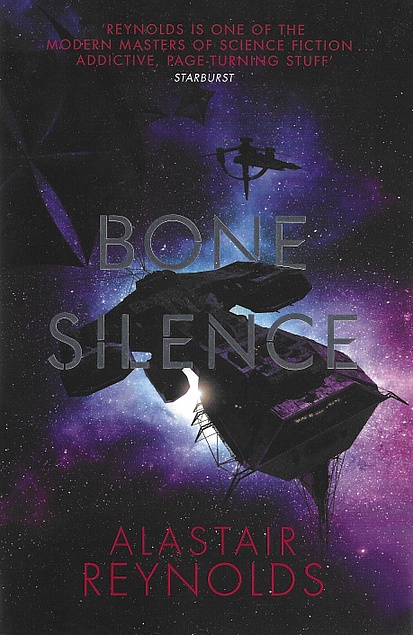 This exploration of a far future Solar System travel through which is powered by solar sails with auxiliary rocket powered launches for shorter journeys continues the adventures of the Ness sisters, Adrana and Fura, after the events of Revenger and Shadow Captain. The readjustment of the economies of the Congregation following the sisters’ agglomeration of a cache of quoins – which resulted in their values changing – is in full swing but they are in flight from a squadron representing the banks and commerce, led by one Incer Stallis. In search of a bone skull (skulls are a kind of mystical communication device only accessible by adepts) to replace Revenger’s defunct one, they take over another ship, the Merry Mare and split the two crews.
 In the future universe this novel describes people live in kinds of utopias where they don’t bother to learn many languages or even to read and write, delegating translation to AIs and work to machines, an existence which in effect renders the typical specimen of humanity, to a degree, infantile. Nevertheless, two different modes of faster than light travel dubbed α and β have been developed. The first utilises simultaneous time and space dilation and is (fractionally) slower than the second, which deploys extremely rapid spacetime bubbling. (Not that this is important. Any putative FTL technology is only ever a handy device for getting characters from A to B.) The α and β spacecraft types in which their passengers travel are called startships (note that second ‘t’,) which are essentially hospitals; space travel, of any sort, is dangerous, a spaceship’s passengers require protection. And the ships themselves, contrary to some earlier imaginings, are not transplanted marine vessels since a spaceship doesn’t need a rigid framework nor corridors. Here, instead, they consist of woven clusters of moveable Meissner tetrahedra linked together by smartcable. Utopias, though, need to be escapable or conflict will arise. And escape from a spaceship is difficult.
 Issue number 13 of ParSec magazine
  Hammajang Luck by Makana Yamamoto
 Just in from